

The argument that ends most marriages isn’t dramatic. Nobody throws a ring across a restaurant or weeps in an airport. More often, it’s the slow accumulation of a hundred small unfairnesses that nobody named – the kind that only become visible when you imagine the roles flipped.
Flip the genders on almost any habit, behavior, or expectation that wives carry as a matter of course, and watch how quickly it transforms from “that’s just how things are” into grounds for a very expensive conversation with a divorce attorney. The double standard in marriage is rarely the explicit kind, the openly stated rule. It’s ambient. It runs through the whole arrangement like a current nobody clocked.
Some of what follows will make you laugh. Some of it will make you slightly uncomfortable. All of it is grounded in how heterosexual marriages actually distribute labor, attention, and accountability, and in who gets a pass for which behaviors. This is not a list of complaints. It’s a mirror.
1. Running the entire household calendar while he “helps”

Women spend 2 hours and 19 minutes per day on housework, while men spend 1 hour and 34 minutes, according to a 2026 Pew analysis averaging three years of American Time Use Survey data. But the raw time gap, as exhausting as it is, may be the smaller problem. The bigger one is who owns the whole operation in their head.
Women overwhelmingly assume responsibility for organizing household and childcare activities: 63% of women report being the primary organizer, and 52% of men confirm that their partner holds this role. Both parties largely agree on who is running the show. The difference is that one of them calls it “helping” when they unload the dishwasher.
Imagine a husband who managed every appointment, every school form, every birthday card, every grocery list, every social obligation for the entire family, and then received praise for “being so on top of things.” His wife would not praise him. She would expect it, because the person who manages the household is simply supposed to manage the household, without fanfare. That is the double standard marriage has quietly baked in for generations.
2. Tracking everyone’s emotional state except her own

U.S. cultural norms have long positioned women as emotional caregivers, whether within families or romantic relationships. The result is an imbalance where women carry the weight of ensuring their partner’s emotional stability while men often take this labor for granted.
The specific expectation is telling. In research on emotion work in marriage, men have been found to describe their primary partners as “self-absorbed” for failing to notice they were having a bad week – without having said a word about it. The expectation was that she would notice on her own, a pattern rooted entirely in traditional gender roles rather than any reasonable definition of mind-reading.
A husband who simply knew when his wife was having a bad week, without being told, and proactively adjusted his behavior accordingly, would be described as unusually perceptive and emotionally gifted. A wife who fails to do this on any given Tuesday is accused of being distant. The mind-reading isn’t a relationship bonus when women do it. It’s the assumed baseline.
3. Apologizing to keep the peace

Most couples have one person who apologizes more. Research on conflict repair in heterosexual marriages consistently points in one direction. Navigating conflicts with extended family, providing emotional support to children, and initiating apologizing and conflict repair tend to fall to one partner – and it is almost never the husband.
In practice, this often means a wife apologizes for raising a problem, then apologizes for raising it again, then apologizes for the way she raised it. A husband who routinely apologized preemptively, absorbed blame to smooth things over, and consistently put the relationship’s emotional temperature above his own need to be right would be described as remarkably mature. A wife who stopped doing this would be described as difficult.
The apology gap in marriage isn’t really about who is wrong more often. It’s about who has been socialized to believe that keeping things calm is their job.
4. Doing the double shift without complaint

Sharing a home with a spouse could, in theory, lighten the burden of housework for each person. The Gender Equity Policy Institute’s 2024 analysis of American Time Use Survey data found the opposite: getting married seems to exacerbate the burden of household work on women. Married women without children do 2.3 times as much household work as their male counterparts, 14.3 hours per week versus 6.2 hours.
That gap exists before children enter the picture. Add kids, and the numbers shift further. While more men take on childcare and housework than ever before, women continue to perform more of the physical and emotional labor in their families. Women in dual-income families are more likely to be in charge of creating and maintaining a family schedule and tend to manage the social lives of their families more than men.
A husband who came home from a full day of paid work and then spent his evening cooking, cleaning, supervising homework, and doing laundry before falling asleep on the couch would be the subject of concerned conversations at family dinners. “Doesn’t he have any help? Poor thing, he’s exhausted.” His wife does this Tuesday through Sunday, and she’s just mom.
5. Being blamed for any tension in the relationship

When a marriage goes through a rough patch, the question “is she okay?” is rarely the first one asked. The assumption that a wife’s emotional state is the variable most likely to explain marital friction is so embedded that couples can reinforce it without either party noticing. If she seems withdrawn, she’s “in a mood.” If he seems withdrawn, something must have happened at work.
Research has found consistently that those who carry more emotional labor than their partners report higher levels of stress, elevated rates of depression, and greater anxiety. Taking on more of the mental load leaves a partner feeling depleted in ways that are plainly visible in how they respond to ordinary stress – but the depletion gets attributed to temperament rather than workload.
So the person who is more emotionally reactive is, statistically, the one who has been managing everyone else’s emotions all day. A husband who was visibly depleted and short-tempered after a day of doing what most wives do daily would be pitied. A wife doing the same is described as “a lot.”
6. Managing the mental load of the children
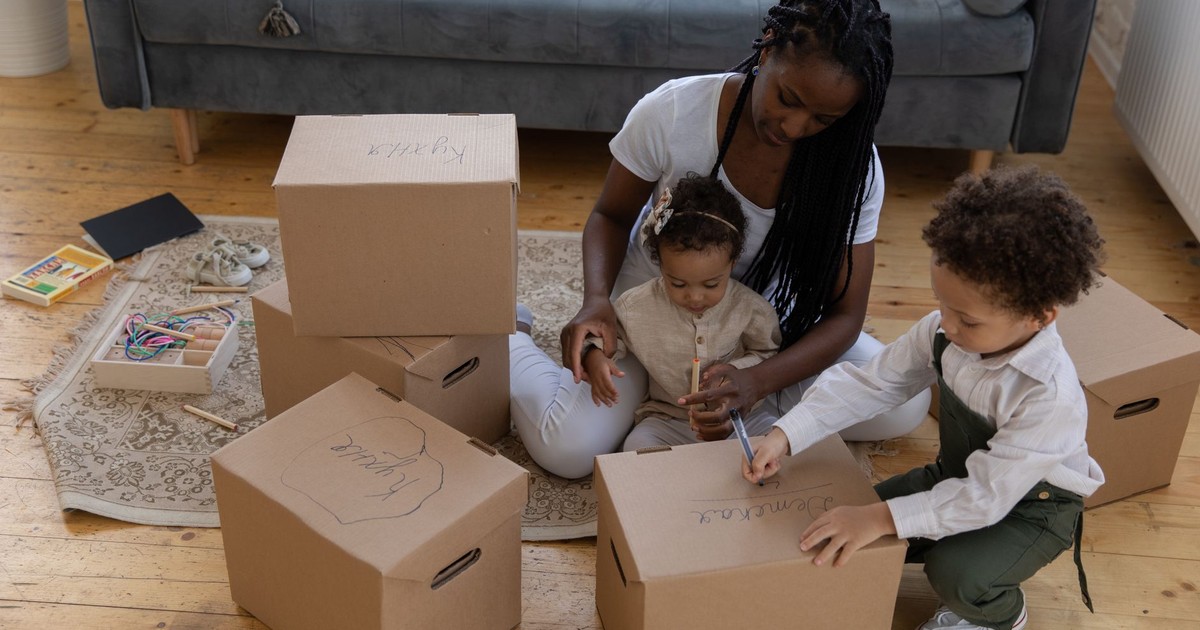
The mental load of parenting doesn’t come with office hours. It runs in the background of every other task: knowing when vaccinations are due, which friend your child had a falling out with, what food allergies the class has before you send in the birthday cupcakes, what the school’s policy is on head lice. None of this appears on a to-do list. It just lives in someone’s head all the time.
Evidence consistently shows the mental load falls disproportionately on women and links directly to stress, fatigue, lower well-being, and reduced relationship satisfaction. One useful way to see this: researchers have found that women and men who feel responsible for household tasks – not just those who spend more time doing them – show worse health outcomes over time. Feeling accountable for something, even when you’re not the one executing it, carries its own weight.
In dual-income families, parents may spend similar amounts of time thinking about household chores and childcare, but mothers are more distressed by those thoughts, carrying the sense of double responsibility that comes with managing both a professional life and the household’s operational reality simultaneously.
A husband who forgot to tell his wife about the school concert would cause a fight. A wife who forgot would have failed.
7. Maintaining the social relationships for both of them

Who sent the birthday card to his college roommate? Who organized the Christmas dinner? Who texted his mother when she had surgery? In most heterosexual marriages, one person holds all three answers, and it is not him.
Women in dual-income families are more likely to manage the social lives of their families than men. This extends to his social relationships just as much as hers. The friendship maintenance and holiday logistics land in her calendar, often without discussion, and often without credit.
A husband who quietly stopped doing all of this would face no social consequences, because social expectation never put it in his hands in the first place. A wife who stopped would hear about it from his mother by December 26th.
8. Having her work schedule treated as “flexible” by default

Two people work full-time. One of them is the default emergency contact at the school. One of them is expected to arrange childcare when school finishes early. One of them’s career is quietly assumed to be the one that bends when the family needs something.
More women pursue careers today while also balancing household responsibilities, and many men take on domestic duties once seen as entirely theirs. But the adjustment in attitudes has not caught up to the adjustment in practice. When couples’ expectations differ from reality, conflict follows – and the conflict usually reveals which person’s job was always the one that bent.
The mismatch between what couples say they believe and what actually happens when the school calls at 2pm is one of the more telling gaps in modern marriage. Both partners will describe their relationship as equal in most surveys. Then the call comes in, and one of them picks up without question while the other keeps working.
A husband who was consistently the one who left early, rearranged meetings, and built his professional week around school schedules would, in many workplaces and families, be considered unusual, even admirable. A wife who did this is just being a mom.
9. Being expected to stay warm in a conflict

There is a particular conversational pattern in many marriages where a wife is allowed to raise a concern, but only if she raises it calmly, without crying, without volume, without any tone that could be described as naggy or sharp. The content of her concern matters less than the packaging. If the packaging is imperfect, the conversation becomes about the packaging.
A 2005 study in the Journal of Marriage and Family, which surveyed 335 employed married parents, found that husbands’ performance of emotion work had the strongest positive effect on wives’ marital well-being – stronger than housework or childcare. The biggest predictor of how satisfied wives were in their marriages was whether their husbands were doing the emotional work of the relationship. Not the dishes. The emotional engagement.
A husband who got visibly frustrated, raised his voice slightly, or ended a difficult conversation by going silent would be described as having strong feelings about the issue. A wife who did any of these things would be described as unstable, emotional, or impossible to talk to. The double standard in marriage when it comes to emotional expression is specific: one person’s feelings are treated as data, and the other person’s are treated as the problem.
10. Initiating every difficult conversation

The conversation about money. The conversation about his drinking. The conversation about where they’re going as a couple. The conversation about her mother-in-law. In most marriages, one person holds the clipboard of unfinished business, and it follows them into every room.
Research on emotion work and marital health has found consistently that when emotional labor is shared, relationships are healthier and less prone to burnout. But sharing it requires both people to pick up the clipboard. When only one person consistently brings the hard topics to the table, the other gets to live in permanent conflict-free comfort while also privately believing the relationship is basically fine.
A husband who refused to initiate any difficult conversation, ever, in fifteen years of marriage would simply be described as not a talker. A wife who did the same would be described as emotionally unavailable.
11. Keeping her weight, appearance, and age from becoming a conversation

The standards around physical appearance in marriage have never been symmetrical, and they have not become meaningfully more symmetrical in the years since the word “symmetrical” started appearing in think pieces. A wife who gained weight, let her hair go, or stopped making an effort with her appearance would hear about it, directly or indirectly, in ways that track through the relationship.
The unspoken expectation in many marriages around appearance runs in one direction with remarkable persistence. A husband who let everything go is described as comfortable, settled, or “dad bod” – a phrase that exists precisely because male physical decline in marriage has been normalized to the point of having an affectionate nickname. There is no equivalent term for women.
The double standard here is not just about attractiveness. It’s about whose physical changes are registered as a failure of respect for the relationship and whose are accepted as a natural function of being alive and busy.
12. Being grateful for the things he “chooses” to do

There is a specific genre of marital praise that flows in one direction. He bathed the kids tonight. He made dinner. He picked up the dry cleaning without being asked. Each of these events is narrated as a small act of love, a gesture, a choice he made to show up.
A 2025 systematic review in the Journal of Family Theory & Review, examining 38 studies on the division of housework in North America from 2014 to 2024, confirmed that women have continued to take on more household tasks than men across the entire decade reviewed. In that context, a husband receiving genuine praise for doing dishes is not a small thing. It reflects the deeper belief that his contributions to the household are optional additions, voluntary kindnesses, while hers are just the background hum of family life.
A husband who casually announced over dinner that he’d done laundry today and expected enthusiastic recognition would seem strange. A wife who did the same would be told she was looking for a gold star for doing what she’s supposed to do.
13. Aging without it becoming a referendum on the marriage

At 45, a husband who has some gray in his hair, reads at restaurants without glasses, and prioritizes his Saturday run above almost everything else is aging “well.” At the same table, a wife doing the same work to stay fit and feel like herself is described as “trying to hold on to her youth.” The same behaviors – exercise, grooming, self-investment – read entirely differently depending on who is doing them.
Younger women in their 20s, 30s, and 40s are still grappling with these inequities, and often in larger amounts than older women, while also carrying larger portions of caregiving duties. Women in their 30s are shouldering nearly an hour more of household and caregiving responsibilities per day, on average, than men their age. They are doing this while also being held to a narrower window of acceptable aging, with less tolerance for physical changes, less cultural permission to opt out of the work of being presentable, and less social reward when they do it well.
A husband who stopped coloring his gray, put on fifteen pounds, and felt completely at ease in his skin would be described as secure. His wife, doing exactly the same, would spend the next three years fielding unsolicited opinions about it.
Read More: Experts Explain Wives Who Can Never Admit They’re Wrong Have One Thing In Common
What This Actually Means
The double standard marriage has historically maintained is not a list of rules anyone wrote down. Nobody sat a newlywed woman down and explained the terms. The terms are absorbed gradually, through observation, through what gets praised and what gets ignored, through whose behavior prompts a conversation and whose just becomes weather.
None of these patterns start as conscious choices. They form in the first year of marriage, harden over the next two, and become invisible by the fifth. By ten years in, both partners have often forgotten that it was ever any other way – and that amnesia is part of how the arrangement sustains itself. The person doing more doesn’t tend to talk about it constantly. The person doing less doesn’t tend to notice it’s even happening.
The problem isn’t really about who does the dishes on any given night. It’s about whether both people in a marriage are operating from the same set of expectations – or whether one of them is quietly working two jobs while the other thinks everything is roughly equal. Naming the gap doesn’t fix it. But unnamed gaps don’t change, and the ones that get spoken out loud at least have a fighting chance.
AI Disclaimer: This article was created with the assistance of AI tools and reviewed by a human editor.