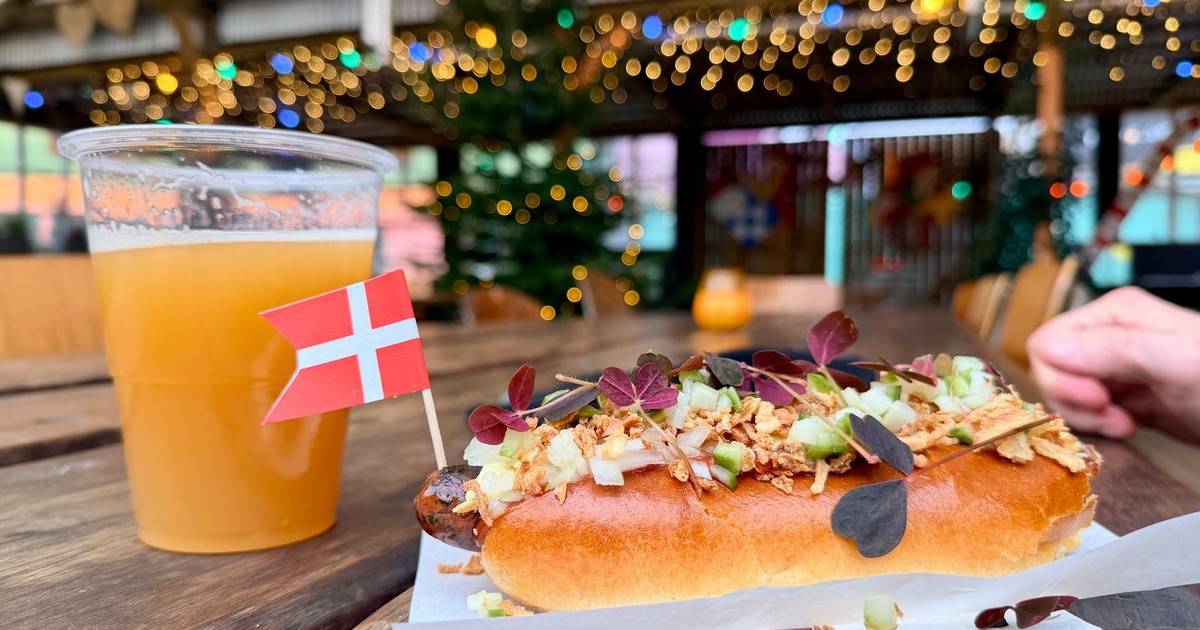

The American hot dog – yellow mustard, relish, maybe ketchup – represents roughly ten percent of what a hot dog can be. The Danes figured this out a century ago. They took the same basic concept, a sausage in a bun, and built something so layered with contrasting textures and flavors that the toppings are genuinely the point.
Order one in Copenhagen and you’ll be handed a bun loaded with creamy, curry-tinged remoulade, two kinds of onions working against each other (soft and raw, crunchy and fried), thin ribbons of sweet-sour pickled cucumber, mustard, and ketchup. Every bite hits a different note. Nothing about it is simple, even though every component is.
Making Danish-style hot dogs at home requires understanding what each element is doing, and why skipping even one means you’re back to just eating a hot dog.
What Makes the Pølsevogn So Danish
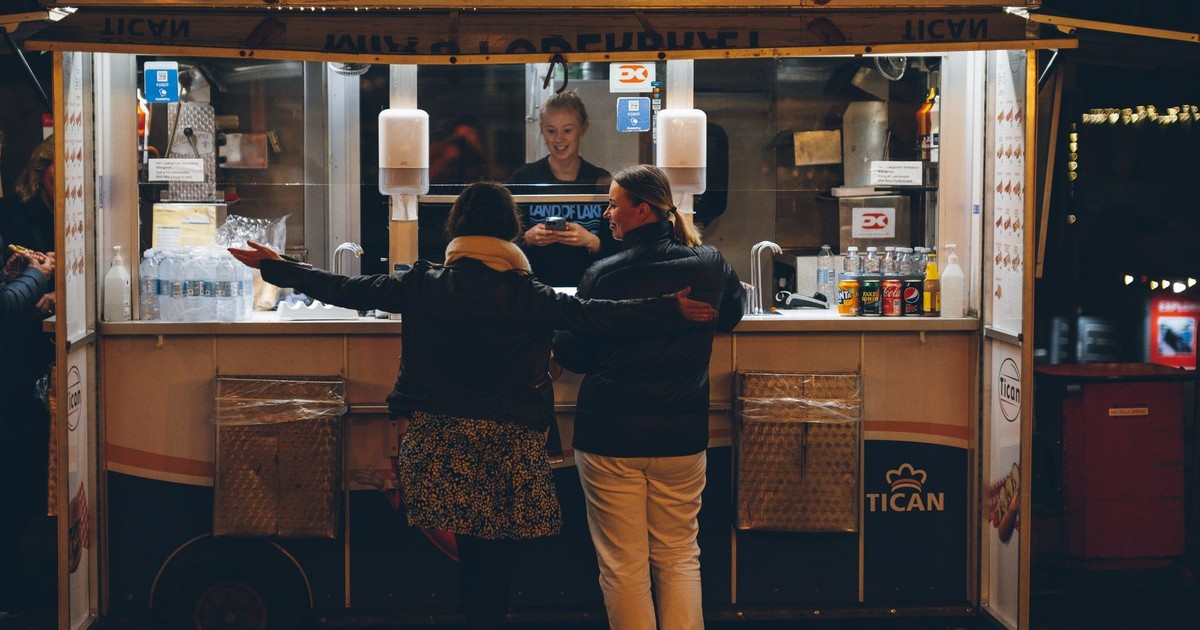
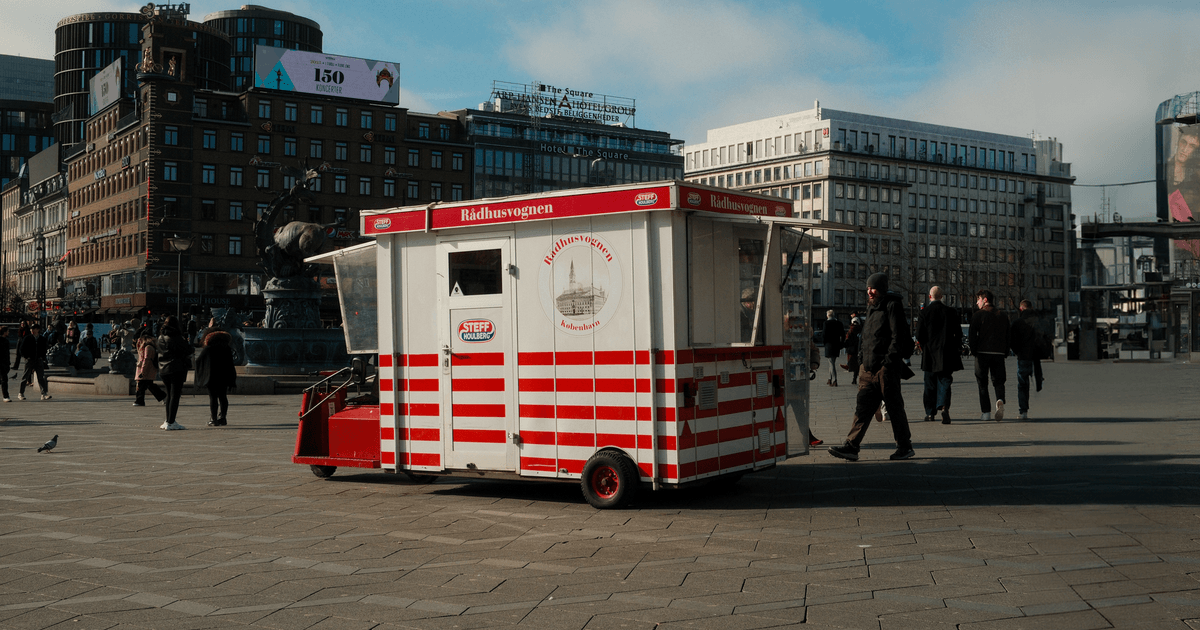
According to Eating Europe, the pølsevogn (the iconic Danish hot dog cart) traces back to the early 20th century in Copenhagen, where the hot dog cart became an integral part of working-class street life, a place to grab a low-cost snack and socialize, a symbol of the city itself. The pølsevogn made its official debut on January 18, 1921, when the first white and red sausage carts appeared on the streets of Copenhagen.
Despite well over a century of competition from modern fast food, Danes hold such an enduring affection for their hot dogs that the pølsevogn was voted onto Denmark’s official intangible cultural heritage register as a nomination for UNESCO consideration, celebrated as a democratic space where people from all walks of life come together, transcending social classes and backgrounds.
The Nordic Dish notes that at their peak in the mid-20th century, there were hundreds of pølsevogne across Denmark, and even today about 100 remain in operation. The tradition has endured through more than a century of changing food trends.
The Sausage: Red or Brown, But Always Pork
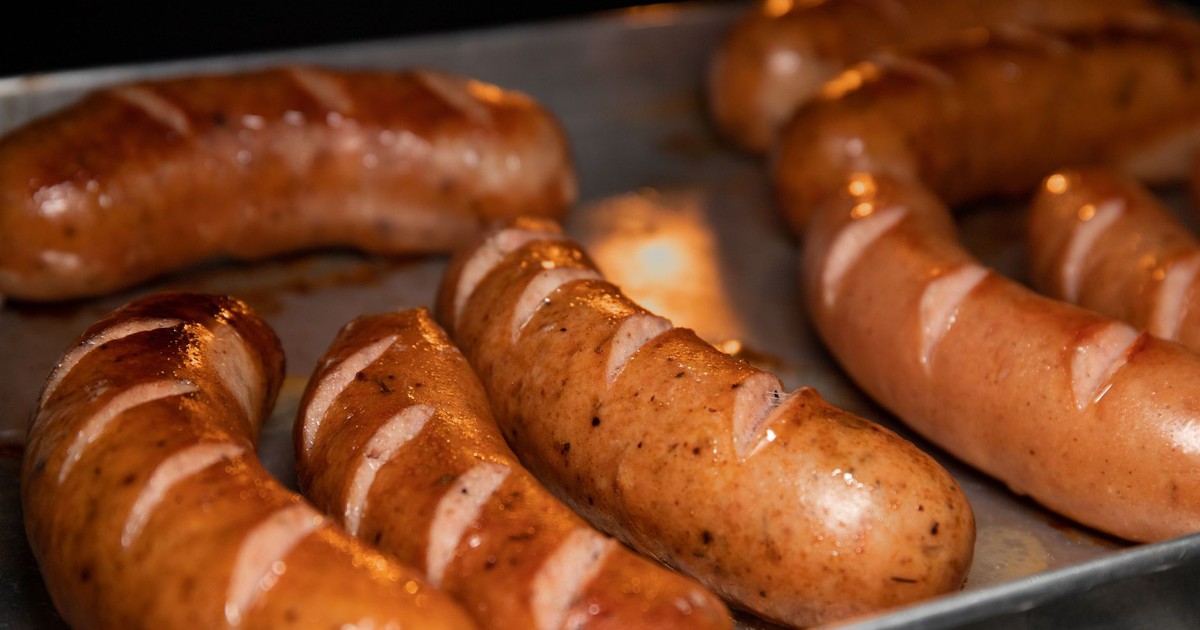
My Hungry Traveler describes the essential pølse as an extra-long beech wood-smoked pork sausage with a natural casing, flavored with sweet and savory spices including cardamom and nutmeg. That spice profile is more interesting than it sounds. Cardamom and nutmeg push the sausage into territory that’s slightly warm and fragrant, closer to something you’d expect from a charcuterie board than a street cart.
There are two main types found in Denmark: the classic rød pølse (red sausage), which is bright red in color, and the popular brown grillpølse (grilled sausage). The long, skinny red-dyed, natural-casing pork hot dogs called rødpølser are particularly popular. It’s said they were originally dipped in the dye to make day-old dogs look fresher. Whatever the origin story, the color became the tradition.
If you can’t find authentic Danish sausages locally, the closest substitute is a high-quality all-pork frank with a natural casing, the kind that snaps when you bite it. Avoid anything pre-cooked in the American style. The casing integrity matters here because grilling (ristet, meaning toasted or grilled) is the preferred method. The Danish hot dog is grilled and usually extends over the edges of the hot dog bun. That overhang isn’t aesthetic, it’s a sign you’re working with the right proportion of sausage to bread.
The Toppings: Why There Are So Many, and Why They All Matter
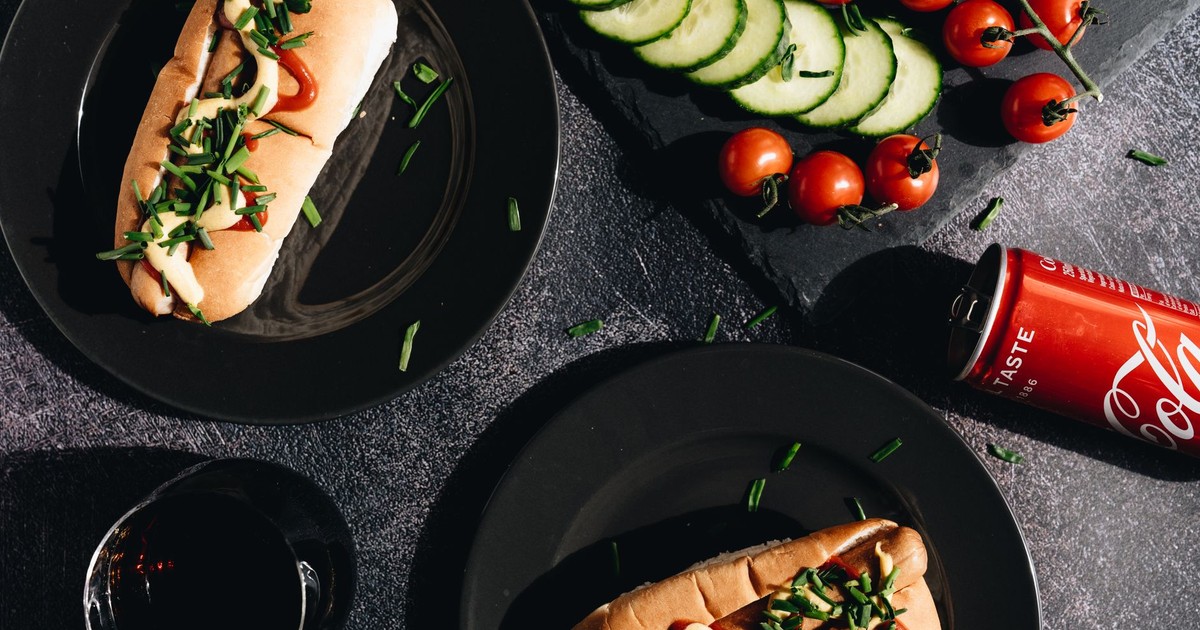
Order a hot dog “med det hele” (with the works), and you’ll get an explosion of taste and texture: mustard, ketchup, creamy Danish remoulade, two kinds of onions (raw diced onions and crunchy fried onions), and tangy pickled cucumber slices on top.
Each of those components is doing something specific. The mustard and ketchup are the bass notes, familiar, grounding. The remoulade brings a creamy, slightly sweet richness. The raw onions add sharpness. The fried onions bring crunch. The pickled cucumber cuts through all of it with acid. Remove any one of them and the balance shifts noticeably.
The Remoulade
Danish remoulade looks like a bright yellow tartar sauce, and the flavor is somewhere between a very mild curry and a tangy aioli with a streak of sweetness running through it. It’s the component most first-timers don’t expect, and the one they usually reach for more of.
Danish remoulade contains a base of mayonnaise or a mixture of mayonnaise and neutral oil, along with pickles, mustard, lemon juice or vinegar, and sometimes curry powder, onions, and chopped vegetables. The overall taste tends toward sweet and slightly tangy compared to its French counterpart. The turmeric or curry powder is what gives it that distinctive golden color.
Most American remoulades are made just with pickles, but the Danish version is a blend of fresh raw vegetables, fruits, and pickles, typically a combination of carrot, onion, apple, and pickles, blended until finely chopped and then squeezed to remove excess liquid before folding into the mayo base. That last step matters: skip it and the sauce turns watery. A good Danish remoulade should hold its shape on the bun without sliding off. Make it a day ahead if you can, the flavors sharpen overnight in the fridge.
The Two Onions
Danes crown their dogs with a generous handful of crispy fried onions alongside a sprinkle of fresh raw onions for bite. The mix, soft and sharp versus toasted and crunchy, creates an avalanche of flavor and texture that elevates each bite in a way a single onion preparation simply can’t.
The fried onions are thin-sliced and deep-fried until dry and almost chip-like. In Denmark they’re sold bagged in every supermarket. In the US, the French’s crispy fried onions (the kind used for green bean casserole) are an acceptable substitute, though making your own from thinly sliced white or yellow onion fried in neutral oil produces a noticeably better result. The raw onion should be diced very finely, not chunky, so it integrates rather than dominates.
The Pickled Cucumber
The traditional Danish pickled cucumber, called agurksalat, is made by slicing a long cucumber into very thin slices and pickling them in a brine of white vinegar, water, sugar, and salt. The ratio skews toward sweet rather than sharp. This is not a dill pickle situation. The sweetness is there to balance the mustard and the onion bite, and it does that job precisely.
You can have quick-pickled cucumbers ready in 30 minutes by salting thin-cut slices first (this draws out excess water and keeps them from going soggy), then submerging them in a brine of equal parts white vinegar and water with two tablespoons of sugar and a teaspoon of salt per cup of liquid. Let them sit at room temperature while you prepare everything else.
The Fransk Variant: A Different Architecture
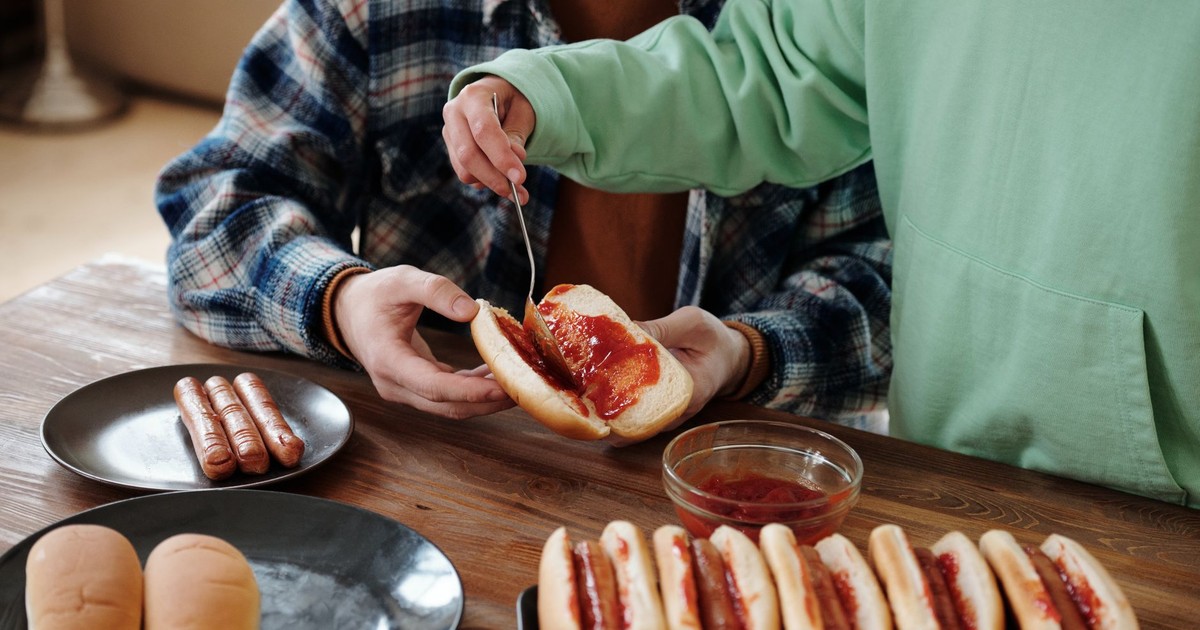
Hotdogopedia describes the Fransk Hotdog (“French hot dog”) as another staple of Denmark’s hot dog tradition. It’s served in a hollowed-out baguette-style roll, the bread itself acting as a vessel for the sausage and sauces. Vendors fill the hollow with a mayonnaise-based dressing before inserting a grilled sausage, creating a unified savory snack that avoids mess while packing flavor.
The Fransk version is worth making at home for one practical reason: the sauce is sealed inside the bread, which means nothing falls off and every bite is evenly dressed. Often topped with ketchup, mustard, remoulade, and crispy fried onions, it’s particularly good for eating on the move, which is, after all, the original point of pølsevogn food.
To recreate it, use a soft baguette or a hoagie roll. Cut a lengthwise channel about an inch deep without cutting through the bottom. Squirt remoulade and mustard into the channel first, then slide in the grilled sausage and add toppings on top. The bread soaks up the sauce from the inside without going soggy, which is the whole trick.
Sourcing the Sausage Outside Denmark
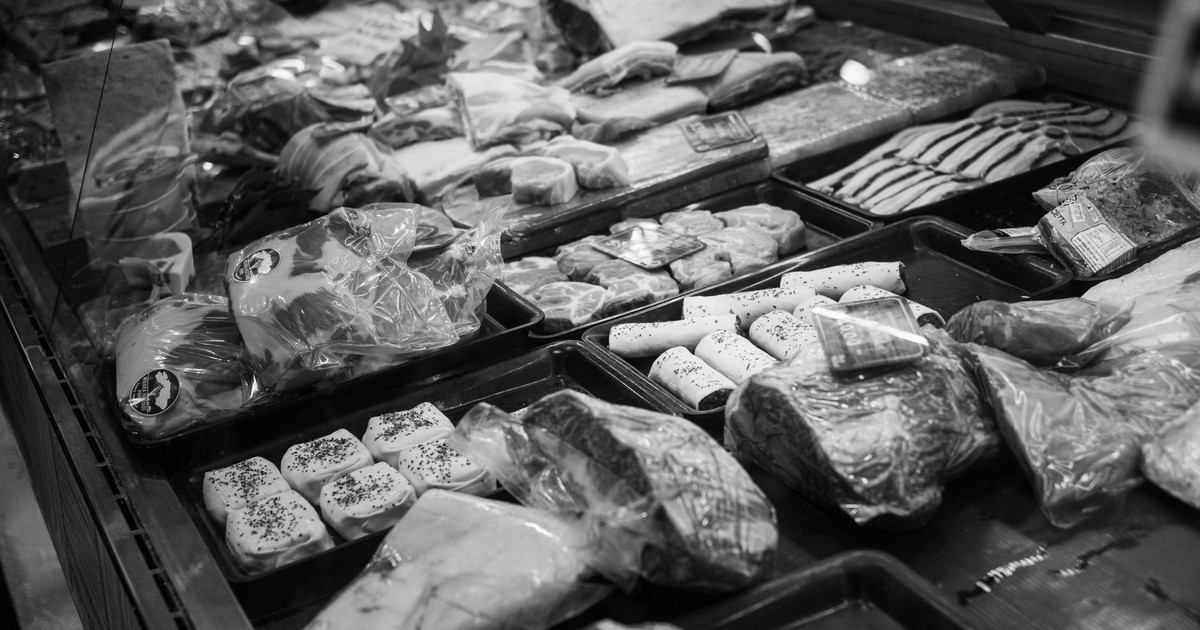
Authentic rød pølse can be found at Scandinavian specialty grocery stores and online retailers that carry Nordic imports, and it’s worth tracking down at least once to understand the flavor target. The cardamom-and-nutmeg spice profile is distinct enough that it will reframe how you think about the rest of the toppings, they were calibrated for that specific sausage.
That said, the build works beautifully with a quality all-pork frankfurter or Bratwurst-style sausage. The key is the natural casing. A skinless sausage won’t produce the satisfying snap that’s part of the experience, and it won’t color the same way on the grill. Look for European-style pork sausages at specialty delis or the charcuterie section of a well-stocked grocery store.
Brush with a little neutral oil and grill over medium heat for 7 to 10 minutes, turning to get color on all sides. The goal is a slight char on the casing, not steamed, not boiled. The grill char introduces a smoky bitterness that cuts through the rich remoulade.
Putting It All Together
The classic Danish hot dog is served in a soft bun with ketchup, mustard, remoulade, raw onions, fried onions, and pickled cucumbers. The order in which you apply the toppings isn’t arbitrary. Remoulade goes down directly on the bread so it adheres. Mustard and ketchup stripe over the sausage. The onions (both kinds) go on next. The pickled cucumber slices go on last, laid flat so they sit on top of everything rather than sliding down into the bun.
The bread itself should be a soft hot dog bun, not a brioche (too rich), not a baguette (too hard). The bun is there to catch the toppings and absorb a little of the remoulade, not to assert itself. Apple ketchup, rather than tomato-based ketchup, is the more traditional Danish choice, it’s slightly sweeter and less acidic, and it’s worth making or sourcing if you want the full picture. A simple version is just standard ketchup simmered with a tablespoon of unsweetened applesauce and a pinch of cinnamon.
Why This One Is Worth Making Properly
Danish-style hot dogs taste better than the standard American version because every single topping is doing the opposite of the one next to it. Creamy against sharp. Sweet against acidic. Soft against crunchy. The American hot dog is mostly in one register, savory, a little sweet, which is why it gets boring halfway through. The Danish version keeps you eating because each bite lands differently depending on which toppings you catch.
There’s also something in the culture it comes from that’s baked right into the food. The pølsevogn has always been a democratic space, the spot where a student, a construction worker, and a city official end up standing at the same cart, eating the same thing. The food is informal almost by design. Nothing about it is precious or complicated to assemble. It just rewards a little more thought than most people put into a hot dog.
Build it once with all the components done properly, remoulade made from scratch, both kinds of onions, quick-pickled cucumbers, and the question you’ll be asking is why it took this long to try. The toppings are the point, and when they all come together on one bun, the result is genuinely hard to go back from.
Disclaimer: This information is not intended to be a substitute for professional medical advice, diagnosis, or treatment and is for information only. Always seek the advice of your physician or another qualified health provider with any questions about your medical condition and/or current medication. Do not disregard professional medical advice or delay seeking advice or treatment because of something you have read here.
AI Disclaimer: This article was created with the assistance of AI tools and reviewed by a human editor.