
Discussions about dangerous cities in America can quickly become heated and unclear. Many people assume that crime is mainly an issue in larger, well-known urban centers. However, several smaller cities face serious safety challenges that often go unnoticed.
Surprisingly, some American cities rank among the most dangerous in the world, alongside places frequently highlighted for their violence. These cities may not be widely recognized, but they grapple with significant issues that impact their residents’ daily lives.
This is not just about alarming statistics; it’s about acknowledging the realities faced by communities. The people living in these cities often have rich histories and vibrant cultures, and they work hard to improve their situations despite the challenges.
Instead of sensationalizing or ignoring these issues, it’s essential to engage in honest conversations about how to support these communities. By understanding the complexities of their situations, we can foster empathy and work toward solutions that enhance safety and quality of life. Recognizing both the struggles and strengths of these cities allows for a more balanced perspective and encourages meaningful dialogue about their futures.
1. Memphis, Tennessee
According to Numbeo’s 2026 Crime Index for the Americas, Memphis ranks third overall in the region, with a crime index score of 78.5 and a safety index of just 21.5, placing it behind only Caracas, Venezuela, and San Pedro Sula, Honduras. That’s not a ranking any American city wants to hold.
Memphis tops the list of the most dangerous large U.S. cities, with a violent crime rate nearly six times the national figure. Detroit and Baltimore also have rates more than triple the U.S. average, according to Security.org’s analysis of FBI crime data across the 30 largest American cities. The picture, though, is more layered than a single number captures. FBI data shows homicides fell from 156 in 2023 to 129 in 2024, and robberies dropped nearly 30 percent. Progress is happening, just slowly, and from a very high starting point.
Crime in Memphis is heavily concentrated in Frayser, Parkway Village-Oakhaven, and Whitehaven, while suburbs like Germantown and Collierville consistently rank among Tennessee’s safest. Memphis is not uniformly dangerous. It’s a city of extremes, where the risk is real but tightly concentrated. For residents navigating daily life, where you live within Memphis matters enormously.
2. Detroit, Michigan
Detroit appears tenth on Numbeo’s 2026 Americas Crime Index, with a score of 72.8 and a safety index of 27.2, placing it among cities in Brazil, Colombia, and Ecuador. Detroit’s spot on this list is less surprising to most Americans than Memphis’s, given the city’s decades-long association with urban decline. What is surprising is that the city is genuinely making strides that the crime index hasn’t yet caught up with.
Detroit’s 2024 homicide rate was the lowest the city had experienced since 2013. That trajectory matters. A city that has been falling for years is a different kind of problem than one that is accelerating. Detroit has the third-highest murder rate among cities of similar size, and it remained near the top across several violent crime categories, continuing its long struggle with high crime rates rooted in decades of economic decline, population loss, and inadequate resources following the city’s 2013 bankruptcy.
The economic roots of the problem run deep. Since the financial crisis and the collapse of the American auto industry, Detroit has struggled with the erosion of its economic base and tax revenues, fueling poverty rates that compound the city’s capacity to respond. That’s not an excuse so much as an explanation for why crime data in post-industrial cities tends to lag behind recovery narratives.
3. Baltimore, Maryland
Numbeo’s current Crime Index places Baltimore at a score of 71.2, with a safety index of 28.8, ranking it among the most dangerous cities in the Western Hemisphere. Baltimore has carried this reputation for long enough that it almost feels detached from any single cause or moment. But 2025 brought something genuinely new.
Baltimore experienced one of the largest drops in homicide rates in the Council on Criminal Justice’s city sample, falling 40 percent compared to 2019 levels, according to the Council on Criminal Justice’s year-end 2024 report. As of mid-2025, robberies and auto thefts are down compared to the previous year, while the homicide clearance rate jumped from 40.3 percent in 2020 to 68.2 percent in 2024.
The murder rate, at approximately 34.8 per 100,000 residents, still ranks among the highest of any large U.S. city. The Numbeo index includes residents’ perceptions, suggesting that people still believe there is a high risk of becoming a victim of crime here. The gap between lived experience and statistical reality is one of the harder things to address. Trust in a city’s safety takes years longer to rebuild than the crime rate itself.
4. Albuquerque, New Mexico
Albuquerque comes in with a crime index of 71.0 and a safety index of 29.0 on Numbeo’s current rankings, making it the fourth American city on a list otherwise dominated by Latin American and South African cities. Albuquerque is the entry on this list that tends to shock people the most, because it doesn’t have the same name recognition for danger as the others.
The FBI recorded 1,182 violent crimes per 100,000 residents in Albuquerque, and in the most recent reporting year the city saw 94 homicides, three fewer than the year prior. Vehicle theft has been a particular crisis. At one point, Albuquerque had the highest vehicle theft rate in the country, driven partly by the Kia/Hyundai theft epidemic affecting certain models without engine immobilizers, and partly by organized theft rings. Vehicle theft in this city isn’t a background statistic; it became a genuine crisis that forced local officials and automakers into difficult conversations simultaneously.
Parts of the city suffer high rates of gang violence and violent crime concentrated in specific areas. One of the hotspots is the International District, which has been nicknamed the “War Zone” by locals. 2025 data shows meaningful improvement, but property crime remains extremely high. New Mexico as a state has some of the highest firearm death rates in the country, which provides context for why Albuquerque’s numbers stay stubbornly elevated even as the city tries to reduce them.
5. St. Louis, Missouri
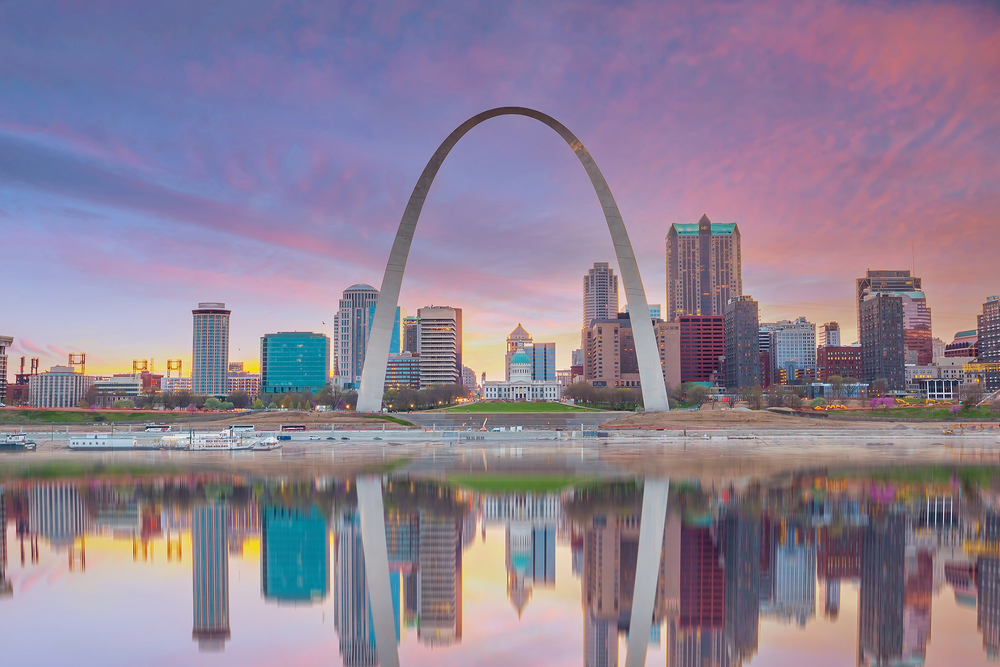
St. Louis rounds out the five American cities on Numbeo’s global list, with a crime index score of 70.1 and a safety index of 29.9. For anyone who follows American crime statistics, St. Louis’s presence here is the least surprising entry on the list.
St. Louis went from a homicide rate of 72.1 in 2019 to a rate of 48.6 in 2024, a drop of 23.5 homicides per 100,000 people. That’s a real shift. Context matters here: St. Louis City, with a population of around 300,000, differs statistically from St. Louis County with over a million residents, and a few north-side neighborhoods concentrate most violent crime. That geographic concentration doesn’t make the numbers less serious, but it does explain why people can live in greater St. Louis for decades and feel safe.
In 2024 FBI data, St. Louis ranked among the top cities for property crime rates, recording 5,707 property crimes per 100,000 people. In early 2025, city officials confirmed a sharp drop in the number of murders, reporting the lowest total since 2005. That shift followed a wave of new community policing strategies. Still, neighborhoods like Walnut Park and Dutchtown report regular shootings, and gun violence remains the leading cause of death for young men in the city.
What the Numbers Actually Tell Us
The five cities above make this list for different reasons and with different trajectories. Memphis leads on perception and raw crime rate. Detroit is falling fast. Baltimore just posted dramatic homicide reductions not seen in decades. Albuquerque has a property crime problem that inflates its index score. St. Louis carries a decades-long statistical weight that even genuine improvement hasn’t fully shaken. What they share is a combination of concentrated poverty, strained civic institutions, and histories that don’t reset on a calendar year.
The Council on Criminal Justice’s year-end report found that homicides were 21 percent lower in 2025 than in 2024 across 35 study cities, putting the U.S. on track for the lowest homicide rate ever recorded, going back to 1900. That’s an extraordinary national headline. But national averages don’t live in neighborhoods, and they don’t tell you much about what it feels like to be a resident of Frayser or the International District or north St. Louis.
The Honest Version of This Story
Global comparisons help with perspective. Cities like Caracas, San Pedro Sula, and Durban operate in a different statistical universe than anything on this list, with homicide rates that can exceed 40 to 60 per 100,000 people, making them roughly eight times deadlier than the world norm. The primary way danger is measured in global rankings is through the homicide rate because, unlike other crime categories, homicides are almost always reported and documented by governments. The U.S. cities on this list are serious problems, but they exist in a different category from war-zone-adjacent cities in Venezuela or the cartel-fractured metros of Ecuador.
What doesn’t change is that real people live in these five cities. Most of them are navigating neighborhoods, school pickups, and grocery runs without incident, while also being statistically more exposed to violent crime than residents of almost anywhere else on Earth. The improving numbers are real and worth acknowledging. So is the fact that improvement and “still genuinely dangerous” can be true at the same time. Holding both of those things together is probably the most honest place to land.
AI Disclaimer: This article was created with the assistance of AI tools and reviewed by a human editor.