

There’s a version of international travel that used to feel uncomplicated. You packed your bags, landed somewhere with an American passport, and the world generally received you with curiosity, warmth, or at least indifference. That dynamic has been shifting for a few years, but in 2025 it shifted hard. The data that’s come in since, from surveys spanning nearly 30 countries, from travel behavior tracking, from airports recording declining arrivals, tells a story that American travelers can’t ignore heading into a busy season: the welcome is, in a measurable number of places, cooling off.
This doesn’t mean everyone abroad is hostile. It doesn’t mean you’ll be confronted at a cafe in Paris or shouted at on a street in Copenhagen. But the gap between how Americans see themselves as travelers and how some parts of the world are now receiving them has widened considerably, and the reasons are specific, country by country, worth understanding before you book.
Some of what the research reveals is uncomfortable. Some of it is surprising. And some of it will change where , and how , you travel.
What Pew Research Tells Us About American Tourists Not Welcome Abroad
The foundation of this conversation is a survey of 28,333 people in 24 countries, conducted January 8 through April 26, 2025. The organization behind it, the Pew Research Center, has been tracking global attitudes toward the U.S. for over two decades, which makes this round of findings particularly striking by comparison.
U.S. favorability ratings declined from 2024 to 2025 in 19 of the 24 countries surveyed. That’s not a rounding error or a blip. Among the nearly 30,000 people polled across 24 countries, a median of 62% had no confidence in President Donald Trump to do the right thing regarding world affairs. The connection between views of the president and views of the country is direct: the lack of confidence in Trump appears to have impacted global opinions of the country he leads, according to Pew.
The numbers are most dramatic in specific countries. From 2024 to 2025, America’s favorability ratings fell by as many as 32 points in Mexico, 28 points in Sweden, 22 points in Poland, and 20 points in Canada. Those aren’t abstract opinion shifts. They’re a signal to American travelers about what they may encounter on the ground.
A separate Pew analysis focusing on the other G7 countries, Canada, France, Germany, Italy, Japan, and the United Kingdom, showed that shares of respondents in all six nations have worse opinions of the U.S. than Americans have of them.
What does Pew Research 2025 say about how Americans are viewed abroad? In short: the median global view of the U.S. is now evenly split between favorable and unfavorable, with specific countries recording dramatic declines. But that global median hides a wide spread, some countries are still very warm toward Americans while others have turned decidedly cold. The question that matters for any traveler is which is which.
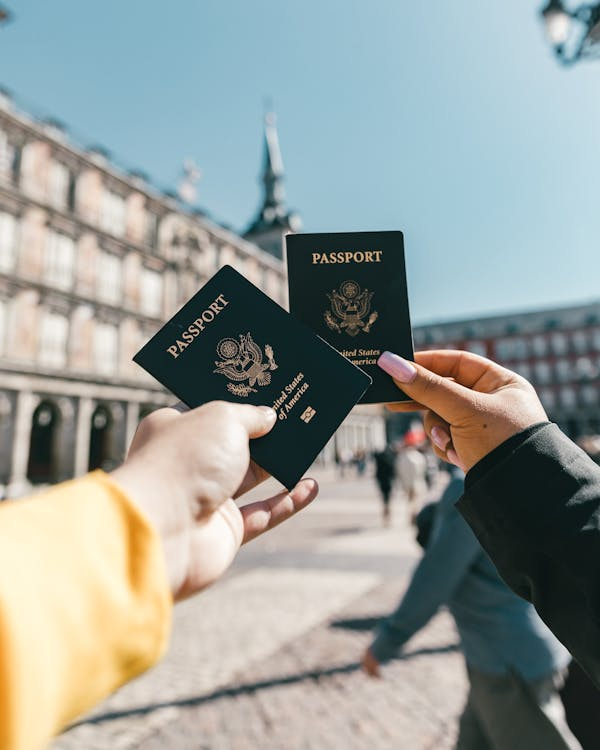
Countries Where Americans Are Unwelcome: A Country-by-Country Breakdown
France
France has had a complicated relationship with American tourists for a long time. What’s changed is that the reputation now has hard numbers behind it. In France, Germany, the Netherlands, Sweden, and the United Kingdom, the U.S. is the second-most commonly named threat after Russia, while people in Spain name the U.S. as their top threat about as often as they name Russia.
In Germany, 63% of adults expressed confidence in Biden in 2024; this year, far fewer, just 18%, have confidence in Trump. France is no different in scale. More than six-in-ten adults view the U.S. negatively in neighboring Canada and Mexico, as do majorities in Australia, France, Germany, the Netherlands, Spain, and Turkey.
On top of the political dimension, the survey found that France, Germany, the Netherlands, Sweden, and the United Kingdom collectively named the U.S. as the second-most commonly cited threat to their own country. When a country perceives you as a threat, the dinner party vibe tends to suffer.
For travelers specifically, a 2025 European resident survey found that France topped the list of nations whose own residents considered it unwelcoming to American tourists, with 15% of French respondents viewing their nation as unwelcoming to U.S. travelers. No other country in Europe came close to that level of self-declared coolness.
What should you do with this information? Learn a few words of French. Make a genuine effort to engage with the culture rather than expecting it to bend toward you. The frustration that French residents express toward American tourists is partly about behavior, and that’s the part you can actually change.
Sweden
Sweden deserves its own entry because the numbers here are genuinely stark. The U.S. receives its least positive assessment in Sweden, where 79% have a negative opinion of the country. That’s not a fringe view, it’s a near-consensus.
While 63% in both Sweden and Germany had confidence in then-President Joe Biden last year, just 15% and 18%, respectively, said they have confidence in Trump. Sweden joined NATO in 2024, partly in response to Russia’s invasion of Ukraine, and the sense that the U.S. is pulling back from its commitments to European allies, combined with sweeping tariff announcements, has sharply eroded the goodwill that existed not long ago.
In Sweden, which joined NATO in 2024 following the Russian invasion of Ukraine, a 47% favorable rating of the U.S. last year plummeted to just 19% this year, with 79% of Swedish respondents viewing America unfavorably. For a country that historically had a strongly positive view of the U.S., that’s a transformation. An American traveling to Stockholm should expect pointed questions and frank opinions, Swedes are known for exactly that kind of bluntness. Coming in humble, curious, and open to debate goes a long way.
Canada
The most emotionally charged shift of all might be Canada, simply because of how close the relationship used to be. Neighbors, allies, trading partners, the word most often used was “friends.” That word is being reconsidered north of the border.
In Canada, a 54% favorability mark in 2024 dropped 20 points in 2025, to 34%, amid Trump’s repeated threats to make the country America’s newest state. Twenty points in a single year, between countries that share the longest undefended border in the world.
The reaction has been behavioral, not just emotional. According to the U.S. Travel Association, visits from Canada recorded a 26% annual decline in overnight land trips in March 2025, with air travel also down 14% year-over-year. Canadians are not just less fond of America; they are actively choosing not to visit. And when your neighbors are deciding to stay home, the welcome mat you’ve left out for them doesn’t exactly send warm signals in the other direction.
For Americans heading north, the advice from travel professionals is essentially the same as it’s always been for any international trip: don’t assume your assumptions about Canada apply. It’s a distinct country with its own identity, one that’s currently feeling that identity more acutely than usual.
Germany
Germany’s story is about a historically strong relationship that has soured fast. In Germany, 63% of adults expressed confidence in Biden in 2024. This year, far fewer, just 18%, have confidence in Trump. That’s not a political nuance, that’s a collapse.
The practical consequence shows up in travel behavior. Western Europe recorded a 17% decline in visits to the U.S. in March 2025, the first such decline since 2021. Germany’s piece of that decline is even more pronounced. Trade tensions and NATO disputes have fueled anti-American feeling among German locals, and the reciprocal coolness is spilling over in both directions: Americans visiting Germany and Germans visiting America.
That said, the on-the-ground reality is often more manageable than the survey numbers suggest. Many travel professionals who visited Germany in 2025 reported encountering curiosity and empathy rather than hostility, a pattern consistent across much of Europe, where locals tend to distinguish between U.S. foreign policy and the person standing in front of them.
Denmark
Denmark is the entry on this list most directly tied to a single political flashpoint. Opinion toward the U.S. is lowest in Denmark, not surprisingly, since Greenland, which Trump has vowed to annex, is an autonomous territory of the country.
Just 20% of Danes express a favorable view of the U.S., plummeting from 48% in August 2024. That’s a drop of 28 percentage points, driven almost entirely by the Greenland annexation rhetoric that has been genuinely alarming to Danish and Greenlandic citizens alike. Scandinavian visits to the U.S. declined sharply, with Denmark recording a 17.8% decrease, a drop that coincides with political tensions related to Greenland, which may have influenced travelers’ decisions.
American travelers visiting Copenhagen in 2025 are walking into an atmosphere shaped by something they likely had no part in creating. The practical tip here is the one travel veterans always give: make clear, verbally and through your engagement with Danish culture and customs, that you are an individual with your own views. Danes, like most Europeans, are quite good at making that distinction when someone gives them the chance to.
Norway
Norway operates on a quieter register than most countries on this list, but the data still registers. A 2025 survey found that Norway, at 8%, ranked among the European countries whose residents self-identified as least welcoming to Americans. That may sound modest, but among the 22 European countries surveyed, it placed Norway firmly in the top five.
Norway recorded a 13.9% decrease in visits to the U.S. in the first half of 2025, a behavioral shift that tracks with the opinion data. Scandinavia as a bloc has moved significantly away from its historically favorable view of America, and Norway has moved with it.
Practically speaking, Norway values quiet, orderly public behavior and personal space. American tourists who arrive with the loud, expansive social style common to U.S. group travel can feel jarringly out of place in a fjord-side village. Toning it down, not in terms of joy, but in terms of volume, makes a real difference.
Spain
Spain’s issue is less about America specifically and more about all of humanity at once, but Americans have found themselves swept up in a wave of frustration that is genuinely fierce. Spain recorded 6.9% of its residents self-identifying as least welcoming to Americans in the same 2025 survey.
The deeper story is overtourism. Over the course of 2024, 94 million tourists visited Spain, compared to its 48 million population. That ratio, nearly two tourists for every resident, has pushed local frustration to a breaking point in certain cities.
The image that went around the world was from Barcelona. Protesters turned water pistols on tourists in Barcelona and on the Spanish island of Mallorca as demonstrators marched to demand a rethink of an economic model they believe is fueling a housing crunch and erasing the character of their hometowns. The marches were part of the first coordinated effort by activists concerned with the ills of overtourism across southern Europe’s top destinations.
Spain’s 48 million residents welcomed a record 94 million international visitors in 2024. When housing costs skyrocket and locals can’t afford their own neighborhoods, they stop seeing tourists as guests. Americans, often perceived as the loudest subset of the tourist crowd, get swept into that frustration by default. Understanding the full scope of Spain’s overtourism protests and their causes can help travelers make more informed choices about where to go and how to engage. Choosing smaller cities over Barcelona’s most tourist-saturated areas, staying in locally owned accommodation, and spending in local businesses rather than international chains all make a real difference.
Portugal
Portugal lands in an interesting position: a 2025 survey of more than 2,200 European residents across 22 countries found that Portugal tops the “annoyance” category at approximately 18.8%. This is not the same thing as openly declaring unwelcomingness, it’s a quieter, more simmering frustration, driven more by behavioral friction than political anger.
Locals in Lisbon and the Algarve vent about ignored customs and English-only demands, and overtourism has fueled graffiti against visitors. Portugal became enormously popular with American tourists and digital nomads over the past decade, and the pace of that influx has outstripped local communities’ ability to absorb it comfortably.
The country’s beauty and warmth remain real. The frustration is specific: visitors who treat Lisbon like an extension of their home city, who complain loudly about prices without recognizing what those prices mean relative to local wages, who demand English without attempting a word of Portuguese. The fix is cultural awareness, not avoidance.
The Netherlands
The Dutch stand out on this list for a particular reason: nearly everyone speaks excellent English, which means no language barrier softens the edges of any friction. The same 2025 survey found that 27% of Europeans hold a generally negative opinion of American tourists, and 36% believe Americans behave worse than tourists from other countries.
Amsterdam has moved aggressively to limit mass tourism, announcing in 2025 that it would maintain its ban on new hotel construction and continue restrictions on short-term rentals. The message to mass tourism, including American-style group travel, is becoming increasingly clear. Dutch directness, which is a genuine cultural value, means you’re more likely to hear that message stated plainly than you are in countries where politeness filters the signal.

Hungary
Hungary occupies a unique position in the European sentiment data. Hungary ranked second in Europe for locals describing their country as unwelcoming to Americans, with 8.7% of respondents identifying it as such, placing it just behind France, ahead of Norway, Denmark, and Spain in the European rankings.
The political layers here are complex. Hungary’s government has been one of the few in Europe more sympathetic to the current U.S. administration’s tone, which creates an interesting split between official-level politics and ground-level social dynamics. Israel and Nigeria are two of the five nations, along with Hungary, India, and Kenya, where half of adults or more express confidence in Trump’s handling of world affairs. Yet the survey data still places Hungary high on the unwelcoming list, suggesting that even in places where political alignment exists at the top, tourist friction operates on a different level entirely.
Mexico
Mexico recorded the steepest single-year drop in U.S. favorability of any country in the Pew 2025 survey. Roughly seven-in-ten Mexicans, 69%, have an unfavorable view of the U.S., compared with 29% who have a favorable one. With President Donald Trump back in the White House, people in Mexico have a much more negative opinion of the United States than they did during the final year of Joe Biden’s presidency.
This 32 percentage point drop in favorable views of the U.S. is the steepest in any of the 24 countries Pew surveyed this year. That’s a remarkable shift for a country that shares 1,900 miles of border with the U.S. and has historically been one of the top destinations for American travelers.
The good news: Mexico is genuinely welcoming to tourists economically and culturally, and many on-the-ground reports suggest that individual Americans are not being greeted with personal hostility. The political frustration is real, but Mexicans, like most people in most countries, tend to distinguish between the government they oppose and the person standing in front of them.
Australia
Australia was included in the Pew survey and its numbers tell a story similar to Europe’s. Roughly half or more in most European countries, Australia, Mexico, and Canada say democracy in the U.S. is functioning poorly, and in Australia, Canada, Mexico, the Netherlands, and Sweden, around a third say U.S. democracy is working very poorly.
Australia has long had a warm relationship with American tourists, and on-the-ground reports from travelers continue to reflect that warmth at an individual level. But the political opinion data has moved meaningfully, and Australians, known for forthright opinions, won’t hesitate to bring up their concerns in conversation. Come ready to engage honestly rather than defensively.
Poland and Sweden: NATO’s New Fault Lines
Poland saw a 22-point drop in U.S. favorability, from a very high base, between 2024 and 2025. Poland has been one of the most pro-American countries in Europe for decades, rooted in shared history and gratitude for U.S. support during the Cold War. The drop reflects anxieties about whether American commitment to NATO and Eastern European security is still reliable, a concern that NATO’s newest member, Sweden, shares.
New Pew Research Center polling shows especially big drops in favorable opinions of the U.S. in neighboring Mexico and Canada and in NATO allies, including Poland and Sweden. These are allies feeling nervous, not enemies feeling hostile, a distinction that matters enormously for how American travelers will actually be received. Expect questions and concerns rather than animosity.
South Korea, Japan, and the Asia-Pacific Region
Asia tells a more complex story. Majorities view the U.S. favorably in Brazil, Hungary, Japan, Kenya, Nigeria, Poland, and South Korea. Japan, despite being a popular travel destination for Americans, still holds a majority favorable view, but that view has been slipping.
51% of Japanese people ages 18 to 34 have confidence in Trump, according to the poll, while 31% of Japanese people 50 years or older say the same, a generational split that tells you the reception for American travelers may vary considerably depending on who you’re talking to. Japan’s own domestic overtourism frustrations are also building, with some of its most iconic destinations implementing restrictions on visitor numbers and photography. Respectful behavior in Japan has always mattered; it matters even more now.
Turkey, India, Indonesia, Brazil, Nigeria, and Kenya: Where the Welcome Remains Warm
Not every country is cooling on America. The share of people in Turkey, Nigeria, and Israel who rated the U.S. favorably actually increased significantly over the last year.
Majorities view the U.S. favorably in Brazil, Hungary, Japan, Kenya, Nigeria, Poland, and South Korea. India, Indonesia, and much of sub-Saharan Africa remain genuinely hospitable to American travelers, with strong cultural ties and growing economic relationships offsetting whatever political friction exists at the governmental level. For Americans who want to travel internationally without navigating political undercurrents, these destinations offer an easier road.
The Broader Economic Picture
Based on preliminary U.S. Department of Commerce data, international visits to the United States fell approximately 14% in March 2025 compared to the same period in 2024, and Western Europe recorded a 17% decline in visits to the U.S. in March 2025, the first such decline since 2021.
A 2025 Global Rescue survey found that 72% of experienced travelers believe U.S. tourists will be perceived more negatively abroad in 2025. That perception is already shaping behavior, both how Americans travel and how the world receives them.
What This Means for American Travelers Abroad
Which countries are least welcoming to American tourists? The clearest signals come from France, Sweden, Denmark, Germany, Canada, and Mexico, all of which recorded dramatic drops in U.S. favorability and, in several cases, translate that opinion shift into measurable behavioral changes. For Americans planning trips to Europe, the most direct answer is this: the political climate has made the welcome colder in ways that didn’t exist five years ago.
Is it safe for Americans to travel to France and Germany in 2025? Safety, in the traditional sense, is not the issue in either country. Experts advise U.S. travelers to stay informed, maintain a low profile, and be culturally aware, noting that some travelers already report experiencing anti-American hostility and political confrontations overseas. The risk is social discomfort and political friction, not physical danger.
How has anti-American sentiment changed in Europe and Asia? The Pew Research 2025 Pew Research American tourist welcome study results show a historic and unusually fast shift. Countries that were polling at 47%, 50%, and 63% favorable just twelve months ago are now at 19%, 20%, and 34%. That’s not a gradual erosion, that’s a rupture tied specifically to the political moment.
The best countries to avoid as an American tourist are really a matter of what you’re trying to avoid. If the goal is escaping political tension, head toward sub-Saharan Africa, Japan (still mostly warm), Israel, Nigeria, or Poland. If you’re determined to travel in Europe, and there’s every reason to, go in with cultural humility, genuine curiosity, and a willingness to have honest conversations. Most people abroad distinguish between the flag and the face in front of them. Your job is to give them a reason to make that distinction in your favor.
The data shows 72% of experienced travelers expect Americans to be perceived more negatively abroad, but perception is not destiny. Travelers who show up as curious, respectful, and genuinely engaged with local cultures consistently report being received that way in return, even in the countries topping this list. The world is complicated right now. So is America. Traveling anyway, with awareness and care, is still the best argument any individual can make.
A.I. Disclaimer: This article was created with AI assistance and edited by a human for accuracy and clarity.