

The number appearing most reliably on a grocery receipt isn’t usually what gets people. It’s the math you do in your head on the way home, the recalculation of what you used to spend versus what you just spent, and the slow recognition that the gap isn’t closing. For millions of households across the globe right now, that math is no longer adding up.
What’s different about this moment isn’t simply that things are expensive. Prices spike after wars, pandemics, and supply chain breakdowns. They always have. What’s different now is the combination: wages that lag behind, savings spent down to nothing, housing markets that have drifted beyond the reach of middle-income earners, and energy costs that were supposed to come down but largely didn’t. The cost of living isn’t just high. In many places, it is becoming structurally, persistently, possibly permanently unsustainable.
These twelve signs aren’t predictions. They’re things that are already happening, documented across dozens of countries and confirmed by people who study economies for a living. If several of them sound familiar from your own daily life, that’s not a coincidence.
1. Real Wages Have Been Losing Ground for Years

Work hard, earn enough to live on. That promise has been quietly breaking down for most of a decade, and the pandemic didn’t help. A cost-of-living crisis, in economic terms, is what happens when wages stagnate while the cost of food, housing, and energy rises sharply enough that real income gets squeezed to the point where people can no longer afford the standard of living they were previously used to.
Raises that look good on paper translate into less purchasing power at the checkout. Regular pay began to outpace inflation in the UK starting in May 2023, but living costs remained elevated and continued increasing faster than headline inflation into 2025. The same story played out across OECD countries: nominal wages crept up, but the basket of goods those wages needed to cover cost significantly more than before.
In most OECD countries, a single minimum-wage earner cannot support a four-person family, and in many cases, even two full-time minimum-wage incomes fall short. That describes a significant portion of working households in the world’s wealthiest nations, not an edge case.
2. Housing Costs Have Outrun Incomes Almost Everywhere
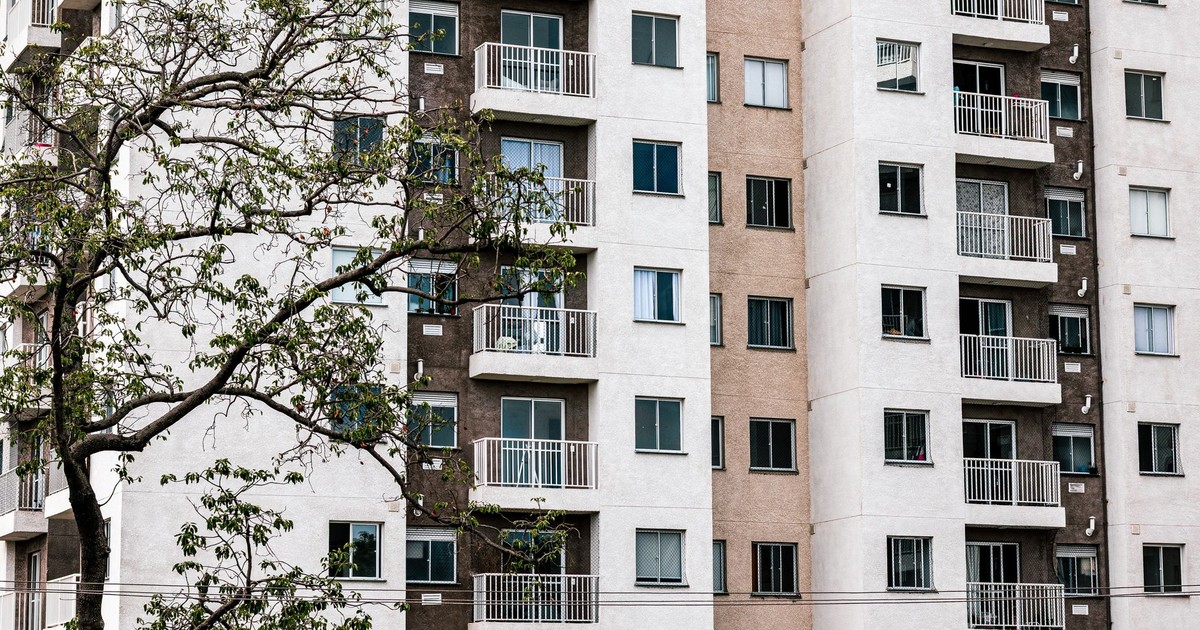
Housing should consume no more than 30% of gross household income. That’s the long-established threshold for affordability, and it has become unreachable for a growing share of the global population. According to the UN-Habitat World Cities Report 2026, nearly 44% of households worldwide spend over 30% of their income on housing, indicating rising rental stress and urban inequality. The global price-to-income ratio increased from 9.3 in 2010 to 11.2 in 2023, reaching 16.8 in Central and South Asia.
Up to 3.4 billion people lack access to secure, safe, and adequate housing, while global housing deficits increased from 251 million units in 2010 to 288 million in 2023. In the United States, home prices shot up roughly 45% since 2020, more than twice the typical rate of appreciation over any comparable period.
Research conducted by UN-Habitat estimates that approximately 64 million people were evicted globally between 2003 and 2023, with severe consequences for livelihoods, security, and social well-being. Homeownership, once considered a standard milestone of adult financial stability, is now statistically out of reach for younger generations in most major cities worldwide.
3. Food Insecurity Is Spreading Into the Middle Class

Food insecurity used to be a problem most people associated with poverty. The sharp edge of the current cost-of-living squeeze is that it’s no longer confined there. According to Purdue University’s Center for Food Demand Analysis and Sustainability, the food insecurity rate for 2025 was 14.2%, 1.7 percentage points higher than 2024.
That’s not a statistic from a low-income country or a period of mass unemployment. It’s the United States, during a period of relatively low headline unemployment, while the official inflation rate was falling. Consumers made substantial changes to their grocery shopping in 2025, largely driven by economic pressures, according to the December Consumer Food Insights Report from Purdue’s Center for Food Demand Analysis and Sustainability. The majority of respondents, 82%, modified their shopping behaviors.
Food banks across Europe, Australia, and North America have all reported record usage from people who were previously donors, not recipients. The profile of the food-insecure household has shifted: dual-income families, college-educated adults, and people who thought of themselves as financially stable until they ran the numbers. The grocery bill became the first place the crisis became impossible to ignore.
4. Energy Bills Have Permanently Reset Upward

Before 2022, most households in developed economies spent a relatively predictable and manageable share of income on energy. That predictability is gone. In the UK, household energy bills are 52% higher than their pre-pandemic level. For most households, that increase arrived faster than any pay rise could offset it.
In the United States, according to a Century Foundation analysis, monthly energy costs nationwide rose from $196 to $265 between March 2022 and June 2025, a 35% jump that was nearly three times overall inflation during that period. The analysis also found that 4.34% of households, approximately 5.77 million, have severe utility debt, equivalent to nearly one in twenty U.S. households.
The problem isn’t simply geopolitical volatility, though that’s a factor. Federal regulations allow utilities to earn profits based on what they build rather than on reliability of performance, leading to underinvestment in efficiency improvements, while the explosion of AI data centers and the growing demand for energy they require is driving up household utility bills. Even as wholesale energy prices fluctuate, consumer bills in many countries are unlikely to return to 2019 levels. Energy has become a significant and unbudgeted pressure on household finances in a way it simply wasn’t a decade ago.
5. Healthcare Costs Are Becoming a Financial Catastrophe

In countries without universal healthcare, medical expenses have long been a source of financial vulnerability. What’s changed is the scale. The ACA’s enhanced premium tax credit expired at the end of 2025, which is estimated to increase premium payments for Marketplace coverage by 114% on average, according to KFF analysis. On average, a 60-year-old couple making $85,000 would see yearly premium payments rise by over $22,600 in 2026, bringing the cost of a benchmark plan to about a quarter of their annual income, up from 8.5%.
Roughly doubling the cost of health coverage in a single year is not a marginal adjustment. For millions of families, it’s the difference between insured and uninsured. The average ACA deductible has jumped 37%, an increase of more than $1,000 per person, from 2025 to 2026.
Even in countries with publicly funded healthcare, the cost-of-living crisis bleeds into medical outcomes. People delay treatment, skip prescriptions they can’t afford, and choose between their heating bill and their medication. These are documented patterns in survey after survey from the UK, Australia, Canada, and across the EU.
6. Emergency Savings Have Evaporated

When a cost-of-living situation crosses from difficult to unsustainable, households stop being able to hold any buffer. The emergency fund, the modest savings account, the cushion for a broken boiler or a sudden job loss: these were always thin for low-income households, but they’re now thin or nonexistent for households that never expected to be in that position.
Across OECD countries, disposable incomes continued to decline in real terms through 2025 as costs outpaced wage growth. When disposable income falls year after year, savings don’t just stagnate; they get drawn down to cover the shortfall. Families end up using their reserves not for emergencies but for regular bills, which leaves them with no protection when a genuine emergency arrives.
The cascading effect is severe. A single unexpected car repair, a medical bill, or a period of reduced work hours can tip a household into debt from which recovery is genuinely difficult on their current income. Financial planners consistently recommend three to six months of expenses in liquid savings. A large and growing proportion of households in high-income countries cannot currently meet even one month.
7. Consumer Debt Is Rising as a Coping Method

When income doesn’t cover expenses, households have two options: cut spending or borrow. Many have already cut everything they can, which means borrowing is how millions of people are bridging the gap between what they earn and what it costs to live. Credit card balances have risen sharply across the U.S., UK, Canada, and Australia. Buy-now-pay-later services have expanded dramatically, often used not for discretionary purchases but for groceries, utility bills, and essential repairs.
UK households in particular have been pushed into a cost-of-living crisis by high inflation, stagnant real incomes, rising unemployment and underemployment, high energy prices, and high housing costs. Each of those pressures individually would be manageable. Together, they create a situation in which debt becomes structural rather than temporary.
Interest payments reduce future purchasing power, tightening the squeeze further. A household carrying high-interest credit card debt on essential purchases isn’t borrowing to invest; it’s borrowing to stay still. The monthly interest charge becomes another fixed cost in a budget that already has too many of them.
8. Younger Adults Are Being Priced Out of Independence

Finishing education, renting independently, eventually buying a home, starting a family, building modest savings: that sequence has been disrupted across the developed world. In most major cities, the cost of housing has grown faster than incomes over the past decade, and the trend accelerated sharply after 2020. Young adults in their twenties and thirties are returning to or remaining in parental homes at rates not seen since the postwar period.
In Australia, Canada, the UK, and the United States, the median age of a first-time homebuyer has risen significantly over the past decade. High rent, privatized healthcare, and childcare costs in countries like the U.S., Singapore, and Switzerland have made independent living unaffordable for millions of young workers. In many cities, spending 50% or more of take-home pay on rent in a first job has become routine rather than exceptional.
The knock-on effects extend beyond the individuals affected. When people delay starting families, when homeownership becomes irrelevant to financial planning because it’s simply not achievable, entire patterns of wealth-building and social stability start to fray. These are structural economic problems with measurable long-term consequences for pension systems, birth rates, and social mobility.
9. The Political Fallout Has Become Undeniable

Cost-of-living pressures have moved from economic concern to genuine social crisis when they start toppling governments. That’s been happening. In 2024, incumbent parties were repeatedly dismissed by voters frustrated with high prices. In 2025, Zohran Mamdani’s rise from relative obscurity to win the New York City mayoral race was largely predicated on a platform focused on cost-of-living issues.
Heading into 2026, the consistent pattern playing out across countries with very different political systems and ideological governments, from Europe to the Americas to the Asia-Pacific region, is that incumbent leaders who treated affordability as a temporary problem to be managed found that voters experiencing it on a weekly basis disagreed.
When housing affordability, grocery prices, and energy costs become the central issue in election after election, it’s because the crisis is being felt universally enough that no other single policy issue competes with it. Politicians who dismissed the squeeze as transitional have repeatedly paid for that assumption at the ballot box.
10. Tariffs and Trade Disruptions Are Pushing Prices Higher
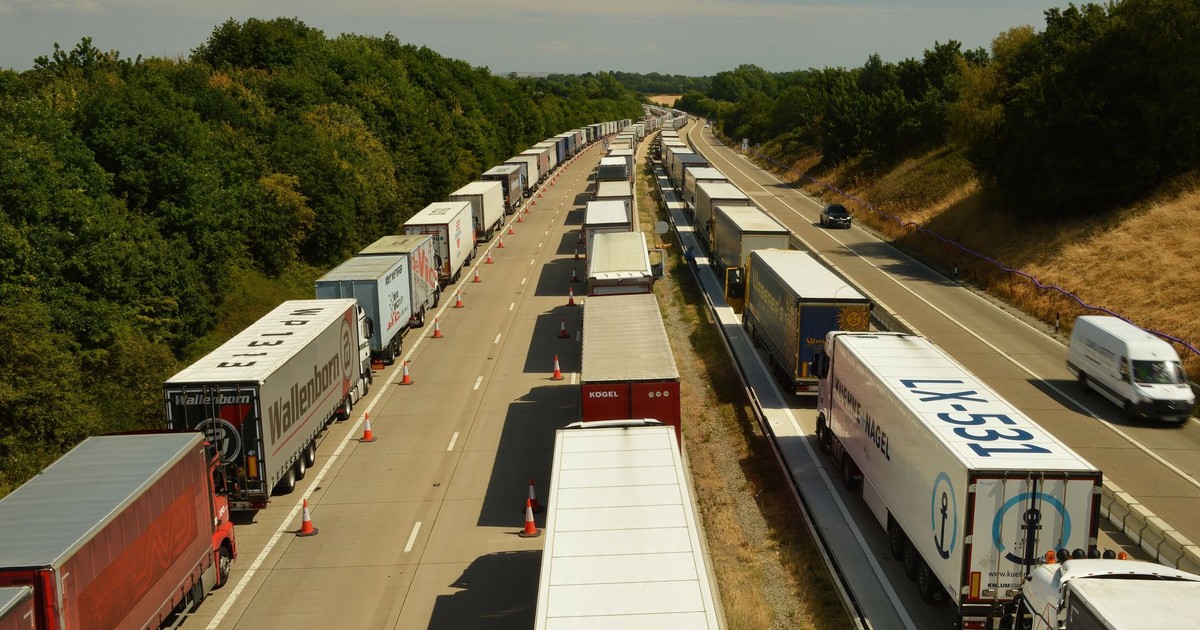
Global trade policy has become an additional driver of household cost pressure in ways that are directly traceable to decisions made in 2025 and 2026. In the U.S., the Trump administration ramped up tariffs despite warnings and evidence of their inflationary effects, while simultaneously slowing or blocking wind and solar projects that could have expanded electricity supply. The tariffs raised import costs, which passed through to consumer prices across categories from electronics to food packaging to household goods.
Trade disruption compounds inflation that already existed. Supply chains rebuilt after the pandemic disruptions of 2020 to 2022 are now being re-disrupted by shifting tariff regimes, with the costs landing predictably with end consumers. Businesses facing higher input costs don’t absorb them indefinitely; they pass them on.
The sources of strain differ across regions: in advanced economies, housing costs are the main driver of unaffordability, while in much of the developing world, food prices carry the biggest pressure. Trade disruptions feed into whichever category was already under most pressure, which is why their inflationary effect is particularly damaging for households that were already stretched.
11. Geopolitical Instability Is Keeping Energy Costs Elevated

Even without domestic policy decisions driving energy prices up, geopolitical factors have locked energy bills at levels far above their pre-pandemic baselines. Ongoing conflicts in Eastern Europe and the Middle East continue to create price volatility in global oil and gas markets. For countries that import the majority of their energy, what happens in a conflict zone thousands of miles away now directly determines what households pay to heat their homes.
Governments across Europe introduced support packages to cushion household bills in 2022 and 2023. Those packages were always intended as temporary. The underlying energy prices that made them necessary haven’t resolved to pre-2022 levels, and several analysts tracking 2026 forecasts expect the instability to persist through the remainder of the decade.
How financial stress reshapes the relationship between couples is one thread running through all of these pressures, because energy, food, and housing costs don’t just strain bank accounts. They strain households.
For households in countries that import their energy, geopolitical stability in regions they have no influence over now directly determines what they pay for an inescapable cost. You can change your behavior, your consumption, your provider. You can’t change what’s happening in a conflict zone on the other side of the world.
12. Mental Health Is Deteriorating Under Financial Pressure

The final sign that a cost-of-living situation has crossed into genuinely unsustainable territory isn’t economic. It’s personal. It’s the kind of stress that follows people out of the kitchen and into their sleep, into their relationships, into their ability to concentrate at work. The American Psychological Association’s Stress in America survey found that nearly two-thirds of respondents said money was a significant source of stress, a figure that has risen consistently since 2019.
Chronic financial worry keeps cortisol levels, the body’s primary stress hormone, elevated for extended periods. When that happens, the effects show up in unexpected places: disrupted sleep, elevated blood pressure, digestive issues, and fraying relationships. These are documented physical responses to sustained financial anxiety, not metaphors.
Nearly half of Gen Xers and 38% of boomers report losing sleep over financial stress. When financial pressure becomes a chronic health condition, it stops being simply an economic problem. The cost of the crisis extends beyond what’s in the bank account; it’s in the doctor’s waiting room, the couples argument that starts about groceries and ends about something else entirely, and the hours spent staring at the ceiling at 3am running numbers that don’t add up.
Read More: How Money Anxiety Is Costing You Thousands and What to Do About It
What All of This Is Actually Telling Us
The twelve signs above aren’t twelve separate problems. They’re one problem expressing itself in twelve different places. When wages can’t keep pace with housing, food, energy, and healthcare all rising simultaneously, the system designed to translate work into stability starts to break down. Not for everyone, not everywhere, not all at once. But in enough places, for enough people, that the pattern is unmistakable.
Cost of living unsustainable as a description isn’t alarmist. It’s the accurate term for a situation in which the arithmetic of daily life no longer works for a significant and growing share of households in the world’s wealthiest countries. The path through is long and structural: more housing supply, stronger wage floors, more resilient energy systems, healthcare that doesn’t bankrupt people for getting sick. None of that happens overnight, and none of it is guaranteed to happen at all.
In the meantime, the most honest thing that can be said is this: if the numbers aren’t working for you despite doing most things right, that’s not a personal failure. The pressures documented above are real, measurable, and being felt by tens of millions of households. Some of these patterns go back further than any single policy decision or market event. Naming what’s actually happening is where any serious conversation about fixing it has to start.
AI Disclaimer: This article was created with the assistance of AI tools and reviewed by a human editor.