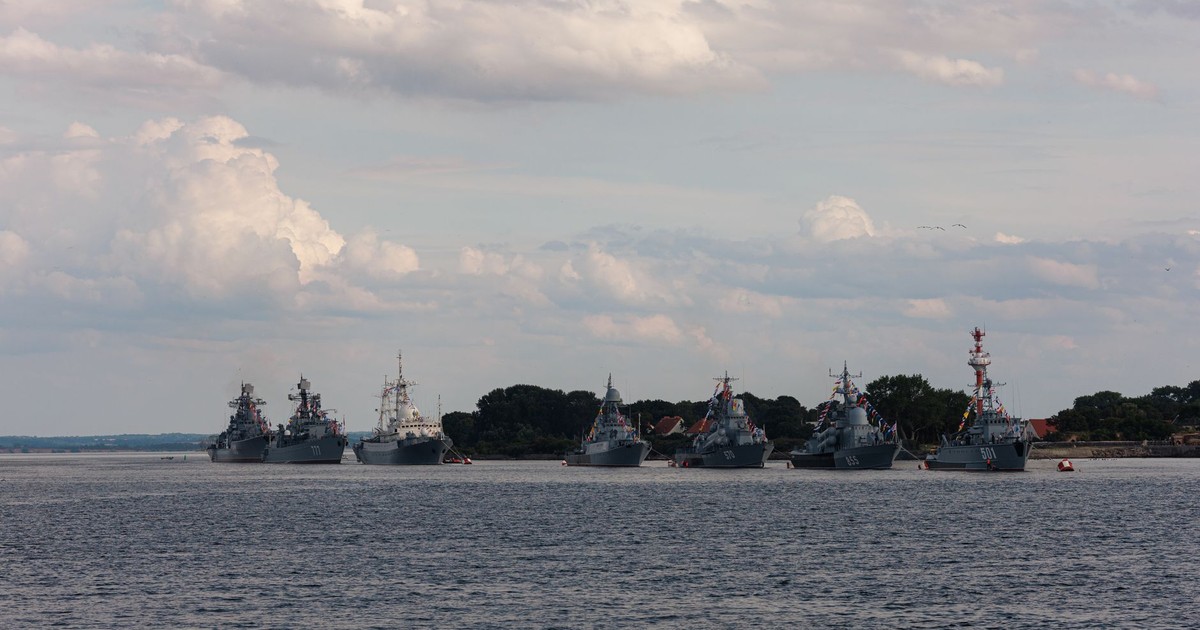

Somewhere in the Taklamakan Desert, more than a thousand kilometers from the nearest coastline, a 155-meter steel structure sits baking in the sun. It has a hull, a forward gun position, a bridge, a funnel, and a helicopter flight deck. It isn’t a ship. It has never touched water. But it looks almost exactly like one of the most capable warships in the United States Navy, right down to the radar geometry along its superstructure. And it was built to be destroyed.
The structure is a full-scale replica of a US Navy Arleigh Burke-class guided-missile destroyer, erected at a Chinese missile-testing range in Xinjiang’s Ruoqiang area. CNN reported in July 2026 that the replica had been built at a missile-testing facility in Xinjiang, using satellite imagery supplied by US geospatial intelligence company Vantor. The replica was first identified by Joseph Wu, co-founder of the Taiwan Defense Studies Initiative, with Copernicus Sentinel-2 satellite imagery indicating construction began around October 2025. By the time the story broke publicly, the target was already largely assembled and sitting in the desert, ready to receive incoming fire.
The Ruoqiang China missile testing models program has been running continuously for years, quietly turning a remote stretch of desert into one of the most revealing windows into the People’s Liberation Army’s operational ambitions and into exactly what it plans to shoot at if a conflict ever starts.
What’s Actually in the Taklamakan Desert
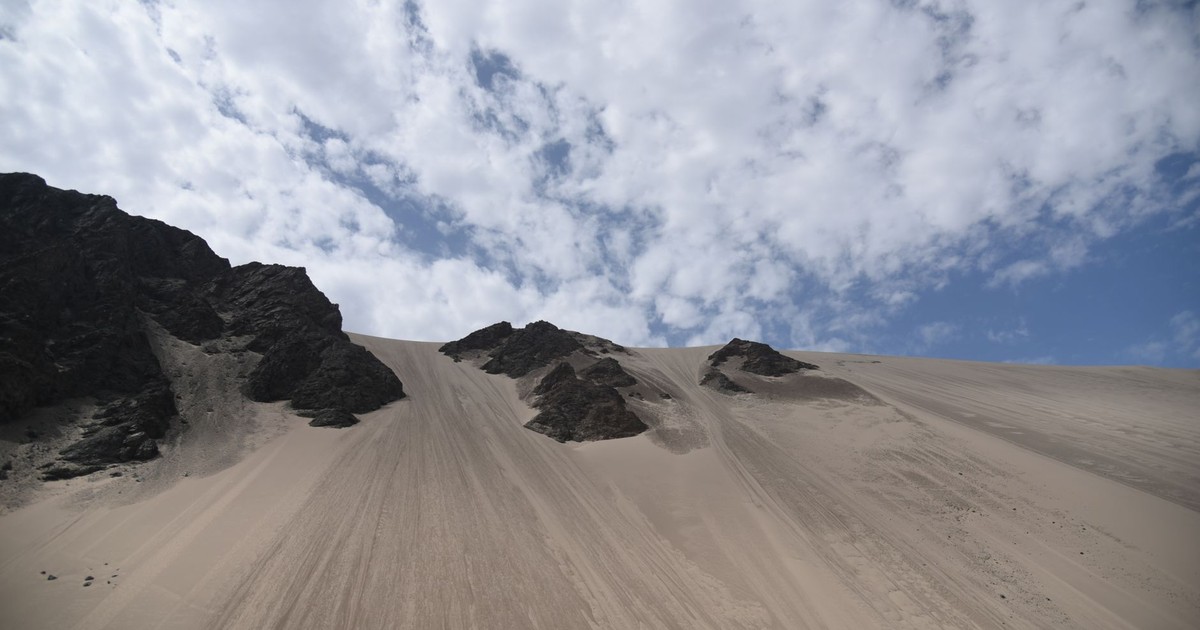
The Ruoqiang test range has existed for years, and the replica destroyer is far from its first tenant. USNI News reported, citing an assessment by AllSource Analysis, that the site contains mock-ups of several probable US warships, including mobile and rail-mounted targets, and noted that the detailed design of the targets, along with multiple sensors placed on and around them, suggests the site is intended for repeated testing under different conditions.
Satellite images released in 2021 showed flat outlines of a US aircraft carrier and two Arleigh Burke-class destroyers. Those early structures were essentially two-dimensional silhouettes, useful for testing basic targeting coordinates but limited when it comes to replicating the radar signature of an actual ship. The new destroyer replica is a different category of object entirely. Unlike those earlier two-dimensional ship outlines, the new structure incorporates radar reflectors, elevated superstructure simulations, and physical geometry intended to reproduce realistic radar cross-sections for advanced missile seeker testing.
The target stands among large desert dunes, far from populated areas and more than 1,000 kilometers from the nearest coastline. These conditions allow China to conduct controlled weapons and sensor trials without the maritime traffic, weather variations, and foreign observation associated with testing at sea. In the desert, China can fire, measure, adjust, and fire again without a foreign intelligence vessel on the horizon.
Maritime targets occupy one section of the range, while aircraft replicas are positioned roughly 66 kilometers away. One of the most distinctive features is a 37-kilometer railway system designed to simulate moving naval targets. Mock warships mounted on rail cars are pulled along tracks, allowing missile crews to practice engaging vessels that mimic movement at sea. A static ship at anchor is one problem. A ship doing 30 knots in an evasive pattern is another. The railway tries to close that gap, at least partially.
Earlier satellite images from 2021 showed one vessel in pristine condition equipped with radar reflectors. More recent imagery shows the same target heavily damaged, indicating repeated live-fire exercises. These aren’t props. They are being actively shot at.
Further northeast from the maritime missile range is a terrestrial weapons site where mock-ups of US aircraft, including F-35 and F-22 fighter jets, have been seen in satellite imagery since at least 2024. And the targets aren’t limited to US military hardware. Satellite images showed China had also expanded its replica of Taiwan’s Presidential Office and other key administrative buildings in Taipei at the Zhurihe military training base in northern Inner Mongolia. As far back as 2015, China’s state media had broadcast footage from the training complex, which analysts said was intended to strengthen training for a potential strike targeting Taiwan’s leadership.
Geo-intelligence researcher Damien Symon, who first identified several of the maritime models, said the precision of the replicas demonstrates “a highly specific focus on potential adversaries rather than generic capability building.”
The Destroyer They Chose to Copy
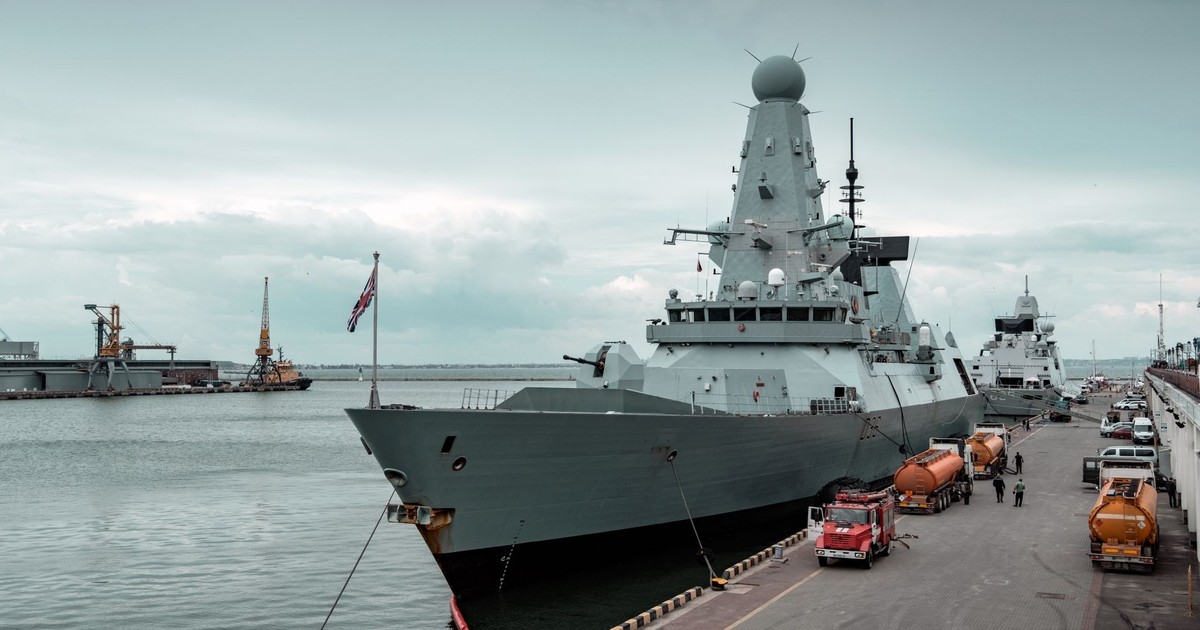
The Arleigh Burke-class guided-missile destroyer is a mainstay of the US Navy, used as an escort for aircraft carriers, as an air-defense platform, and for long-range strikes. It is the workhorse that makes a US carrier strike group function. Sink the destroyers and the carrier loses its protective umbrella.
The approximately 155-meter-long mock-up reproduces several visible elements of an Arleigh Burke-class destroyer, including its hull, forward gun position, bridge, funnel, and helicopter flight deck. Unlike the flat silhouettes previously identified at Chinese desert ranges, the new structure possesses a raised superstructure that could generate more representative radar, infrared, and electro-optical signatures. A missile’s guidance system doesn’t see a ship the way a human eye does. It reads electromagnetic signatures. A flat painted outline gives the missile almost nothing useful to lock onto in its terminal phase, the last few seconds before impact, when precision guidance is everything. A three-dimensional replica with realistic radar geometry gives it something real to practice on.
Military analysts assess that the new replica is specifically optimized for validating anti-ship ballistic missiles such as the DF-21D and DF-26, alongside emerging hypersonic strike systems and AI-assisted targeting. The objective behind these tests is not merely missile accuracy but the refinement of the entire anti-ship kill chain: satellite detection, target identification, sensor fusion, terminal guidance, and electronic warfare resistance. If the PLA can reliably target and disable Burke-class destroyers at extended ranges, the survivability of larger carrier formations becomes significantly more uncertain during a high-intensity regional conflict.
Destroyer Squadron 15, comprising nine Arleigh Burke-class ships, is the largest combat group of its kind and is stationed in Japan under the command of the US 7th Fleet. Its units frequently encounter China’s naval forces during operations in the Pacific region. The choice of replica isn’t abstract. These are the specific ships that would be in the water if a Taiwan conflict began.
The Missiles These Targets Are Designed to Hone
China’s anti-ship ballistic missile program has grown substantially over the past decade, moving from a single experimental system to a layered family of weapons covering progressively longer ranges. USNI News reports that within the last decade, the PLA Rocket Force has deployed the DF-21D and DF-26 anti-ship ballistic missiles, as well as maneuvering hypersonics designed to target warships via the DF-17. The DF-21D, with a range exceeding 1,450 kilometers, was the world’s first operational anti-ship ballistic missile capable of targeting a moving carrier strike group from land-based mobile launchers. The DF-26 extended that reach dramatically: with a range of at least 4,000 kilometers, it is China’s first conventionally armed ballistic missile capable of striking Guam.
The DF-26 has continued to be modernized during its time in service, with the DF-26D variant first unveiled in September 2025. Footage aired in July 2026 by a military program on China Central Television appeared to show a previously unknown variant of the DF-26 intermediate-range ballistic missile of the PLA Rocket Force.
Then there is the DF-27. Among the Pentagon’s 2025 report’s most significant findings, China has fielded a conventional intercontinental ballistic missile able to range parts of America’s homeland, making China the first nation publicly assessed to have fielded an operational, conventionally armed ICBM. The 2025 report was the first to treat the DF-27 as a fielded system in the ICBM range band and to depict it as a conventional ICBM with an anti-ship ballistic missile variant. The report also confirmed that China has the world’s leading hypersonic missile arsenal, highlighting missile families including DF-17, YJ-21, DF-21, DF-26, and DF-27, whose reentry vehicles or glide payloads can maneuver at hypersonic speeds.
This is why the desert replicas matter. Each new generation of missile requires guidance systems that can identify, track, and hit a specific ship type under real-world electromagnetic conditions. You can model that in a computer. You can also build a 155-meter steel destroyer in the Xinjiang desert and shoot at it until your targeting software stops missing.
What This Reveals About China’s Strategic Posture
Countries don’t pour the engineering and intelligence resources required to reproduce a specific destroyer variant’s radar cross-section, down to its superstructure geometry, unless the testing program is serious, methodical, and oriented toward defeating the actual fleet of a specific adversary. The Taklamakan complex is that program made visible.
The US Department of Defense’s 2025 report attributes anti-ship roles to the DF-21, DF-26, and DF-27 ballistic missiles, and describes the YJ-21 as a hypersonic anti-ship ballistic missile. A separate analysis of China’s missile industry found that production increased significantly in 2025, marking the largest annual increase since President Xi Jinping became president in 2013.
The Pentagon warned in its latest annual assessment that China’s military is capable of directly threatening the security of Americans. The report described China’s recent buildup as “historic,” estimating that China will add six aircraft carriers by 2035, bringing its fleet to nine, just behind America’s 11.
Still, analysts urge caution about overstating what the desert facility actually proves. The target does not demonstrate that China can reliably strike a maneuvering US destroyer under operational conditions. It nevertheless shows continued investment in testing against representative naval targets. There is a significant distance between hitting a static replica in a controlled desert environment and hitting a destroyer moving at combat speed while its crew is actively jamming incoming signals and launching interceptors. The desert range builds the skill, but the real scenario is far more contested.
Nobody Is Talking About How Long This Has Been Going On
This program has been running continuously for years, getting more sophisticated with each iteration, and both governments have treated it largely as background noise. China’s Defense Ministry declined to comment when the 2026 replica story broke. The US Department of Defense said it had no comment to provide.
The silence is instructive. The US has long known China is building anti-ship capabilities specifically designed to hold American carrier groups at risk. China knows the US knows. The desert range isn’t a secret. It’s visible from commercial satellite imagery. What it represents is a documented, sustained commitment to answering a specific military question: can we hit that class of ship, under realistic conditions, at the ranges we need?
This aligns with Beijing’s broader anti-access strategy, aimed at creating an operational environment where US intervention becomes politically risky and militarily costly. The missiles, the range, the replicas, the railway system that simulates moving targets all point toward one core objective: making the calculation of sending an American carrier group into the Western Pacific complicated enough, in the event of a Taiwan crisis, that Washington hesitates.
Whether that hesitation ever materializes is a political and strategic question that no desert test range can answer on its own. But the testing continues. New structures go up. Old ones get shot apart and replaced. The Copernicus satellite passes overhead every few days, and the images keep coming.
Some programs announce what a country intends. This one announces what it has already decided to practice.
Disclaimer: This information is not intended to be a substitute for professional medical advice, diagnosis, or treatment and is for information only. Always seek the advice of your physician or another qualified health provider with any questions about your medical condition and/or current medication. Do not disregard professional medical advice or delay seeking advice or treatment because of something you have read here.
AI Disclaimer: This article was created with the assistance of AI tools and reviewed by a human editor.