

The last words of the famous dead have always held a particular grip on our imagination. Not because they’re reliably profound – many aren’t – but because they arrive at the only moment in a person’s life when performance is finally impossible. Whatever filter a celebrity spent decades constructing between themselves and the watching world tends to dissolve in those final hours, leaving something rawer and more honest in its place. Some of these departures were funny. Some were devastating. Some are still being argued over. All of them say something that the person’s entire public career, somehow, didn’t quite manage to say on its own.
What draws people to celebrities’ deathbed quotes isn’t morbidity, exactly. It’s closer to the feeling you get when you see a candid photo of someone who spent their whole life only being photographed on purpose. The mask is off. And what you find underneath – bewilderment, tenderness, humor, regret – turns out to be startlingly recognizable.
The entries below draw on verified accounts from biographical sources, eulogies, contemporaneous reporting, and fact-checked historical records. Where a quote has been disputed or its origins are contested, that is noted. The history of famous last words is also a history of invention and wishful attribution, and it would be a disservice to the people involved to smooth over those complications.
Steve Jobs: “Oh Wow. Oh Wow. Oh Wow.”
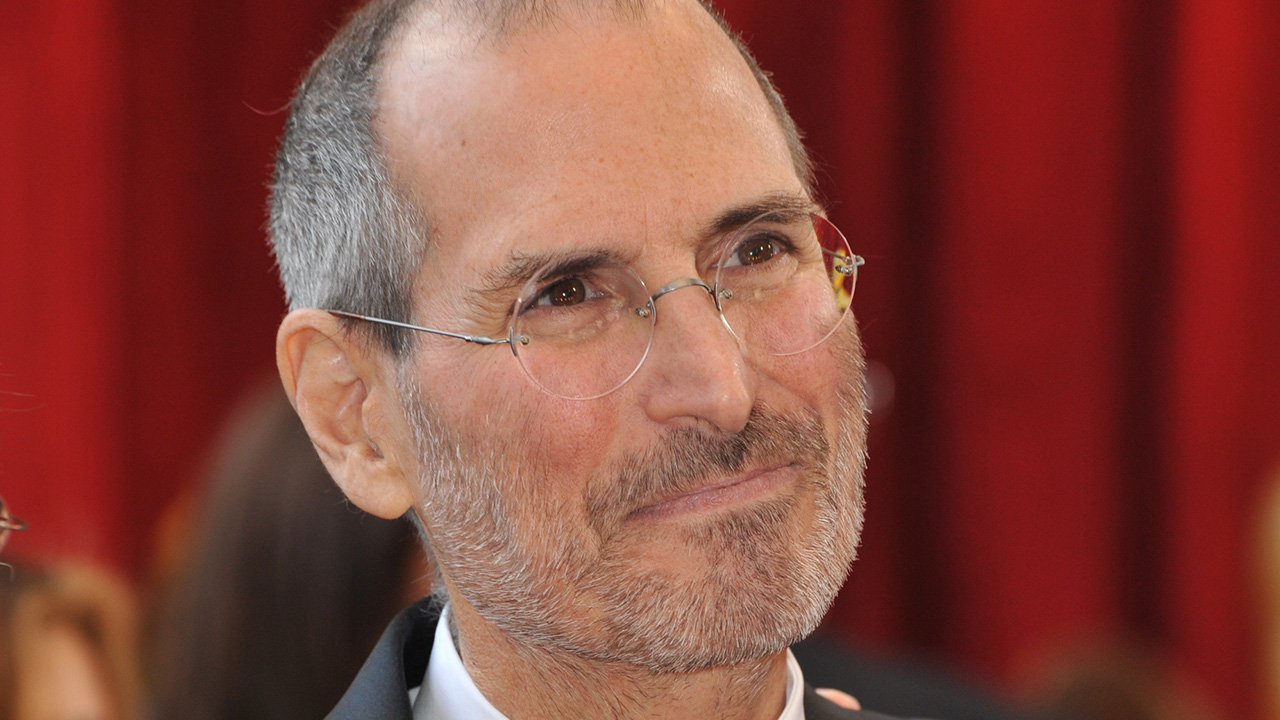
Of all the celebrities deathbed quotes documented in the modern era, few have landed with the force of Steve Jobs’ final words. Jobs’ sister, novelist Mona Simpson, shared in the eulogy she delivered at his memorial service that his final words from his deathbed were “Oh wow, oh wow, oh wow,” and described his final moments in a Palo Alto hospital surrounded by family as his breathing gradually became shorter.
After Jobs passed away on October 5, 2011, Simpson remarked on her brother’s final words: “Steve’s final words, hours earlier, were monosyllables, repeated three times. Before embarking, he’d looked at his sister Patty, then for a long time at his children, then at his life’s partner, Laurene, and then over their shoulders past them.”
The three words have been analyzed endlessly since. Were they wonder? Recognition? Pain? Simpson didn’t speculate, and in not speculating she left something more powerful than any interpretation could be. In describing what she learned from his passing, Simpson said “death didn’t happen to Steve, he achieved it.” That framing – death as something Jobs accomplished rather than something that happened to him – gives those three words a different weight every time you read them.
A widely-shared social media post attributed a lengthy speech to Jobs about wealth being meaningless in the face of death, including the line “you cannot rent someone to carry the disease for you” – but this was flagged as misinformation. No credible source connects Jobs to these words. The genuine account, from his own sister, published in The New York Times, is far simpler and far stranger than any fabricated wisdom speech.
Humphrey Bogart: “I Should Never Have Switched from Scotch to Martinis.”
Known for his roles in Casablanca and The Maltese Falcon, Bogart’s dry humor didn’t stop even on his deathbed. He reportedly said his last words to his wife, Lauren Bacall. The founding member of the hard-drinking, heavy-smoking Rat Pack was diagnosed with esophageal cancer in 1954 but did little about it until it was too late. On his deathbed in January 1957, Bogart died just a few seconds after saying goodbye to his wife and their children, aged 57.
The quip about Scotch and martinis is almost too perfectly Bogart to be true, and some historians have questioned whether it was genuinely his final utterance or a line he delivered during his illness that was later promoted to “last words” by a good story’s gravitational pull. Either way, it captures something essential: a man who had spent his career playing characters who faced darkness without flinching, and who apparently chose to go out the same way – with a one-liner and a light touch.
Bob Marley: “Money Can’t Buy Life.”
Reggae legend Bob Marley’s last words to his son Ziggy were both personal and universal. The singer died in 1981 after succumbing to cancer, but his final words serve as a reminder that material wealth is ultimately meaningless compared to life and love.
Marley was 36 years old. He had been diagnosed with acral lentiginous melanoma – a form of skin cancer – in 1977, after a dark spot beneath his toenail was found during a football injury. He refused amputation on religious grounds. By 1981, the cancer had spread to his brain, lungs, liver, and stomach. He died on May 11, 1981, in Miami, on his way back to Jamaica after seeking treatment in Germany. That a man with his entire catalogue of songs about freedom, love, and resistance distilled his final message to his son into four words about money says something about where a person’s mind actually goes at the end.
Betty White: “Allen.”
Betty White’s final word was a mention of her beloved late husband Allen Ludden. Vicki Lawrence, who appeared on Mama’s Family with White in the 1980s, told Page Six the last thing White said was “Allen” – a detail passed on to Lawrence by their co-star and friend Carol Burnett.
Betty White died on December 31, 2021. The Emmy-winning actress, comedian, and producer was just days away from celebrating her 100th birthday when she died in her sleep. Allen Ludden, the game show host she married in 1963, had died of stomach cancer in 1981 – forty years before she did. She never remarried. The single word she spoke at the end of a 99-year life was his name. Lucille Ball aside, few exits in Hollywood history have been that clean.
Leonard Nimoy: “A Life Is Like a Garden.”
Leonard Nimoy’s final tweet before dying on February 27, 2015, read: “A life is like a garden. Perfect moments can be had, but not preserved, except in memory. LLAP [live long and prosper].”
The line “A life is like a garden. Perfect moments can be had, but not preserved, except in memory” was Nimoy’s final public message, posted to Twitter. He was 83 years old and had been diagnosed with chronic obstructive pulmonary disease (COPD), which he attributed to decades of smoking, despite having quit nearly 30 years earlier. The tweet is worth reading as both a farewell and a warning – Nimoy had been publicly urging people to quit smoking in the months before his death. That he signed off with the Vulcan salute he’d made famous over five decades says everything about his relationship with the character that had defined him publicly, even as he’d spent much of his career complicating and expanding that relationship in memoir and art.
Robin Williams: “Goodnight, My Love.”
Robin Williams’ last words to his wife were “Goodnight, my love.” His third wife, Susan Schneider Williams, revealed her husband’s final words in an emotional interview with ABC News’ Good Morning America. Williams died on August 11, 2014, in his home in Tiburon, California. He was 63. The cause of death was later confirmed to be suicide by asphyxiation, though subsequent investigation and his wife’s public statements revealed he had been suffering from Lewy body dementia – a diagnosis that wasn’t confirmed until his autopsy.
The contrast between the words and the circumstances is almost unbearable: a man who made everyone around him laugh until it hurt, whose last exchange was for an audience of one, saying the most tender thing imaginable. “Goodnight, my love” is what you say when nothing wrong is happening, when tomorrow is assumed. For Williams, it wasn’t. His last public words, weeks before his death, had been a social media post for his daughter Zelda’s 25th birthday, sharing a family photograph and writing “Quarter of a century old today but always my baby girl. Happy birthday @zeldawilliams. Love you!”
Bob Hope: “Surprise Me.”
When asked on his deathbed where he wanted to be buried, Hope had told his wife Dolores, “Surprise me,” and those, supposedly, were his last words. Hope was born on May 29, 1903, and died on July 27, 2003, at the age of 100 in Los Angeles, California. He had been a professional comedian for the better part of eight decades. That he turned even the question of his own burial into a punchline isn’t surprising. What’s striking is that the joke works precisely because it acknowledges the situation directly – he knew exactly what was coming, he was ready, and he still wanted the last laugh.
The line has been reported widely enough to be treated as established, though, like many celebrated last words, it arrived in the record through secondhand channels and may have been polished slightly in the retelling. Even if that’s true, it’s hard to imagine Hope objecting.
Joe DiMaggio: “I Finally Get to See Marilyn.”
The legendary Yankees slugger was married to Marilyn Monroe for less than one full year, but she left a lasting impression on him. They were married briefly in 1954, but despite their breakup, DiMaggio always loved her. He claimed her body when she died in 1962, and took care of the funeral arrangements. When DiMaggio passed away in 1999, thirty-seven years later, his last words were about his former wife. The words attributed to him at the end are reported as: “I finally get to see Marilyn.” He was 84. Whether those were genuinely his last conscious words or a sentiment expressed during his final illness, they captured something his whole post-Monroe life had suggested: that he never stopped grieving her.
Alfred Hitchcock: “One Never Knows the Ending.”

As he was dying, Alfred Hitchcock said, “One never knows the ending. One has to die to know exactly what happens after death, although Catholics have their hopes.” Hitchcock died on April 29, 1980, at the age of 80, in his Bel Air home, from renal failure. He had been raised Catholic and the reference was presumably sincere, though delivered with the ambiguity that defined everything he made. “Catholics have their hopes” is the kind of line he might have put in a screenplay – dry enough to pass as wit, loaded enough to leave you unsure whether he was comforted or merely resigned.
John Lennon: What He Actually Said
The commonly cited last words attributed to John Lennon are “I’m shot,” spoken outside the Dakota building in New York City after Mark David Chapman shot him four times on the night of December 8, 1980. According to BBC Radio 4’s Desert Island Discs, Yoko Ono revealed in a 2007 interview that before Lennon was shot, she had asked him “Shall we go and have dinner before we go home?” and Lennon responded with “No, let’s go home because I want to see Sean before he goes to sleep.” Ono claims those were Lennon’s real last words.
Two versions exist, and which you count as his last words depends on what you think last words are for. “I’m shot” describes a fact, spoken in shock. “I want to see Sean before he goes to sleep” describes a life – specifically, the domestic life Lennon had deliberately stepped back into after years of public battles, to be present for his younger son.
Winston Churchill: “I’m So Bored with It All.”
Winston Churchill, ever level-headed, declared in his final moments that he was “so bored with it all.” These were described as the last words from the mouth of the statesman and great orator before he slipped into a coma. Churchill suffered a severe stroke on January 15, 1965, and died nine days later on January 24, at the age of 90. Whether the line is darkly comic or genuinely weary – or both – depends on everything you believe about Churchill, and people believe very different things. What’s beyond dispute is that it sounds exactly like him: a dismissal of the grand occasion of his own death, delivered with the casual authority of a man who had outlived his era by at least a decade.
The Question of Verification

Every list of famous last words eventually has to reckon with something uncomfortable: most of these accounts are not transcribed records. They’re memories, reconstructed by grieving people and sometimes refined by years of retelling. Even with careful fact-checking, many entries rely on single witnesses, deathbed whispers, or accounts provided years after the fact. The Humphrey Bogart martini line exists in enough contemporaneous accounts to be treated as credible. The Churchill line is so widely reported across independent sources that its substance seems reliable, even if the exact wording varies. Others – attributed over centuries to artists and poets and revolutionaries – carry more doubt.
This isn’t a reason to dismiss them. It’s a reason to hold them correctly: as accounts of what people believed happened, shaped by love and grief and the very human need to find meaning in final moments. Even a cleaned-up or slightly embellished last word tells you something true about how the people closest to that person understood them.
Read More: James Franco Sparks Concern With Bizarre Social Media Posts
What the Last Words Actually Leave Behind

The most famous celebrity deathbed quotes share a quality that’s hard to name precisely. They feel complete. Not because they resolve anything – Bob Marley at 36 speaking four words to his teenage son, Lennon talking about seeing his child before bedtime, Williams saying goodnight to his wife – but because they’re fully themselves. No performance. No brand management. Just the thing the person actually was, stripped of everything else.
Reading through enough of these accounts, one pattern keeps appearing: the words people reach for at the end are almost never about their work. Jobs didn’t say anything about Apple. Bogart didn’t reference Casablanca. Nimoy added “LLAP” almost as an afterthought, after the actual human thought was already complete. The thing people reach for, reliably, is other people – a wife’s name, a word to a son, a child not yet in bed. The career turns out to be the vehicle. The destination was always someone specific.
That probably shouldn’t be a surprise. But it is, every time.
AI Disclaimer: This article was created with the assistance of AI tools and reviewed by a human editor.