

Nutrition science has spent decades trying to separate correlation from causation. People who eat more vegetables tend to live longer, but did the vegetables cause it, or do vegetable eaters also sleep more, drink less, and earn higher incomes? That uncertainty has made it nearly impossible to draw direct lines from specific foods to specific health outcomes.
A study published in June 2026 in BMC Medicine approached the problem differently. Scientists at the Monell Chemical Senses Center in Philadelphia, the National Institutes of Health, the University of Queensland, the University of Bristol, and the QIMR Berghofer Medical Research Institute examined the DNA that shapes which foods people prefer. Of the 140 foods analyzed through this genetic framework, the genetic instrument for onion liking was the only one to satisfy all validity criteria for classification as high confidence—and it was linked to lower blood pressure and reduced diabetes risk.
The Problem With Nutrition Studies

Proving that a specific food causes a health benefit is harder than it sounds. The standard approach tracks what people eat, measures their health outcomes, and looks for patterns. The problem is that eating habits don’t exist in a vacuum. People who eat lots of onions might also cook at home more often, smoke less, and exercise more. The onions and the health outcomes travel together without the onions necessarily driving the bus.
Dr. Liang-Dar Hwang of UQ’s Institute for Molecular Bioscience said determining whether a specific food causes or is merely linked to a disease is a significant challenge in nutrition epidemiology. His team sidestepped lifestyle confounders by examining the genes that determine whether someone enjoys a food at all.
If your DNA makes you more likely to love the taste and smell of onions, you’ll probably eat more of them throughout your life. That genetic tendency is essentially random. It’s not tied to your income, stress levels, or exercise habits. If people with the onion-loving gene variant consistently show different health outcomes than those without it, lifestyle coincidence becomes a much weaker explanation. The researchers used Mendelian randomization, a statistical method that treats random genetic inheritance like a randomized controlled trial.
What 160,000 People’s DNA Revealed

The team used data from the UK Biobank and developed a genetic framework based on more than 1,200 genetic variants across 325 taste and smell receptor genes. They assessed associations with preferences for and intake of 140 foods. The analysis drew on data from more than 160,000 adults ages 37 to 73. To stress-test the findings, they also studied participants from the Avon Longitudinal Study of Parents and Children, which involved younger adults around 25 years old.
An olfactory receptor gene, OR2T6, predicted onion liking in both older and younger adults, predicted onion consumption, and showed no associations with social deprivation or unrelated health conditions. That last detail matters. A genetic variant associated with social deprivation would suggest the health difference was really about poverty or stress, not onions. OR2T6 showed none of that noise.
People with the genetic variant linked to greater onion liking had, on average, lower systolic blood pressure (approximately 1.3 mmHg per point on the liking scale) and lower diastolic blood pressure (approximately 0.7 mmHg). A sustained reduction of even 2 mmHg in systolic blood pressure at a population level is associated with meaningful reductions in stroke and heart disease risk. They also had a roughly 14% reduced risk of developing type 2 diabetes.
There was no effect on body mass index, blood fats, or blood sugar levels. If people who liked onions were simply healthier across the board, you’d expect improvements everywhere. The specificity of the result (lower blood pressure and reduced diabetes risk, but nothing else) points toward onions doing something particular.
Why Onions, Specifically
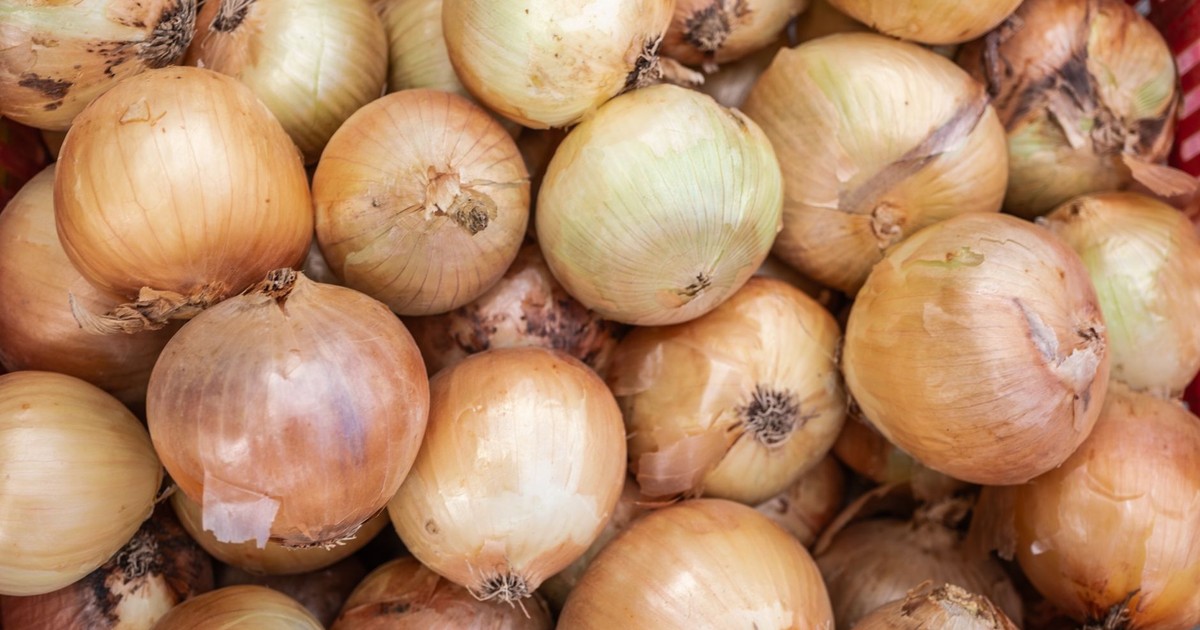
Onions are among the richest food sources of quercetin, a flavonoid that supports blood vessel health. Research published in European Food Research and Technology found quercetin improves endothelial function and helps prevent hypertension by increasing nitric oxide production and reducing oxidative stress. Endothelial function refers to the health of the inner lining of blood vessels. When that lining works well, vessels relax and dilate properly. When it’s damaged by smoking, poor diet, or chronic inflammation, vessels stay rigid and blood pressure climbs.
Clinical evidence backs this up. A randomized controlled trial involving 70 overweight adults with pre-hypertension or stage 1 hypertension found that supplementation with 162 mg of quercetin daily from onion skin extract lowered 24-hour systolic blood pressure by 3.6 mmHg in the hypertensive subgroup compared to placebo. The effect in people who already had elevated blood pressure was consistent.
Most blood pressure diet advice focuses on cutting sodium and processed foods. The onion data suggests there may be something to gain from certain plants, not just something to lose by avoiding harmful foods. Of the 140 foods analyzed in the genetic framework, the instrument for onion liking was the only one to satisfy all validity criteria for classification as high confidence.
The onion’s fiber content may also support the gut microbiome and influence inflammatory pathways that affect cardiovascular health. But quercetin remains the most studied factor for the blood pressure connection.
Read More: The 9 Best Cheeses to Eat If You Have Chronic Inflammation
What the Study Can and Can’t Tell You

The blood pressure reductions observed were real but modest at the individual level. Previous laboratory and small human studies have hinted at onions’ potential health benefits; this new evidence leveraging genetics provides much stronger grounds for taking those effects seriously. Genetic association studies, even well-designed ones with 160,000 participants, don’t always translate directly into straightforward dietary prescriptions.
Dr. Hwang said strong causal evidence for specific foods, dietary patterns, or nutrients remains limited despite extensive observational evidence linking diet to chronic disease. “Our research shows taste and smell genes are promising tools for studying links between diet and disease and can help strengthen evidence about cause and effect in nutrition research.”
Not everyone metabolizes quercetin equally. The amount of quercetin in onions varies depending on the variety, how they’re stored, and how they’re cooked. Raw onions contain more quercetin than cooked ones. Yellow and red varieties tend to contain more than white. Boiling onions causes some loss. Sautéing in a small amount of fat preserves more.
Unhealthy diets cause an estimated 11 million premature deaths annually, primarily from cardiovascular disease and cancer. No single food reverses that. Onions aren’t a workaround for a diet built around ultra-processed food.
What to Do With This

Onions have earned their place not just as flavor but as a functional ingredient. Among the 140 foods analyzed through the study’s genetic validity framework, the instrument for onion liking was the only one to reach high-confidence status on blood pressure outcomes.
If you already eat them regularly, you’re probably getting some benefit. The serving threshold that appears in clinical literature is somewhere around 60 to 100 grams, roughly half a medium onion, eaten consistently over weeks. Keeping skins on during stocks and soups adds concentrated quercetin that can be strained out later.
Disclaimer: This information is not intended to be a substitute for professional medical advice, diagnosis, or treatment and is for information only. Always seek the advice of your physician or another qualified health provider with any questions about your medical condition and/or current medication. Do not disregard professional medical advice or delay seeking advice or treatment because of something you have read here.
AI Disclaimer: This article was created with the assistance of AI tools and reviewed by a human editor.