
History has a way of keeping its strangest stories off the syllabus. Not the made-up ones, but the verified, documented, stranger-than-fiction ones: an entire empire slowly poisoned by its own economy, a Hollywood actress who rewired global communications from her living room, a king who may have been fully conscious at his own funeral. These things happened. They just didn’t make the standard curriculum.
The official account of the past is always a selection, and the selection reflects what seemed important at the time. What tends to get left out is everything that doesn’t fit the neat arc of progress and heroism.
The Roman Empire Had a Lead Problem Nobody Talked About for 2,000 Years
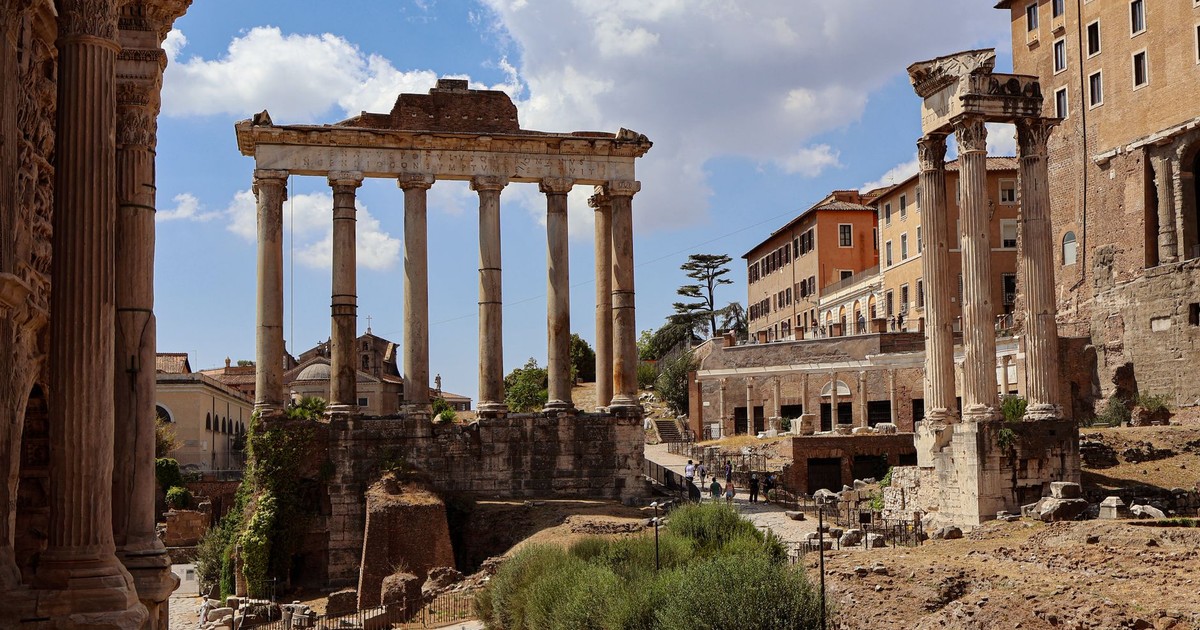
During its golden age, the Roman Empire was poisoning its own population. Smelting lead-silver ores to mint coins released enormous quantities of lead dust into the atmosphere, and a 2025 study by a research team at the Desert Research Institute found the evidence preserved in Arctic ice cores: lead concentrations in Greenland ice rose and fell in lockstep with key events in Rome’s economic history, spiking when the empire expanded silver production in Spain and dropping during plagues and wars that slowed industry.
Using atmospheric modeling, the researchers translated those ice-core readings into blood lead levels and cognitive outcomes. Children across the empire during the Pax Romana, that roughly 200-year stretch of relative peace, had blood lead levels elevated by around 2.4 micrograms per deciliter, likely enough to reduce average IQ scores by 2.5 to 3 points empire-wide.
Spread across an entire civilization for generations, 3 points off the average affects everything: governance, engineering, administration, the capacity of a complex system to sustain itself under pressure. The Romans didn’t know. They used lead in water pipes, cooking vessels, and even as a wine-sweetening additive. The smelting that financed their economy was the same process flooding their lungs.
The Actress Who Accidentally Invented the Technology Behind Wi-Fi
Most people who recognize Hedy Lamarr’s name picture a Hollywood actress from the 1940s. She was also one of the more consequential inventors of the twentieth century, though you wouldn’t know it from her obituaries. During World War II, Lamarr wanted to help the Allied forces and began exploring military applications for radio technology.
She theorized that varying radio frequencies at irregular intervals would prevent transmissions from being intercepted or jammed, producing a communication system that enemies couldn’t lock onto. She called this “frequency hopping.” Together with composer George Antheil, she filed a patent application in June 1941, and the patent was issued in August 1942. They brought it to the U.S. Navy.
According to the Smithsonian Institution, the Navy didn’t act on it. Their patent expired in 1959. Lamarr never earned a cent from the invention. The technology was later used for military communications during the Cuban Missile Crisis before eventually becoming a foundational layer of Wi-Fi, GPS, and Bluetooth. She died in 2000 and was inducted into the National Inventors Hall of Fame in 2014, fourteen years after her death, for an invention that had already changed the way every wireless device on Earth communicates.
Alexander the Great May Have Been Buried Alive
Alexander the Great died in Babylon in 323 BCE at the age of 32. What happened in the days before and after his declared death is considerably less clear. Katherine Hall, a senior lecturer at the Dunedin School of Medicine at the University of Otago in New Zealand, has argued that Alexander’s symptoms, including fever, severe abdominal pain, and a progressive, symmetrical paralysis that spread over days while he remained mentally lucid, fit a neurological disorder called Guillain-Barré syndrome.
The immune system attacks the peripheral nervous system and can produce total paralysis without affecting consciousness. The detail that interested Hall most was the decomposition record. Fox News, reporting on Hall’s research, noted that Alexander’s body allegedly showed no signs of decomposition for six days after he was declared dead, something the ancient Greeks took as proof of divinity.
Hall’s explanation was more clinical: he wasn’t dead yet. In antiquity, death was determined by the absence of visible breath, not by pulse. A man in full paralysis with reduced oxygen demands might not visibly breathe at all. “His death may be the most famous case of pseudothanatos, or false diagnosis of death, ever recorded,” she wrote.
Texas Was Its Own Country, and Most Americans Have Forgotten That
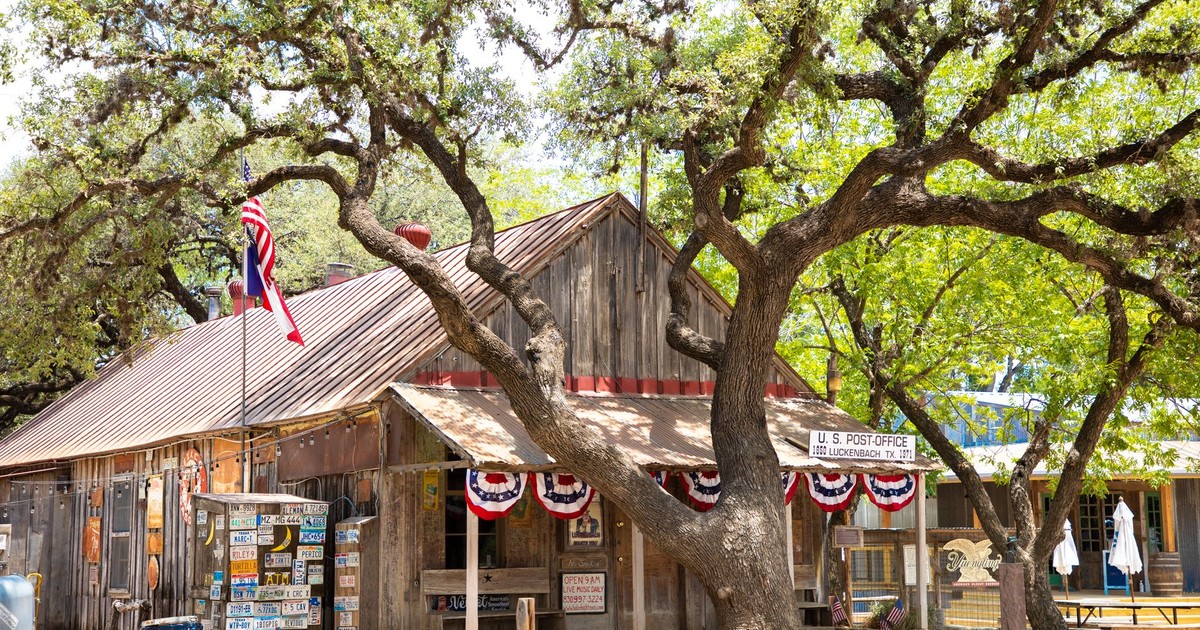
When Texas joined the United States in 1845, it wasn’t a territory being absorbed. It was a sovereign nation giving up its independence. The Republic of Texas had been its own country since 1836, following the Texas Revolution against Mexico, and existed as an independent state for nearly a decade. It had its own president, its own congress, its own currency, and its own foreign policy, including diplomatic relationships with France, Britain, and the Netherlands.
The annexation triggered the Mexican-American War. Mexico had never formally recognized Texas’s independence and regarded American annexation as an act of aggression. The war ended with the Treaty of Guadalupe Hidalgo in 1848, which ceded roughly half of Mexico’s territory to the United States, including what is now California, Arizona, New Mexico, Nevada, Utah, and Colorado. The ten-year nation of Texas didn’t just join the union. It reshaped the continent.
The Knocker-Upper: The Human Alarm Clock Who Survived Into Living Memory
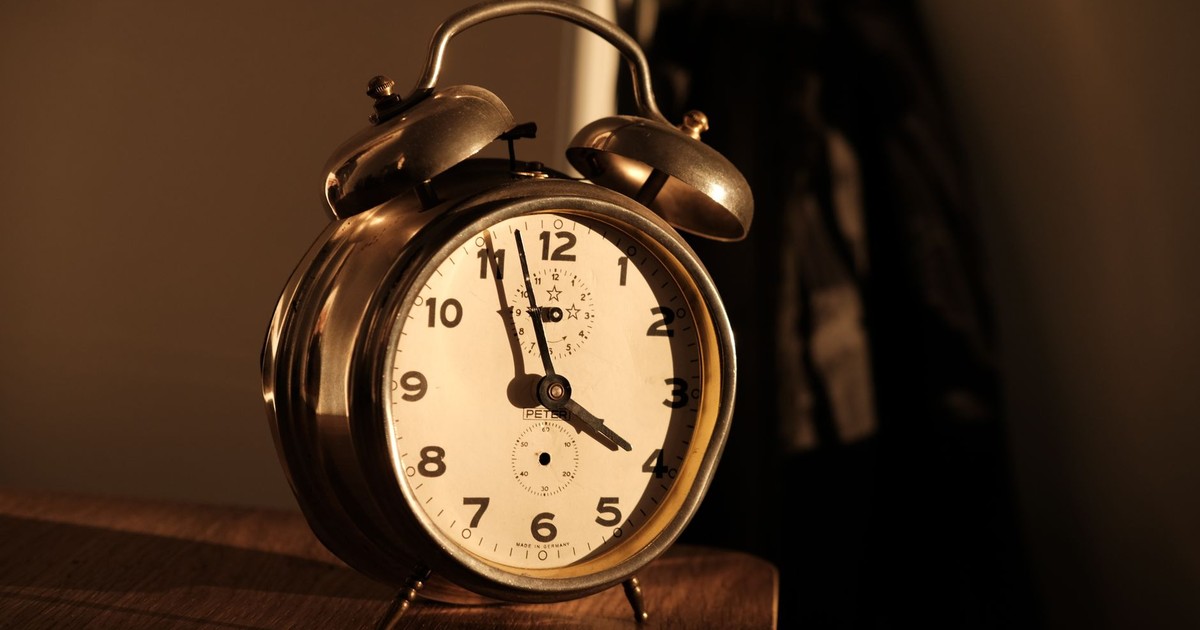
Before alarm clocks were cheap and reliable enough for ordinary households, British and Irish workers hired people to wake them up. Knocker-uppers were professional early risers who walked their rounds before dawn, tapping on bedroom windows with long wooden poles, stiff wire, or pea-shooters loaded with dried peas. They charged a weekly fee. Their clients ranged from factory workers who couldn’t miss a shift to police officers starting early.
The job sounds like something from Dickens. It overlapped entirely with the era of color television. The most photographed knocker-upper was Mary Smith of East London, captured in a 1931 photograph using a pea-shooter to rouse her clients, and she continued working into the 1930s. The profession didn’t disappear because it was ineffective. It disappeared when the price of reliable electric alarm clocks dropped below the cost of paying someone to tap on your window at five in the morning.
The 4,000-Year-Old Cake That’s Still on Display
The world’s oldest known cake sits in a museum in Vevey, Switzerland. Discovered in an ancient Egyptian tomb in 1913, it consists of two slices of wheat flatbread with a honey and milk filling, preserved inside copper molds that acted as a seal. Researchers date it to the reign of Pharaoh Pepi II, somewhere between 2251 and 2157 BCE, making it roughly four thousand years old and still structurally intact enough to be displayed.
Wheat, honey, milk. These aren’t remote or unrecognizable ingredients. The flavor profile of a honey cake made four millennia ago would be immediately familiar to anyone who’s had one last week. Food historians sometimes point to this as evidence that the fundamentals of baking have changed far less than we assume, and that the impulse behind it, marking something worth celebrating with something sweet, hasn’t changed at all.
The Year 46 BCE Had 445 Days
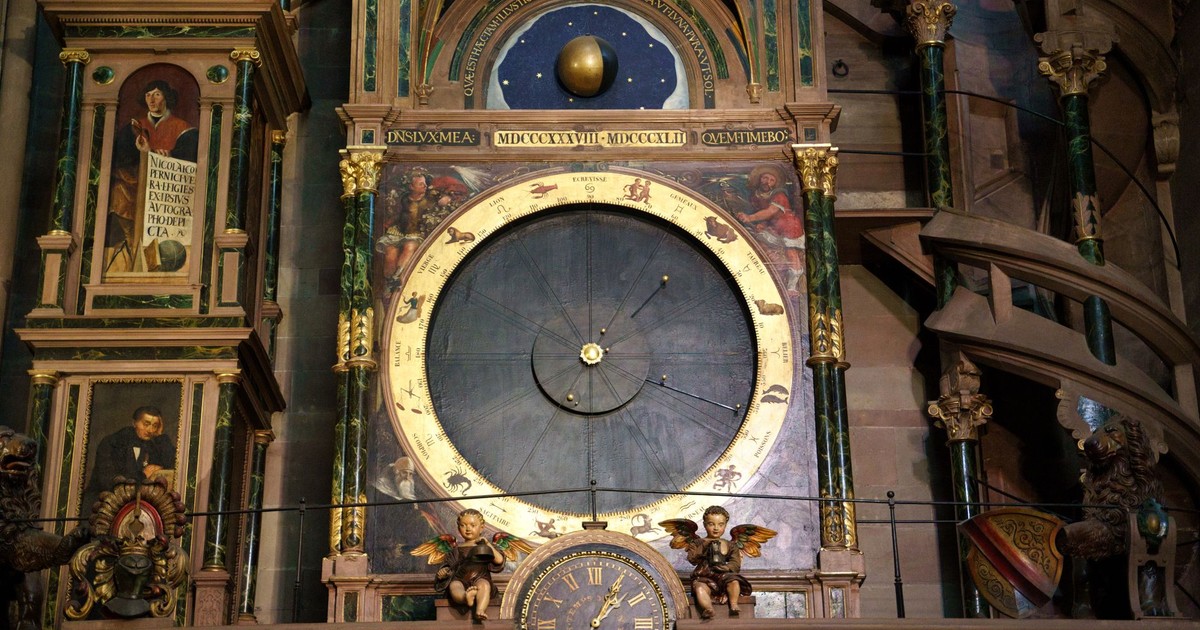
When Julius Caesar set out to fix the Roman calendar in 46 BCE, he discovered the problem was worse than anyone had admitted. Decades of political manipulation and bureaucratic neglect had let the calendar drift so badly out of alignment with the solar year that a single reform wasn’t enough. To correct it, Caesar and his Greek astronomer Sosigenes inserted additional months into 46 BCE itself, stretching the year to 445 days.
Romans called it the “year of confusion,” which was reasonable given the circumstances. The correction produced the Julian calendar, which ran for more than 1,600 years before the Gregorian calendar, the one most of the world uses today, replaced it in 1582.
A World War II Bear Outranked Most Human Recruits
In 1943, the Polish II Corps adopted a Syrian brown bear cub in Iran. They named him Wojtek. By the time the unit fought at the Battle of Monte Cassino in Italy, Wojtek had learned to carry artillery shells and supply crates by watching the soldiers around him, and was officially enlisted and given the rank of private in the Polish Army.
He wasn’t a mascot in any decorative sense. Wojtek slept in the men’s tents, learned to drink beer and smoke cigarettes by imitating his unit, and reportedly wrestled the soldiers for entertainment. After the war he was retired to Edinburgh Zoo, where he lived until 1963.
Polish veterans visited him there regularly, and some climbed into his enclosure to wrestle with him for old times’ sake. He now has a bronze statue in Edinburgh’s Princes Street Gardens and another in Chicago, where the city’s large Polish-American community has claimed him proudly.
The Great Dane That Became a Decorated War Hero

During World War II, a Great Dane named Juliana received the Blue Cross Medal, the British animal equivalent of a military decoration, for extinguishing an incendiary bomb by urinating on it. This is a real entry in the historical record, not a footnote added later for color. Juliana received the award twice: the first time for the bomb incident in 1941, and a second time in 1944 for alerting her owners to a fire in their shop in time for them to escape.
The use of animals in wartime extended well beyond the symbolic. Dogs carried messages and located the wounded. Pigeons delivered intelligence that saved thousands of lives. Horses hauled supplies into the twentieth century. The Blue Cross itself was established during World War I specifically to care for animals injured in service.
The Pineapple Was a Status Symbol You Could Rent

In 18th-century Britain, a single pineapple could cost the modern equivalent of thousands of dollars. Growing them required heated greenhouses, enormous investments, because pineapples don’t grow in the English climate, and importing them from the Caribbean was slow and expensive enough that most didn’t survive the journey intact. The result was a fruit so rare and prestigious that wealthy hosts would carry one around at social events simply to be seen with it. Pineapple imagery appeared on clothing, housewares, and architectural details as a direct signal of status.
The logical extension of this was the rental market. Specialist shops would hire out a pineapple for an evening: the host would display it prominently at dinner, then return it the following morning. The same fruit would cycle through events until it became too ripe to present. Some of the most prized pineapples in circulation were never eaten at all.
The architectural legacy of this period still shows up in Britain today. Pineapple motifs on gateposts, finials, and building cornices are a direct remnant of the decades when the fruit meant something. Next time you see one carved into a gatepost, it’s not decorative whimsy. It’s a status symbol from a time when fruit could bankrupt you.
What History Actually Kept Out
The ten facts above aren’t curiosities sitting at the margins of the real story. In most cases, they are the real story, or at least a more complete version of it. The Roman Empire’s lead problem wasn’t a footnote to its eventual collapse. It may have been a contributing factor, embedded in the very industry that funded the empire’s expansion.
Hedy Lamarr’s patent wasn’t a sidebar to her film career; it was an invention that reshaped wireless communication globally, and the institution that could have acted on it chose not to for two decades. Alexander the Great’s death wasn’t settled by the accounts that came down from antiquity; a clinician in New Zealand is still making a credible medical argument about it more than two thousand years later.
What these stories share is that they were available all along, documented and verifiable, just not in the version of history most of us received. The official account of the past is always a selection. It reflects what the people doing the selecting thought mattered at the time. They got some of it right. They also ran out of time, ran out of page space, and dropped anything that complicated the main argument.
What’s left once you go looking past that, an empress’s poisoned capital, a rented pineapple, a bear with a military rank, is a past that feels inhabited again, by people doing recognizable things for recognizable reasons, just with considerably stranger props.
Disclaimer: This information is not intended to be a substitute for professional medical advice, diagnosis, or treatment and is for information only. Always seek the advice of your physician or another qualified health provider with any questions about your medical condition and/or current medication. Do not disregard professional medical advice or delay seeking advice or treatment because of something you have read here.
AI Disclaimer: This article was created with the assistance of AI tools and reviewed by a human editor.