
The Seoul High Court ordered Chey Tae-won to pay his former wife 944 billion Korean won, roughly $645 million. The figure is the largest divorce asset award in South Korean history. The case has run for nearly a decade, cycled through four separate court proceedings, survived a Supreme Court intervention, and at one stage briefly generated an award of more than $1 billion before being revised back down.
The Marriage That Made Headlines Twice

SK Group Chairman Chey Tae-won and Roh Soh-yeong met as students at the University of Chicago and married in 1988 at the presidential Blue House, a match between a chaebol heir and a sitting president’s daughter. Roh Soh-yeong built a career as the director of Art Center Nabi, a digital art museum in Seoul. Chey Tae-won consolidated control of SK Group, guiding it from a mid-sized conglomerate into one of South Korea’s largest.
In a three-page letter published by a South Korean newspaper in 2015, Chey announced that he wanted a “clean end” to his 27-year marriage, revealing he had fallen in love with another woman and fathered a child with her. Chey filed for divorce mediation in 2017. Roh filed a counterclaim in 2019 after their three children reached adulthood, seeking a substantial share of the assets.
A Decade of Courtroom Battles

The legal proceedings followed a volatile trajectory. From a first-instance ruling of approximately $50 million in 2022, to an appellate court judgment of nearly $1 billion in 2024, and then a revised settlement of $645 million in July 2026, the case never held still. Each round turned on the same contested questions: Were Chey’s inherited shares in SK Inc. part of the marital estate or his separate property? Did Roh’s contributions as a spouse translate into a legal claim on the company’s growth?
The Seoul High Court’s 2024 ruling ordered Chey to pay 1.38 trillion won, slightly over $1 billion, taking into account contributions Roh and her father made to Chey’s success. That figure briefly made the case the most expensive divorce settlement on record anywhere in the world. Chey’s legal team immediately appealed to South Korea’s Supreme Court.
The Supreme Court’s ruling, handed down in October 2025, rejected claims that alleged financial support from Roh Tae-woo should be included in the asset calculation. The Supreme Court sent the property division question back to the Seoul High Court for reconsideration, which produced the July 2026 ruling. The court attached annual interest of 5 percent until the sum is paid and required cash rather than a transfer of stock, citing the importance of Chey’s shareholding to his control of the conglomerate.
The Inherited Shares Argument
Chey’s legal team consistently argued that his holdings in SK Inc. were inherited from his father and therefore constituted separate, pre-marital property, not a shared marital asset subject to division. The courts, across multiple hearings, rejected this argument. Judges awarded Roh roughly one-third of the couple’s marital assets, rejecting Chey’s argument that his inherited SK Inc. shares should be excluded from the settlement.
The court said the value of Chey’s stocks soared during their marriage and that Roh’s homemaking, child-rearing responsibilities, and support for SK Group’s public-facing activities all contributed to that growth. Even if the shares began as inherited assets, the court concluded that their dramatic appreciation during the marriage was partly attributable to the work Roh performed as a spouse.
The Presidential Fund Controversy
Roh’s legal team presented a document that reportedly listed “Sunkyong”, the former name of SK Group, alongside a figure of 30 billion won. Her lawyers argued the note was evidence that her father had secretly channelled funds to help Chey’s family expand the business. The Seoul High Court had previously said Roh Tae-woo helped Chey’s business during his five-year presidency from 1988, easing regulatory hurdles for SK’s late former chairman.
The Supreme Court ultimately rejected the inclusion of the alleged Roh Tae-woo funds in the asset calculation, stripping that element from the settlement before returning the case to the High Court. The court found that any such cash likely stemmed from illegal bribes and therefore could not be counted as a marital contribution. The 30 billion won in disputed presidential-era funds was excluded from the final $645 million figure.
When Asset Values Kept Climbing
The award was calculated using SK Hynix share prices from April 2024, when closing arguments concluded in the second-instance trial, before the AI boom drove valuations sharply higher. Roh’s legal team argued for a calculation based on current market values, noting that SK’s stock price had more than quintupled since that closing argument date. The court chose the earlier baseline.
Forbes puts Chey Tae-won’s current net worth at approximately $5.3 billion. That rise is almost entirely attributable to SK Hynix’s extraordinary run during the AI hardware boom. Had the court valued Chey’s assets at current prices, the settlement figure would have been dramatically larger.
The AI Fortune at the Centre of It All
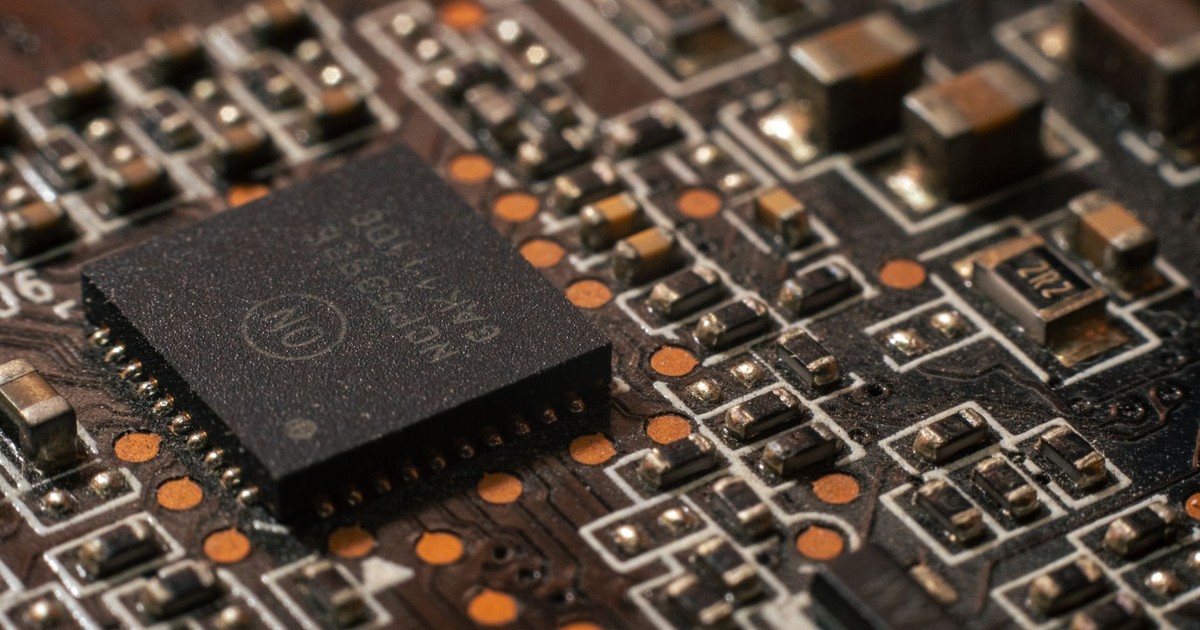
High-bandwidth memory (HBM) solves a bottleneck in AI accelerators by stacking memory chips vertically and placing them right beside the processor, so information flows almost instantly. Without enough of it, even the most powerful AI chip sits idle, waiting. SK Hynix is the dominant global supplier of that technology. Counterpoint Research reports that SK Hynix’s HBM market share stood at 58% in the first quarter of 2026, well ahead of Samsung and Micron at around 21% each. That position makes it one of the single most strategically important companies in the global AI supply chain.
Following the court ruling, SK Hynix’s Korea-listed shares slumped 8.34%, while its Nasdaq-listed American depositary receipts fell around 4% in premarket trading, despite the fact that since the start of 2026, SK Hynix’s stock price had soared nearly 150%, with SK Inc. rising around 143% over the same period. The markets’ reaction was immediate: investors began calculating what a $645 million cash payment could mean for Chey’s ability to maintain control of his holdings.
How Chey Will Pay
Chey is SK Inc.’s largest shareholder with a 17.9% stake in the holding company. The court mandated a cash payment rather than a stock transfer, specifically to preserve that controlling stake and remove a major overhang for the HBM chip supplier. Requiring cash instead of shares was the court’s way of awarding Roh a meaningful settlement without triggering a forced sale of SK Group stock that could destabilise both the company and South Korea’s semiconductor industry.
Analysts said Chey may need to sell assets or borrow against his shares, though they do not expect the award to threaten his control of SK Group. The 5% annual interest attached to the unpaid balance gives Chey time, but also creates a growing liability.
The People Behind the Case

Chey Tae-won
Chey Tae-won was convicted in 2013 of misappropriating company funds, pardoned by then-President Park Geun-hye in 2015, and returned to his post in 2016. Chey is a nephew of SK Group founder Chey Jong-gun, who built the conglomerate from Sunkyong Textile, a company he re-established in 1953 after the Korean War. The Seoul Central District Court found Chey guilty of embezzling 46.5 billion won from two companies within the SK Group conglomerate, which he had invested in stock futures and options.
The pardon that freed him was part of a broader government exercise: then-President Park Geun-hye gave pardons to 6,527 people, citing in part Seoul’s efforts to revive a sputtering economy. The pattern of criminal conviction followed by presidential pardon is not unusual in South Korean chaebol history, but it was repeatedly cited during the divorce proceedings as context for how Chey’s relationship with the law and with power had unfolded.
The chipmaking billionaire’s lawyers told reporters that they are examining whether to appeal the ruling but added Chey was “apologetic” for causing concern over the case. His lawyers did not rule out another appeal to South Korea’s Supreme Court.
Roh Soh-yeong
Roh Soh-yeong, 65, is the director of Art Center Nabi in Seoul and the daughter of the late President Roh Tae-woo, who governed South Korea from 1988 to 1993 as the country’s first post-military-rule president and died in 2021. During the proceedings, Roh shared that she had begun packing up the family home where she had lived for 37 years and raised the couple’s three children. On social media, she shared photos of handmade wedding posters her children had crafted as kids, with cut-out photos of the couple pasted onto paper wedding attire.
She had asked for half of Chey’s wealth. She received one-third, calculated against a valuation she argued was already out of date.
The Broader Significance

What South Korean Law Says About Marital Contributions
The Seoul High Court’s reasoning, that Roh’s homemaking, child-rearing, and support for SK Group’s public activities entitled her to a share of the wealth growth, will shape how South Korean family courts handle similar cases going forward. The ruling drew a clear line between inherited assets and the appreciation of those assets during a marriage, treating the latter as a joint product of the partnership rather than solely the original holder’s property. As the court put it, “the defendant’s shareholdings increased substantially during the marriage through his management activities”, and Roh’s contributions to the household were part of what made those management activities possible.
The Seoul High Court’s July 2026 ruling came months after the Supreme Court ordered further review of the property division. The case now represents one of the clearest articulations in South Korean jurisprudence of how courts should treat the invisible economic contributions of a homemaking spouse in an ultra-high-net-worth marriage. Chey was also previously ordered to pay 2 billion won ($1.3 million) in alimony, separate from the property settlement.
The Chaebol Context
The litigation laid bare the rawest elements of South Korea’s chaebol dynasties: Chey’s two prison terms for embezzlement and stock manipulation, both erased by presidential pardons, allegations of secret political funds from the Roh Tae-woo era, and the role of elite wives in maintaining the family-business nexus. The South Korean public has followed the case with intense interest precisely because it touches so many live wires simultaneously: inherited corporate power, political connections, marital fidelity, and the question of who really built what.
South Korea has a long history of pardoning powerful tycoons. As the Inquirer reported, Hyundai Motor head Chung Mong-Koo, convicted of embezzlement and other charges, was pardoned in 2008, and Samsung Electronics chairman Lee Kun-Hee, convicted of tax evasion, was pardoned in 2009. This pattern runs directly through the Chey-Roh case. Roh Soh-yeong’s legal team used Chey’s criminal history and the political circumstances of his pardons to argue for a more expansive reading of what the marriage had actually cost her.
What Happens Next

The ruling is final in its current form but not necessarily the last word. Either side may appeal, potentially sending the property-division dispute back to the Supreme Court. Given that Chey’s legal team spent a year successfully engineering a reduction from $1 billion to $645 million via a Supreme Court referral, his lawyers are clearly weighing whether another round of appeals could cut the figure further, or whether the litigation risk and reputational cost now outweigh the potential financial saving.
The market will be watching closely. SK Hynix’s share price dropped 8% on the day of the ruling alone. Any move by Chey to raise the cash, whether through a share pledge, an asset sale, or a structured loan, will attract immediate scrutiny from investors who are acutely aware of how much the global AI infrastructure buildout depends on that one company’s output.
The Part That Doesn’t Settle
What the courts were actually adjudicating is whether the work of holding a household together, raising three children, and sustaining the public face of a billionaire’s empire constitutes real economic contribution, or whether it simply disappears from the ledger because it never showed up on a balance sheet. South Korea’s courts, across multiple rulings, said it counts. The $645 million billionaire divorce settlement is the arithmetic expression of that answer.
Roh raised the children. She ran the household. She built her own career in the cultural sector. And she spent nearly a decade in court proving that those things had value. She asked for half. She got one-third, calculated using share prices that were already two years out of date by the time the ink dried.
Disclaimer: This information is not intended to be a substitute for professional medical advice, diagnosis, or treatment and is for information only. Always seek the advice of your physician or another qualified health provider with any questions about your medical condition and/or current medication. Do not disregard professional medical advice or delay seeking advice or treatment because of something you have read here.
AI Disclaimer: This article was created with the assistance of AI tools and reviewed by a human editor.