

The argument that deception is a modern problem doesn’t hold up for very long once you start looking at the record. Human beings have been constructing elaborate, consequential lies for as long as they have held power over one another – and some of the most world-altering falsehoods in history were not exposed for decades, centuries, or in one case not until a scholar put a quill to parchment and noticed the Latin was wrong. Some of the biggest lies history has produced didn’t just mislead a few people. They started wars, propped up empires, sent innocent people to their deaths, and in at least one instance gave a single institution enough forged paperwork to dominate European politics for seven hundred years.
What makes these deceptions so enduring is rarely their cleverness. It’s the fact that people in power – governments, churches, institutions, newspaper editors – wanted them to be true. When belief is convenient and skepticism is dangerous, a well-placed lie can run for a very long time before anyone bothers to check.
From ancient ruses that became legends to twentieth-century frauds that cost tens of billions of dollars, these fifteen episodes stand out not just for their audacity but for what they reveal about the societies that believed them.
1. The Trojan Horse
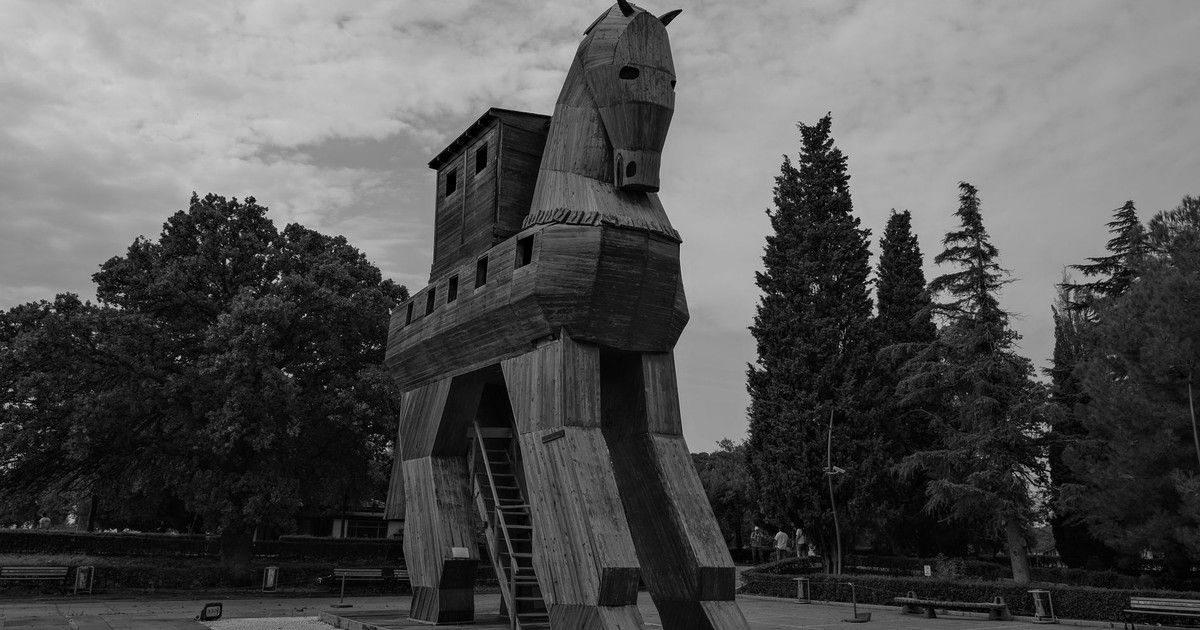
According to the legend, the Trojan Horse was a massive wooden structure built by the Greeks on Odysseus’ suggestion, designed to hide a group of armed warriors inside. The Greeks pretended to abandon their siege and left the horse before the city walls as an apparent offering to the gods. The Trojans dragged it inside, and at night the hidden men emerged, opened the gates, and let the Greek army pour in.
The story has lodged itself so deeply in Western culture that “Trojan Horse” is now common shorthand for any scheme dressed up as a gift. But whether it happened the way Homer described is another matter entirely. The Archaeological Institute of America has noted that there is no evidence a colossal horse with a hollow interior played any role in the attack, and most archaeologists treat the specific device as mythological. Heinrich Schliemann’s 19th-century excavations at Hisarlik in modern Turkey established that a city of Troy genuinely existed, and there is some evidence that walls in the ruins were damaged around the time the war would have taken place. But whether that destruction came from warfare, natural disaster, or something else entirely remains unclear.
Researchers have suggested that the wooden horse may have been poetic symbolism representing subterfuge or betrayal rather than a literal object. The deception at the heart of the story – gaining access by pretending to be something harmless – has proved to be the real legacy. The Trojan Horse as a concept has outlasted the question of whether it was ever real.
2. The Donation of Constantine
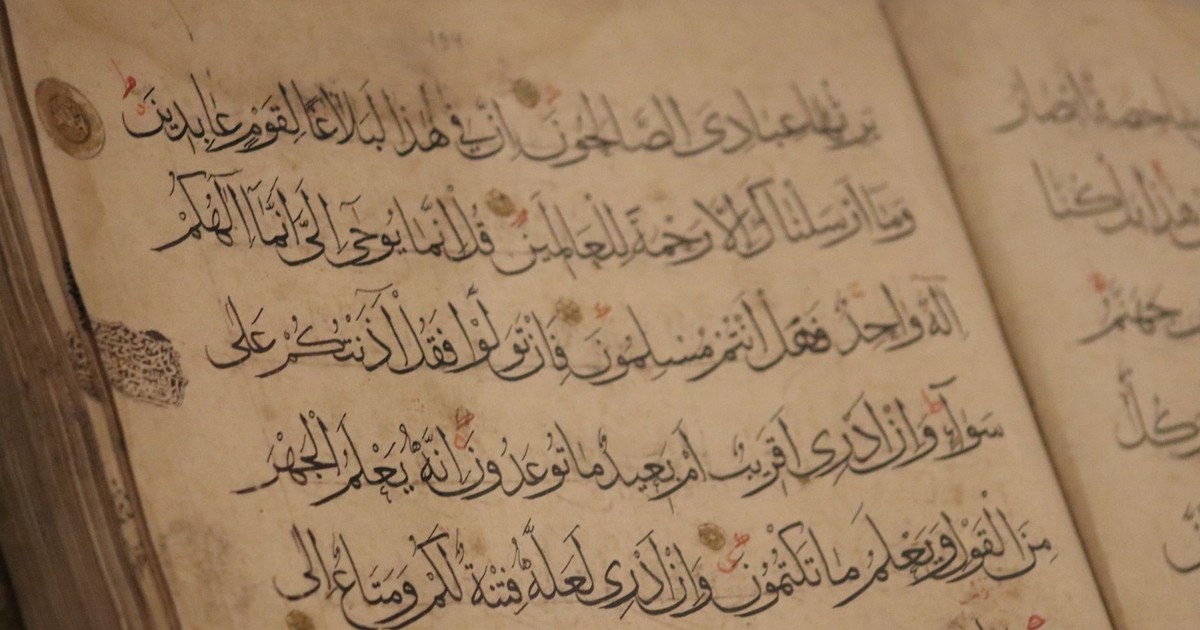
The Donation of Constantine is considered the best-known and most important forgery of the Middle Ages. The document purported to record the Roman Emperor Constantine the Great’s bestowal of vast territory and both spiritual and temporal power on Pope Sylvester I and his successors. Composed probably in the 8th century, it had only limited impact at the time of its compilation, but it exerted enormous influence on political and religious affairs in medieval Europe – until scholar Lorenzo Valla demonstrated conclusively that it was a forgery in the 15th century.
The document claimed that around 315 – 317 AD, Constantine was cured of leprosy by Pope Sylvester I and, in gratitude, surrendered his power and lands to the pope, who then generously returned that power and allowed the emperor to continue his reign. This was the story that gave the Catholic Church its justification for claiming political authority over Western rulers for centuries. The document used terms and titles that simply didn’t exist in Constantine’s time, a detail that any careful reader might have caught – but careful readers were in short supply when the document was politically useful.
The Church placed Valla’s exposé on the Index of Prohibited Books for centuries. It wasn’t until 1929 that the Church publicly admitted the document was a fake and returned the Papal States to Italy. Seven hundred years of political leverage, built on a document that a Renaissance scholar debunked in an afternoon.
3. The Popish Plot

In 1678, a single man threw England into a murderous panic with nothing but his own mouth. By the time Titus Oates fabricated his notorious plot, he already had a long history of deception behind him. He had entered Cambridge to study for the Anglican order before being dismissed for misconduct. Despite holding strong anti-Catholic sentiments, he then infiltrated two different Catholic seminaries, both of which eventually expelled him. But by that point, he had gathered enough inside information to do real damage. In 1678, he concocted and pretended to uncover what became known as the “Popish Plot” – a Catholic plan to murder King Charles II and put his Catholic brother James on the throne.
What followed was a three-year panic that fueled intense anti-Catholic sentiment across England. Thirty-five people were executed as a result. Oates became a celebrated national hero, feted and financially rewarded, while the bodies of the falsely accused piled up. It wasn’t until 1685 that Oates was arrested and convicted of perjury. He served only a few years in prison before being pardoned when William III came to power, after which he received a government pension. History has an uncomfortable way of being lenient with its most spectacular liars.
4. The Protocols of the Elders of Zion and the Biggest Lies History Can Produce
Consisting of 24 chapters that claim to document a plot for Jewish world domination, the Protocols of the Elders of Zion may be the most dangerous hoax in modern history. The document was created by a member of the Russian secret police around the turn of the 20th century and was cobbled together from a variety of unrelated sources, including a book by Jewish author Theodore Herzl, an anti-Semitic German novel, and a French satire that was actually an attack on Napoleon III.
First published in Russia in 1903, the Protocols purported to be a secret plan by Jewish leaders to take over the world and establish a global Jewish government. The document was used as propaganda to incite antisemitic sentiment and was widely distributed across Europe and the United States in the early 20th century. Despite being exposed as a forgery by The Times of London in 1921, the Protocols continued to be used as a tool for antisemitic propaganda by various groups, including the Nazi Party.
The Nazi regime used the Protocols to justify the persecution of Jewish people and other minorities during the Holocaust. The lie was definitively debunked more than a century ago, and yet it continues to circulate online today. Of all the entries on this list, the Protocols represent the clearest example of a fabrication that killed millions and refuses to die.
5. The Piltdown Man
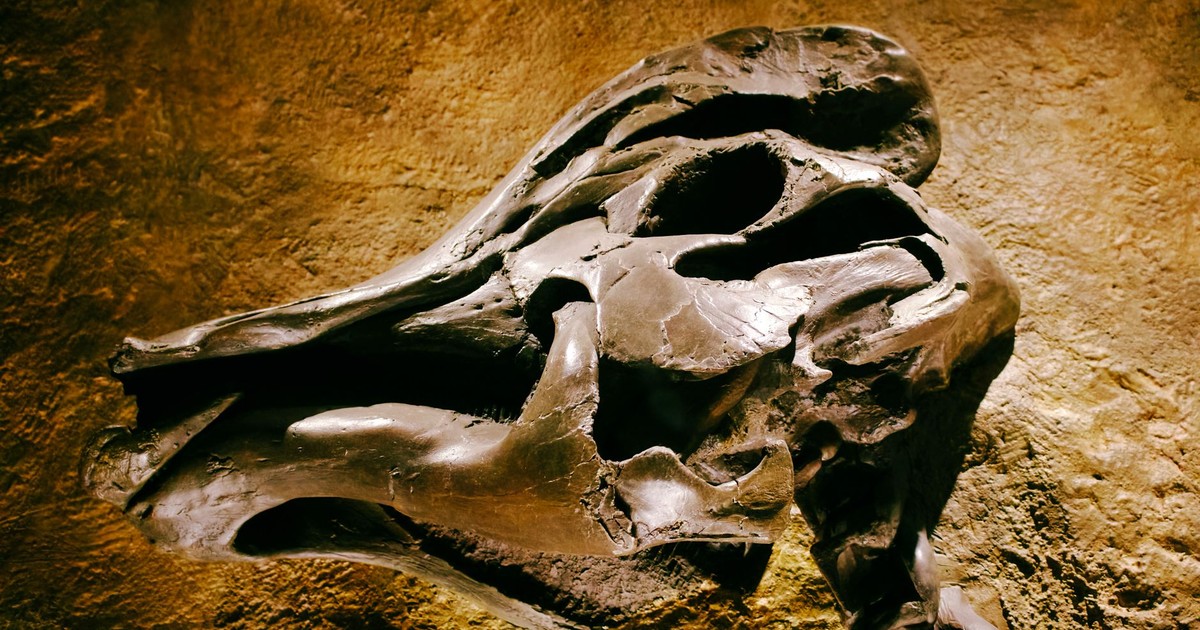
In 1912, amateur archaeologist Charles Dawson claimed to have discovered the missing link between humans and apes in Piltdown, England. The so-called Piltdown Man was welcomed as one of the most significant discoveries in the history of human evolution. It turned out to be a complete fraud.
After years of examination, scientists discovered that the skull had been artificially aged to appear older than it was. The jawbone belonged to an orangutan, with teeth filed down to resemble human teeth. The bones had been chemically stained to give them an authentic appearance. The Piltdown Man hoax fooled scientists and experts for over 40 years.
It wasn’t formally exposed until 1953, when a team of scientists using fluorine dating established that the skull and jaw were modern. The fraud set British paleoanthropology back by decades – researchers shaped entire theories of human evolution around bones that never belonged to a human ancestor at all. Scientists and institutions are no more immune to believing what flatters them than anyone else, and the Piltdown case proved it in the most embarrassing way possible.
6. Operation Mincemeat

Operation Mincemeat was a successful British deception operation during the Second World War, designed to disguise the 1943 Allied invasion of Sicily. The plan was as audacious as it sounds. Two members of British intelligence obtained the body of Glyndwr Michael, a homeless man who had died, dressed him as an officer of the Royal Marines, and placed on him forged correspondence between two British generals suggesting that the Allies planned to invade Greece and Sardinia, with Sicily presented as merely a decoy target.
According to Britannica’s account of the operation, Glyndwr Michael’s identity was not disclosed until 1997, when his name was added to the grave by the Commonwealth War Graves Commission. Adolf Hitler fell for the deception completely, moving vital troops away from Sicily. The actual invasion of Sicily proceeded with significantly less resistance than it would otherwise have faced. A dead man with a fabricated identity, floated off a Spanish coastline, may have shortened the war in the Mediterranean by months. Few deceptions in military history produced consequences of that scale from materials so improvised.
7. The Hitler Diaries
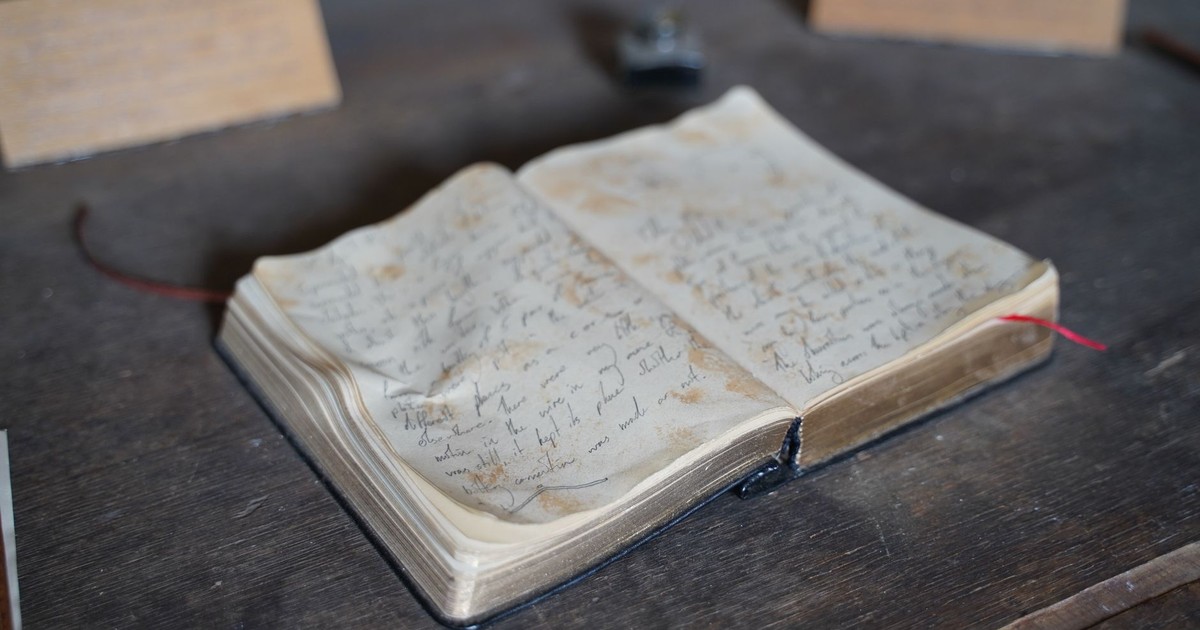
On April 22, 1983, the German news magazine Stern announced the discovery of 60 small notebooks purported to be the personal diaries of Adolf Hitler, covering his rise to power in the 1930s and his years as Nazi leader. The diaries were authenticated – wrongly – by several respected historians, and Stern paid 9.3 million Deutsche Marks for the exclusive. The world’s media treated them as a genuine window into the mind of the 20th century’s most notorious dictator.
Less than two weeks later, forensic scientists at the West German Federal Archives issued their own press release: the paper and ink used had been manufactured at least eight years after Hitler’s death. The forgeries had been produced by a petty criminal named Konrad Kujau, who had no formal training and was selling fake Nazi memorabilia out of Stuttgart. Both Kujau and Stern’s intermediary Gerd Heidemann went to jail, though nobody has ever accounted for exactly what happened to all the Deutsche Marks that changed hands.
Forty years on, the Hitler Diaries serve as a warning about what happens when the lure of an exclusive overpowers journalistic caution, and how even renowned experts can be blinded by the promise of a sensational discovery. The desire to believe was the real vulnerability – not the quality of the forgeries.
8. The Iraq WMD Deception

On February 5, 2003, Secretary of State Colin Powell addressed the United Nations Security Council, holding up a vial he claimed could contain anthrax and repeating now-discredited intelligence claims about secret biological laboratories and mobile weapons programs. When U.S. troops entered Iraq, they found nothing. The lie killed hundreds of thousands of people, destroyed America’s credibility for years, and haunted Powell until his death.
The 2003 invasion of Iraq was built on the assertion that Saddam Hussein possessed weapons of mass destruction – biological, chemical, and potentially nuclear. No such weapons were found. Multiple subsequent inquiries in both the United States and the United Kingdom found that intelligence had been manipulated, exaggerated, or selectively presented to build a case that the underlying evidence did not support. The political consequences shaped the entire first decade of the 21st century. The human cost continues to accumulate in the region to this day.
9. Charles Ponzi’s Postal Scheme
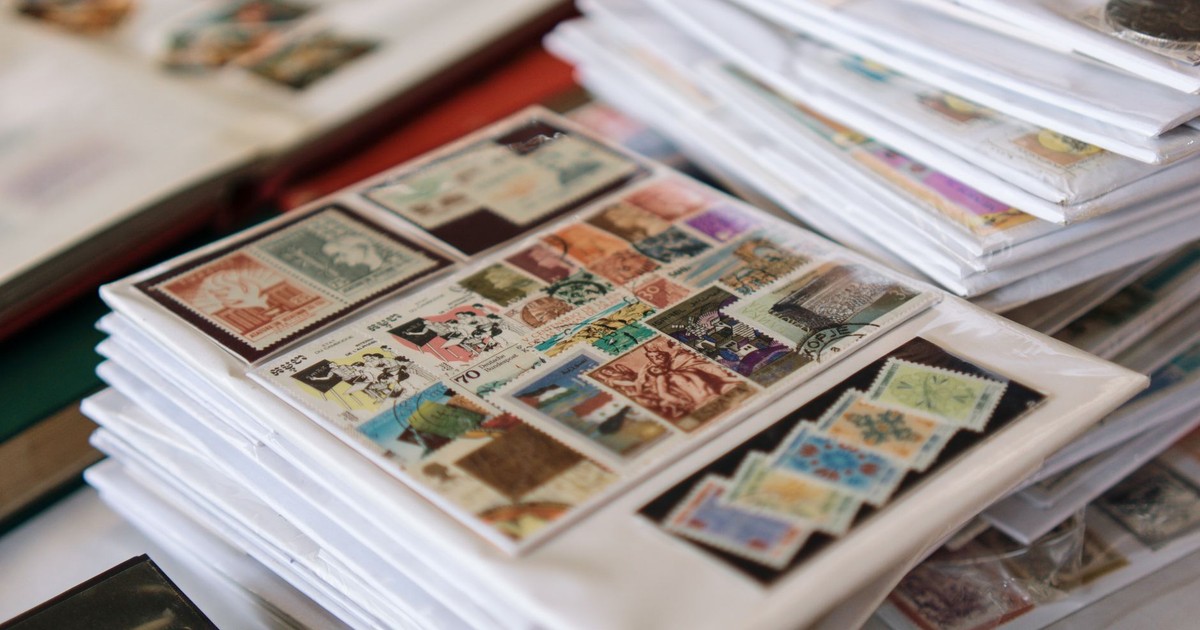
In 1920, Charles Ponzi tricked thousands of New England residents into investing in a postage stamp speculation scheme. The pitch was deceptively simple: Ponzi claimed he could exploit price differences in international reply coupons – postal certificates redeemable for stamps in different countries – to generate returns of 50% in 45 days. Investors lined up. Word spread. People handed over life savings.
The scheme worked the way all Ponzi schemes work: early investors were paid returns using money from new investors, creating the illusion of a profitable operation. When his operation collapsed in 1920, it exposed a template that fraudsters would replicate for decades. Bernie Madoff admitted in 2008 to having conned approximately $50 billion from investors who trusted him with their savings – describing his own investment firm as “just one big lie.” The fraud was so foundational that the government named this type of scheme after Charles Ponzi himself. The model he created in 1920 was still being replicated on a multi-billion dollar scale nearly ninety years later.
10. The Zinoviev Letter

In 1924, a forged letter purportedly signed by Grigory Zinoviev, the head of the Communist International in Moscow, surfaced in Britain four days before a general election. The letter appeared to instruct the British Communist Party to stir up revolution and agitate within the armed forces. The timing was devastating. The ruling Labour government, which had recently signed a trade agreement with the Soviet Union, was accused of being soft on Bolshevism. Labour lost the election in a landslide.
Decades of investigation – including a 1999 inquiry by the British Foreign Office – concluded that the letter was almost certainly forged, most likely by anti-Soviet White Russian émigrés working with elements of British intelligence. The letter shaped British domestic politics for a generation, embedding deep suspicion of Labour as a party of dangerous radicals. One fabricated document, circulated at precisely the right moment, helped keep a political party out of power for years.
11. Stalin and the Ukrainian Famine
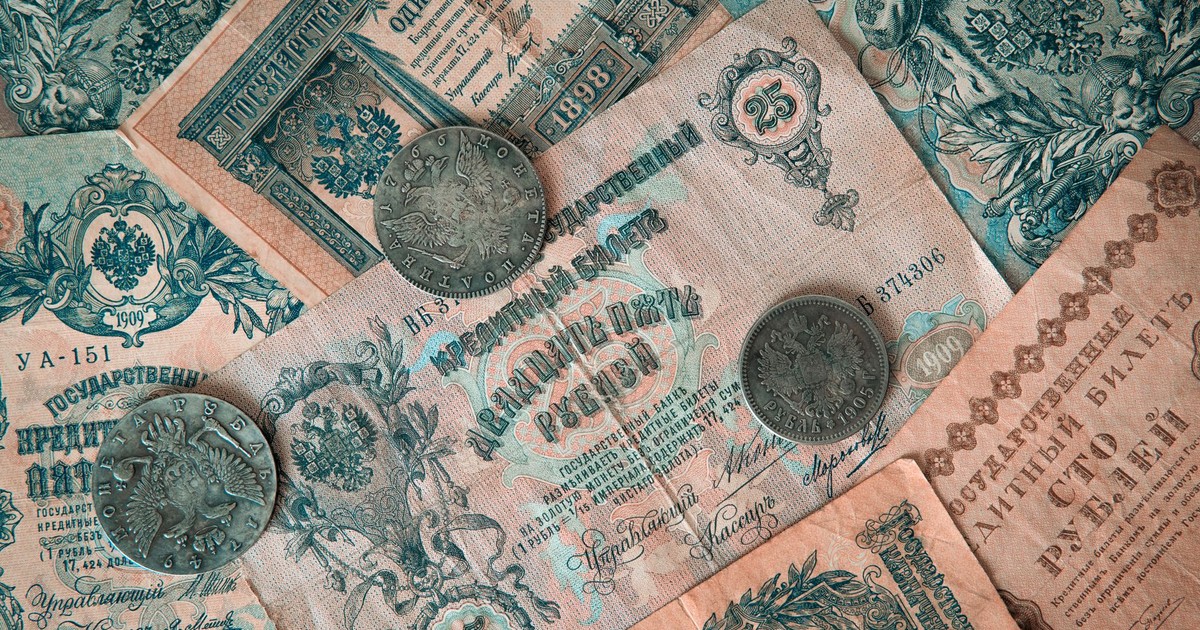
In the early 1930s, as millions of Ukrainians were dying in a man-made famine known as the Holodomor – a catastrophe caused by Soviet grain requisitioning policies – the Soviet government denied it was happening at all. State censorship suppressed reports, photographs were destroyed, and officials who documented the death toll were punished. Foreign journalists who reported on the famine were dismissed or discredited. Walter Duranty, the New York Times correspondent in Moscow, actively spread Soviet denials and won a Pulitzer Prize for reporting that historians later described as deliberate falsification.
The scale of what was concealed is staggering. Scholarly estimates of the death toll range from 3.5 million to 7.5 million Ukrainians who died between 1932 and 1933. The Soviet government maintained its denial for decades. It was not until 1991, with the dissolution of the Soviet Union, that Russian archives began to confirm what survivors had always known. The cover-up was not just a lie told to the outside world – it was enforced through terror on the people experiencing the famine in real time.
12. The Dreyfus Affair

In 1894, the French Army accused Captain Alfred Dreyfus, the only Jewish officer on the French General Staff, of passing military secrets to Germany. He was convicted of treason in a secret court martial based on a forged document and sentenced to life imprisonment on Devil’s Island. When evidence emerged pointing to another officer, Major Ferdinand Walsin Esterhazy, as the actual spy, the French Army suppressed it. Esterhazy was court-martialed in 1898 and acquitted in a proceeding that lasted less than three minutes.
The lie that sustained the Dreyfus conviction was not just a single document – it was an entire institutional apparatus of denial, forgery, and rank antisemitism that required the systematic silencing of anyone who questioned the verdict. Writer Émile Zola’s open letter “J’accuse,” published in 1898, named the officers responsible and forced the affair into public view. Dreyfus was not fully exonerated until 1906. The affair exposed the depth of official antisemitism in Republican France and directly influenced Theodor Herzl’s decision to found the Zionist movement.
13. Trofim Lysenko and Soviet Science

From the late 1930s through the 1960s, Soviet agriculture operated according to a theory of heredity that had been rejected by the scientific community everywhere else on earth. Trofim Lysenko, an agronomist with no formal training in genetics, convinced Stalin that Mendelian genetics was a bourgeois capitalist lie and that acquired characteristics could be inherited – a discredited idea known as Lamarckism. Stalin backed him, and Lysenko’s theory became official state science.
The consequences were catastrophic. Real geneticists were fired, imprisoned, and in some cases executed. Soviet crop science fell decades behind the rest of the world. Agricultural policies based on Lysenkoist theory contributed to food shortages affecting millions of Soviet citizens. The lie was institutional and enforced: questioning Lysenko’s theories meant questioning the party. It wasn’t until 1964, after Khrushchev’s ouster, that Soviet science officially repudiated Lysenkoism – by which point an entire generation of Soviet geneticists had been destroyed.
14. The Tobacco Industry’s Health Denial

For decades, the major American tobacco companies knew that cigarettes caused cancer and cardiovascular disease – and said the opposite in public. Internal documents from companies including Brown & Williamson, later released through litigation, showed that researchers within the industry had confirmed the link between smoking and cancer as early as the 1950s. The public-facing response was a coordinated campaign to manufacture doubt.
In 1954, tobacco companies published a full-page advertisement in more than 400 newspapers titled “A Frank Statement to Cigarette Smokers,” pledging to investigate health concerns and assuring the public their products were safe. It was the opening shot of a four-decade campaign of strategic misinformation. By the time the industry’s internal documents were made public through the 1998 Master Settlement Agreement, an estimated 400,000 Americans were dying from smoking-related illness every year. The campaign to obscure that fact is one of the most meticulously documented cases of corporate deception in history.
15. The Industrialization of Political Disinformation

The 21st century did not invent political disinformation, but it did industrialize it. The intervention of the Internet Research Agency, a Russian state-linked troll farm, in the 2016 U.S. presidential election was documented in extensive detail in the 2019 Senate Intelligence Committee report. Thousands of fake social media accounts, impersonating American citizens and political groups across the ideological spectrum, reached an estimated 126 million people on Facebook alone according to the platform’s own testimony to Congress. The operation created the appearance of organic American political movements that did not exist.
What made this particular lie so effective was not its sophistication but its understanding of how people actually consume information: in emotionally charged fragments, from sources they already agree with, in environments designed to reward outrage over accuracy. The biggest lies history has produced have always exploited the gap between what people want to believe and what the evidence actually supports. The 21st century just found a way to deliver that gap at scale, algorithmically, into three hundred million pockets simultaneously.
Read More: 8 Notorious ‘History Facts’ Most People Believe to Be True But Are Completely Made Up
The Pattern Behind the Deception
Looking at these fifteen cases together, one thing stands out: none of them worked because they were impossibly clever. The Donation of Constantine was exposed by a linguist who checked the Latin. The Piltdown Man was debunked by a fluorine test that should have been run decades earlier. The Hitler Diaries fell apart within days of forensic investigation. The Iraq WMD case required intelligence officials to ignore their own analysts.
What allowed each of these lies to survive as long as it did was institutional power, motivated belief, or both. The Church had every reason to accept the Donation of Constantine. The French Army had every reason to convict Dreyfus. Soviet officials had every reason to accept Lysenko. Stern’s editors had every reason to believe they’d found the scoop of the century. When the incentive to believe a lie is strong enough, the bar for scrutinizing it drops to almost nothing. That’s not a flaw in a specific era or a specific people. It’s a constant in how power operates – and how deception survives long after it should have been buried.
The record of the biggest lies in history isn’t a story about other people making obvious mistakes. It’s a record of how thoroughly institutions, experts, and entire societies can fail to ask the one question that would unravel everything: is any of this actually true?
AI Disclaimer: This article was created with the assistance of AI tools and reviewed by a human editor.