
There’s something quietly thrilling about the American road trip. That moment when you round a bend or cross a bridge and suddenly understand why people leave cities for small towns and never look back. A sun-bleached clapboard village at the edge of a glacier-carved lake. A mountain mining town that still has its original opera house. A tropical island closer to Cuba than to Miami. The country is studded with places like these, each one a complete world in miniature, and most people have driven past the exit sign a dozen times without ever stopping.
What makes a town beautiful isn’t always the same thing. Sometimes it’s geography, being wedged between two of Colorado’s tallest peaks, or perched at the northern tip of a lake so clean the nearest city drinks from it unfiltered. Sometimes it’s history: streets of preserved Victorian architecture that look exactly the way they looked when silver millionaires were building their empires. And sometimes it’s simply a quality of light, a slowness in the pace, the feeling of a place that hasn’t decided it needs to become something else.
These five towns made the list for reasons that are genuinely worth understanding. Each one earns its place.
1. Key West, Florida
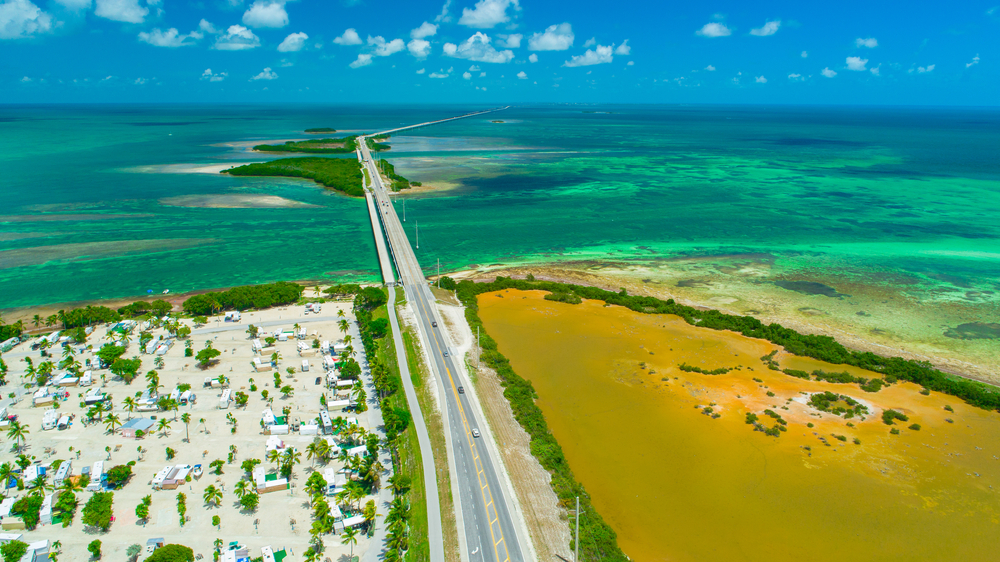
Laid back, free-spirited, artistic, quirky, and scenic, Key West is one of the most unique places in the United States. It’s a tiny Florida Keys island known for its live-and-let-live attitude and tropical climate that has been welcoming visitors seeking a vacation from the normal for two centuries. That’s a long time for a place to maintain its personality, and Key West has managed it impressively.
Once a rip-roaring buccaneers’ town, Key West is now the quirky, tropical heart of the Florida Keys. Closer to Cuba than mainland Florida, visiting Key West feels a million miles from the rest of the USA. That distance, both literal and psychological, is a big part of the appeal. The pace is different here. The rules feel more optional.
Strolling or cycling the Old Town is the perfect way to see Key West’s distinctive pastel-colored homes. Nestled behind white picket fences, their porches are typically furnished with rocking chairs, the perfect setting for sipping iced tea in the balmy heat. A saunter along Caroline Street or Greene Street will give you great glimpses of these late-1800s “conch houses,” built in a mix-and-match style that fuses Victorian, Colonial, and Tropical architecture. The visual effect is something between New Orleans and the Bahamas, and there’s nothing else quite like it in the continental United States.
Key West provides an unparalleled view into island life and culture through popular historic locales like Mallory Square, home to restaurants, bars, shops, and the famous Sunset Celebration. The celebration is held every night around sundown and features live music, street performers, food trucks, and more, with many celebrity guests and famous figures attending since its inception in the late 1960s. It’s one of those rituals that seems touristy until you’re standing there watching the sun drop into the Gulf and a stranger next to you starts clapping. Then it makes complete sense.
2. Brevard, North Carolina
Most people who love the outdoors have heard of Asheville. Far fewer have made it the extra 30 miles southwest to Brevard, which is a shame, because Brevard has a reasonable claim to being the single most waterfall-rich destination in North America.
Brevard and Transylvania County are known as the “Land of Waterfalls,” boasting over 250 waterfalls, the largest concentration in North America. To put that number into perspective: there are more cascades within a few miles of this Blue Ridge Mountain town than most people will visit in a lifetime of hiking. One of those, at 411 feet, is called the “King of Waterfalls,” the highest waterfall in the Eastern United States, designated a North Carolina Natural Heritage Area.
Located between Pisgah National Forest, DuPont State Recreational Forest, and Gorges State Park, Brevard affords visitors endless outdoor adventures, including hiking, mountain biking, waterfall hunting, and fly fishing. But the appeal isn’t purely about adrenaline. Celebrated as North Carolina’s Land of Waterfalls, Brevard and Transylvania County have much more than gorgeous cascades: an All-American Main Street full of local shops, galleries, and great restaurants.
Then there’s the detail that makes Brevard genuinely strange in the best possible way. Transylvania County is home to a rare white squirrel population, said to be descended from an escaped carnival animal in 1949. The animals are not albino. They are considered an offshoot of the Eastern gray squirrel, with a similar coloration but otherwise white. Visitors sometimes spot them darting across the main street between coffee shops. It’s exactly that kind of unexpected, inexplicable detail that makes a place feel like it belongs to itself.
3. Leadville, Colorado
Leadville makes the list partly because of what it is and partly because of what it was, and the two are difficult to separate.
With an elevation of 10,152 feet, almost 2 miles above sea level, Leadville is the highest incorporated city in the United States. It is surrounded by the two tallest peaks in the state, Mount Elbert and Mount Massive. The views from town are not subtle. On a clear morning, the mountains look close enough to touch, and the air has that particular thin-blue quality that only happens above 10,000 feet.
Located in a high-mountain valley two miles above sea level in central Colorado, Leadville began in the 1860s as a gold-mining camp. In the late 1870s, prospectors discovered what would become one of the world’s largest lead-zinc-silver deposits, transforming the hardscrabble town into a thriving city of 30,000 people by 1880. The city became second only to Denver in opulence, with dozens of high-end hotels, restaurants, theaters, and dance halls. That era is still visible in the architecture.
The Victorian-era mining town is one of the best preserved in the state, with more than 70 registered historic buildings, eight museums, and an unyielding boomtown spirit. Leadville’s most famous building is arguably the Tabor Opera House, which anchors the south end of Harrison Avenue. When it was built in 1879 by local millionaire miner Horace Tabor, the theater was the costliest structure in Colorado. Today it still stands, slightly worn at the edges and entirely magnificent for it. For people who want beauty without polish, Leadville is close to perfect.
4. Skaneateles, New York
Skaneateles (say it “skinny atlas,” everyone mispronounces it the first time) sits at the northern end of one of New York’s eleven Finger Lakes, and it has the quiet confidence of a place that knows exactly what it is and has no desire to change.
The cleanest of the Finger Lakes, Skaneateles Lake’s water is so pure that the city of Syracuse and other municipalities use it unfiltered. The lake is the second cleanest in the United States as measured by dissolved nitrogen, after Crater Lake in Oregon. That level of clarity does something remarkable to the color of the water. Tourists come for the unique shops and cultural festivals and are awestruck by the sparkling blue waters, often called the most beautiful in the world. The characteristic bluish-green color is the result of several factors, including the lake’s depth, with gorge-like cliffs dropping right off the shore, and the clarity of the water, which allows for the easy penetration of blue light waves deep into the lake.
Skaneateles is picturesquely situated on the pristine shores of Skaneateles Lake in the Finger Lakes Region, and the village’s downtown historic district shops and galleries are housed in restored buildings dating back to 1796. Taking a stroll through Skaneateles is like taking a stroll back in time. Every holiday season the Dickens Christmas Festival takes place, where the community takes on Dickens-era décor and personality and visitors flood in to interact with the village’s cast of characters. It’s the sort of event that sounds gimmicky and turns out to be exactly the opposite: a town so at ease with its own charm that it doesn’t need to oversell it.
For anyone looking for a road trip through America’s most beautiful places, the Finger Lakes region tends to be criminally underrated on most itineraries, and Skaneateles is the clearest argument for changing that.
5. Gatlinburg, Tennessee
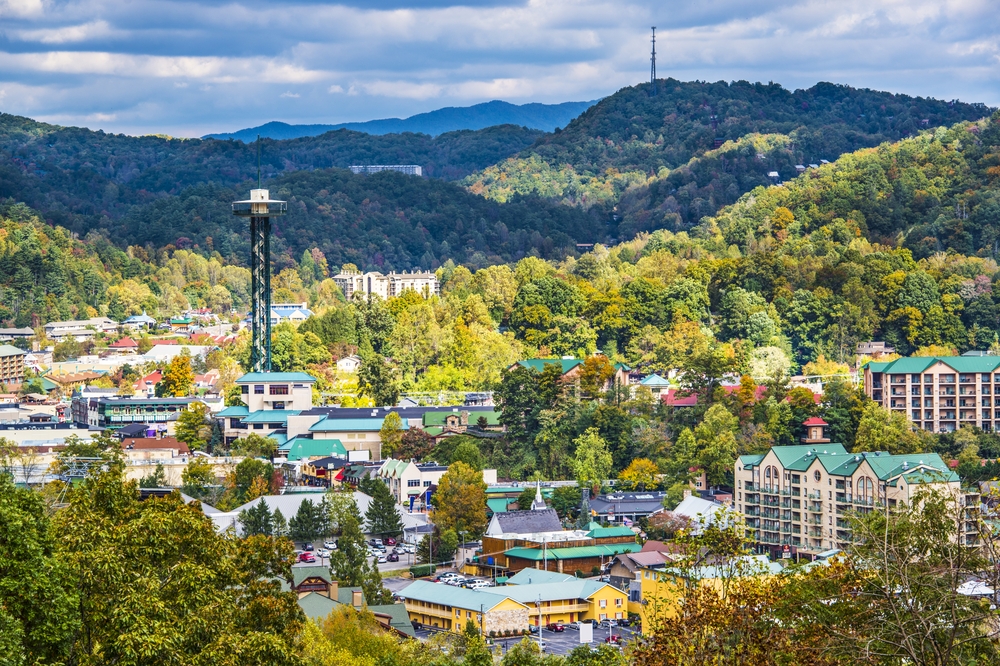
Gatlinburg is not a secret. With its mix of mountain scenery, Appalachian culture, moonshine distilleries, and proximity to the country’s most visited national park, it draws crowds that can test even the most patient visitor’s love of a place. The reason people keep coming back anyway is simple: the Smokies are genuinely spectacular, and Gatlinburg sits right at the door.
With over 12 million visitors in 2024, Great Smoky Mountains National Park is the most visited national park in the United States, encompassing 522,419 acres and making it one of the largest protected areas in the eastern US. The park was recognized as both a UNESCO World Heritage Site and an International Biosphere Reserve, designations that exist for a reason. The range of biodiversity in the Smokies, the wildflowers, the old-growth forest, the synchronized fireflies near Elkmont in June, is unlike anything else in the eastern half of the country.
For those interested in art and authentic Appalachian crafts, a day exploring the 8-mile loop through Gatlinburg’s Great Smoky Arts and Crafts Community is well worth the time. The scenic drive passes more than 100 artists and crafters, as well as eateries, shops, and boutique lodging. This is Gatlinburg at its best, not the loud strip of novelty shops on the main drag, but the quieter version, where potters and basket weavers are still working in the same traditions their grandparents practiced.
Gatlinburg is also home to Ole Smoky Mountain Distillery, the first federally licensed distillery in the history of East Tennessee, where visitors can tour the facility and enjoy tastings of moonshine and whiskey flavors. It’s the kind of detail that perfectly captures the town’s character: ancient mountains, living craft traditions, and something with a little fire in it.
Worth Stopping For
The thing about beautiful towns is that they tend to attract the same conversation: “You should go before it changes.” And it’s true that crowds find beautiful places eventually, that short-term rentals displace longtime residents, that the coffee shop that made a town charming gets replaced by something with a national logo. But all five of these towns have survived their own versions of boom and bust. Leadville literally watched its population crater when the silver market collapsed in 1893, and it’s still standing, still magnificent, still itself.
That persistence isn’t accidental. Beauty tied to a place’s actual geography and genuine history, rather than manufactured for a marketing campaign, turns out to be surprisingly hard to erode. You can still drive into Brevard and be stopped in your tracks by a 150-foot waterfall twenty minutes from a gas station. You can still watch the sun sink below Key West’s harbor to spontaneous applause from strangers. These aren’t experiences that quietly disappear or get old with familiarity. They’re the ones that make you reconsider the exit you’ve been driving past for years. The five places on this list have all earned that second look, and most of them will reward you for finally taking it.
AI Disclaimer: This article was created with the assistance of AI tools and reviewed by a human editor.