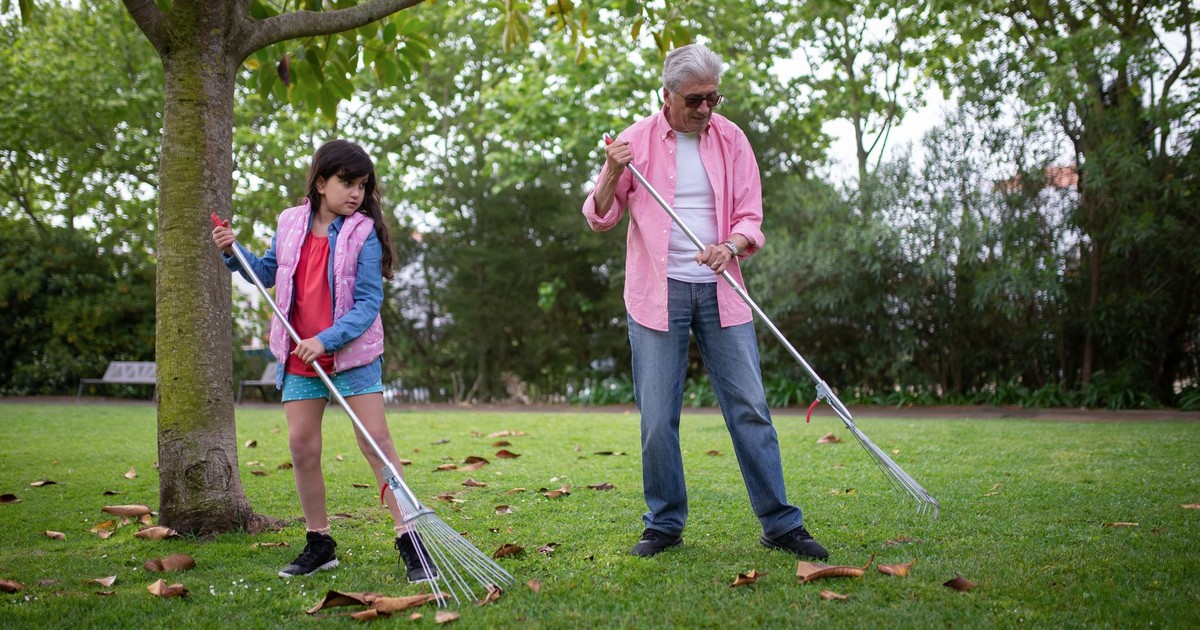

Ask anyone who grew up in a house with a big yard and a baby boomer parent, and they’ll probably describe the same October scene: the leaf blower they weren’t allowed to use because raking “builds character,” the precise lines in the lawn, the forty-five-minute lecture on why the neighbor’s yard is an embarrassment to the street. Baby boomers raking leaves isn’t just a seasonal chore. For many of them, it is something closer to a calling.
Why do so many boomers treat a pile of leaves as a matter of personal urgency? Why does the rake come out before the coffee is even finished? And why, when their children offer to hire someone to do it, do they look vaguely offended? The answer turns out to be about identity, routine, community judgment, the satisfaction of visible results, the refusal to get old without a fight, and some genuinely compelling health reasoning.
1. The Yard Is Their Longest-Running Project

For the generation that built their adult lives around homeownership, the yard is not a maintenance problem. It’s a project that has been ongoing for forty years. According to a 2024 survey by Clever Real Estate, roughly 61% of boomers currently own homes, and among those homeowners, more than half, 54%, never plan to sell, intending to spend the rest of their lives there.
When you’ve mowed the same lawn for thirty-five years, planted the same hydrangeas, and raked leaves from the same oak tree every November since the Reagan administration, that yard is less a piece of real estate and more a relationship. You don’t hire a stranger to maintain a relationship.
When a boomer rakes, they aren’t just clearing debris. They’re doing the same thing they’ve done every October for as long as they can remember, in the same yard, with the same sense of responsibility. The ritual itself is the point. Disrupting it through a leaf blower, a lawn service, or a kid who suggests they don’t have to do it anymore isn’t efficiency. It’s an interruption of something that matters.
2. The Neighbors Are Absolutely Watching
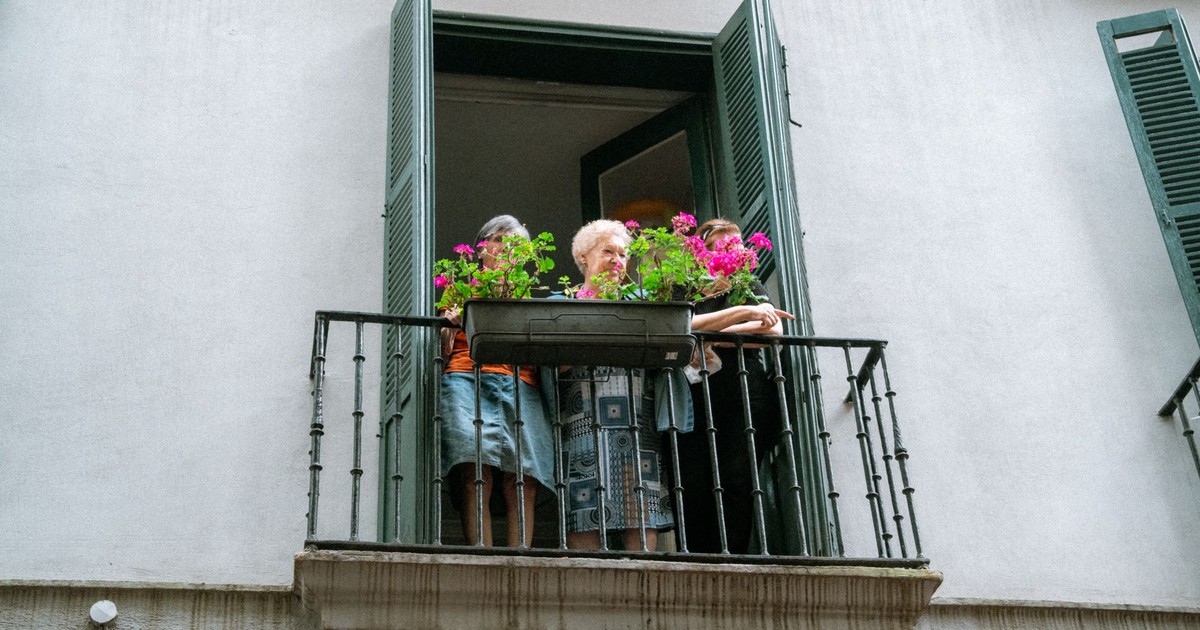
Boomers grew up in the era when your yard was a public statement about who you were as a person. In the postwar suburban culture that shaped this generation’s earliest memories, a well-kept lawn signaled that you were responsible, that you cared about the neighborhood, that you had your life together. A yard full of leaves in November was a moral failure, not just an aesthetic one.
Walk through any boomer-dominant suburb in October and you’ll see this in action: the same three neighbors out on the same Saturday morning, side by side, raking in near-silence like they’re all aware of some unspoken grading system. The National Association of Realtors found that 92% of real estate agents recommend that sellers improve curb appeal before listing a home, and 97% said curb appeal was important in attracting a buyer. But for many boomers, curb appeal isn’t about selling. It’s just how things should look, all year round, whether anyone is buying or not.
A social contract operates here that younger generations find baffling and boomers find completely obvious: you keep your property neat because that’s what it means to be a good neighbor. The leaves are just the seasonal test. Failing it, letting them sit through November, blowing onto everyone else’s freshly raked grass, is the kind of thing that comes up at block parties six months later.
3. It’s the Gym They Actually Enjoy

Boomers are often more physically active than the stereotype suggests, and outdoor yard work is a big part of that. The National Institute on Aging lists yard work such as raking leaves or pushing a lawnmower as an example of moderate-intensity activity that builds endurance. That puts it in the same category as a brisk walk or a light jog.
You’re not dragging yourself to a gym. You’re not staring at a wall while something beeps at you. You’re outside, in the fall air, doing something with a visible beginning and end, and your yard looks better when you’re done. Researchers at Oregon State University found in a 2013 study of more than 6,000 American adults that an active lifestyle approach, building movement into daily tasks like raking rather than relying on scheduled gym sessions, was just as beneficial for preventing high blood pressure, high cholesterol, and metabolic syndrome as structured exercise.
For boomers, who came of age before the fitness industry turned exercise into a product to be purchased, this framing makes intuitive sense. You work because there’s work to do, and your body stays active because the work requires it.
4. They’ve Earned the Right to Do It Their Way

Ask a boomer why they insist on raking instead of hiring it out or letting the leaves decompose, and you’ll often get a version of the same answer: “I like it done properly.” This is not stubbornness. This is decades of experience informing a preference.
Boomers have had long enough to discover that the service they hired three years ago missed the corner by the fence, that the leaf blower just moves the problem into the flower beds, and that when they do it themselves, it actually gets done. That kind of earned skepticism about shortcuts is a real thing, not a character flaw.
A 2025 survey found that a quarter of Americans say maintaining their lawn makes them happy, and generational spending data shows that baby boomers keep their monthly lawn care costs under $500, averaging $475. That’s notably less than millennials, who spend closer to $700 a month and rely far more on hired help. Boomers have figured out what they need, they do it themselves, and they spend less getting there.
The specificity of how they do it matters too. The right rake, the right pile placement, the exact sequence of passes across the yard are not arbitrary quirks. They’re the product of years of refinement. Raking outdoors after 60 delivers the same aerobic credit as many structured workouts, with the added satisfaction of a visibly transformed yard at the end.
5. Retirement Gave Them the Time and They’re Using It

One of the less-examined aspects of baby boomer yard culture is simply that they now have the time. For twenty years, the leaves sat there while they were at work, and the yard got done on weekends if there was any energy left. Now, for the first time in their adult lives, Tuesday morning in October is completely available. The rake is in the garage. The leaves are right there.
Retirement restructures the day in ways that can be disorienting, and outdoor physical tasks give it a shape. You’re up, you’ve had coffee, there’s something concrete to do, and it will be finished by noon. Gardening and yard work, raking included, give older adults something that a blank calendar doesn’t: a clear problem, a physical response, and a result they can see.
Raking leaves is a specific kind of satisfying because it imposes order on something visibly chaotic. You can see the problem, you have the tool, and two hours later the problem is gone. In a season of life when many things feel out of control, health, adult children’s problems, the world at large, the yard is the one thing that reliably responds to effort.
6. It’s Connected to an Identity That Predates the Leaves
The boomer relationship to yard work didn’t start in retirement. Many grew up in households where Saturday chores were nonnegotiable, where the mower came out every week regardless of how busy anyone was, and where a neglected yard reflected poorly on the whole family. Those expectations are woven in early and they don’t unhook easily.
That identity carried forward through the decades, through the years of raising kids, building careers, and establishing households of their own. Yard work wasn’t outsourced because it wasn’t questioned. You owned a home, you maintained it, full stop. Baby boomers generally see homeownership as a symbol of financial success and personal responsibility, and the yard is where that belief becomes visible in a way that the inside of the house doesn’t. Anyone can have a tidy living room. The yard is what the whole street sees.
Fall is the last visible statement before winter locks everything in. The yard in November is the year’s final grade. Boomers did not grow up shrugging at final grades.
7. It’s a Way of Staying in the Game
For many boomers, staying physically active in and around their home is an assertion that they are still capable. Still strong. Still here.
Activities like raking leaves serve as light exercise that improves heart health and overall physical strength, and helps manage conditions including high blood pressure and cardiovascular disease. Boomers know this, either from their doctors or from decades of lived experience. They also know that the moment they stop doing the physical things they’ve always done is often the moment those things become impossible. Keeping at it isn’t denial, it’s a reasonable strategy.
The yard also connects boomers to their community. You’re visible to the neighborhood. You wave to people walking dogs. You talk to the person two houses down who’s doing the same thing. The yard connects boomers to their community in a way that retiring to the couch doesn’t.
The Leaves Were Never Really About the Leaves
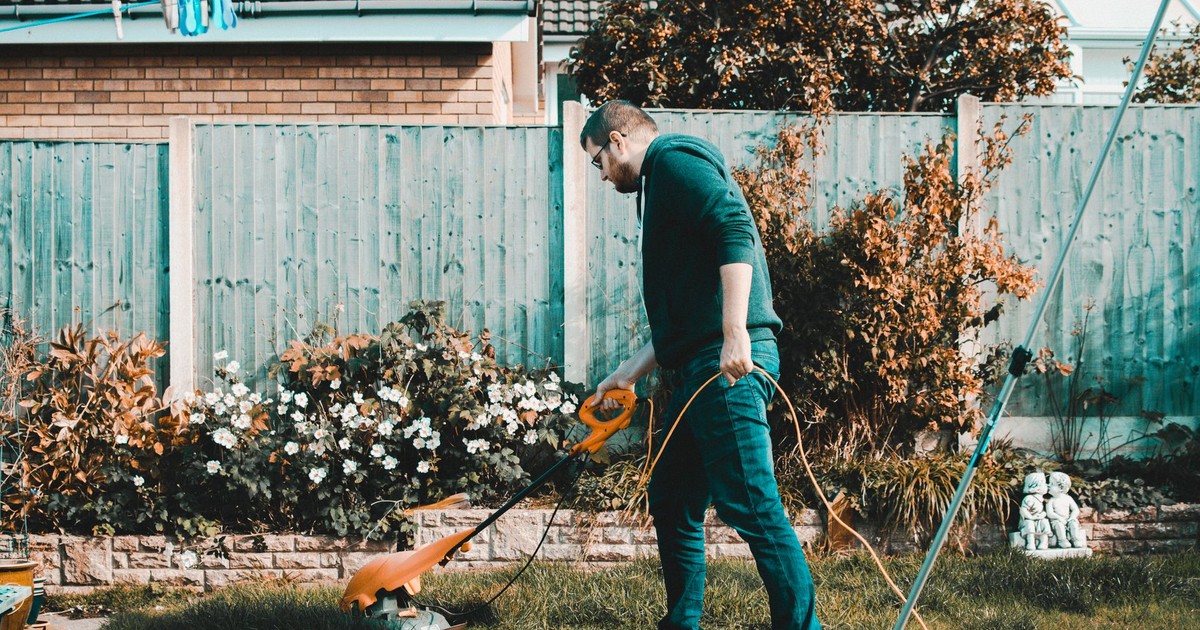
Fall after fall, the same scene plays out in suburban driveways across America: rake in hand, a boomer who has no shortage of other options, doing the work anyway. From the outside it looks like stubbornness or habit. From the inside, it’s something else.
It’s the satisfaction of a task completed, the familiarity of a routine that goes back decades, the unspoken communication to the neighborhood that standards are being maintained, the physical engagement with a body that still works, and the pleasure of being the kind of person who does the job right. Baby boomers raking leaves with total seriousness are not confused about whether it matters. They’ve just decided that it does.
That decision, made in driveways and on front lawns every October, is worth a little more respect than it usually gets. Or at least fewer unsolicited suggestions about hiring it out.
Disclaimer: This information is not intended to be a substitute for professional medical advice, diagnosis, or treatment and is for information only. Always seek the advice of your physician or another qualified health provider with any questions about your medical condition and/or current medication. Do not disregard professional medical advice or delay seeking advice or treatment because of something you have read here.
AI Disclaimer: This article was created with the assistance of AI tools and reviewed by a human editor.