

The ancient world was not waiting to be rescued by modernity. Long before steam engines or satellites, people were solving problems that still stump us, building things that still stand, and inventing weapons that governments classified for centuries. The popular image of ancient civilizations as primitive or pre-scientific is one of those comfortable myths that falls apart the moment you look at the actual evidence. A 2,000-year-old computer. Concrete that still hasn’t cracked. A weapon so effective its formula was never leaked, even after the empire that made it was gone. These aren’t legends. They’re documented history.
What makes these ancient advanced technologies so hard to process isn’t just that they existed. It’s how good they were. Not good “for the time.” Good by any reasonable standard. Some of what the ancient world figured out, we’re only now rediscovering through cutting-edge materials science or AI-assisted analysis. And in a few cases, we still can’t fully replicate what they did.
These eight technologies aren’t curiosities tucked into a museum corner. Each one rewrites something we thought we understood about human capability before the modern era.
1. The Antikythera Mechanism
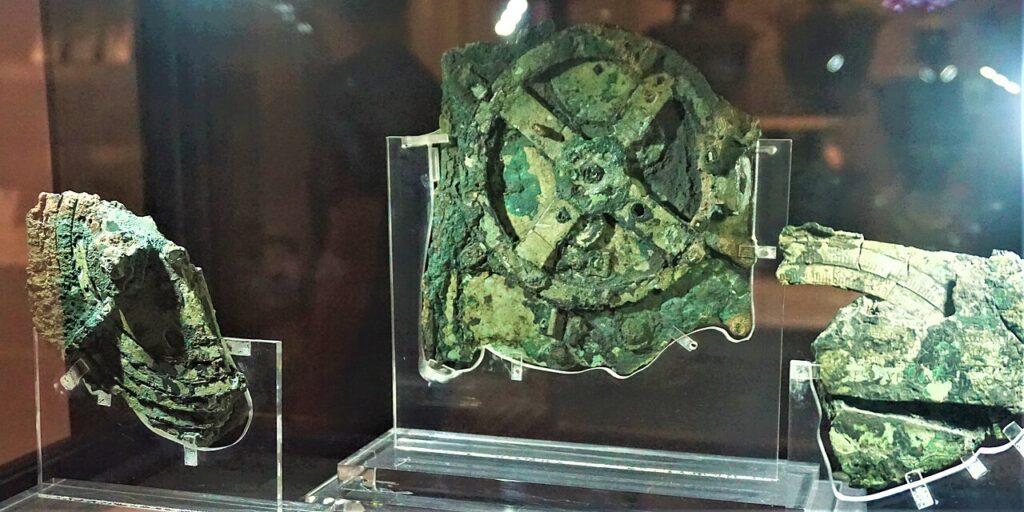
In 1901, sponge divers off a small Greek island hauled up what looked like a corroded lump of bronze about the size of a shoebox. It sat largely ignored in the National Archaeological Museum in Athens until someone noticed a gear wheel embedded in the rock-like mass. That was the beginning of one of the most astonishing archaeological discoveries ever made.
The object turned out to be a hand-cranked astronomical calculator built around 100 BC, capable of predicting solar and lunar eclipses, tracking the irregular motion of the Moon, and pinpointing the four-year cycle of the ancient Olympic Games. Nothing of comparable mechanical complexity would appear anywhere on Earth for the next 1,400 years. The device is now known as the Antikythera mechanism, and it remains the oldest known analog computer.
Scans suggest the mechanism had 37 meshing bronze gears enabling it to follow the movements of the Moon and the Sun through the zodiac, to predict eclipses, and to model the irregular orbit of the Moon. On the back of the device, two spiral dials track longer cycles: the Metonic cycle of 235 lunar months that brings the Moon back to the same phase on the same date every 19 years, and the Saros cycle of 18 years and 11 days that astronomers used to predict eclipses. The engineering required to pull this off – miniaturized interlocking gears, each one precisely cut – was so far ahead of its time that researchers spent decades just figuring out what they were looking at. In 2024, a team analyzing the spacing of holes around the broken calendar ring, using statistical techniques originally developed for gravitational-wave detection at LIGO, concluded that the ring most likely had 354 holes, matching a lunar year of 12 synodic months. The tools of one of the most advanced physics experiments ever built, applied to solve a puzzle from 100 BC. That says something.
2. Greek Fire
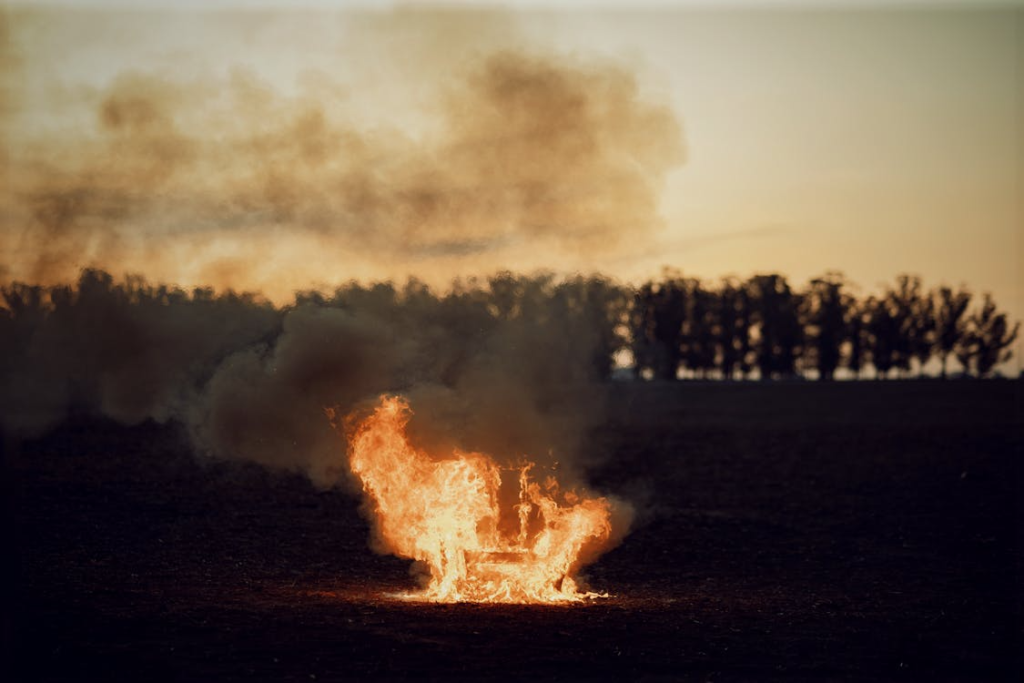
The term refers to a mixture introduced by the Byzantine Greeks in the 7th century CE. But calling it a “mixture” is like calling a nuclear warhead a “device.” The highly flammable liquid was made of secret ingredients and used both in catapulted incendiary bombs and sprayed under pressure to launch flames at enemy ships and fortifications.
What made the weapon so unique and potent was its ability to continue burning in water, which prevented enemy combatants from dousing the flames during naval battles. It’s possible that the flames burned even more vigorously upon contact with water. Greek fire was a liquid that stuck to whatever it touched, be it a ship or human flesh. Sailors who leapt overboard to escape burning ships found the fire following them across the surface of the sea.
Greek fire became the most devastating weapon of Christendom for over seven centuries and ensured that Constantinople resisted all comers. Emperor Romanos II knew its value and declared three things must absolutely never reach foreign hands: the Byzantine imperial regalia, any royal princess, and Greek fire. The art of compounding the mixture was a secret so closely guarded that its precise composition remains unknown to this day. Historians suspect petroleum-based compounds, quicklime, and sulfur were involved, but every enemy who captured samples or even entire fireships was unable to reproduce it. The Byzantines took the formula to their graves, and we still don’t know it.
3. Viking Sunstones

GPS didn’t arrive until the late 20th century. Magnetic compasses weren’t widely used in European waters until around the 12th century. So how did Viking sailors cross the North Atlantic with enough reliability to colonize Iceland, reach Greenland, and make landfall in North America, centuries before any of those tools existed?
Research suggests minerals such as Iceland spar could polarize sunlight and help determine solar position even in poor visibility. Iceland spar is a transparent form of calcite with an unusual optical property: hold it up to the sky and rotate it, and it reveals the position of the sun even when clouds are thick enough to hide it completely. The Norse sagas mention “sunstones” used for navigation, and for a long time historians assumed this was poetic license. Then a calcite crystal was found aboard a sunken Elizabethan warship, and the hypothesis gained real traction.
If widely used, the technique may have helped Vikings cross vast stretches of the North Atlantic with surprising accuracy centuries before advanced navigational instruments emerged. The physics behind it is solid: polarized light from the sky forms a pattern relative to the sun, and Iceland spar makes that pattern visible. A centuries-old navigation method that worked because of optics the Vikings understood entirely through observation and use, long before anyone had words for what was happening.
4. Wootz Steel
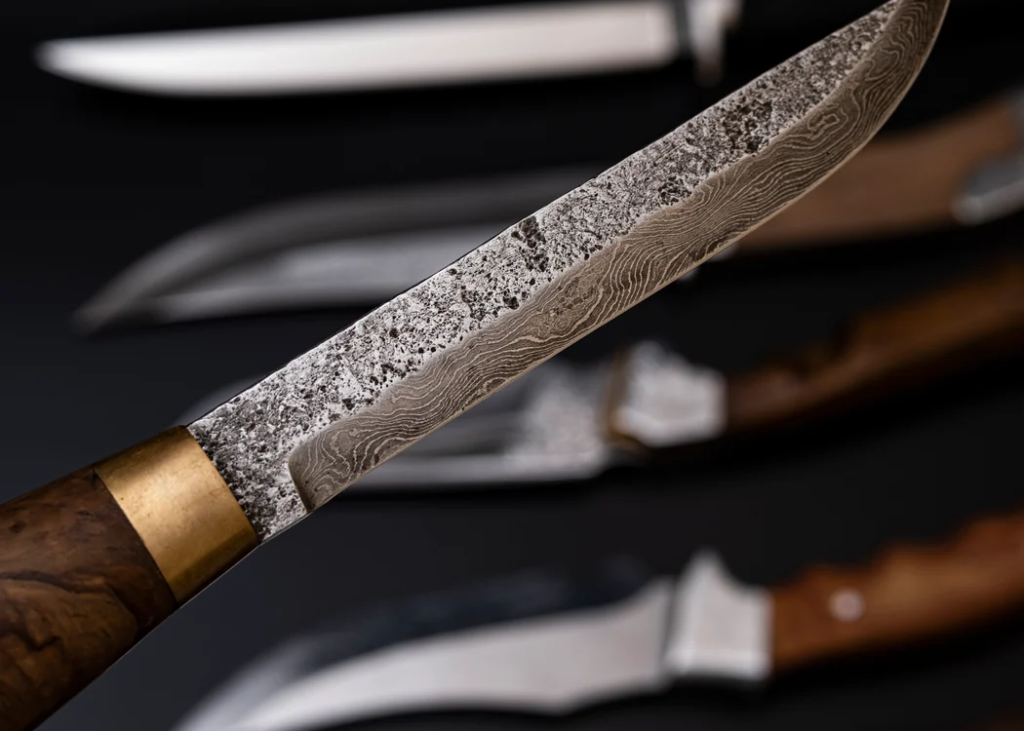
Produced in ancient India as early as the first millennium BCE, Wootz steel became one of the most sought-after materials in the ancient world. The metal was known for its exceptional strength, flexibility, and ability to hold a sharp edge. Those three properties are notoriously difficult to achieve simultaneously in any steel, ancient or modern. You can have a blade that’s hard and holds an edge, but it shatters under impact. You can have one that’s flexible, but it bends rather than cuts. Wootz managed all three.
The secret was in the carbon content and the cooling process. Wootz was produced using a crucible method that allowed very precise control over the material, creating a steel with a distinctive crystalline structure that wouldn’t be properly understood by metallurgists until the 20th century. Merchants and warriors across the ancient world paid extraordinary sums for Wootz blades. Its reputation spread from India into the Arab world and eventually into medieval Europe, where it became the raw material for another technology that would become legendary in its own right.
5. Damascus Steel
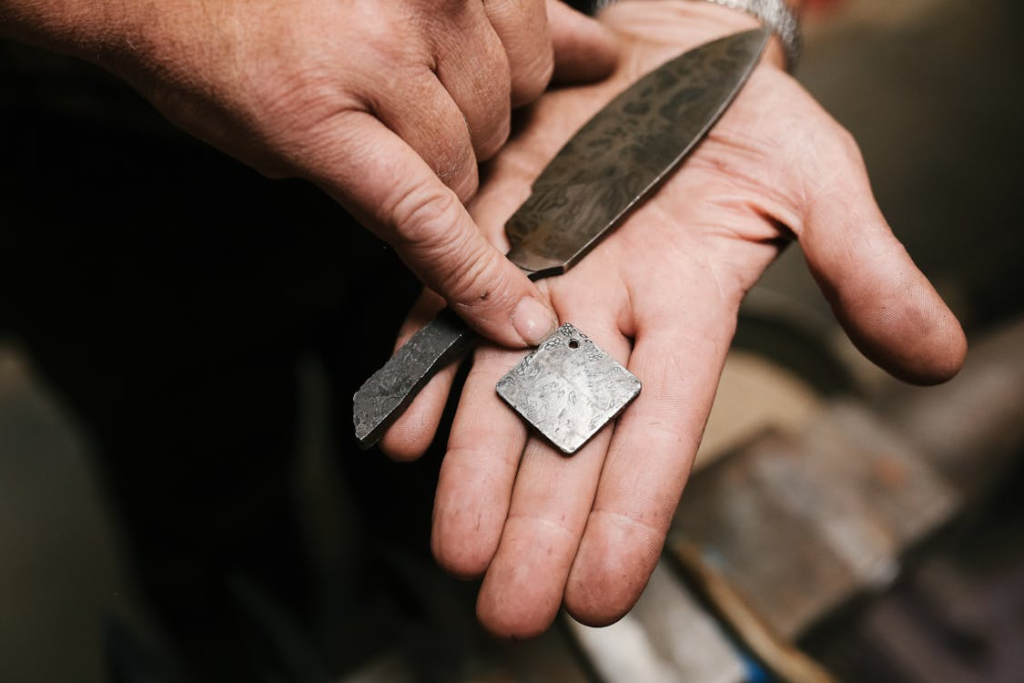
Ask a medieval soldier what the most feared blade in the world looked like, and the answer would probably include a reference to the flowing, watery patterns on the surface. Damascus steel swords were distinctive enough in appearance that you could spot one across a marketplace. More importantly, the people who faced them in battle knew exactly what those patterns meant.
Historical accounts describe Damascus blades as capable of holding a razor edge while remaining unusually resilient under combat stress. No European smithing tradition of that era produced anything close. Modern research has confirmed that these properties were real, not legend, and likely resulted from the carbon-rich structure created during the forging process, using Wootz steel from India as the starting material. Microscopic analysis has revealed carbon nanotubes and other structures within the steel that weren’t supposed to exist until modern metallurgy, formed by accident through techniques the original smiths developed entirely through practice and observation.
The knowledge simply vanished. Somewhere between the decline of trade routes and the disappearance of the specific ore deposits, the process was lost. Modern metallurgists have reproduced blades that look similar and perform well, but the precise original method remains debated. One of the ancient world’s greatest material achievements went extinct before anyone thought to write it down carefully enough to recreate it.
6. Roman Self-Healing Concrete

Modern concrete starts deteriorating in 50 to 100 years. Roman seaports built two millennia ago are still structurally intact on the ocean floor. The Pantheon’s dome, still the largest unreinforced concrete dome in the world, has stood for nearly 2,000 years. The gap between ancient Roman construction and modern concrete engineering is significant, and for a long time, nobody could fully explain it.
In 2023, a team of researchers from MIT, Harvard, and laboratories in Italy published findings in the journal Science Advances after analyzing Roman concrete samples. They found bright white mineral clasts – chunks of lime previously dismissed as evidence of poor mixing. They were wrong. These lime clasts were intentional. Tiny cracks in the concrete would tend to travel through the high-surface-area lime clasts and, when exposed to water, would recrystallize as calcium carbonate, filling the crack almost like glue. The concrete wasn’t just durable; it was actively repairing itself, automatically, for centuries.
Roman concrete’s resistance to seawater erosion is also attributed to its interaction with the environment, where seawater percolates through and promotes the growth of rare minerals like aluminous tobermorite and phillipsite. These minerals form interlocking structures within the concrete, enhancing its strength and durability over time. In other words, the sea was making it stronger. Roman engineers didn’t know the chemistry behind why this worked. They knew that it did, and they kept doing it. Scientists are now racing to replicate the formula for use in modern coastal infrastructure.
7. The Nabataean Water System at Petra

Petra sits in one of the driest places on earth. According to UNESCO’s World Heritage record for Petra, an ingenious water management system allowed extensive settlement of what was essentially an arid desert canyon during the Nabataean, Roman, and Byzantine periods. At the city’s peak, that population reached an estimated 20,000 people. Getting water to 20,000 people in a Jordanian desert is not a small problem. The solution the Nabataeans built was extraordinary.
They constructed a network of canals, pipelines, cisterns, dams, and tunnels that captured seasonal rainfall, controlled flash floods, and distributed water across difficult terrain with a precision that engineers still study today. The system fed not just drinking water but agriculture, public baths, and elaborate fountains in a place that receives under 150 millimeters of rain per year. More recent discoveries suggest the Nabataeans also developed high-pressure water transport techniques previously associated almost exclusively with later Roman engineering. They were essentially running a city-scale water utility in a desert, with nothing but carved stone and practical physics.
The scale of the engineering is difficult to overstate. The Nabataean engineers accounted for evaporation, flash flood surge, seasonal rainfall variation, and distribution across uneven topography, solving every variable that makes desert water management difficult with solutions that were both elegant and robust. The city thrived for centuries as a direct result. The question worth sitting with is how a civilization without computers or modern surveying equipment built something that the Romans, when they arrived, chose to expand rather than replace.
Read More: Fossil Found in California May Change Evolutionary History
8. Zhang Heng’s Seismoscope
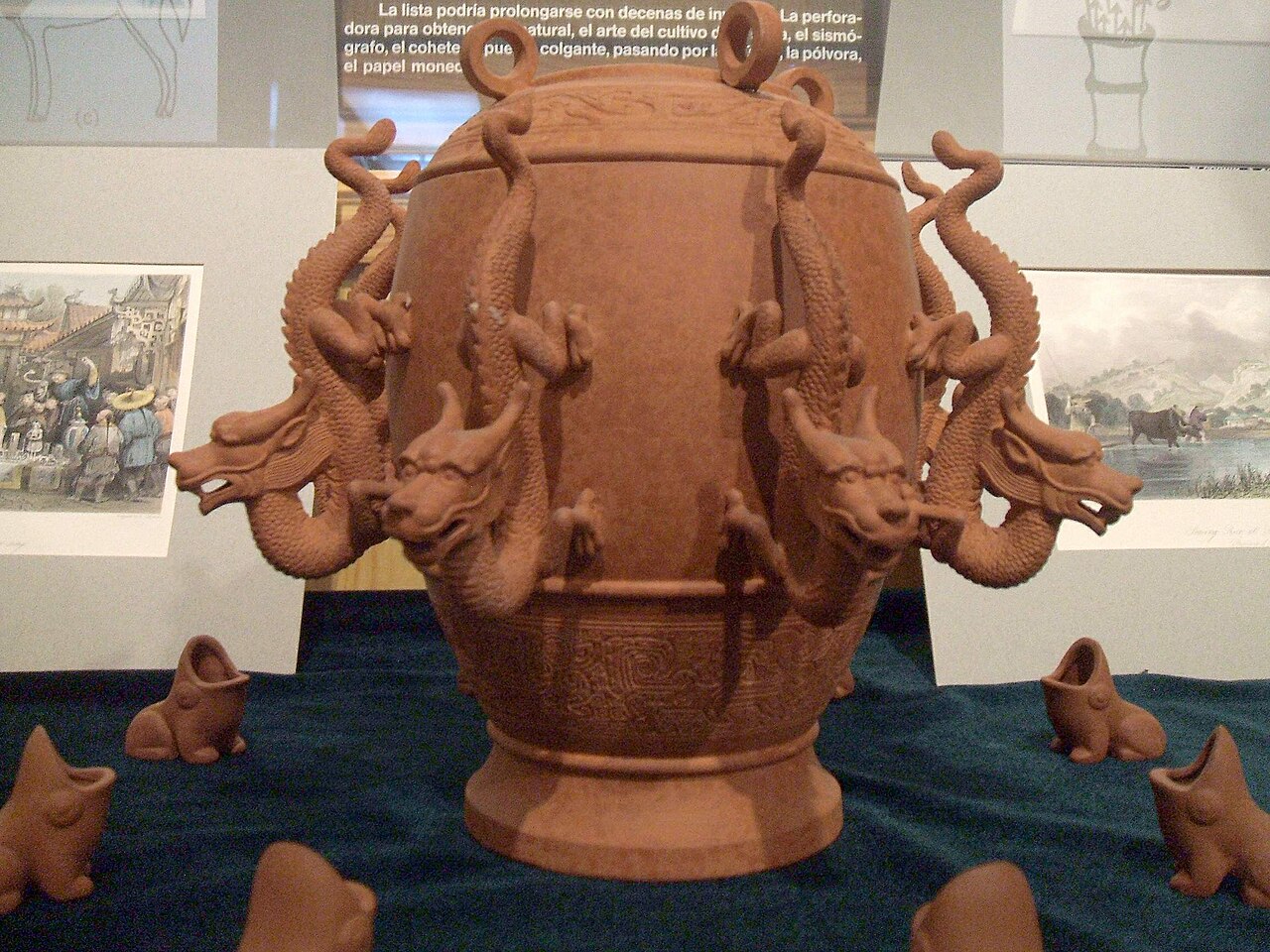
In 132 CE, a Chinese polymath named Zhang Heng presented the Han imperial court with a bronze instrument he called the houfeng didong yi, which translates roughly as “instrument for measuring the seasonal winds and the movements of the earth.” What it actually did was detect earthquakes, almost 2,000 years before the first modern seismograph.
The device was an ornate bronze urn about two meters in diameter, decorated with eight dragon heads, each holding a bronze ball. Around the base sat eight bronze toads with their mouths open. When an earthquake occurred, the mechanism inside would cause one of the dragons to release its ball into the waiting toad directly below, indicating the direction from which the seismic waves had arrived. Historical records describe a moment when the machine registered a tremor that no one at the court could feel. Days later, a messenger arrived from hundreds of miles to the northwest confirming a major earthquake had occurred. The court had doubted the device. They stopped doubting it after that.
The internal mechanism that made this possible has never been fully reconstructed. Zhang Heng left descriptions of what it did but not a complete account of how it worked. The leading theory involves a pendulum suspended inside the vessel, sensitive enough to swing in response to seismic activity and trigger the release mechanism. What is certain is that it worked, repeatedly, and that nothing comparable appeared in the Western world until the 19th century.
What We Keep Underestimating

The instinct to see ancient people as simply less capable than us is a form of intellectual laziness dressed up as historical context. Yes, they lacked certain accumulated knowledge. But they were working with the same human brain, often with generations of accumulated practical experience, in conditions that demanded real solutions to real problems. When your city needs water, you build a water system. When your navy needs a weapon that can’t be countered, you build one. When you need to predict eclipses for calendrical and religious purposes, you build the machine that can do it.
What these eight technologies share is that they weren’t theoretical. They were deployed, refined, maintained, and in most cases, worked so well that rival civilizations spent decades or centuries trying to copy them without success. The loss of some of this knowledge, whether through war, trade disruption, or simple failure to write things down precisely enough, represents a real cost to human progress. The Roman concrete formula alone, had it survived intact, might have changed the engineering of every coastline in the world.
The other thing worth sitting with is how much we still don’t know. The Antikythera mechanism sat in a museum drawer for decades before anyone realized what it was. The lime clasts in Roman concrete were misread as manufacturing errors for over a century. Zhang Heng’s seismoscope inner workings remain a matter of debate. Our ancestors were not waiting for us to arrive and explain what they’d done. Some of them were considerably further ahead than we’ve given them credit for.
AI Disclaimer: This article was created with the assistance of AI tools and reviewed by a human editor.