

The pattern tends to start the same way. Someone does the math on what they’re actually getting for what they’re paying, and the numbers stop adding up. The mortgage that requires two incomes and still feels precarious. The healthcare bill that arrives three weeks after the procedure. The retirement calculator that keeps spitting out ages that feel wrong. At some point, the question shifts from “how do we make this work?” to “does it have to work here?”
For a growing number of Americans, the answer is no. The cities absorbing them aren’t random. They tend to share a specific profile: accessible visa pathways, a cost of living that doesn’t require a salary overhaul, and the kind of daily infrastructure that actually delivers what people are leaving for. Not expat bubbles, but real cities with real life in them.
Relocation conferences are selling out. Visa attorneys are booking months in advance. Someone moved to Lisbon two years ago and now everyone in the group chat is asking for her contact details.
The United States saw net negative migration of between 10,000 and 295,000 people in 2025, according to research from the Brookings Institution. This is the first time in at least 50 years that more people moved out of the country than moved in, with voluntary departures estimated at between 210,000 and 405,000. By November 2025, one in five Americans told Gallup they would like to move abroad permanently. While politics is one reason why Americans are looking to emigrate, it’s not the only one. Cost of living, healthcare access, and quality of life consistently rank as top motivators across multiple surveys. The Association of Americans Resident Overseas estimated that 5.5 million Americans lived abroad as of October 2024.
The cities absorbing these Americans aren’t random. They tend to share a specific profile: accessible visa pathways, a cost of living that doesn’t require a salary restructuring, and the kind of daily life that actually delivers what people are leaving for. Here are the six cities currently seeing the biggest surge of Americans relocating internationally.
1. Mexico City, Mexico
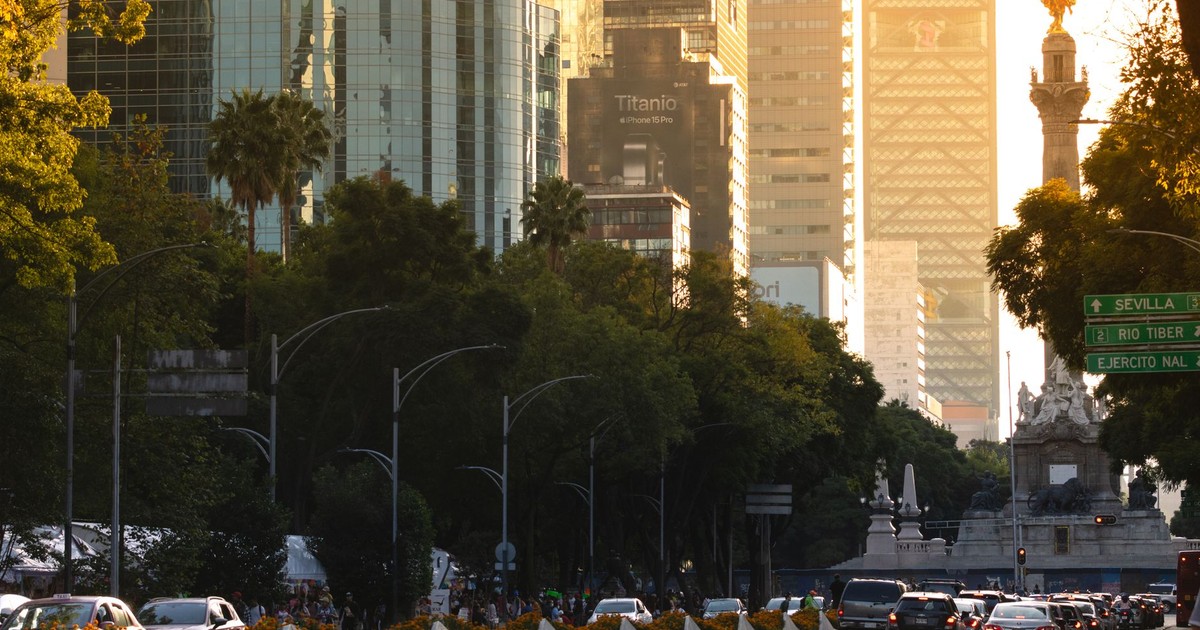
No other city on earth is absorbing American arrivals at this scale. Mexico leads all international destinations for American emigrants, with the U.S. State Department estimating approximately 1.6 million Americans living in Mexico alone. Mexico City, the country’s capital, is where the urban concentration of that surge is most visible, pulling in remote workers, creatives, and younger professionals who want a cosmopolitan city without a U.S. price tag.
The logistics are straightforward for a reason. U.S. citizens can stay in Mexico for up to 90 days without a visa, or 180 days with a tourist visa, and those seeking longer-term residency typically begin by applying for a temporary residency visa. Living costs are usually between $1,200 and $1,900 per month for one person, or $2,800 to $4,000 for a family. The neighborhoods most popular with arriving Americans (Roma Norte, Condesa, and Juárez) are walkable, dense with restaurants and co-working spaces, and offer a social infrastructure that makes the transition dramatically easier than landing somewhere without an existing expat community.
What’s kept Mexico City at the top of this list for several years running is that it doesn’t require much sacrifice in urban amenities. The city has a subway, world-class food, and a cultural calendar that rivals any major European capital. The thing people tend not to expect is how quickly it stops feeling like a foreign country and starts feeling like home.
2. Lisbon, Portugal

According to the latest official data from AIMA (Portugal’s Agency for Integration, Migration, and Asylum), around 19,258 Americans live in Portugal, representing a 36.3% increase from the previous year. Around 4,800 U.S. residents obtained Portuguese residence permits in 2024 alone. Lisbon is where the overwhelming majority of those new arrivals land first.
Portugal’s pull for Americans relocating internationally runs deeper than affordability alone, though the numbers there are real. The cost of living in Portugal is, on average, around 30 to 40% less than in the U.S., with rent running roughly 36 to 38% lower across the country. Lisbon itself has gotten more expensive as demand has surged, but it’s still dramatically cheaper than comparable European capitals. Portugal’s Digital Nomad Visa has been updated for 2026 with a minimum monthly income threshold for individuals, making it a structured option for remote workers, while the D7 Passive Income Visa continues to draw retirees and anyone with consistent income from investments or pensions.
Safety rounds out the picture. Portugal ranks 7th out of 163 countries on the 2025 Global Peace Index, with low crime rates, political stability, and a sense of civic cohesion underpinning that standing. The trade-off is real, though: demand has driven up housing competition in Lisbon and Porto, and affordable rentals are harder to secure than they were even three years ago. People arriving with a firm budget need to do serious research before assuming they’ll find the same deals that made early movers so enthusiastic.
3. Barcelona, Spain

Spain continues to attract Americans drawn to its climate, culture, and lifestyle. Cities such as Madrid, Barcelona, and Valencia offer strong infrastructure and established international communities, while Spain’s digital nomad visa has further increased interest among remote professionals. Spain hosts tens of thousands of American residents, with estimates typically ranging between 40,000 and 50,000 Americans living across the country, and Barcelona accounts for a disproportionate share of that, given the city’s size and international character.
Spain’s visa offerings have expanded significantly and are now among the most accessible in Europe for Americans. The Digital Nomad Visa targets remote workers with steady income, while the Non-Lucrative Visa works well for retirees or those who can demonstrate they don’t need local employment to support themselves. Spain ranks third on Global Citizen Solutions’ Global Retirement Report 2025 and first on the Digital Nomad Index by the Global Intelligence Unit. The main ways to get residency are the Digital Nomad Visa, which requires a monthly income of about $3,000, and the Non-Lucrative Visa for retirees or people with passive income. Barcelona’s appeal stacks these legal pathways on top of a city with genuine infrastructure: excellent public transit, an international airport, strong English proficiency in professional settings, and a quality of healthcare that catches many American arrivals by surprise.
The thing Barcelona offers that most cities on this list don’t is sheer scale. It’s a major metropolitan city, not an expat enclave dressed up as one. That means more professional opportunity, more cultural depth, and a higher likelihood of finding a neighborhood that fits your actual life rather than just the version of European living you’d imagined. A Chicago couple who relocated to Valencia, Spain in the spring of 2025 spent 10 months saving more than $20,000 for the move, a useful reference point for what the initial costs of a Spanish relocation actually look like.
4. Rome, Italy

Italy has long appealed to Americans seeking a slower pace of life combined with rich cultural history. The country’s digital nomad visa has further increased interest among remote professionals and entrepreneurs. Estimates suggest 15,000 to 20,000 Americans currently live in Italy, with large communities in Rome, Florence, and Milan. Rome remains the anchor, offering deep cultural infrastructure and a pace of life that feels fundamentally different from major U.S. metros.
Italy’s visa structure has gone through notable changes in 2025 and 2026 that American movers need to understand. The Elective Residency Visa remains the go-to option for financially independent individuals and retirees who can demonstrate sufficient passive income. Italy launched a Digital Nomad Visa in 2025, adding a pathway for remote workers who’d previously had to rely on tourist stays or more complicated arrangements. One significant pathway has recently been narrowed: Italy’s ancestry citizenship route, historically one of the most popular for Americans, was restricted by Law 74/2025 to children and grandchildren of Italian citizens only. Italy’s Constitutional Court upheld that restriction in a ruling announced March 12, confirming that the estimated 60 million to 80 million people worldwide who had previously been eligible through earlier generations no longer qualify under the automatic framework. The change has prompted a rush of last-minute applications and accelerated interest in alternative routes.
That legal shift has redirected American interest toward residency visas rather than citizenship-by-descent applications, which means Rome is drawing a slightly different profile of arrival now: more retirees and remote workers, fewer people chasing a passport. The lifestyle case for the city remains as strong as ever. The combination of world-class food, walkable neighborhoods, and a calendar of cultural events that runs year-round is, for many people, simply not available anywhere else.
Read More: 9 Countries That Let You Claim Citizenship Through Your Family Tree
5. Athens, Greece

Greece has emerged as a compelling relocation option. Its digital nomad visa and relatively accessible cost of living compared with Western Europe have attracted growing numbers of American professionals. The American expat community in Greece is estimated at 8,000 to 12,000 residents, with Athens and Crete among the most popular destinations. Those numbers are smaller than Lisbon or Barcelona in absolute terms, but the growth rate is what’s drawing attention. Athens is one of the fastest-accelerating destinations for Americans relocating internationally right now.
The financial case is straightforward. Rent in central Athens runs about $700 to $1,100 per month for a one-bedroom apartment, which is substantially cheaper than Lisbon and roughly half what Barcelona would cost in a comparable neighborhood. A full meal with wine at a local taverna often comes to around $12 to $18 per person. For Americans used to running a tight monthly budget, those numbers create real breathing room.
Greece’s digital nomad visa has been one of the most effective in Europe at converting interest into actual arrivals. It requires proof of income from outside Greece but doesn’t demand the levels that some Western European equivalents do, making it genuinely accessible for a wider range of remote workers. Athens also benefits from a large English-speaking professional class and a startup and creative scene that didn’t really exist a decade ago. The old image of Athens as a museum-and-ruins destination doesn’t hold in the neighborhoods where most American arrivals are actually settling. Koukaki, Monastiraki, and Exarcheia each have a distinct energy that runs closer to Berlin or Brooklyn than to a tourist brochure.
6. Dublin, Ireland

Ireland welcomed 10,000 people from the U.S. in 2025, about double those who came in 2024. That year-over-year doubling is the most dramatic growth rate of any English-speaking destination in Europe, and Dublin absorbs the majority of those arrivals given its size, its international business infrastructure, and its position as the default first landing point for Americans moving to Ireland.
The English language is the obvious initial draw, but Dublin’s appeal goes beyond linguistic ease. Ireland is a full EU member, which means that Americans who establish residency and ultimately qualify for Irish citizenship gain the right to live and work across all 27 EU member states. Americans are applying for British citizenship at the highest rate since records began in 2004, with around 6,600 in the year to March 2025. They are securing Irish passports at a record pace: 31,825 in 2024, and an estimated 40,000 in 2025. That gap reflects just how much stronger Irish citizenship is perceived to be as a strategic move for Americans looking for long-term European mobility.
Dublin is not a cheap city. It’s consistently ranked among the more expensive capitals in Europe, with housing costs that have risen sharply as demand from both domestic and international arrivals has outpaced supply. The calculation many Americans are making is that the combination of English-language ease, EU access, strong employment in tech and finance, and cultural proximity to the U.S. is worth the premium. Ireland is home to roughly 35,000 to 40,000 American residents, many of whom live in Dublin and work in the country’s expanding technology and finance sectors. American professionals working for companies with Dublin offices (Google, Meta, LinkedIn, and dozens of others have significant Irish operations) find the transition particularly clean, since they’re often moving within the same corporate structure.
What to Make of All This

The most striking thing about the current wave of Americans relocating internationally isn’t the volume. It’s the range. A growing number of Americans are exploring moving abroad or becoming digital nomads earlier in their careers, seeking countries that offer lower living costs, flexible residency options, and the freedom to work remotely. For decades, moving abroad was largely associated with retirement, diplomatic postings, or corporate relocation. But that assumption is shifting. The 40-year-old marketing director, the 35-year-old freelance developer, the couple in their early fifties who ran the numbers and realized they could retire five years sooner in Lisbon than in Los Angeles: these are the people filling out residency applications right now.
Portugal ranks first in Global Citizen Solutions’ Global Retirement Report, and Spain leads its Global Digital Nomad Index for U.S. citizens. But the right city ultimately depends on which specific version of your life you’re trying to build. A city that works brilliantly for a remote worker with a $4,000 monthly budget might be a poor fit for a family with school-age children. The cities on this list each have real trade-offs (rising housing costs in Lisbon, higher overall expenses in Dublin, bureaucratic friction in Rome) and the Americans making the most successful transitions tend to be the ones who researched those trade-offs before the flight, not after.
The paperwork alone will sort out the serious from the daydreaming. Gathering the documents for a Portuguese D7 visa, securing proof of income for a Spanish Digital Nomad application, tracking down three generations of Irish birth certificates: none of it is impossible, but all of it takes time. The Americans who land well tend to be the ones who started that process months earlier than felt necessary, built in a contingency budget that covered at least the first six weeks of housing uncertainty, and resisted the urge to pick a neighborhood before they’d actually spent time in the city. Moving abroad doesn’t solve the underlying math if you replicate your U.S. spending habits in a city that no longer has the U.S. salary to support them.
What the data shows, and what the people in those visa lines already understand, is that this isn’t a fleeting pandemic hangover. The structural conditions that made these cities attractive in 2023 haven’t changed. If anything, the pathways have gotten more established, the expat communities more developed, and the information more accessible. For anyone still doing the math, the gap between considering it and actually doing it has never been narrower.
Disclaimer: This information is not intended to be a substitute for professional medical advice, diagnosis, or treatment and is for information only. Always seek the advice of your physician or another qualified health provider with any questions about your medical condition and/or current medication. Do not disregard professional medical advice or delay seeking advice or treatment because of something you have read here.
AI Disclaimer: This article was created with the assistance of AI tools and reviewed by a human editor.