

Americans have been voting with their moving trucks for years now, and the 2026 data makes the pattern clearer than ever. The cities people are leaving aren’t random. They share a specific combination of high housing costs, rising taxes, and, for some, a variable that barely existed in serious conversations five years ago: climate risk. The sheer predictability of it is almost startling at this point. The same names keep coming up. The same families keep packing.
What’s changed in 2026 isn’t the list of cities losing people. It’s the reasons those people give, and the places they’re actually landing. For a long time, Americans moved for jobs. You took the position in the city that could give you the career, paid the astronomical rent, and told yourself it was an investment. That calculation has fundamentally shifted. Affordability has overtaken career as the number-one reason people move, and that single change has reshuffled nearly everything downstream of it.
The broader picture from moving companies, Census data, and real estate platforms is more complicated than the old Sun Belt script suggests. Some cities that looked doomed are showing real signs of stabilization. Others that seemed safe are accelerating their losses. Below are the cities Americans are leaving fastest in 2026, what’s actually driving each one, and where those residents end up.
1. Los Angeles, California
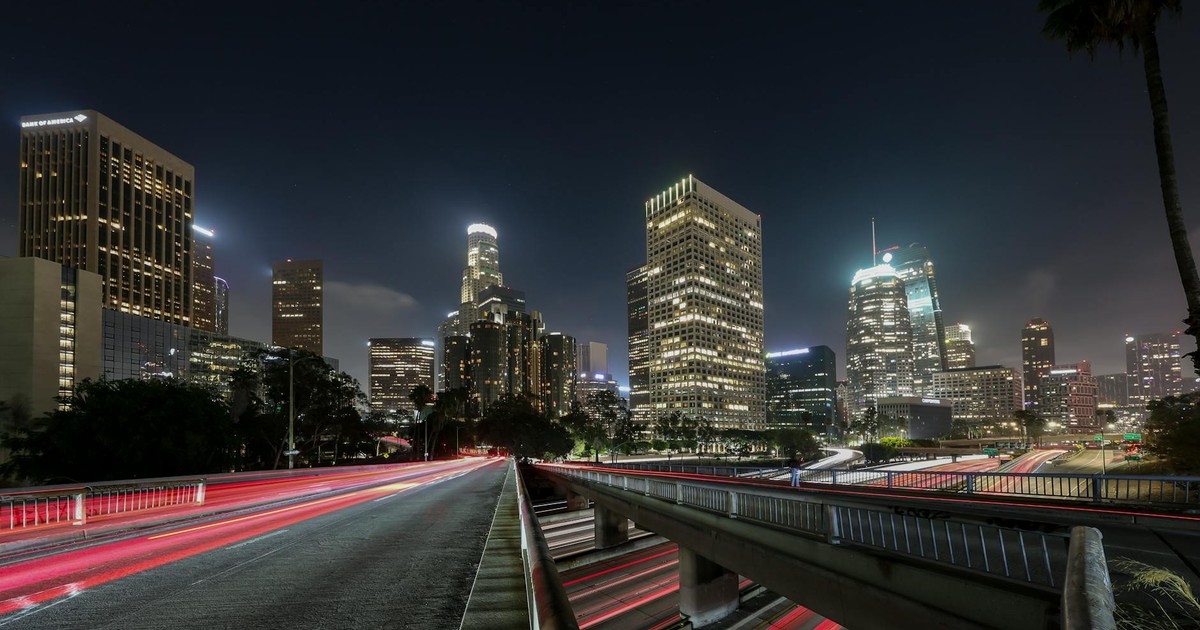
Los Angeles claims the top spot for move-outs for the fifth consecutive year. That’s not a blip. That’s a trend so consistent it has become the defining story of American domestic migration this decade. The city that once felt like an inevitable destination – the weather, the industry, the myth of reinvention – is now the single biggest source of outbound movers in the country.
A 2026 PODS Moving Trends Report found that affordability has overtaken career as the top deciding factor for where Americans choose to move, with 58% of movers citing it as their primary motivation. Community and connection came in second at 41%. For a long time, people moved for jobs. Now they’re moving away from monthly bills they can’t keep up with, and nowhere illustrates that more clearly than Los Angeles.
California as a whole carries some of the country’s highest taxes and most punishing cost-of-living pressures. The January 2025 wildfires in Los Angeles County made things considerably worse, destroying tens of thousands of homes and displacing more than 100,000 residents, many of whom have still not fully recovered. For people who were already on the fence about staying, that event removed the last hesitation.
Where are Angelenos going? Primarily Texas and the Carolinas, trading sky-high rent for homes they can actually own. The U-Haul Growth Index has ranked California 50th out of 50 states for six consecutive years, which tells you this isn’t a new development so much as a deepening one.
2. New York City, New York
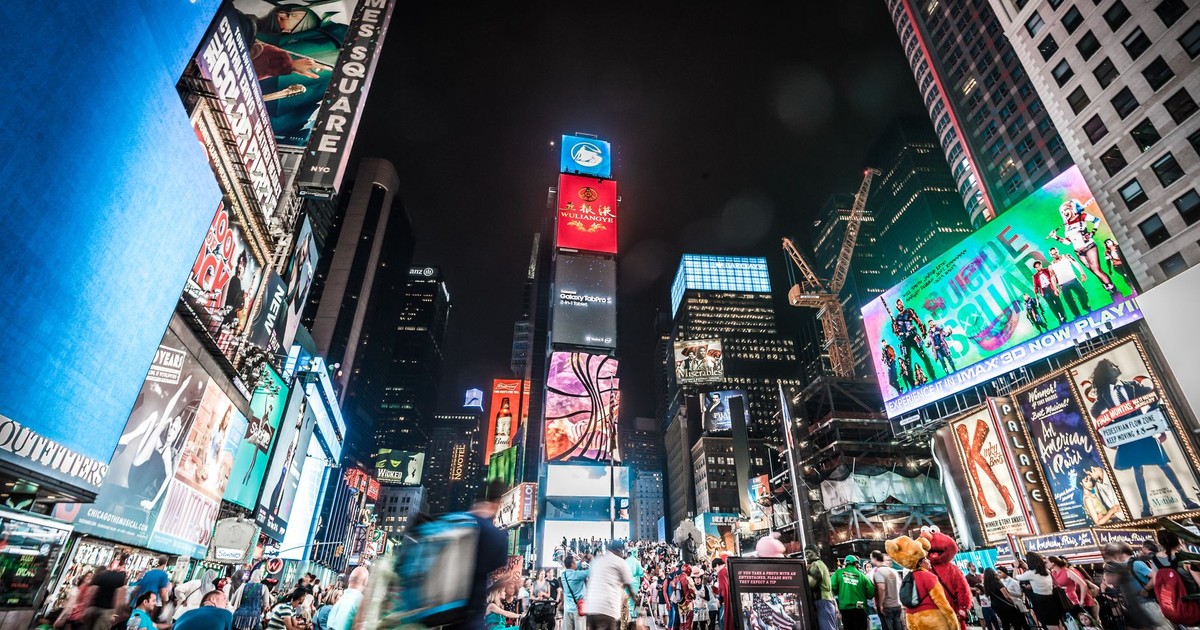
New York is the most paradoxical city on this list. It added more people in raw numbers than almost any other metro in the country last year. And yet it’s simultaneously one of the biggest sources of domestic outmigration – and those two things are not contradictory once you understand the math.
The U.S. Census Bureau’s Vintage 2025 estimates show New York City’s population declined by 12,196 between 2024 and 2025, the greatest numeric decrease in the nation. What growth exists in the wider metro is concentrated in its exurban outer edges, not the city itself. The New York metro area suffered a net domestic migration loss of nearly 1.3 million people over the first half of this decade – the biggest loss of any U.S. metro area. Remove the international arrivals and the city is losing population at a rate few other metros can match.
The domestic exodus is driven by housing costs that have made even modest apartments feel like a luxury purchase, a cost of living that forces trade-offs most families can no longer absorb, and a growing sense that the lifestyle benefits don’t justify the financial strain. People leaving New York tend to land in the Mid-Atlantic suburbs, Florida, and North Carolina – smaller cities where the same salary goes considerably further.
3. South Florida (Miami Metro), Florida

South Florida’s appearance near the top of the move-out list in 2026 is the most surprising entry here, given that Florida spent most of the past decade as the country’s primary migration magnet. The reversal is real, and it’s been building for several years.
The state’s rapid influx of wealthy residents from 2021 to 2023 pushed housing costs up sharply. Natural disasters drove insurance rates to levels that make homeownership nearly unaffordable for middle-income buyers. Worsening hurricanes and oppressive summer heat have dissolved much of Florida’s middle-class appeal. As of early 2026, Zillow shows the housing market in Florida is down 4.1% year-over-year, a sign that even demand is cooling.
Climate anxiety is now translating directly into migration numbers. Redfin reported that for the first time since 2019, high-flood-risk areas in the U.S. saw a net domestic outflow of 29,027 people in 2024, with Miami-Dade County recording the worst domestic outflow among high-flood-risk counties at 67,418 people. The people most likely to stay in South Florida are those with the financial resources to manage the risk. Everyone else is doing the math.
4. Washington, D.C.

Washington, D.C. made the biggest single jump on the move-out list of any city in 2026. The capital climbed 10 spots on the move-out rankings in a single year, from 14th place to just outside the top three. That kind of rapid movement doesn’t happen without a clear, identifiable cause.
D.C. lost approximately 200,000 jobs in 2025, with analysts concluding the District’s economy “took a nosedive” due to federal job cuts that ricocheted throughout the local economy. When a city’s economic identity is built so heavily on one sector, a disruption to that sector empties neighborhoods fast. MoveBuddha’s 2026 migration data places the Northeast and mid-Atlantic region among the areas seeing the highest outbound search ratios, with Connecticut, New Jersey, and Maryland all ranking among the least popular states to move to in 2026.
Political tensions and a drop in affordability have compounded the problem. RentCafe put Washington D.C.’s average rent at $2,450 per month as of April 2026, compared to the national average of $1,750. For people who have lost federal positions or seen their contractors lose government work, that rent calculation gets very simple very fast. D.C. movers are largely heading to Virginia suburbs, Tennessee, and the Carolinas.
5. Northern California (San Francisco Area)

San Francisco spent several years as the poster city for urban flight, and the story hasn’t changed dramatically in 2026. Northern California, meaning the San Francisco metro area, remains among the top move-out markets for the fifth consecutive year, alongside six other California cities. The Bay Area’s specific exodus is driven by a tech industry that has spent the last two years contracting headcount, paired with housing costs that never corrected meaningfully even as the office market collapsed.
What’s worth noting is that the outflow has slowed slightly compared to its peak. San Francisco, which had been a net-loss metro on U-Haul’s index, flipped to a net-gain market in 2025 and entered U-Haul’s top 25 growth metros for the first time. That’s a meaningful signal – not that the city has fixed its affordability problem, but that the steepest phase of the departure may have passed. Still, the broader state-level trend is unambiguous. California leads all states in move-outs, with seven cities on the exodus list this year. The people leaving the Bay Area are heading primarily to Austin, Phoenix, Denver, and smaller Pacific Northwest cities.
6. Long Island, New York

Long Island’s presence on this list might seem surprising given that it’s technically suburban, not urban. But the same pressures hammering New York City proper have spread outward, and in 2026 PODS moving data places it firmly in the top five nationally for move-outs alongside South Florida, Northern California, and Washington D.C.
Long Island’s exit story is essentially a housing story. Median home prices rival Manhattan-adjacent neighborhoods in cities where incomes are significantly lower. Property taxes in Nassau and Suffolk counties are among the highest in the nation, and many residents find themselves property-rich but cash-poor, especially in retirement. The destination of choice for Long Island leavers skews toward Florida, the Carolinas, and Pennsylvania suburbs – places where the same equity buys far more.
The pattern also points to something broader: the flight from the Northeast isn’t just about city centers anymore. It’s spreading to the suburbs that once seemed like the sensible middle ground between urban cost and rural isolation. New Jersey has led United Van Lines’ outbound study for six consecutive years, confirming that the wider tri-state area continues to shed residents to other regions.
7. Chicago, Illinois
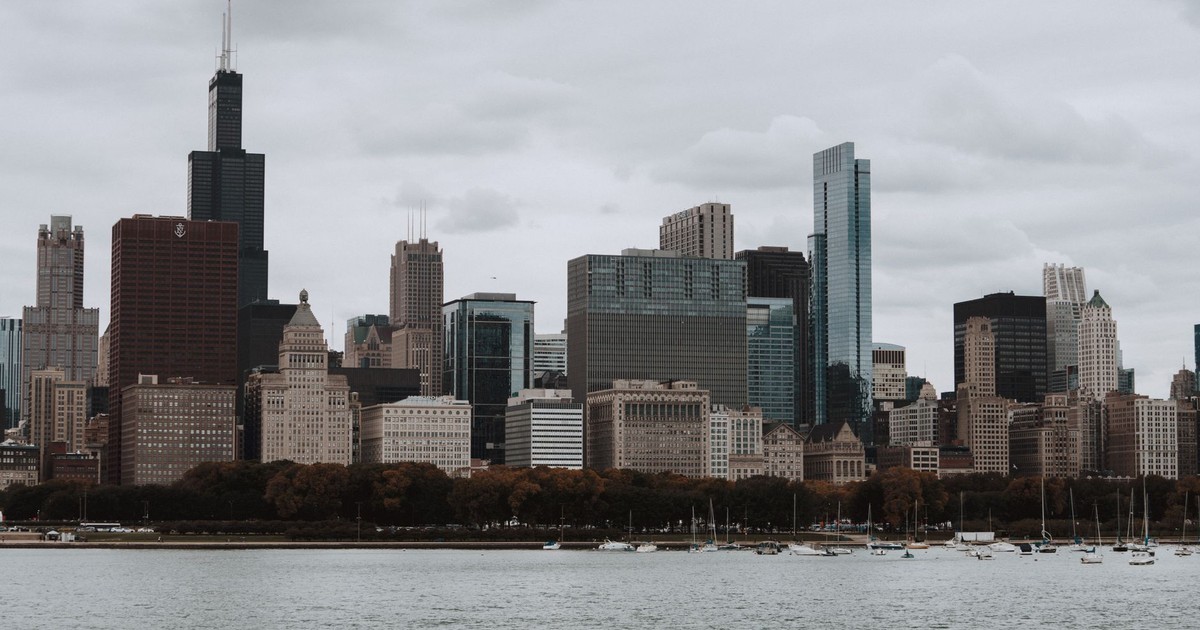
Chicago is an interesting case because it’s a city that has been losing people for years – and yet is now showing signs of genuine stabilization. It still has a meaningful domestic outflow, but the trajectory has shifted. Illinois, ranked among the top two outbound states for years, moved to “balanced” status in 2025, the first time in over a decade. For a city that has been on the wrong side of migration data since at least 2015, that’s worth noting.
The reasons Chicago has been losing residents are well-documented: high property taxes, a state pension crisis that has hung over the city’s finances for years, harsh winters, and a cost of living that, while lower than the coasts, has crept upward fast enough to push out residents who once considered it the affordable alternative. The outflow has historically tracked toward the South, with Indianapolis, Nashville, and Phoenix absorbing large numbers of Chicago transplants.
New York’s domestic outflow improved by nearly 34,000 year-over-year in the most recent data. Los Angeles improved by roughly 21,000. Washington D.C. improved by 20,000, and Chicago improved by nearly 20,000. All four cities are still losing people, but the rate is slowing across the board. Whether that holds through the rest of 2026 depends heavily on broader economic conditions and, in particular, on whether immigration continues at its current reduced levels.
So Where Are They All Going?
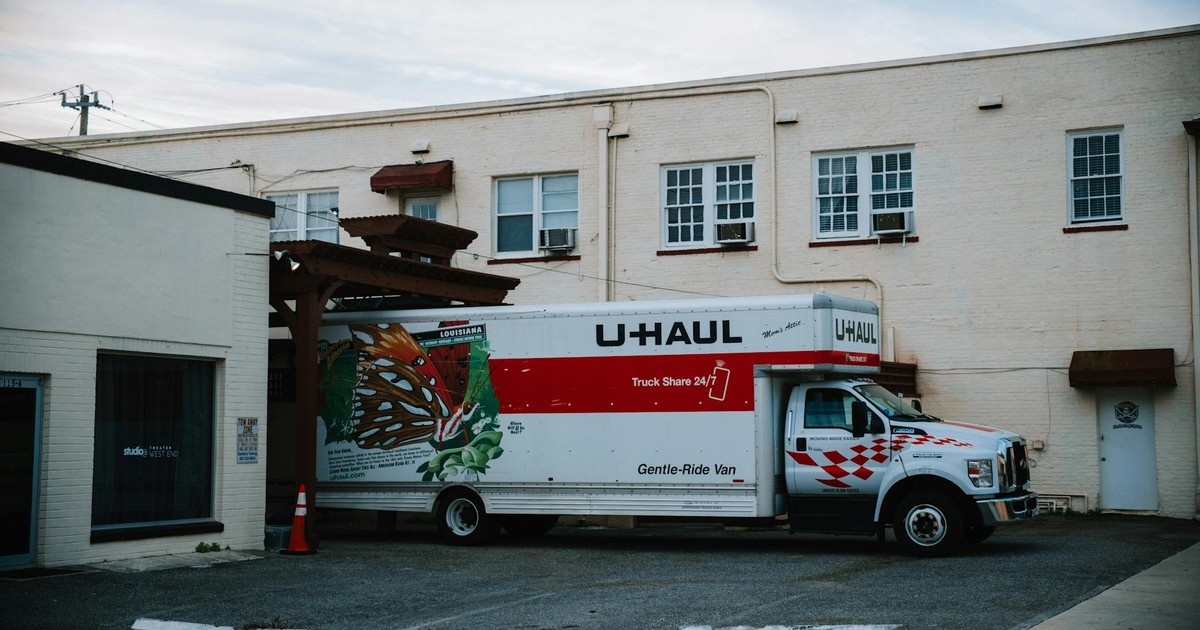
The answer, consistently and across every data source, is the South and the Sun Belt – specifically its smaller, more affordable corners. Sun Belt dominance continued in 2026, with the region claiming 80% of the most popular destination cities, up from 75% in 2025. For the fourth consecutive year, the Myrtle Beach – Wilmington area claimed the top spot for move-ins, while Ocala, Florida ranked second for the third straight year.
But the newer story is the Midwest, which is emerging as a destination in a way that would have seemed implausible a decade ago. Trends show Montana’s in-to-out move ratio up 42 percentage points since 2025, with Idaho, Arizona, and New Mexico also gaining ground significantly. Minneapolis and Indianapolis both flipped from net domestic outflow to net inflow, and Zillow’s data identified its hottest housing markets of 2025 as dominated by affordable Midwest cities: Rockford, Illinois; Toledo, Ohio; Dearborn, Michigan; South Bend, Indiana; and Carmel, Indiana.
More Americans are trading big-city prestige for mid-sized metros and college towns that offer a mix of jobs, decent schools, and outdoor recreation. The person leaving Los Angeles in 2026 isn’t necessarily dreaming of Tampa or Austin anymore. They might be looking at Knoxville, or Boise, or Toledo – cities that never made anyone’s vision board but are quietly making the math work.
Read More: Best Places to Be in the US When Society Collapses
The Real Reason People Leave

It would be easy to frame all of this as a simple affordability story, and affordability is certainly at the center of it. But the migration data from 2026 reveals something a little more complicated than people chasing cheaper rent. It’s about a recalibration of what city life is actually worth.
For decades, people accepted sky-high costs in major metros as the price of access – access to career networks, cultural institutions, professional opportunities, the energy of density. The pandemic broke that implicit deal. Remote work proved that access didn’t require presence. And once that door opened, the cost-benefit calculation for places like Los Angeles, New York, and Washington shifted permanently for a large segment of the population.
A Brookings Institution analysis found that New York, Los Angeles, Chicago, Washington, Miami, and several other large metros have relied overwhelmingly on international immigration to maintain or grow their populations – and with international migration now at historic lows, several face the prospect of renewed and sharper population decline. The city, in other words, has to keep replacing the people it loses rather than retaining them. That’s a fragile way to grow.
None of this means the great American cities are finished. Cities have absorbed far worse shocks and come back stronger. But the Americans leaving in 2026 aren’t leaving in a panic. They’re leaving with spreadsheets, weighing what they actually get for what they actually pay. And increasingly, the numbers are pointing somewhere smaller, cheaper in cost if not in life, and a lot further from where they started.
AI Disclaimer: This article was created with the assistance of AI tools and reviewed by a human editor.