

On March 18, 1990, two men disguised as police officers gained access to the Isabella Stewart Gardner Museum and stole 13 objects, including rare paintings by Rembrandt, Degas, and Vermeer, making it the largest property crime in U.S. history. Thirteen pieces of art. Eighty-one minutes. No arrests in 36 years.
Some losses are administrative. A file goes missing. A hard drive fails. The thing can, in principle, be reconstructed. The six losses on this list don’t work that way. These American treasures lost to history vanished in moments of collapse: governments falling, men dying before they could talk, criminal operations so tightly held that the secrets went into the ground with the people who kept them. The paper trails end. The maps turn out to be riddles. The FBI names suspects who are already dead.
All of them are still out there, or at least the possibility of them is.
The Gardner Museum Masterpieces

In the early hours of March 18, a vehicle pulled up near the side entrance of the museum. Two men in police uniforms pushed the buzzer, stated they were responding to a disturbance, and requested to be let in. The guard on duty broke protocol and allowed them through the employee entrance. He stepped away from the watch desk at the fake officers’ request, and he and a second guard were handcuffed and tied up in the basement. The thieves departed with 13 works of art 81 minutes later.
The combined value of the 13 works stolen during the Gardner theft is at least $500 million. Among them: Rembrandt’s only known seascape, a Vermeer that is one of only 36 paintings by him in existence, and several Degas works. The thieves cut some canvases directly from their frames, a detail that art conservators have noted with particular alarm, since rolled or folded oil paintings deteriorate fast.
For decades, the FBI has investigated the case in partnership with the museum and the Massachusetts U.S. Attorney’s Office, following leads around the world. In 2013, the Bureau said it had identified the thieves but declined to name them, a statement that added another layer of frustration. On the 35th anniversary of the heist in March 2025, retired FBI agent Geoffrey Kelly, who led the investigation for more than two decades, spoke publicly for the first time since retiring, offering a clearer picture of the suspects than the Bureau had previously provided. Both principal suspects are now believed to be dead.
The Isabella Stewart Gardner Museum’s Board of Trustees has extended its $10 million reward for information that leads directly to the successful return of the 13 works of art stolen from the museum in 1990, the largest reward ever offered by a private institution for stolen art. The empty frames still hang in the Dutch Room on the second floor of the museum, exactly where Isabella Gardner placed them. Her will stipulated that nothing in the museum could be rearranged. So the gaps stay.
The Lost Confederate Treasury
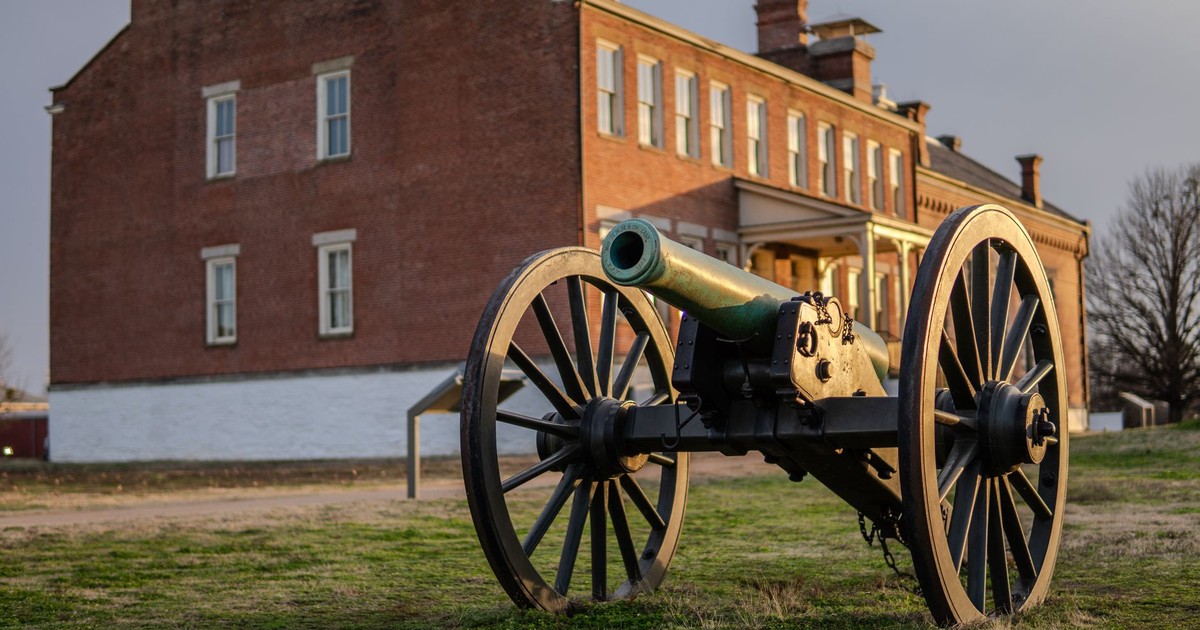
The story of the lost Confederate gold is, at its core, a straightforward accounting problem that somehow became a 160-year obsession. Georgia was a hub of gold mining, minting, and trading during the Civil War, and as Richmond fell to Union forces in the war’s final days, the Confederate treasury was loaded onto trains and sent south, where much of it disappeared.
On the night of April 2, 1865, Jefferson Davis received word in church that Lee’s defensive line at Petersburg had been broken. Two trains left Richmond in a hurry. On the first were Davis and government officials. On the second were the holdings of the Confederate Treasury, along with the reserves and assets of six Richmond banks. The plan was to get the gold and silver as far south as possible and keep it out of Federal hands.
What happened next is where the documented record unravels into competing accounts. According to History.com, near Chennault Crossroads on May 24, 1865, bushwhackers attacked the wagons and roughly $250,000 vanished. Davis’s group left Richmond with a substantial treasury and, six weeks later when he was captured, the money was largely gone. That arithmetic, substantial sum in, almost nothing out, has sent treasure hunters into Georgia fields and Appalachian hollows for generations.
The rumors about different portions of the missing funds still circulate. Some $86,000 in remaining treasury funds was reportedly entrusted to two Confederate navy officials tasked with smuggling it to Britain, and that portion was never accounted for either. The treasure has been “found” in everything from rural Georgia to Michigan over the decades. None of those finds have held up.
The Beale Ciphers

In the early 19th century, a man named Thomas J. Beale allegedly buried a treasure in Bedford County, Virginia, and left behind three encrypted messages meant to reveal its location, contents, and the names of the rightful heirs. He entrusted the messages to an innkeeper named Robert Morriss, with instructions to open the box if Beale did not return within ten years. Beale never returned.
Of the three ciphers, only one has been decoded. The key turned out to be the Declaration of Independence, each number in that cipher corresponds to the first letter of a numbered word in that founding document. The decoded cipher describes the treasure’s contents, estimated at over $60 million in today’s value. The other two messages, which supposedly reveal the exact burial location and the names of the heirs, remain unbroken despite decades of effort by cryptographers and amateur solvers.
The Declaration of Independence trick doesn’t work on the remaining two ciphers. Nobody has established what does. Some researchers believe the whole story is an elaborate 19th-century hoax, pointing to inconsistencies in the original pamphlet that publicized the ciphers in 1885. Others remain convinced that a literal fortune is sitting in the Virginia soil, protected by two puzzles that have defeated every attempt at a solution for over a century.
The Lost Dutchman’s Gold Mine
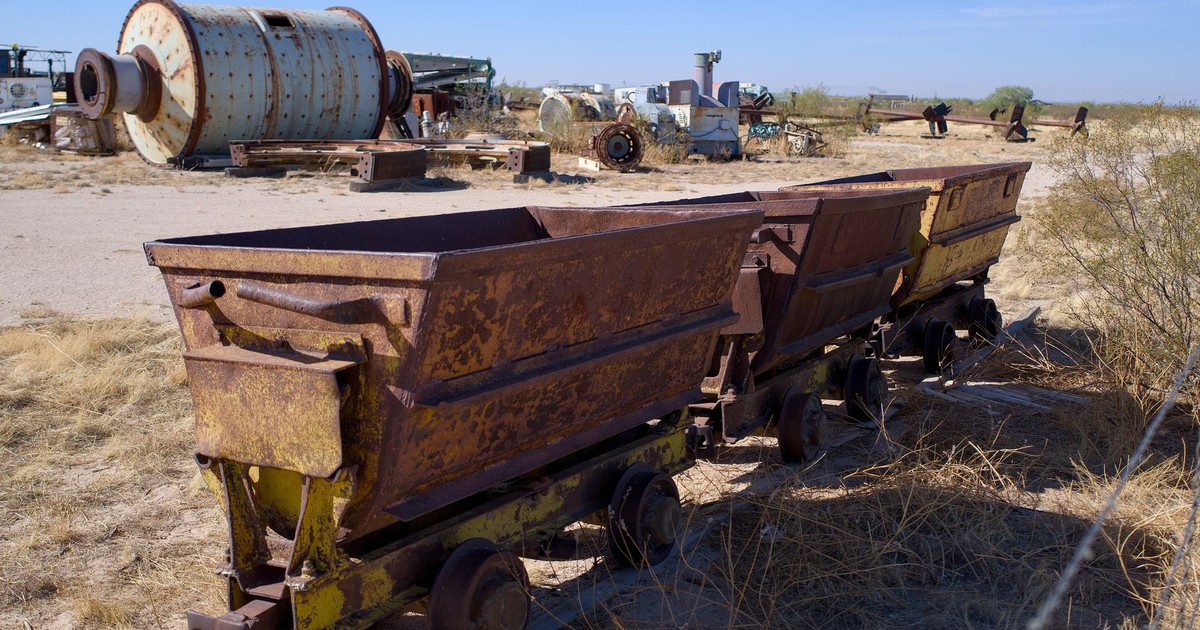
No American treasure story is more iconic, or more disputed, than the Lost Dutchman’s Gold Mine. Deep in Arizona’s Superstition Mountains, the mine is said to contain a vast gold vein discovered by Jacob Waltz, a German immigrant who became known, somewhat inaccurately, as “the Dutchman.” On his deathbed in 1891, Waltz reportedly described the mine’s rough location, but his directions were fragmentary at best: a distinctive volcanic spire called Weaver’s Needle, a military trail you could see from the mine but not the other way around, a canyon that ran a particular direction at a particular time of day.
The search for the mine has been continuous since his death and has drawn an extraordinary amount of obsessive attention for well over a century. Searchers have died in the 160,000-acre Superstition Wilderness Area while looking for it, with accounts of fatalities ranging from a dozen named cases in documented records to claims of many more. In 1984, the federal government passed a law forbidding prospecting and excavation in the area, which added a new complication: even if the mine were found, removing gold from federal wilderness land would require a negotiation with the U.S. government, which would have a substantial claim.
Historians who have studied the Waltz legend point out that his story changed considerably in the retelling across decades, and that much of what people treat as established fact about the mine was filtered through secondhand accounts published long after his death. Whether the mine ever existed in anything like the form the legend describes is genuinely unresolved. But the mountain has kept its secrets either way.
Mosby’s Treasure
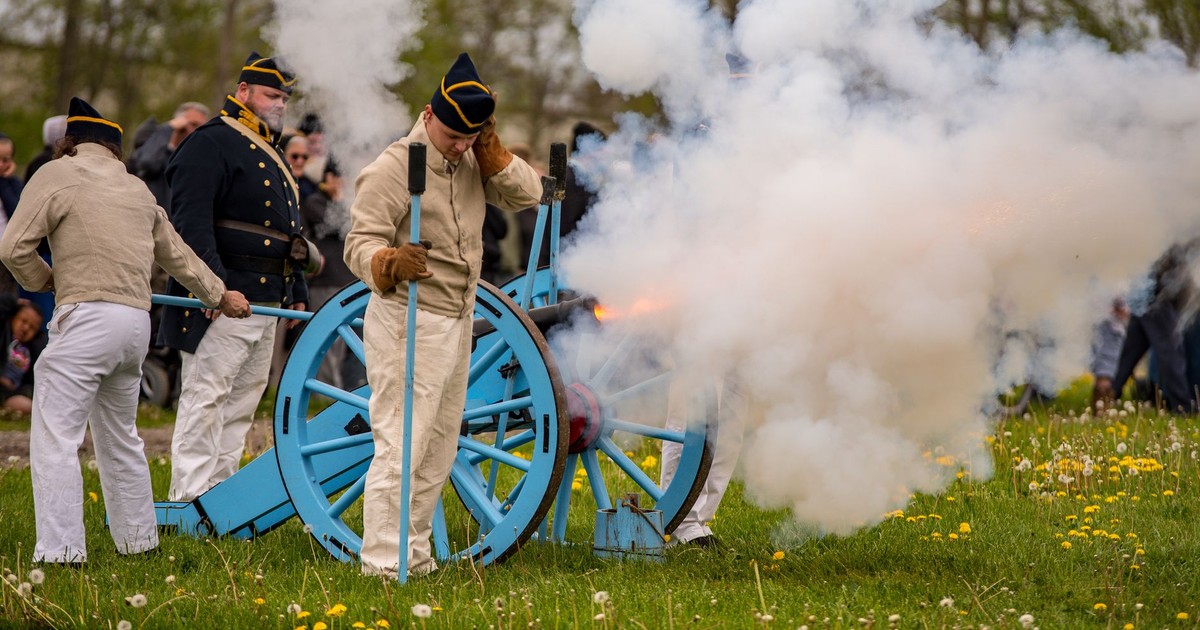
John Singleton Mosby was one of the most effective Confederate cavalry commanders of the Civil War, a guerrilla fighter whose raids behind Union lines in northern Virginia earned him the nickname “the Gray Ghost.” Mosby organized a battalion of Confederate rangers in 1863, used to scout and raid behind Union lines. In March 1863, Mosby’s Rangers captured Fairfax Court House and seized Union General Edwin H. Stoughton, 32 other prisoners, and 58 horses. Supposedly the raiders also discovered a sack of gold, silver, and jewels which Union soldiers had stolen from Virginia homes in the area.
Mosby had the sack of treasure buried between two pines, which he marked with an X. All the Confederates reached Culpeper with their captive men and horses, but when a band returned to unearth the treasure, they were captured and hanged. The men who knew the exact location between those two trees never made it back. Despite the lack of evidence, the tale is repeated that Mosby’s treasure, worth $350,000 in modern dollars, is still buried at a site once marked by two pines with an X carved on each.
The pine trees have long since died. The road through that part of Fauquier County has been dug up, repaved, and built over in the 160 years since. Whether Mosby himself ever went back for the cache after the war is another question without a verified answer.
Dutch Schultz’s Catskill Fortune

Of all the American treasures lost on this list, this one has the most specific address and the least useful map.
Whether Dutch Schultz feared going to jail or anticipated his own death, he had a special airtight and waterproof safe made into which he placed an estimated $7 million in cash, bonds, and gold. He and his personal bodyguard, Bernard “Lulu” Rosenkrantz, drove the safe to an undisclosed location in the Catskill Mountains, where Schultz was said to have buried it.
Schultz, who for a time was the most powerful gangster in America, met his violent end in a Newark tavern on October 23, 1935. His dying words, recorded by a police stenographer, give tantalizing clues to the location of his fortune. The things Schultz said in those final hours, transcribed verbatim as he drifted in and out of consciousness, are famously incoherent. References to dog biscuits, French Canadian bean soup, and cryptic instructions to “drive me back to Phoenicia” have never been successfully decoded into usable directions.
Police initially swarmed Phoenicia “elbow-to-elbow,” discovering a 1926 truck door and moonshine still parts but no fortune. The estimated cache has been valued at anywhere from $50 to $150 million in today’s money, fueling persistent searches near Esopus Creek. A PBS documentary on the case documented modern teams employing ground-penetrating radar and satellite mapping. They found nothing.
Rosenkrantz, the one other person who knew the burial location, was shot and killed at the same chophouse as Schultz. Whatever map may have existed went with him.
What These Losses Actually Tell Us

The thread connecting all six of these American treasures lost to history isn’t mystery for its own sake. It’s a specific kind of gap between what was documented and what was recovered. The paper trail ends at a river crossing in Georgia in May 1865. The cipher works on one message and stops cold on the other two. The FBI names suspects who were already in the ground before the case came together.
Most of these losses happened in moments of sudden collapse: a war ending badly and chaotically, a criminal shot before morning, a museum heist pulled off so cleanly that no useful forensic trail survived. The losses were fast. The searches took generations. Somewhere in Virginia, in the Catskill Mountains, in an Arizona wilderness area, or in a storage unit nobody has thought to look in yet, the physical objects either still exist or were quietly destroyed or melted down decades ago. Gold doesn’t decay. Rolled oil paintings do. Both possibilities sit side by side, and there is no way to resolve them from the outside. Some of these searches are going to outlast everyone currently looking.
Disclaimer: This information is not intended to be a substitute for professional medical advice, diagnosis, or treatment and is for information only. Always seek the advice of your physician or another qualified health provider with any questions about your medical condition and/or current medication. Do not disregard professional medical advice or delay seeking advice or treatment because of something you have read here.
AI Disclaimer: This article was created with the assistance of AI tools and reviewed by a human editor.