
Aldi has earned a devoted following, and for good reason. The prices are genuinely low, the private-label products regularly outperform name brands in blind taste tests, and the stores are small enough to get in and out in 20 minutes. Pricing research from Consumer Reports, comparing a basket of goods at dozens of grocers with Walmart as a baseline, found that Aldi prices were 35% lower than the all-store average and notably cheaper than Walmart. In a grocery environment where food prices rose 3.1% in 2025 alone, according to the U.S. Bureau of Labor Statistics.
But Aldi’s no-frills model comes with a real set of trade-offs. Some are minor annoyances. Others are the kind of thing that can quietly derail a weekly shop, frustrate shoppers with specific needs, or mean a second stop at another store every single time. None of this makes Aldi a bad place to buy groceries. It just makes it a specific kind of place, with a specific set of rules, and knowing those rules in advance is the difference between a smooth shop and a genuinely irritating one.
Here are 15 downsides that frequent Aldi shoppers know well, and that first-timers are usually surprised to discover.
1. The Product Selection Is Extremely Limited
A 2019 CNN Business report found that Aldi stocks around 1,400 items, compared to roughly 40,000 at traditional supermarkets. Walk in hoping to find three varieties of pasta sauce, six brands of salsa, or a specific type of flour, and you’ll be disappointed. While full-service supermarkets may offer a dozen varieties of ketchup or pickles from different brands at different price points, Aldi typically offers one or two.
That limitation isn’t accidental. CNBC reported in January 2026 that Aldi stands apart from rivals through smaller stores, a narrower selection of merchandise, and a heavy emphasis on its own brand, with more than 90% of its assortment coming from private-label items. The model works by reducing complexity at every level. For the customer, though, the trade-off is real: you can save money on basics such as ground beef or red wine, but you’ll still have to make a second stop somewhere else to get the less common items on your list.
2. You Can’t Count on Consistent Stock
Even among the roughly 1,400 items Aldi does carry, there’s no guarantee the item you want will be there when you arrive. Many of Aldi’s products are seasonal, limited-time offers, and Aldi Finds, so they’re not restocked regularly, often forcing customers to shop multiple stores. Aldi keeps prices low by offering a curated selection of predominantly store-brand items, but this leads to a haphazard inventory with frequent out-of-stock items. Former Aldi shopper David Bakke explained the constant fluctuations grew tiresome over time: “Blueberries might be at a steal of a price one week, and they don’t have any the next week. It’s the same thing with other shopping categories.”
Shoppers have discovered that Aldi restocks its groceries on Wednesdays, so this is the day to shop if you want the best chance at finding your items. Wednesday morning is the best bet to explore the Aldi Finds section, where new items are stocked each week, and when produce and meats will likely be the freshest, though availability will vary by location. If Wednesdays don’t work for your schedule, you’re shopping the leftovers.
3. Beloved Products Disappear Without Warning
This is a step beyond general inconsistency. Aldi discontinues products, sometimes permanently, sometimes temporarily, with no official announcement and no clear timeline. Not all amazing products are meant to last, and this private-label retailer is known to regularly change its offerings. Every year, the internet fills up with people lamenting the discontinuation or shifted availability of their favorite products. Although all stores change their offerings from time to time, Aldi is known for doing this more regularly than most.
The result is a dedicated online community of mourners: Reddit threads, Facebook groups, and comment sections full of people searching for the cereal or the frozen pizza that simply vanished one week. Many note that Aldi has specifically discontinued entire categories of items, including vegetarian options and infant products. If something you rely on disappears, your only move is to wait and hope it returns as a seasonal item.
4. Produce Quality Is Hit or Miss
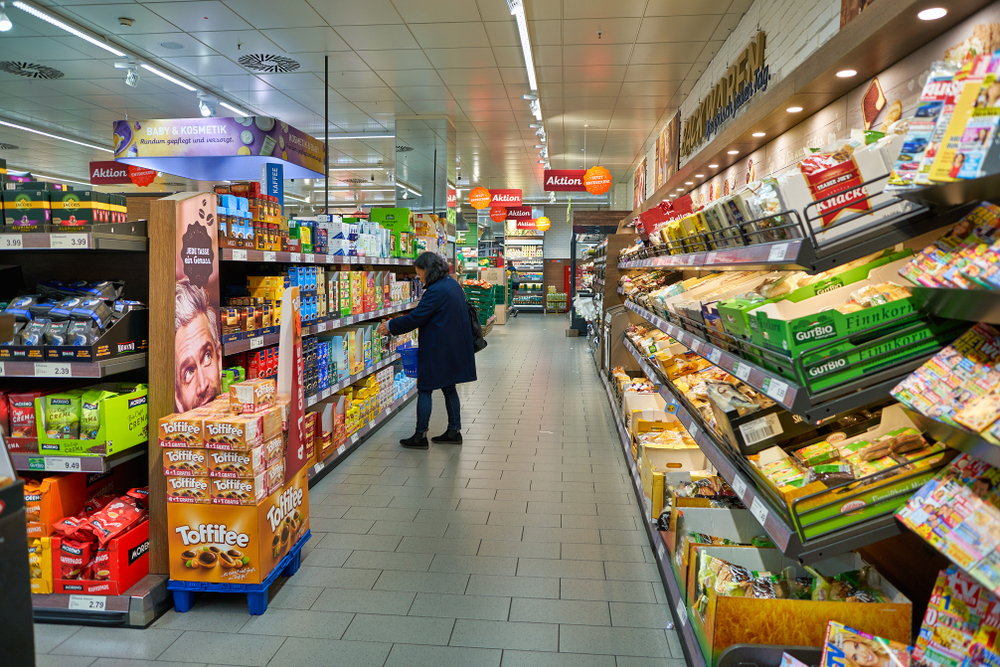
Aldi tends to receive criticism for its produce section because customers find that many of the items they purchase spoil faster than they should and lack flavor. Location has a lot to do with product quality for produce, but customers recommend staying away from fragile products like berries and bananas in general because these tend to rot or grow mold quickly.
Part of the problem is structural. Aldi does not refrigerate its stock of fresh produce the way most supermarkets do, and items go on display in the boxes they’re shipped in. Shoppers report that produce from Aldi does not stay fresh as long as fruits and vegetables from other discount stores such as Costco and Trader Joe’s, a pattern confirmed repeatedly in Reddit comments from regular shoppers. Another issue is that some items, such as apples, potatoes, and onions, cannot be purchased separately. You have to buy an entire bag that you may not be able to use up before it spoils.
5. Meat Quality Draws Complaints
The chicken breasts are less than ideal, with many consumers reporting chewy, stringy, tough, and nearly inedible meat that’s often linked to a “woody chicken” issue. Woody chicken refers to chicken breasts that are overly tough, a problem that often arises because the chicken grew too quickly. In other cases, shoppers report discovering bone shards in their boneless chicken.
It’s not universal. Some shoppers say they’ve never had a problem with Aldi meat, but just as many do, reporting poor texture, color, and overall quality across the board. Stores source their meat and produce locally, which may account for differences in quality and freshness, meaning your experience in one city may be completely different from someone else’s in another. The inconsistency itself is the problem.
6. You Bag Your Own Groceries
This one surprises a lot of first-timers. Aldi cashiers do not bag groceries. Cashiers scan items quickly and leave them at the end of the belt. You’re expected to put everything back in your cart and head to a separate bagging station to pack it yourself. If you didn’t bring your own bags, you’ll need to buy them. The process works fine once you know it, but it can feel chaotic when you’re unprepared and the person behind you is already loading their items.
The philosophy behind it is cost-cutting. Because of its money-saving practice of minimal staffing, Aldi is not like a typical supermarket, where it is generally easy to find an employee to help you. Aldi employees usually fill multiple roles and are not always around to answer questions. Every task the customer performs is a task Aldi doesn’t have to pay staff to do. That’s a fair trade when you know going in, less so when you don’t.
7. The Shopping Cart Requires a Quarter
When you approach the cart corral, you’ll notice all the carts are chained together. To free one, you’ll have to insert a quarter. When you’re done, you put the cart back in the corral, chain it to the cart in front of it, and your quarter pops back out. It’s a practical way to ensure carts don’t wander off or roll around the lot, but it drives some shoppers crazy. If you don’t normally carry cash, you’ll have to go out of your way to procure a quarter. And the mechanism connecting the carts can be finicky, meaning you may have to fiddle with it for a minute or two before the cart, or your quarter, decides to free itself.
For most people this is a minor inconvenience. For shoppers who have gone fully cashless, it’s a genuine barrier. A forgotten quarter means either hunting through your car for change or carrying all your groceries in a basket.
8. Store Hours Are Shorter Than Competitors
If you need groceries after 8 or 9 p.m., Aldi isn’t an option. Aldi’s streamlined operations keep prices low, but their hours of operation are shorter than 24/7 chains like Walmart. Most stores operate from 9:00 AM to 8:00 PM, with variations for holidays or urban locations.
It goes beyond daily hours. Aldi stores are closed on New Year’s Day, Easter Sunday, Thanksgiving Day, and Christmas Day. Additionally, Aldi stores operate limited hours on Memorial Day, Independence Day, Labor Day, Christmas Eve, and New Year’s Eve. Those closures reflect a genuine commitment to employee time off, and that’s admirable, but for a shopper who realizes on Thanksgiving morning that they forgot the cranberry sauce, it’s a problem.
9. There’s No Loyalty Program or Rewards App
Every major grocery chain in 2026 offers some version of a loyalty program. Kroger, Safeway, Target, Walmart – they all have apps, digital coupons, and cashback rewards designed to bring you back and put money in your pocket. Aldi offers none of it. No matter how regularly you shop, no one receives extra rewards. This characteristic sets the chain apart from many others. Popular stores like Walmart, Target, and Costco all offer loyalty programs.
Rather than inflate prices to account for operational expenses such as promotions, fancy store layouts, and a loyalty rewards program, Aldi bucks the trend of most large chain stores to pass the savings on to its customers. No coupons or exclusive offers appear online, making the app download essentially nonessential for savings. Instead, available promotions are listed in-store or occasionally mailed. For shoppers who have become accustomed to stacking coupons, cash-back apps, and loyalty discounts on top of already-low prices elsewhere, the lack of any additional savings mechanism is a real limitation.
10. Delivery Costs Eat Into Your Savings
Aldi’s value proposition rests on low in-store prices. Order for delivery, and that value erodes quickly. According to the store’s website, customers opting for Aldi grocery delivery should expect additional fees tacked onto the final price of their bill. There is a standard service fee, a curbside fee that goes to Aldi shoppers fulfilling the order, and delivery fees, which fluctuate by location, time of day, and which service you use. Instacart charges an extra fee if it takes 30 minutes or longer to bring the groceries to your home. Additionally, Aldi delivery orders less than $10 are charged a $9.99 small order fee. Bags cost extra too: $0.12 for a paper bag, $0.79 for a reusable bag, and $1.09 for an insulated bag.
Online prices are approximately 10 to 15% higher than in-store to cover shopping costs. When you add those inflated prices, the service fee, and the delivery charge, an order that would have saved you money in the store can end up costing more than shopping at a regular supermarket. The savings Aldi is famous for are specifically a reward for showing up in person.
11. The Store Layout Can Be Chaotic
Aldi stores can get pretty packed as customers try to cram their way into a relatively small space. This leads to a chaotic and overstimulating experience for those who want to browse at their leisure or who aren’t terribly familiar with the store’s layout. The stores are designed for efficiency, not for browsing. Products are often displayed in the cardboard boxes they were shipped in, stacked directly on shelves or pallets.
Some Redditors note that these crowds can get a bit rowdy. Shoppers report finding products such as frozen food abandoned where it’s not supposed to be, as well as carts scattered in the parking lots, and a general lack of care for the store or fellow shoppers. On a busy Saturday, a small Aldi can feel genuinely claustrophobic. If you’re someone who finds crowded stores stressful, the compact format works against you.
12. Checkout Lines Can Be Slow Despite the Small Store Size
You’d expect a small store with a tight product range to move people through checkout quickly. In practice, it doesn’t always work that way. Even though the size of the store doesn’t accommodate that many people at once, many locations experience long checkout lines and very few employees around to help. Because the stores are small, their hierarchy is built differently than other stores. Employees and their friends have discussed staffing issues online, which may have contributed to the implementation of so many self-checkout registers nationwide.
The self-bagging requirement also extends the time at checkout per customer. When you factor in a shopper who’s unprepared for the process, didn’t bring bags, doesn’t have a quarter, doesn’t know to have their items ready, the line slows for everyone behind them. At peak times on weekends, the wait can be surprisingly long for a store with so few aisles.
13. The App Offers No Real Savings Benefits
While the Aldi app is convenient in that it helps you locate stores, build shopping lists, and keep track of past orders, there’s no exclusive benefit to downloading it. Where brand loyalists would love additional savings and opportunities, there are none. People online have even noted that finding the Weekly Ad can be difficult with the new app update.
Compare this to what competitors offer. Kroger’s app lets you clip digital coupons. Target Circle gives you percentage-off deals on specific items. Even Walmart has a cash-back feature integrated into its app. Aldi’s app is, by design, purely informational. As of late 2025, no loyalty or rewards implementation had taken place. The retailer does provide a useful app, and you can use it to browse current clearances and inventory, as well as enable curbside pickup or delivery. But no coupons or exclusive offers appear online, making the download nonessential for savings.
14. Product Recalls Have Been a Recurring Issue
No grocery chain is immune to food safety issues, but Aldi’s recall record is worth knowing about. A review of Aldi’s official recall page shows a steady stream of voluntary recalls in recent years. In February 2026, Rosina Food Products voluntarily recalled Bremer Italian Style Meatballs due to potential contamination with foreign material, specifically metal. In December 2025, Silvestri Sweets recalled Choceur Pecan, Cranberry & Cinnamon Holiday Bark due to a potential undeclared wheat allergen and Choceur Cookie Butter Holiday Bark due to a potential undeclared pecan allergen. In October 2025, a Casa Mamita Soft Taco Dinner Kit was recalled due to an undeclared milk allergen, and Fusia Asian Inspirations Veggie Spring Rolls were recalled due to an undeclared shrimp allergen.
Recalls happen across all grocery chains, and Aldi’s willingness to issue voluntary recalls is actually a sign of responsible practice. But for shoppers managing food allergies or specific dietary restrictions, the frequency of allergen-related recalls on private-label items is worth taking seriously.
15. Customer Service Is Difficult to Reach When Something Goes Wrong
Aldi’s lean staffing model keeps costs down, but it creates real problems when you need help. Frequent customer complaints cite rude staff and poor in-store service. Problems contacting support for online orders, refunds, or escalations are recurring. The company does offer a return policy, and if you are not 100% satisfied with the quality of any product, Aldi will gladly replace the product and refund your money under its Twice as Nice Guarantee. For items not covered by the Twice as Nice Guarantee, including non-food Aldi Find items, alcohol, national brands, or non-quality-related issues, a replacement or refund will be offered.
The challenge comes when your issue doesn’t fit neatly into that process. Rather than hire extra staff to answer phones and retrieve carts, Aldi’s employees stay focused on serving shoppers in stores, which explains why there’s no direct phone line for customer support. In practice, it means that if you have a complaint about an online order or a problem that can’t be resolved at the register by a store manager, getting a resolution can be a genuinely frustrating exercise in filling out forms and waiting.
Read More: 12 Savvy Savings Secrets Money Experts Swear By
The Bottom Line
None of these 15 things mean Aldi isn’t worth shopping at. Pricing research from Consumer Reports found that Aldi’s prices were significantly lower than the all-store average, and in a year when grocery budgets are genuinely squeezed for most households, that’s not a trivial gap. The private-label products are often genuinely good. For pantry staples, frozen meals, and seasonal finds, it delivers real value.
What it doesn’t do is replace a full-service supermarket for every shopper in every situation. If you have specific dietary needs, brand preferences, a packed schedule that rules out midweek shopping trips, or a household that goes through a lot of fresh produce quickly, Aldi’s constraints will catch up with you regularly. The honest approach is to know exactly what it does well – shelf-stable pantry staples, basics, frozen goods, and seasonal finds – and plan accordingly. Go in with a focused list, bring your quarter, pack your own bags, and shop on a Wednesday. That’s when Aldi is at its best. The rest of the time, it’s a trade-off you’ll need to decide is worth it for your particular household.
AI Disclaimer: This article was created with the assistance of AI tools and reviewed by a human editor.