

The person who sold you glasses last decade was handing over two lenses and a frame. The person selling them today might be handing over a live feed of everything you see.
Qualcomm CEO Cristiano Amon made that case bluntly in late June 2026, predicting that the next era of mobile technology will turn everyday Americans into “walking cameras” as AI-powered smart glasses stream everything they see and hear to AI models in real time, all over ultra-fast 6G networks. It wasn’t a hypothetical framed in cautious corporate language. “6G is going to transform all of us into walking cameras because we have the ability to, everything that we see, send it to AI models that will interact with us and get intelligence right away,” Amon said. “And that’s an exciting new device category.”
Whether you find that exciting or unsettling probably says a lot about you. But both reactions are reasonable. AI glasses technology is no longer a futuristic concept being debated in think tanks. It’s a product category that already has millions of buyers, a market quadrupling in a single year, and a roster of competitors that reads like a who’s who of Silicon Valley. The question isn’t really whether this technology arrives. It’s already here. The question is what it changes when it becomes ordinary.
Amon has pointed to smart glasses as a key device for the future specifically because they allow people to interact with technology close to their faces while AI processes what users see and hear. That proximity is the whole point. Your phone requires a deliberate act. You have to take it out, point it, unlock it. Glasses are a fundamentally different proposition. With a smartphone, you have to point it at something, turn on the camera, and actually make an effort. Glasses sit on your face all day. That’s both their appeal and their problem.
The Race Is Already Underway
Shipments of smart glasses surged by 167% in the first quarter of 2026 compared to the same period in 2025, according to the IDC (International Data Corporation, the market research firm). Meta dominates the space with 69.2% of the market. Meta CEO Mark Zuckerberg said in an April 2026 earnings call that the number of people using its glasses daily has tripled year-over-year.
The momentum is pushing prices down, which historically is when consumer technology tips from early adopters into the mainstream. According to CNN Business, Meta’s newly announced in-house designed glasses start at $299, making them less expensive than the latest Ray-Ban models, which begin at $379. The average selling price of smart glasses is expected to drop further, from $376 in 2026 to $229 by 2030, according to IDC. At that price point, they stop being a gadget and start being an accessory.
According to Smart Analytics Global, global AI smart glasses revenue is projected to quadruple in 2026, with sales volume rising from 6 million units in 2025 to 20 million units, while market value expands from $1.2 billion to $5.6 billion. For context, the smartphone took several years after its debut to reach those kinds of growth curves. AI glasses are compressing that timeline considerably.
Google unveiled its first consumer AI smart glasses at Google I/O 2026, with a confirmed fall 2026 launch. The glasses are powered by Gemini AI and run on Android XR, featuring cameras, speakers, and microphones with no in-lens display. iPhone support is also confirmed, making these the first Android XR glasses to work cross-platform out of the box. Hardware partners include Samsung, Warby Parker, and Gentle Monster, with Gucci and Kering Eyewear joining later. That last detail matters more than it might look. When Gucci is building AI glasses, the technology is no longer a niche product for tech enthusiasts. It’s a fashion statement, which means it travels to every social setting its wearer enters.
Apple, meanwhile, is testing four frame styles as well as a camera system, and the product is expected to do all the things Meta’s glasses can do: capture photos and videos, make phone calls, play music, and sync with a smartphone. Its big reveal is expected at the end of 2026 or early 2027. Apple entering the category will do what Apple almost always does to hardware categories: make them feel inevitable.
What the Glasses Actually Do
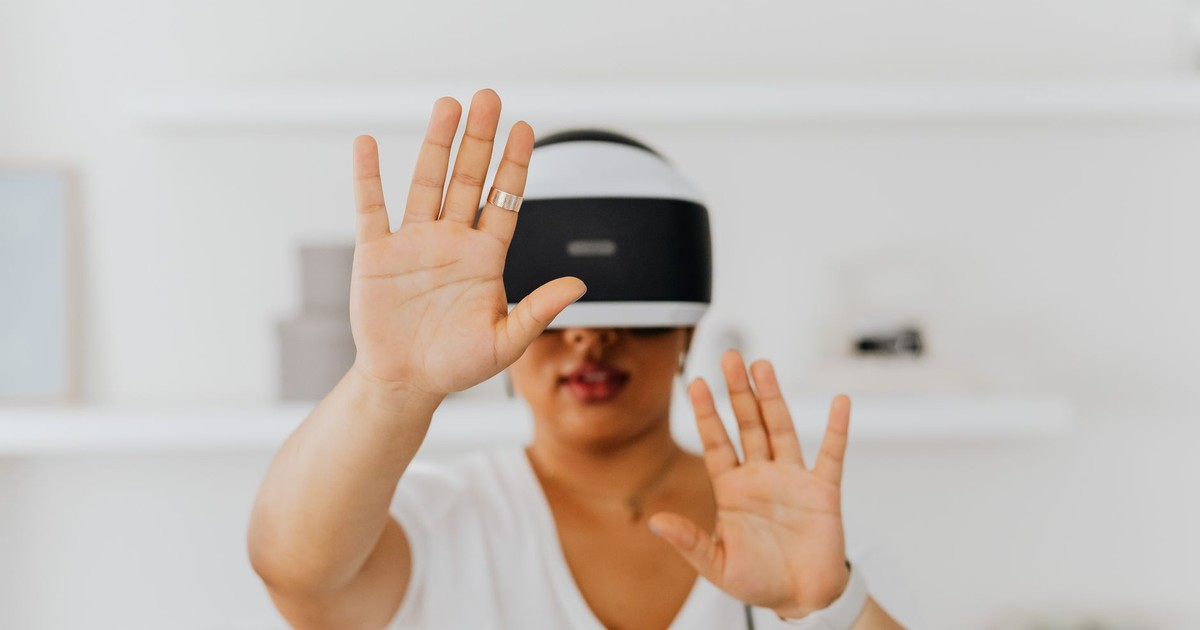
The current generation of AI glasses technology is already more capable than most people realize. Meta’s glasses can play music, translate languages, and answer questions about a person’s surroundings by capturing images with the cameras. The company claims its new Muse Spark AI model improves how the glasses extract details from photos and remember personal preferences.
When CNN tested the glasses during a press event, they were able to estimate the number of calories in a bowl of strawberries, translate a sign from Arabic to English, provide nearby museum recommendations, and even tell whether a container of fake cherries used as a prop wasn’t real. Real-time language translation during a conversation is genuinely useful. Knowing the calorie count of your lunch without opening an app is genuinely convenient. These are not trivial party tricks.
Google’s Gemini-powered glasses, demonstrated at I/O 2026, can identify nearby restaurants, read confusing parking signs, name cloud formations based on what the camera sees, provide turn-by-turn walking or driving directions using voice, manage calls, send texts, and summarize unread messages. That list reads like a smartphone feature set, except delivered hands-free through a device that sits on your face and looks, to everyone around you, like ordinary eyewear.
Chinese AI company iFlytek has gone further, with glasses that combine a 5+1 microphone array, cameras, and bone-conduction technology with lip-motion recognition to identify the person the wearer is looking at and isolate that person’s speech in crowded environments. The company describes the feature as a “hear who you look at” capability designed for airports, rail stations, exhibitions, and other noisy public spaces.
The Problem Nobody Agreed to Be Part Of
Here’s where things get genuinely difficult. The utility case for AI glasses is real. But so is the argument from every person who didn’t put on a pair.
A number of women have shared experiences about being secretly filmed by people wearing smart glasses in public. One woman described being approached on a walk, having a conversation with a man wearing glasses that looked like ordinary sunglasses, and only later discovering that a video of her was posted online with nearly a million views. In October 2025, the University of San Francisco issued a warning after reports that a man wearing Ray-Ban Meta smart glasses was approaching women on and around campus and recording interactions that may have been shared on social media.
Meta’s Ray-Ban glasses include an LED that signals when recording is active, though reports suggest some wearers have paid third parties to disable it. That is a design feature functioning as intended, being defeated by people with bad intentions. No hardware safeguard survives determined misuse.
The more unsettling demonstration came from two Harvard undergraduates in 2024. As the Boston Globe reported, AnhPhu Nguyen and Caine Ardayfio developed an AI tool called I-XRAY that could reveal a stranger’s name, address, and other sensitive information simply by taking a picture of them with Meta Ray-Ban smart glasses. By combining the glasses with AI and publicly accessible online databases, they showed the tool could identify someone in just over a minute. There is no federal law barring the use of facial recognition systems in this way. A number of states, including Massachusetts, have strict regulations limiting government use of such systems, and some cities like Boston and Cambridge have banned it outright. But only a handful of jurisdictions, like Illinois, have laws that forbid individuals or businesses from using facial recognition without the subject’s permission.
Voice recordings triggered by the wake word on Meta’s glasses are stored in the cloud by default and can be kept for up to a year to help improve AI systems, with no option to opt out beyond manual deletion. That detail was buried in a privacy policy update. Most buyers never read it.
Governments Are Watching, Too
The privacy concerns around AI glasses technology aren’t limited to individuals with bad intentions. Law enforcement agencies and border agencies in the United States have expressed interest in the same real-time biometric recognition capabilities that make these devices attractive to consumers, raising questions about where personal surveillance ends and institutional surveillance begins.
The technology is moving faster than the norms and laws meant to govern it. What once required a visible camera and a deliberate act can now happen continuously, at scale, and with no visible indication to the person being filmed. That’s the structural shift. It’s not just that more people have cameras. It’s that the camera has become invisible, wearable, and always potentially on.
Read More: Meta just changed how Facebook works — here’s what the new ‘AI Mode’ is all about
What Happens When This Becomes Ordinary

Only about 5% of U.S. adults currently plan to buy smart glasses in the next 12 months, suggesting the market still has enormous room to grow. That figure will look quaint in five years if prices keep dropping and the products keep improving. The smartphone had tepid early adoption numbers too.
Tech companies are still struggling to prove to consumers that smart glasses are more useful than smartphones, according to Runar Bjorhovde, an analyst at market research firm Omdia. That is true right now, and it probably won’t be true for long. The capability gap between what these devices can do and what a phone can do is closing every product cycle.
The Washington Post has reported that devices like Meta Ray-Bans are drawing pushback from Generation Z, who see them as a threat to personal privacy. That’s an interesting inversion of the usual dynamic, where younger consumers adopt technology faster. When the people who grew up with constant connectivity are the ones raising privacy objections, it suggests something about the specific concern this technology triggers. It’s not about the technology being unfamiliar. It’s about the sensation of being recorded by someone standing right in front of you, who you’d have no way of knowing was doing so.
The Agreement Nobody Was Asked to Sign

The honest version of Cristiano Amon’s prediction is this: we are not all going to choose to become walking cameras. Some people will choose that, and the rest of us will become subjects in their footage without being consulted. That’s the asymmetry that makes this different from most other consumer technologies. Your neighbor buying a new phone doesn’t change what happens to your data. Your neighbor buying AI glasses might.
The market momentum here is not subtle. Google, Apple, Meta, Samsung, and a wave of smaller manufacturers are converging on the same form factor at the same time. Prices are dropping, capabilities are expanding, and the devices look more like regular eyewear with every generation. At some point, you genuinely won’t be able to tell from across a coffee shop whether the person you’re talking to is wearing $20 glasses or a device logging the conversation and your face to a cloud server.
The legal framework hasn’t kept up. Most of the United States has no law specifically governing what a private individual can capture and store using AI glasses in a public space. The technology arrived, the products shipped, and millions of pairs sold before legislatures had seriously grappled with what the new baseline of public privacy should be. Some of the conversations about that are starting now, years after the fact. That pattern, where the regulation comes long after the harm has already normalized, is not a new one. It just tends to feel more urgent when the thing being regulated is the right to walk down the street without your face ending up in a database you never agreed to.
Disclaimer: This information is not intended to be a substitute for professional medical advice, diagnosis, or treatment and is for information only. Always seek the advice of your physician or another qualified health provider with any questions about your medical condition and/or current medication. Do not disregard professional medical advice or delay seeking advice or treatment because of something you have read here.
AI Disclaimer: This article was created with the assistance of AI tools and reviewed by a human editor.