

The number that stops most retirement conversations cold is not $1 million, or $2 million, or whatever the latest survey says Americans think they need. It’s the actual number, the one sitting in the account when someone finally does the math. For most people, that number is sobering. The retirement savings gap between what people thought they’d have and what they actually do has sent a lot of would-be retirees back to the drawing board.
But here’s what the spreadsheets often miss: retirement math changes completely depending on where you live. A $50,000 annual budget, roughly $4,150 a month, which is close to what Social Security and modest savings combined can realistically produce, is genuinely tight in Denver or Seattle. In the right mountain town, that same number buys a real life, with pine trees out the window, hiking trails nearby, and a monthly budget that doesn’t require constant anxiety about the grocery bill.
The places on this list aren’t the ones you’ll find on a glossy magazine cover. They’re not Jackson Hole or Aspen or Park City. They’re towns a little further off the obvious path, smaller, quieter, and dramatically cheaper, without giving up the landscape or the sense that you’re somewhere worth waking up to.
According to SmartAsset’s analysis of Federal Reserve data, for Americans who do have retirement accounts, the median savings balance sits at just $87,000. Not $870,000. Eighty-seven thousand dollars. That gap makes the idea of retiring comfortably in an expensive city almost fictional for most households. It makes a low-cost mountain town worth taking seriously.
1. Harrison, Arkansas
When people think of mountain retirement, they skip Arkansas entirely. Retirees who’ve quietly moved to Harrison, in the heart of the Ozark Mountains, tend not to correct that assumption.
Set among hardwood-covered ridgelines, Harrison has earned a national reputation for friendliness that doesn’t feel performed. According to WorldAtlas, median home values sit around $226,997 and overall living costs run about 22% below the national average. Median rent prices are 35.4% lower than national averages, which matters enormously for retirees who haven’t paid off a home or simply prefer not to be tied down.
In town, you’ll find antique shops, cozy cafés, and the restored Lyric Theater, which hosts concerts and community events year-round. Outdoor lovers have easy access to the Buffalo National River, where towering bluffs, wooded trails, and calm water invite kayaking, fishing, and long quiet mornings. The scenery here would embarrass a lot of more famous mountain destinations, and the price tag is a fraction of what those places charge.
Arkansas taxes retirement income at a rate well below the national norm, and healthcare costs across the state run about 11% lower than the national average. When medical bills are the line item that unravels even careful retirement budgets, that difference is real money. For someone working with $50,000 a year, Harrison makes that number feel like considerably more.
2. Casper, Wyoming
Wyoming’s mountain towns come in two varieties: the kind that cost a fortune (Jackson Hole, where a two-bedroom rental can run $3,500 a month) and the kind that are quietly excellent. Casper is firmly in the second category.
According to SoFi’s analysis of the Council for Community and Economic Research’s Cost of Living Index, Casper ranks as the lowest-cost metropolitan area across all Rocky Mountain states. Located in east-central Wyoming near Casper Mountain, it’s the state’s second-largest city and draws retirees largely through its supply of genuinely affordable housing. The median home value in Casper sits around $275,344, well below the national average of $359,870.
Wyoming is one of the most retirement-friendly states in the country for taxes: no state income tax, no estate or inheritance tax, and property taxes among the lowest in the West. Social Security, pensions, and retirement account withdrawals face zero state taxation. For a retiree on a fixed income, those savings add up to real money every year, money that stays available for groceries, travel, or a healthcare bill rather than going to a state treasury.
Casper sits at the foot of its namesake mountain, giving residents direct access to hiking and mountain biking in summer and skiing in winter. The North Platte River runs through the region and adds fishing and kayaking to the outdoor menu. It’s a working-class Western city with actual infrastructure: hospitals, an airport, full-service grocery stores. Not a postcard town that looks good from the highway and frustrates everyone who actually tries to live there.
3. Butte, Montana
Montana has gotten expensive. Bozeman in particular has become one of the fastest-appreciating real estate markets in the country, pulling in remote workers and tech transplants who drove median rents past $2,000 a month. Missoula followed. But Butte, sitting on the Continental Divide at 5,549 feet and surrounded by the Rockies, tells a different story.
According to Apartments.com’s rental market data for Butte, average rent in the city sits at around $800 per month, which is 51% lower than the national average of $1,625 per month. A two-bedroom apartment typically runs around $906 a month, which is less than what a studio costs in Bozeman. For retirees renting in retirement, that spread is the difference between stretching a modest budget comfortably and watching it evaporate.
Butte has a gritty, lived-in character that’s increasingly rare in the Mountain West. It started as a copper mining town in the 1800s, grew into Montana’s first major industrial city, and still carries that history in its architecture and its attitude. The Uptown Butte historic district contains a remarkable concentration of Victorian-era buildings. The surrounding landscape offers immediate access to multiple national forests, and serious mountain terrain for hikers. Montana has no state or local sales tax, so everything from groceries to appliances costs a little less than the sticker price in most other states. For retirees who want real Montana, not the $3,000-a-month Instagram version, Butte is the answer.
4. Prescott, Arizona
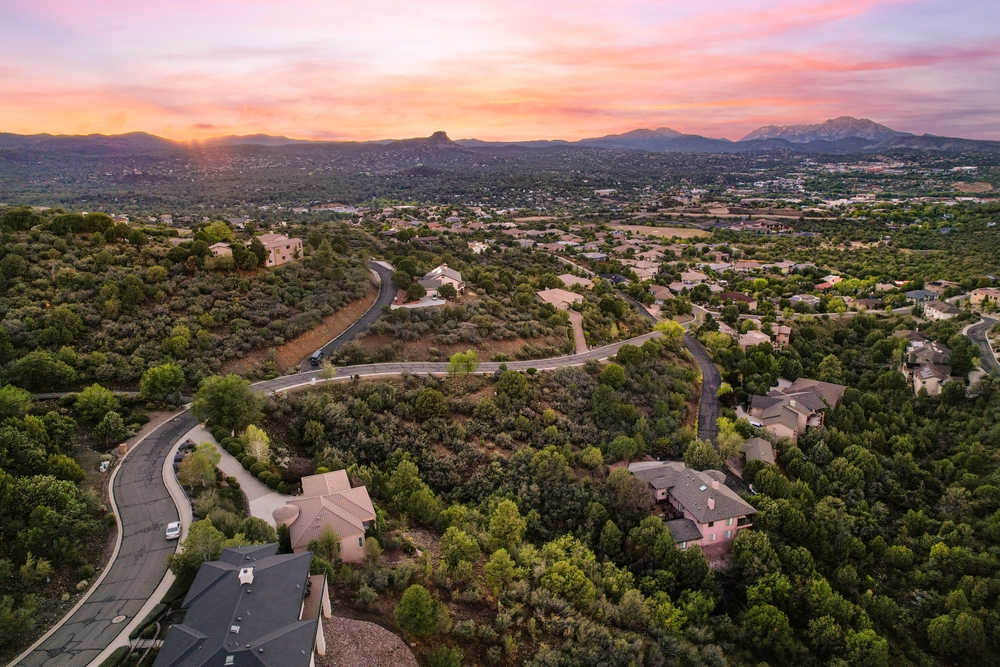
Prescott isn’t the cheapest option on this list, but it solves a problem most pure-budget mountain towns can’t: weather that’s actually livable year-round. At 5,400 feet above sea level in the Bradshaw Mountains, Prescott escapes the scorching summer heat that makes much of Arizona uninhabitable from June through September. It gets all four seasons, real pine forests, and temperatures that rarely push past 90 degrees even in midsummer. Winters bring lows hovering around freezing but rarely drop into the brutal territory that makes Montana and Wyoming winters genuinely hard on older bodies.
On the cost side, PayScale’s cost of living data for Prescott shows utility prices running 10% below the national average, transportation expenses just 4% above average, grocery prices 3% above average, and healthcare costs 9% below the national average. Housing is where Prescott commands a premium, so the $50,000 annual budget works best for buyers who arrive with equity from a prior home sale, or for renters who keep that line item disciplined. Prescott National Forest sits right next to town, offering more than 450 miles of hiking, biking, and horseback riding trails, with five nearby lakes for fishing and boating.
Arizona charges a flat income tax rate of just 2.5% as of 2024, the lowest flat rate of any state that has an income tax, and Social Security benefits face no state taxation at all. Roughly 55% of Prescott’s population is aged 45 or older, which means the town has genuinely built itself around the needs of older residents. There’s an active senior center, a VA hospital for veterans, and a medical infrastructure far more developed than you’d find in a smaller, more rural mountain town. For retirees who want outdoor beauty and mild climate without feeling like they’re pioneers figuring out healthcare access from scratch, Prescott delivers.
5. Silver City, New Mexico
Silver City might be the least-known town on this list, and that’s precisely why it still works financially. Tucked into the southwestern corner of New Mexico at the foot of the Mogollon Mountains, it has the kind of low profile that keeps housing prices honest.
Housing costs in Silver City run 34.1% below the national average, with total monthly costs for a single adult coming in at roughly $2,210, or about $26,500 per year, according to Salary.com’s cost of living data for Silver City. That leaves substantial room within a $50,000 annual retirement budget for travel, medical costs, and the occasional splurge. Food expenses run 37% below the national average at around $252 monthly for an individual, and healthcare and transportation costs come in close to the national average, so the overall savings are real rather than concentrated in one narrow category.
The town is home to Western New Mexico University, which brings a cultural liveliness to a small community, including live music, art shows, and lecture series, that purely rural towns rarely manage. The Gila National Forest begins just outside town, putting millions of acres of wilderness within easy reach: hot springs, ancient cliff dwellings, trails through ponderosa pine forests, and the headwaters of the Gila River. The area gets about 280 sunny days a year, which makes the adjustment from colder climates considerably easier. Silver City has been quietly pulling in artists, writers, and independent-minded retirees for the past two decades, people who came for the low cost and stayed because the light in the late afternoon and the temperature in the evening turned out to be something they hadn’t expected to find anywhere near this price point.
Read More: 35 Money Milestones You Should Hit for Retirement at Every Age
Where the Math Actually Works
The promise behind retiring “like a millionaire” on $50,000 a year isn’t about pretending you have more money than you do. It’s about buying power. In Manhattan, $50,000 a year is poverty. In Harrison, Arkansas, it’s a two-bedroom house with a lawn, a national river twenty minutes away, and enough left over to actually enjoy the next couple of decades.
Americans now say they need $1.46 million to retire comfortably, a figure that’s risen $200,000 in just one year, according to Kiplinger’s analysis of retirement savings data. The median retirement savings for people aged 55 to 64 is $185,000, and for those 65 to 74 it’s $200,000. Both figures fall far short of that $1.46 million target, and the math on that gap is genuinely daunting if the plan is to stay in a high-cost metro area. Move somewhere most people haven’t looked, and the picture changes.
None of these towns are for everyone. Butte in January requires a certain disposition. Silver City is remote in ways that aren’t always convenient. Harrison doesn’t have a major airport within easy reach. Retirement was never one-size-fits-all. What these towns offer is the chance to make a modest nest egg go the distance, with mountains out the window, trails out the back door, and a monthly budget that doesn’t send your heart rate up every time you open a bill. For a lot of people, that’s not a consolation prize. It’s the whole point.
AI Disclaimer: This article was created with the assistance of AI tools and reviewed by a human editor.