
The government you trust to run the courts, issue your passport, and manage the nuclear arsenal has, on more than one occasion, looked the American people in the eye and said: we got it wrong. Sometimes those admissions came decades too late, wrapped in careful language designed to minimize legal exposure. Sometimes they arrived as a single sentence buried in a signing ceremony. And sometimes they came only because classified documents forced the issue into the open. What they all share is a quality that feels almost out of place in politics: an official acknowledgment that power was abused, evidence was misread, or people were deliberately deceived by the very institution meant to protect them.
These aren’t fringe conspiracy theories that eventually got confirmed. They are cases where the U.S. government, through Congress, the presidency, official declassification, or sworn testimony, formally admitted that it was wrong. The admissions range from a White House apology with surviving victims seated in the front row to a bureaucratic declassification that quietly reversed forty years of official denials. Each one reshaped public trust in a different way, and each one left a question that the admission itself could never fully answer: how did it get this far before anyone said anything?
What follows are six of the most consequential government mistakes admitted on the record, the facts behind them, the timeline of how long it took, and what the admission actually changed.
The Tuskegee Syphilis Study: Forty Years of Deliberate Deception

On May 16, 1997, President Bill Clinton stood in the East Room of the White House and issued a formal apology for what had been called “the longest nontherapeutic experiment on human beings” in the history of medicine and public health: the Tuskegee Study of Untreated Syphilis in the Negro Male, a study that ran from 1932 to 1972.
For those four decades, the study involved African American men who were misled into believing they were receiving free healthcare, while they were actually being observed for the effects of untreated syphilis without their informed consent. Penicillin became the standard treatment for syphilis in the 1940s. The men in the study were never offered it. More than 100 of the participants died as a result.
The research project was finally stopped after Peter Buxtun, a former venereal disease investigator with the Public Health Service, shared the truth about the study’s unethical methods with a reporter. The story broke publicly in 1972. It took another twenty-five years to get an apology. By the time Clinton issued his apology in 1997, only a small number of the original 399 participants with syphilis were still alive. Clinton acknowledged them directly at the ceremony, stating: “The eight men who are survivors of the syphilis study at Tuskegee are a living link to a time not so very long ago that many Americans would prefer not to remember.”
Clinton’s apology was direct. He acknowledged the racial injustices inherent in the research and used language that left no ambiguity about culpability. The apology included a pledge to improve healthcare for minorities and protect against medical exploitation. The government also provided a $200,000 planning grant to Tuskegee University to pursue building a Center for Bioethics in Research and Health Care, along with the creation of bioethics fellowships for minority students.
What the apology couldn’t repair was the distrust it left in its wake. The primary legacy of the Tuskegee experiment is African American distrust of the medical establishment, distrust compounded by a history of forced sterilization from the 1920s through the 1970s in some states, which created an atmosphere of fear and suspicion among many minorities toward medical professionals. That distrust has never fully dissipated, and researchers have documented its measurable effects on healthcare-seeking behavior in Black communities for decades since.
MKUltra: The CIA’s Mind Control Program It Tried to Destroy

The CIA didn’t just conduct illegal experiments on American citizens. It then spent years trying to make sure no one could prove it.
Then-CIA Director Richard Helms and Sidney Gottlieb, head of the agency’s Technical Services Staff, ordered the destruction of most MKUltra documents in 1973. The intent was to prevent exactly the kind of congressional reckoning that followed anyway. What survived, including the October 1975 U.S. Senate testimony of the agency’s former top chemist, Sidney Gottlieb, revealed the scope of a program that explored the intelligence applications of LSD and other drugs, with Gottlieb himself admitting the CIA experienced “as many failures as successes.”
MKUltra, a Cold War-era initiative, aimed to develop mind-control techniques through unethical experiments on unwitting human subjects, including the use of LSD, hypnosis, sensory deprivation, and physical methods. Experiments often targeted ordinary citizens, with federal narcotics agent George White conducting tests on unsuspecting individuals using LSD in CIA safehouses, all justified as necessary for national security.
One of the program’s most visible casualties was Frank Olson, a U.S. Army biochemist who was secretly dosed with LSD in 1953 without his knowledge. When the Church Committee’s investigation brought MKUltra into public view in 1975, the Olson family learned for the first time what had actually happened. President Gerald Ford personally met with the family, and CIA Director William Colby apologized for the agency’s role. Congress ultimately passed a private relief law authorizing the Treasury to pay $187,500 to each of the four Olson family members.
His son Eric later sued the government again in 2012, alleging the CIA had murdered his father. That case was eventually dismissed, but it reflected the degree to which the government’s admission had not resolved the family’s, or the public’s, understanding of what really happened.
The admissions that emerged from those congressional hearings confirmed what the CIA had worked so hard to conceal: that a government agency had run a systematic program of nonconsensual human experimentation on its own citizens, and then tried to erase the evidence.
Japanese American Internment: “Here We Admit a Wrong”
Ten weeks after the attack on Pearl Harbor, President Franklin Roosevelt signed Executive Order 9066. It didn’t mention Japanese Americans by name. It didn’t have to.
From 1942 to 1946, close to 120,000 people of Japanese ancestry were relocated to internment camps in the western United States. Over sixty percent of the interned people were American citizens. They lost homes, businesses, savings, and years of their lives, all while sons and brothers served in the U.S. military abroad.
The Civil Liberties Act of 1988, signed into law on August 10, 1988, by President Ronald Reagan, cited “racial prejudice, wartime hysteria and a lack of political leadership” as causes for the incarceration, findings that came out of formal recommendations by the Commission on Wartime Relocation and Internment of Civilians, a body appointed by Congress in 1980.
The federal act granted redress of $20,000 and a formal presidential apology to every surviving U.S. citizen or legal resident immigrant of Japanese ancestry incarcerated during World War II. Reagan’s words at the signing ceremony were unambiguous: “Here we admit a wrong; here we reaffirm our commitment as a nation to equal justice under the law.”
On October 9, 1990, a ceremony was held to present nine elderly Japanese Americans with the government’s first redress checks of $20,000 each. For the oldest survivors, the checks arrived more than forty-five years after the camps closed. Many others had already died waiting. The act was historically significant not just for the reparations it provided but for its explicit language: the government did not describe the internment as a wartime necessity or an understandable error. It named the cause as racism and political failure.
The Gulf of Tonkin: The Attack That Never Happened

On the night of August 4, 1964, radar operators on a U.S. Navy destroyer in the Gulf of Tonkin reported an incoming torpedo attack. By the following evening, President Lyndon Johnson was on national television announcing airstrikes against North Vietnam. Congress passed the Gulf of Tonkin Resolution with almost no dissent, handing Johnson sweeping authority to escalate the war. The only problem: there was not a second attack on U.S. Navy ships in the Tonkin Gulf in early August 1964.
Declassified NSA documents released in 2005 confirmed that signals intelligence had been misread, and that no attack on August 4 had taken place. NSA historian Robert Hanyok concluded that analysts had effectively skewed the data, whether through error or design, to support a conclusion that had already been reached. The intelligence had been bent to fit the policy, not the other way around.
In late 2007, that information was fully made public when an official National Security Agency history of signals intelligence in Vietnam, written in 2002, was released in response to a Freedom of Information Act request. With that report, after nearly four decades, the NSA officially reversed its verdict on the events of August 4, 1964.
The human cost of that reversal, arriving decades too late, is staggering. The phantom battle that justified America’s massive escalation in Vietnam led to over 58,000 American deaths and millions of Vietnamese casualties. Former Defense Secretary Robert McNamara, meeting with his North Vietnamese counterpart in 1995, asked the question he had apparently carried for thirty years. When McNamara asked what really happened in the Tonkin Gulf on August 4, 1964, retired General Vo Nguyen Giap replied: “Absolutely nothing.”
Perhaps the most striking detail is what Johnson reportedly said privately that very night: that the sailors had likely been “shooting at flying fish.” Yet he stood before the American people and told them their navy had been attacked and that the United States would respond with force.
The Iraq War and Weapons of Mass Destruction
On February 5, 2003, Secretary of State Colin Powell presented what the Bush administration described as conclusive evidence of Iraq’s weapons of mass destruction to the United Nations Security Council. It was one of the most consequential press conferences in American history. It was also built on intelligence that turned out to be false.
George W. Bush and other senior officials claimed that Saddam Hussein had weapons of mass destruction and that the Iraqi government had ties to al-Qaeda, posing an unacceptable threat to American security. Yet once the American-led coalition toppled the Iraqi regime in 2003, it quickly became evident that there were no weapons of mass destruction and no active ties to Osama bin Laden.
Amid questions about prewar intelligence, the White House acknowledged that President Bush was incorrect when he said in his State of the Union address that Iraq recently had sought significant quantities of uranium in Africa. The president’s statement was incorrect because it was based on forged documents from the African nation of Niger, White House spokesman Ari Fleischer confirmed.
Powell’s own admission came years later, and it was personal. Powell told Al Jazeera that he regretted providing misleading intelligence that led the U.S. to invade Iraq, and that the information was “a blot on my record.” “It turned out, as we discovered later, that a lot of sources that had been attested to by the intelligence community were wrong,” Powell said, adding: “I understood the consequences of that failure and I deeply regret that the information, some of the information, not all of it, was wrong.”
The Iraq War ultimately cost more than 4,400 American military lives and hundreds of thousands of Iraqi civilian deaths. No formal government apology was issued. The admissions that came were piecemeal, a press spokesman’s statement here, a secretary of state’s interview there, rather than the kind of formal reckoning the scale of the error might have warranted. That gap between the admission and the accountability it carried is part of what makes this case different from the others on this list.
The Hawaiian Overthrow: A Congressional Admission, a Century Late
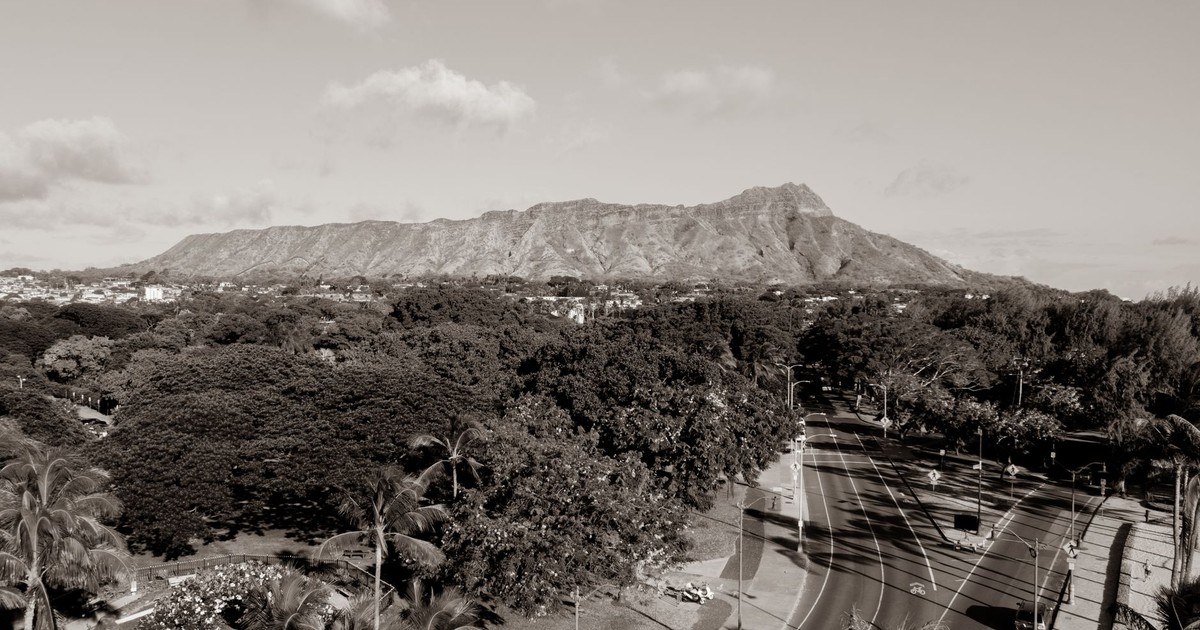
One of the lesser-discussed government mistakes admitted on the congressional record involves not a war or a secret program but a coup. In 1893, U.S. government and military forces supported the overthrow of the Hawaiian Kingdom and its last reigning monarch, Queen Lili’uokalani. One hundred years after the seizure, Congress issued a joint resolution formally apologizing to the people of Hawaii for the U.S. government’s role in the coup on November 23, 1993.
The Apology Resolution, as it became known, acknowledged that the overthrow was illegal under international law and that the native Hawaiian people had never relinquished their sovereignty or their claims to their lands. It was a remarkable act of institutional self-correction, albeit one with no accompanying reparations and no means for redress. The resolution acknowledged the wrongdoing in plain terms but stopped well short of addressing the political and land questions that Hawaiian sovereignty advocates had raised for decades.
What makes this case significant in the context of government mistakes admitted is the directness of the language. Congress did not call the overthrow a regrettable product of the era. It called it illegal and acknowledged that the U.S. government bore responsibility. For many native Hawaiians, the resolution felt like a footnote rather than a reckoning, officially correct, practically empty. But as a matter of historical record, it stands as one of the few times a U.S. government body formally acknowledged that another nation’s sovereignty had been wrongfully eliminated with American involvement.
The Weight of What Gets Said and What Doesn’t
These six admissions share something beyond the obvious: they all arrived late. Tuskegee’s apology came twenty-five years after the story broke and sixty-five years after the study began. The NSA’s reversal on the Gulf of Tonkin took four decades. The Civil Liberties Act came forty-six years after the camps were opened. The pattern is not coincidental. Governments admit mistakes when the cost of continued denial becomes higher than the cost of honesty, and rarely before.
What’s notable about these cases isn’t just that the admissions happened. It’s how partial many of them were. The Tuskegee apology came without criminal charges against anyone who ran the study. The MKUltra admission came after the most damaging documents had already been shredded. The Iraq WMD admission arrived through individual officials expressing regret rather than any formal inquiry with legal consequence. Admitting an error and being accountable for it are not the same thing, and the gap between those two actions is where most of these stories actually live.
The lesson buried in all of this isn’t simply that governments lie. It’s that institutions tend to protect themselves long past the point where the truth is already knowable. Peter Buxtun knew the Tuskegee study was wrong in the 1960s. NSA analysts knew the Gulf of Tonkin intelligence was questionable the night it was collected. The admission, when it finally comes, is rarely a discovery. It’s a decision that the truth has become impossible to outrun. That’s worth keeping in mind the next time an official account of something important is presented as settled and complete.
Disclaimer: This information is not intended to be a substitute for professional medical advice, diagnosis, or treatment and is for information only. Always seek the advice of your physician or another qualified health provider with any questions about your medical condition and/or current medication. Do not disregard professional medical advice or delay seeking advice or treatment because of something you have read here.
AI Disclaimer: This article was created with the assistance of AI tools and reviewed by a human editor.