
Some of the most notorious American crimes on this list reshaped the law. Others rewired public trust in government, in celebrities, in neighbors. A few remain unsolved. All of them burrowed so deep into the national consciousness that decades later, people still know exactly where they were when they heard the verdict, or the news flash, or the name.
The Manson murders said something about the unraveling of the 1960s. Watergate said something about power. The O.J. Simpson trial said something about race, money, and celebrity that America is still working through thirty years later. Each one holds up a mirror to the country at a particular moment, showing not just the act itself but who was capable of it, who looked the other way, and what the country then decided to do about it.
This list spans assassinations, serial killers, heists, corporate fraud, and political scandals. Some perpetrators were executed. Some walked free. Some were never caught at all.
1. The Assassination of President Abraham Lincoln (1865)
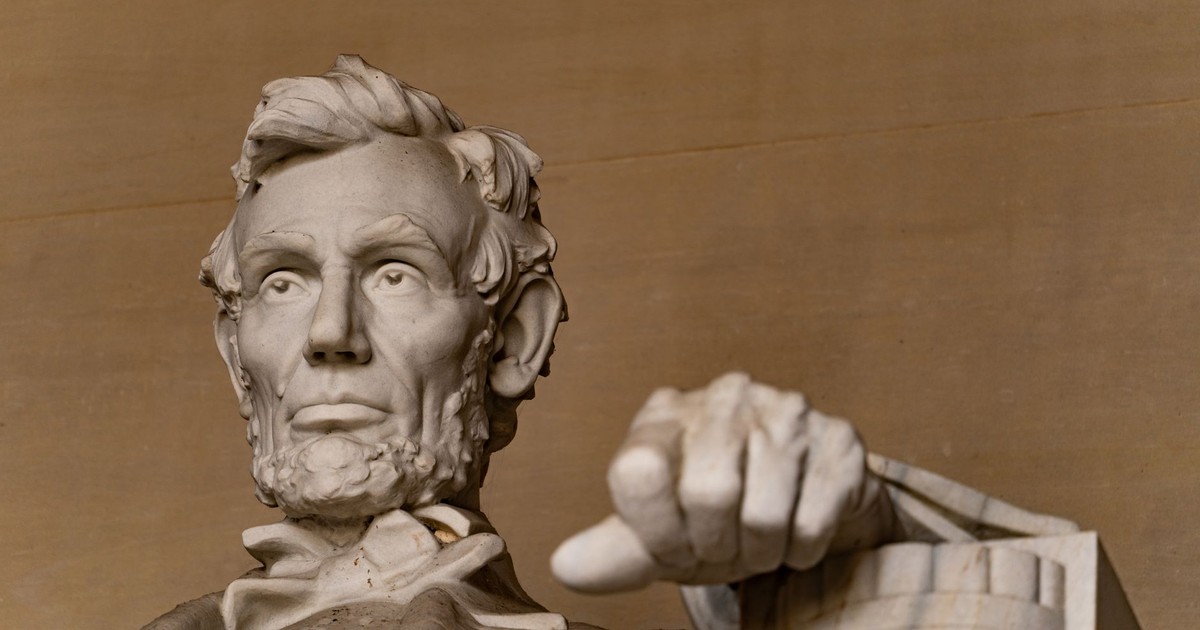
On the night of April 14, 1865, President Abraham Lincoln was attending a performance of “Our American Cousin” at Ford’s Theatre in Washington, D.C. During the play, actor John Wilkes Booth shot the president in the back of the head. Booth was motivated by Confederate sympathies and support for slavery, and had been particularly furious over Lincoln’s speech promising to grant former slaves the right to vote.
Lincoln died the following morning, making him the first U.S. president to be assassinated. Booth fled the theater but was tracked down twelve days later and killed by federal troops at a Virginia farm before he could stand trial. Eight co-conspirators were charged; four were hanged.
The crime landed five days after Confederate General Robert E. Lee surrendered at Appomattox, ending the Civil War. The country had just exhaled, and then this. The assassination reshaped Reconstruction, altered the political trajectory of the post-war South, and created the Secret Service, which was ironically established on the very day Lincoln was shot, though initially to combat currency counterfeiting, not to protect presidents.
2. The Lindbergh Baby Kidnapping (1932)

Cameras appeared in courts long before the man charged with kidnapping and killing legendary aviator Charles Lindbergh’s baby went on trial in New Jersey in 1935. The kidnapping itself happened on the night of March 1, 1932, when 20-month-old Charles Lindbergh Jr. was taken from his crib in the family’s home in East Amwell, New Jersey. A ransom note demanding $50,000 was left on the windowsill.
Charles Lindbergh Sr. was, at the time, the most celebrated man in America, the first person to fly solo nonstop across the Atlantic. His son’s disappearance triggered one of the largest investigations in U.S. history. The baby’s body was discovered roughly two months after the kidnapping, less than five miles from the family home. Bruno Richard Hauptmann, a German-born carpenter, was eventually arrested after marked ransom bills were traced to him. His trial ushered in a new era of criminal proceedings as visual spectacle, with hundreds of reporters and dozens of photographers chronicling every development.
Hauptmann was convicted and executed in 1936. He maintained his innocence until the end, and debate over whether he acted alone, or at all, has never fully died. The case directly led to the Federal Kidnapping Act, which made transporting a kidnapping victim across state lines a federal crime, and gave the FBI jurisdiction over such cases for the first time.
3. The Black Dahlia Murder (1947)
On January 15, 1947, the body of 22-year-old Elizabeth Short was found in a vacant lot in the Leimert Park neighborhood of Los Angeles. She had been murdered, her body severed at the waist and drained of blood, and left positioned with disturbing precision. The press dubbed her the “Black Dahlia,” a nickname drawn partly from a film noir playing at the time and partly from her reputation for wearing black clothing.
According to Britannica, the Los Angeles Police Department conducted hundreds of interviews and received more than 60 confessions, all of them false, while more than 150 suspects were investigated. Despite decades of investigation, interviews, and theories, no one was ever charged. The case became the LAPD’s longest-running unsolved homicide, generating books, films, documentaries, and countless amateur investigations through the twentieth century and into the twenty-first.
Short’s murder also marked a turning point in how the American press covered violent crime, particularly crimes against women. The coverage was lurid, obsessive, and often more interested in Short’s personal life than in finding her killer. The pattern it established has been criticized and repeated ever since.
4. The Manson Family Murders (1969)
In August 1969, members of a cult led by Charles Manson carried out two nights of killings in Los Angeles that left seven people dead, including actress Sharon Tate, who was eight months pregnant. Manson preached “Helter Skelter,” predicting a racial apocalypse that would justify the murders.
Manson himself didn’t kill anyone at the Tate residence. He orchestrated it, having convinced a group of mostly young women and men that murder was a form of spiritual liberation. The prosecution argued that Manson’s psychological hold over his followers was so complete that he bore the same criminal responsibility as if he had held the knife himself. The California Supreme Court agreed.
Manson was initially sentenced to death, but California abolished the death penalty in 1972 and all death sentences were commuted to life in prison. He died at age 83 in November 2017 at a California state prison, never paroled. Several of his followers remain imprisoned to this day, their parole hearings drawing public attention every few years.
5. The Assassination of President John F. Kennedy (1963)
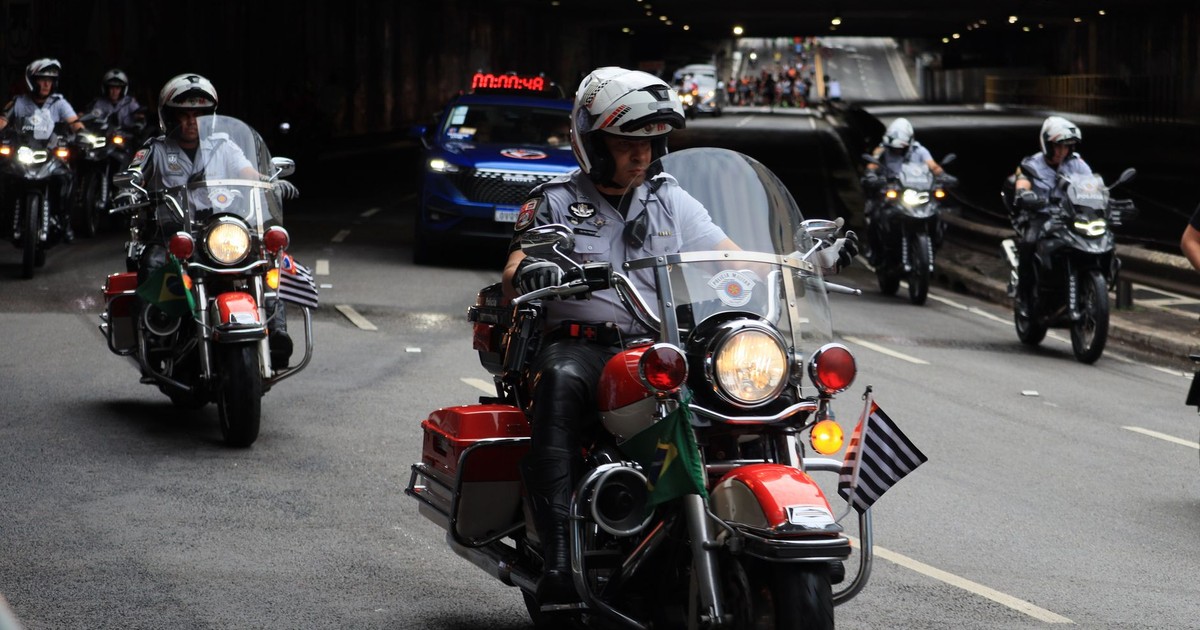
While riding in a presidential motorcade in Dallas, Texas, JFK was shot and killed. Former U.S. Marine Lee Harvey Oswald was arrested for the crime, but he too was murdered by a man named Jack Ruby, sparking enduring theories about a larger conspiracy. Kennedy was 46 years old. He was pronounced dead at Parkland Memorial Hospital 30 minutes after the shots were fired.
After conducting some 25,000 interviews and running down tens of thousands of investigative leads, the FBI found that Lee Harvey Oswald acted alone. The Warren Commission, established by President Lyndon Johnson, reached the same conclusion in 1964. Yet polls have consistently shown that a majority of Americans have never believed it. The killing of Oswald by Ruby, inside a police station, on live television, ensured that the full truth of the assassination could never fully be established.
The Kennedy assassination fundamentally altered American political culture. It accelerated the cynicism about government that would deepen through Vietnam and Watergate. It changed how presidents are protected, how motorcades are run, and how the country processes public grief. The image of the motorcade in Dealey Plaza is among the most studied visual records in history, and still, after more than 60 years, the files keep emerging.
6. The Zodiac Killer (1968 – 1969)

Between the late 1960s and early 1970s, a mysterious killer calling himself the “Zodiac” terrorized Northern California, claiming responsibility for at least five murders and taunting police with cryptic letters and ciphers. His identity remains unknown.
The Zodiac’s direct engagement with the public set him apart from other serial killers of the era. He sent letters to newspapers, including the San Francisco Chronicle, that contained pieces of an encoded cipher he claimed would reveal his identity. One of those ciphers, the 340-character message sent in November 1969, went unsolved for 51 years until a team of amateur and professional codebreakers cracked it in December 2020. It contained no name. The Zodiac claimed in his letters to have killed 37 people, though investigators confirmed at least five victims. He was never identified, never arrested, and never heard from definitively after 1974.
San Francisco schools closed early during the height of the panic. People changed their routines, their routes home, their sense of who a stranger could be. That particular dread, rational, sourceless, ongoing, is the Zodiac’s real legacy.
7. The Assassination of Martin Luther King Jr. (1968)
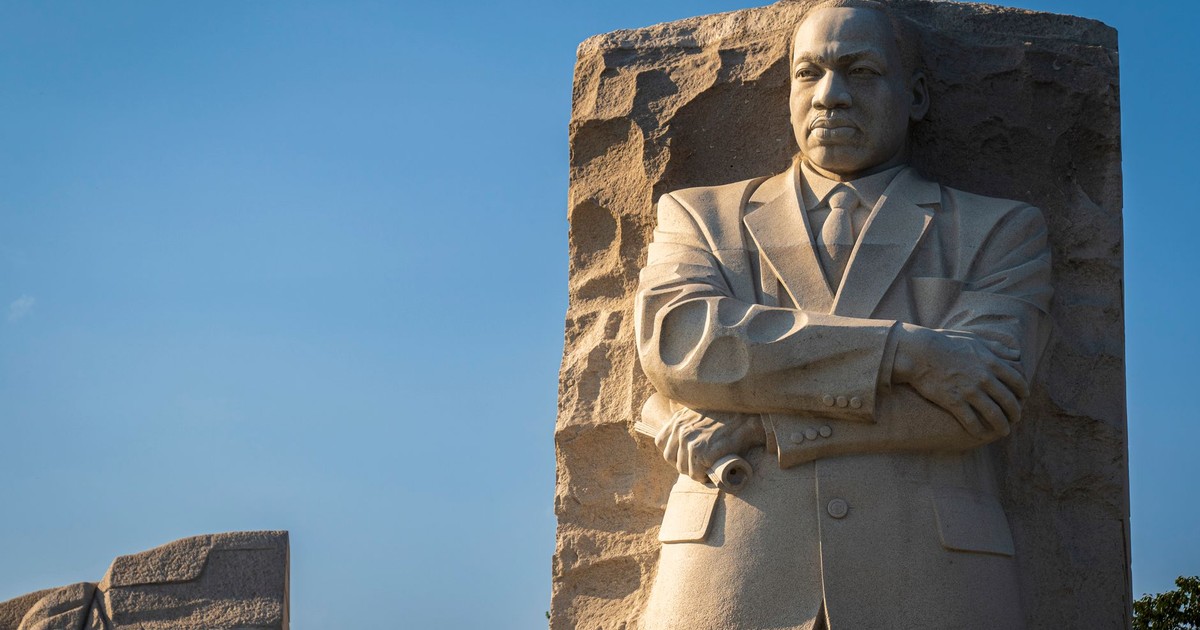
On April 4, 1968, Dr. Martin Luther King Jr. was shot and killed while standing on the second-floor balcony of the Lorraine Motel in Memphis, Tennessee. He had been in Memphis to support striking sanitation workers. James Earl Ray, a fugitive from the Missouri State Penitentiary, was arrested two months later at London’s Heathrow Airport and eventually pleaded guilty to the murder, receiving a 99-year prison sentence. The Department of Justice reviewed the case in 2000 and found insufficient evidence to support claims of a broader conspiracy.
A 1999 civil trial brought by the King family found in their favor, with a Memphis jury determining that a conspiracy involving government agencies played a role in the assassination, though the Department of Justice review reached the opposite conclusion.
King’s murder triggered riots in more than 100 American cities, the worst wave of civil unrest since the Civil War. Congress passed the Fair Housing Act just a week later, a piece of legislation that had been stalled for two years. The assassination remains one of the most consequential crimes in American history not just for who was killed, but for what his death set in motion, and what it foreclosed.
8. The Watergate Burglary and Cover-Up (1972)

On the night of June 17, 1972, five burglars broke into the Democratic National Committee headquarters at the Watergate Office Building in Washington, D.C. It was actually the second such burglary; the first had been to wiretap phones the month before. Behind it all was President Richard Nixon’s Committee for Re-Election. The burglars were caught, and the investigation revealed that Nixon subsequently tried to cover up his administration’s involvement.
Investigative reporting by Bob Woodward and Carl Bernstein at the Washington Post, guided by the anonymous source who became known as Deep Throat, began connecting the break-in to a broader pattern of political espionage, sabotage, and illegal surveillance orchestrated by the White House. Senate hearings ran for months. The Saturday Night Massacre, in which Nixon fired the special prosecutor investigating the case, accelerated his political collapse.
With impeachment looming, Nixon resigned from office in August 1974. His Vice President Gerald Ford became President and pardoned him. The term “Watergate” remains synonymous with political scandal today. Every major political scandal since has been tagged with the suffix “-gate,” a linguistic habit that began here. Watergate established that no one, not even a sitting president, was above criminal investigation, a principle that has been tested repeatedly in the decades since.
9. Ted Bundy (1974 – 1978)
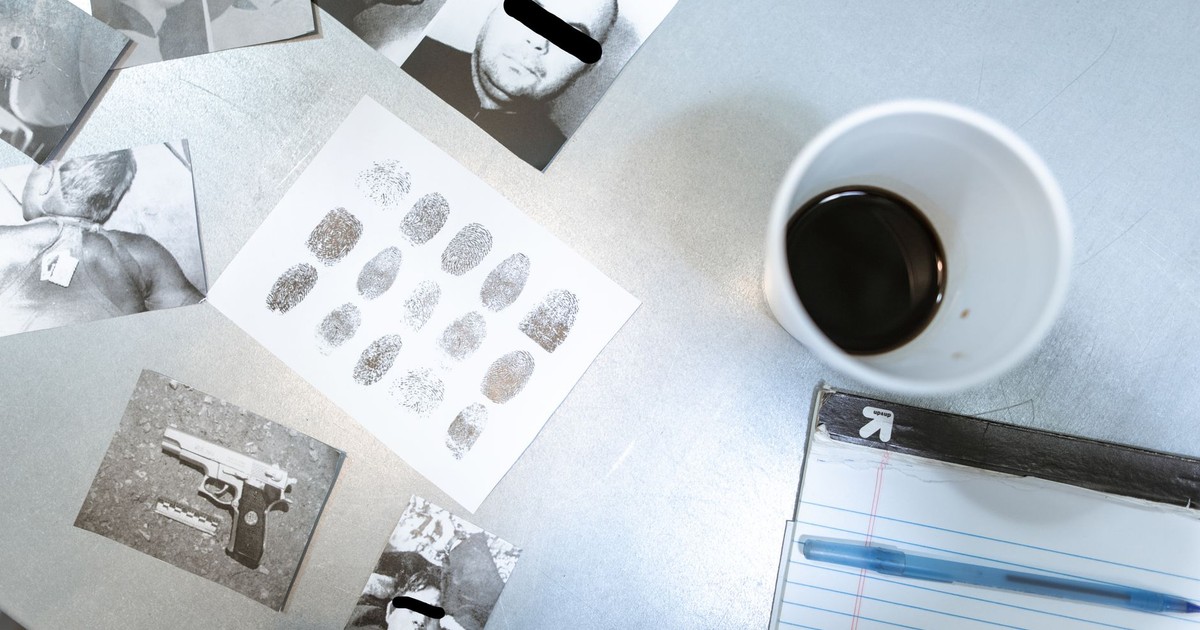
In the mid-1970s, Ted Bundy was a law student at the University of Utah who volunteered at a suicide prevention hotline in his free time. He was also a killer who murdered over 30 women in four years across western America and Florida.
Bundy was charismatic, and often approached his targets in public places, pretending to need help or impersonating a police officer. Once he had led his victims away, he would knock them out and bring them to another location. He escaped from custody twice in 1977, first jumping from a second-story window in June and then escaping through a light fixture opening at a Colorado jail in December. According to ABC News, after his second escape he made his way to Tallahassee, Florida, where he killed two women at the Chi Omega sorority house near Florida State University in January 1978.
He was sentenced to death and executed in 1989. In prison, he confessed to 30 murders, though investigators believe the actual number may be higher. Bundy was educated, articulate, and handsome, the opposite of the monster the public expected. That gap between appearance and reality is what made him a cultural fixation that has never quite faded. The case prompted major reform in how law enforcement agencies across different states share information, a failure that allowed Bundy to operate across jurisdictions undetected for years.
You can explore more cases in true crime stories that continue to challenge what we think we know about crime and human behavior.
10. John Wayne Gacy (1972 – 1978)

A construction contractor known by his suburban neighbors as outgoing and civic-minded, John Wayne Gacy was involved in local politics and dressed as a clown named Pogo at birthday parties and charity events. Gacy came under suspicion in 1978 when 15-year-old Robert Piest, last seen heading to Gacy’s house to ask about a construction job, went missing. That wasn’t the first time families of missing boys had pointed fingers at Gacy, but it was the first time authorities took them seriously.
A search warrant gave police access to Gacy’s home, where officers discovered human remains in a four-foot crawl space beneath the house. According to Britannica, the bodies of 26 boys and young men were found under the house, with three more found elsewhere on the property and four, including Piest, recovered from the Des Plaines River. He was convicted of 33 counts of murder and executed by lethal injection in May 1994.
At the time, his conviction covered the highest number of homicide counts in the legal history of the United States. Families of victims had raised concerns about Gacy years before his arrest, and those concerns had been dismissed. The crawl space beneath his house became one of the most grim images in true crime history, a reminder of how much horror can exist beneath an ordinary suburban exterior.
11. Jeffrey Dahmer (1978 – 1991)
Dahmer began his killing spree in 1978, just 18 years old when he killed his first victim. For almost 13 years, he terrorized Milwaukee, Wisconsin. In 1991, his crime spree finally stopped when one of his victims escaped and led authorities straight to his apartment. Authorities searched it and found visual evidence of mutilated bodies. In total, Dahmer killed 17 young men between 1978 and 1991, and he committed acts of cannibalism and necrophilia in many cases. A jury found him guilty and he received 16 consecutive life sentences.
On one occasion, a potential victim who had managed to escape was returned to Dahmer by officers who concluded they were witnessing a domestic dispute between adult partners. That victim, 14-year-old Konerak Sinthasomphone, was killed shortly after the officers left. A federal court filing later confirmed that Dahmer killed Sinthasomphone about half an hour after police departed his apartment. His victims, mostly from marginalized groups, raised serious questions about bias and oversight, and the case sparked greater demands for accountability and equal protection in the years that followed.
12. The Unabomber (1978 – 1995)
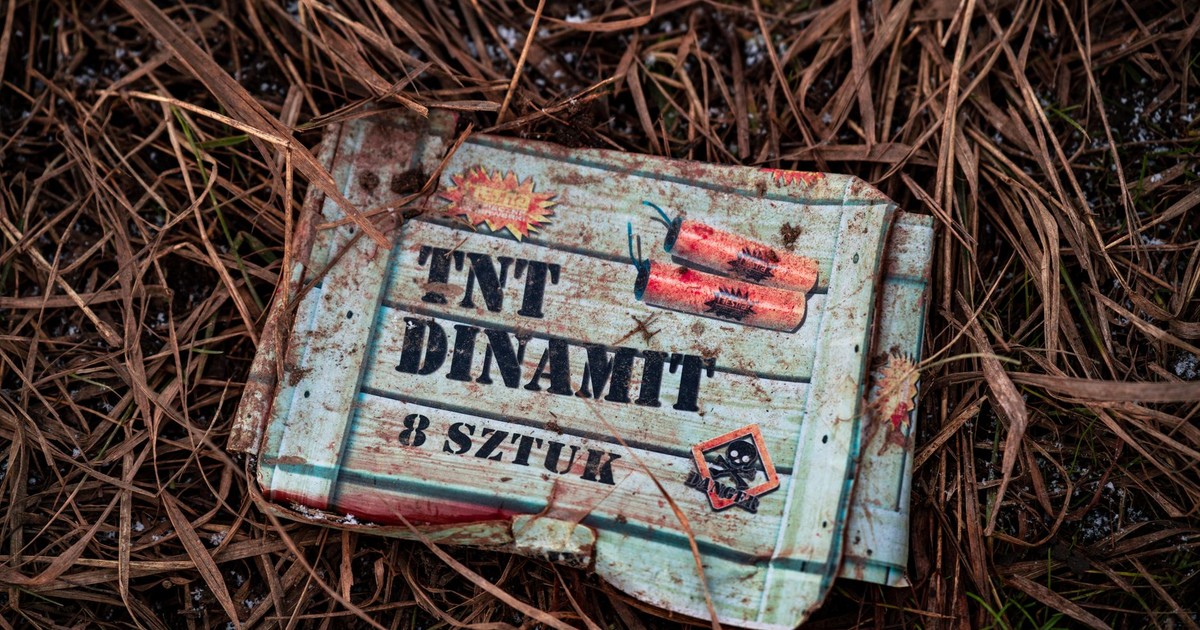
From a brilliant mathematician and assistant professor at the University of California, Theodore Kaczynski became the notorious Unabomber, responsible for mail bombs that killed three people and injured 23 over eighteen years. His targets, universities, airlines, computer stores, gave investigators enough to identify a pattern, but for nearly two decades, he was the most hunted domestic terrorist in FBI history.
He was eventually caught and sentenced to life imprisonment after his anti-technology manifesto, sent to the media, was recognized by his brother. David Kaczynski contacted the FBI in 1995 after reading the manifesto in the New York Times and Washington Post and recognizing his sibling’s writing. It remains one of the most extraordinary family decisions in American crime history: turning in your own brother to stop further killings.
Kaczynski wasn’t pursuing money or notoriety in the conventional sense. He believed industrial society was destroying human freedom, and he was willing to kill to make that argument. His manifesto is still read and debated.
13. The O.J. Simpson Trial (1994 – 1995)
On June 12, 1994, Nicole Brown Simpson and Ron Goldman were found stabbed to death outside Nicole’s home in Brentwood, Los Angeles. Her ex-husband, former NFL star O.J. Simpson, became the primary suspect. What followed was one of the most watched legal proceedings in American history.
From January to October of 1995, televisions across the country and world were tuned in to watch Simpson, his defense team, and the evidence brought against him. The defense team, led by Johnnie Cochran, successfully argued that the LAPD crime lab had mishandled DNA evidence and that detective Mark Fuhrman, who had found a bloody glove at Simpson’s estate, was a racist whose testimony could not be trusted. The jury acquitted Simpson after deliberating for less than four hours.
Simpson later served nine years in prison after being convicted of multiple felonies in Nevada, and was released in 2017. O.J. Simpson passed away from cancer in April 2024. The verdict was met with celebration in many Black communities who saw it as a rare instance of a wealthy defendant beating a system they’d long seen as unjust, and with shock in many white communities who believed the physical evidence spoke for itself. Both reactions were real and neither was entirely wrong.
14. The Columbine High School Shooting (1999)
On April 20, 1999, two senior students at Columbine High School in Littleton, Colorado, carried out a planned assault on their school that killed 12 students and one teacher and injured more than 20 others. Eric Harris and Dylan Klebold had spent more than a year planning the attack, which they initially envisioned as a bombing. When the bombs they had planted in the cafeteria failed to detonate, they began shooting. The attack ended when both perpetrators died by suicide.
Columbine was not the first school shooting in American history, but it became the defining one. Active shooter drills, lockdown procedures, and school resource officers became standard features of American education in its wake. The attack also triggered sustained debate over access to firearms, the role of bullying, and the influence of violent media, debates that were unresolved then and remain so now.
The Columbine name became, grimly, a template. Subsequent mass shooters studied the case and, in several instances, cited the killers as points of reference.
15. The Enron Scandal (2001)

Kenneth Lay was chairman and chief executive of Enron Corp., which he helped drive into bankruptcy by selling off $300 million in stock over more than a decade. The bankruptcy filing was the biggest in U.S. history at the time, costing 20,000 employees their jobs and their life savings and losing billions of investor dollars. Although Lay was indicted on 11 counts of securities fraud, wire fraud, and making false and misleading statements, he died before sentencing.
For years, Enron’s executives, including CEO Jeffrey Skilling and CFO Andrew Fastow, had used complex financial instruments to hide the company’s mounting debts while publicly reporting record profits. Employees who held their retirement savings in company stock watched it collapse to nearly nothing. Thousands of ordinary workers lost everything while executives had already sold their shares.
Skilling was convicted in 2006 and sentenced to 24 years in prison, later reduced to 14 years; he was released in 2019. Fastow pleaded guilty and served six years. The scandal led directly to the Sarbanes-Oxley Act of 2002, which imposed new financial transparency requirements on public companies and created criminal penalties for corporate fraud. Years of inflated profits came crashing down as soon as Enron’s hidden debts were exposed. It was one of the most expensive crimes in American history, and one of the clearest demonstrations that the most devastating crimes don’t always involve violence.
The Weight of the Record
This catalog is about the things Americans have been willing to do to each other, and to themselves. Assassins. Cult leaders. Fraudsters. Serial killers hiding in plain sight. A president who decided the rules didn’t apply to him. A company that decided its employees’ retirement funds were an acceptable casualty of executive wealth.
Every era produces its own version of this story. The crimes that define a generation aren’t random, they reflect the pressure points of their time. Watergate couldn’t have happened before the national security state existed. The Enron fraud couldn’t have happened without the financial deregulation of the 1990s. Columbine couldn’t have become a template without the media coverage that made it one. These cases are a record not just of what happened but of what the country made possible.
Disclaimer: This information is not intended to be a substitute for professional medical advice, diagnosis, or treatment and is for information only. Always seek the advice of your physician or another qualified health provider with any questions about your medical condition and/or current medication. Do not disregard professional medical advice or delay seeking advice or treatment because of something you have read here.
AI Disclaimer: This article was created with the assistance of AI tools and reviewed by a human editor.