

The argument starts at the deli counter. One sandwich versus another, a parking space, a route home you’ve never taken. You pick, you move on, you forget about it entirely by the time you’re back in the car. Except sometimes you don’t forget. Sometimes the choice you made in the time it takes to exhale ends up being the one you’re still talking about twenty years later.
A Reddit thread asking people to share “a decision you made in under 10 seconds that changed your life forever” gathered thousands of responses, and the patterns that emerged were hard to ignore. Not the huge, planned decisions – the job offer accepted after weeks of deliberation, the move to a new city planned for months – but the offhand ones. The ones made without thinking, or sometimes precisely because someone stopped overthinking for one crucial moment. Fleeting, impulsive choices can play just as big a role in our lives as the more carefully thought-out ones. And the stories people shared make a compelling case for exactly that.
Nobody filed these moments away as important. Nobody felt the weight of them at the time. The hinge point of an entire life looked, from the inside, exactly like a Tuesday.
1. Choosing a Different Restaurant

One of the most-shared stories in the Reddit thread became something of a flagship for the whole conversation. Someone decided to go to Subway instead of Dairy Queen. The two were across the street from each other, and the person was passing through town at lunchtime. They ended up hitting it off with the woman making their sandwich. The following week was their 11-year anniversary.
It sounds almost too tidy to be real – the kind of thing you’d roll your eyes at in a romantic comedy. But what makes it resonate is the absolute lack of drama at the moment of choice. Not Subway because of a sign or a craving or a memory. Subway because it was slightly more convenient, or because they’d already had Dairy Queen that week, or for no reason anyone can now reconstruct. The why doesn’t matter. The where was everything.
Not the avalanche set off by a meaningful choice, but the one set off by something you wouldn’t even classify as a choice. A coin flip disguised as lunch. If you tried to reverse-engineer your own life to find its equivalent moment, you probably couldn’t. And that’s the point.
2. Taking a Wrong Turn

Several people in the thread described moments when getting lost or making a navigational error led somewhere unexpectedly good. One person described boarding the wrong train and ending up in an unfamiliar neighborhood where they stumbled into a conversation that eventually became a business partnership. Another took a wrong turn driving home and passed a “now hiring” sign for a job they’d never have considered, applied on a whim, and built a career there.
Intuition turns out to be a surprisingly powerful tool for fast decisions. A Tel Aviv University study by Professor Marius Usher of the School of Psychological Sciences found that when forced to choose between two options based on instinct alone, participants made the right call up to 90 percent of the time.
Disruption also does something useful to attention. When you’re lost, you actually look around. You notice things – storefronts, signs, people – that you’d have driven past on autopilot. The wrong turn forces presence, and presence sometimes finds things that planning misses entirely.
3. Saying Yes to an Event You Almost Skipped

The “I almost didn’t go” story is so common it’s practically its own genre. The party you were too tired for. The work event that seemed pointless. The friend-of-a-friend’s gathering where you didn’t know a single person and nearly turned around in the parking lot. Dozens of people in the Reddit thread traced a marriage, a friendship, a career pivot, or a creative collaboration back to an event they had been on the verge of skipping.
Research published in Frontiers in Psychology found that intuitive choices lead to greater satisfaction with positive outcomes than analytic ones. The version of you that went to the party because something pulled at you – not because you reasoned your way into it – may have been operating on better information than you realized. Going because some part of you simply wanted to tends to produce better outcomes, and not just in hindsight.
When you can’t find a good reason not to go, go. The calculation people run when they talk themselves out of events (“I’m tired, I won’t know anyone, it’s far”) is almost always tilted toward the comfortable present rather than the potentially interesting future.
4. Sending the Message
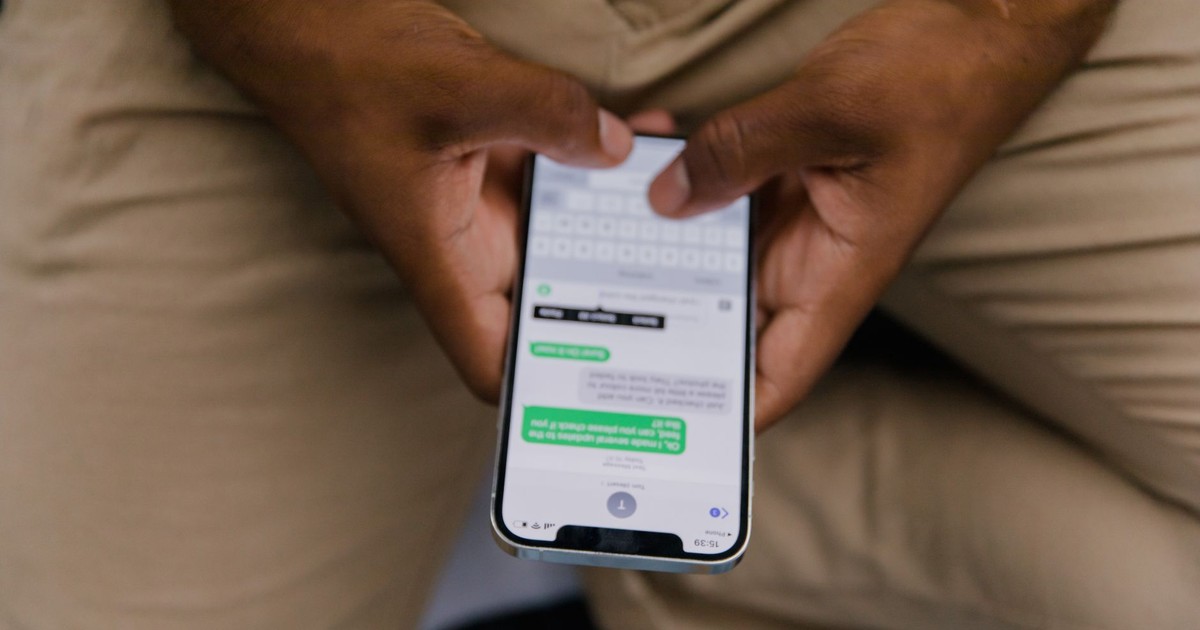
One person described nearly not sending the voice note that became the opening of a years-long friendship. Another talked about firing off a compliment to a stranger’s work online – something they immediately questioned as too much – and receiving a reply that led to a collaboration that changed their professional life. A third described sending an “are you okay?” text to someone they hadn’t spoken to in years, and finding out the timing had mattered enormously to the person on the other end.
The instinctive reach-out carries something the deliberated one sometimes loses. A message written and revised for an hour has had its spontaneity engineered out of it. The person on the other end can usually tell the difference, and so can the person who sent it. The impulse behind a fast message is often kinder and more genuine than anything that emerges from ten minutes of second-guessing.
The moment of hesitation before sending – the “should I though?” – is usually worth overriding when the impulse behind it is kind. Most people who sent the message say they can’t imagine not having. Most people who didn’t send it still think about it.
5. Accepting Help From a Stranger

Several people shared stories about moments when they accepted help they could have refused – directions from someone on a street corner, a hand carrying something heavy up a flight of stairs, an offer of a ride in an unfamiliar city – and found that the interaction opened into something far larger. One person described accepting help from a stranger at a train station and discovering the person worked in the exact field they were trying to break into. The conversation lasted four minutes. The introduction they got from it changed their career.
Wise advice about life often points to the value of staying open to the unexpected, but it’s usually framed as a philosophy rather than a practical act. What these stories illustrate is something more concrete: the people who accepted help weren’t being passive or lucky. They were making a fast, low-stakes choice to stay in an interaction rather than end it. That choice is always available. Most of the time, people take the exit. Occasionally, staying in the room is the entire thing.
The refusal of help is culturally coded in a way that the acceptance isn’t. Saying “I’m fine, thanks” is the default. Saying “actually, yes” takes a beat of deliberateness, even when it happens fast.
6. Picking Up the Phone

One person in a crowdsourced collection of life-changing decisions shared that they wouldn’t normally have made a video call, and usually would have just texted, but felt like it – and that the resulting conversation was something they’d otherwise have missed entirely. The call that gets made when texting would have been easier. The phone picked up instead of let ring. The FaceTime accepted from a parent on a random Wednesday evening that turns out to be the last conversation in good health before something changes.
Several people described moments where answering or making a call in a context where they easily could have let it go produced something irreplaceable. One person called a former colleague to apologize for something years-old and found that the call led to a job offer. Another answered an unfamiliar number that turned out to be a reconnection with a family member they hadn’t spoken to in over a decade.
The quick life decisions that involve communication are particularly powerful because they operate on both ends simultaneously. The person calling and the person answering are both making a choice in real time, and when both say yes, something happens that neither one could have planned for.
7. Stepping Outside Your Comfort Zone in a Crowd
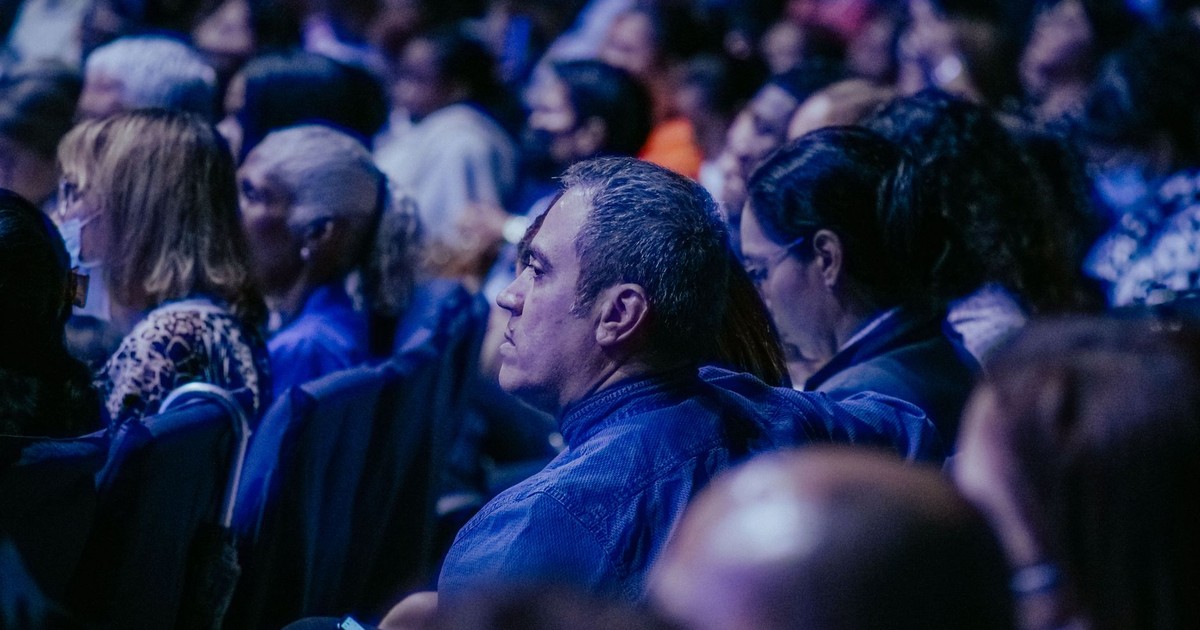
The moment someone raises their hand in a room full of people when they hadn’t planned to. The person who volunteers to go first. The one who speaks up in a meeting when they’d spent the previous ten minutes talking themselves out of it. The Reddit thread was full of these: a hand raised in a seminar that led to being invited to join a project, a question asked after a panel talk that led to a mentorship, a joke made to break an awkward silence that led to a friendship.
Psychologist Barry Schwartz, in The Paradox of Choice, argues that people who set criteria and choose the first option that satisfies them – rather than endlessly optimizing for the very best option – end up happier and less prone to regret than those who agonize. Raising your hand before you’ve thought it through is uncomfortable precisely because it bypasses that optimization loop. Bypassing it is often the better move.
Most people who raised their hand said they did it before they could stop themselves. The impulse came first. The rational objection came a fraction of a second too late. And that fraction of a second was the whole thing.
8. Choosing Kindness in an Irritating Moment

Some of the most powerful stories in the thread weren’t about meeting a partner or landing a career. They were smaller and, in a way, harder. The person who chose not to react when someone cut in front of them in line, and later realized that the person was visibly distressed and needed the shortcut more than they did. The driver who waved someone in instead of holding their ground, and got a wave back from someone who turned out to live on their street and became a close neighbor.
One perspective shared in the thread framed it this way: the world doesn’t end if you burn a pizza, or if the water boils over. The person who cut you off isn’t the worst part of your day. The staff member checking your ID isn’t a bad person. You can simply choose not to react to those things, and life gets a whole lot easier.
In practice, it’s a decision made in under ten seconds, usually under mild social pressure, that determines whether the next ten minutes go one way or another. And those ten minutes compound. The irritable response that puts two strangers at odds. The pause that defuses the same situation. The gap between those two paths is real, even if nobody’s measuring it.
9. Acting on an Instinct to Check on Someone

One person described driving past a friend’s house on a whim – not planning to stop, just passing – and noticing something that made them pull over. The friend was in the middle of a crisis. Another described sending a message to someone they hadn’t thought of in years because a song had come on that reminded them of that person. The message arrived on a day the recipient later said had been one of the hardest of their life.
Acting on the impulse to check on someone rarely has a downside that outweighs the potential upside. The cost of a message that arrives and turns out to be unnecessary is close to zero. The cost of not sending one when it mattered is a much harder thing to quantify.
The thing about these impulses is that they pass quickly. You think of someone, and if you don’t act in the first few seconds, the moment closes. The person packs away their worry, puts their phone in their pocket, and the thought drifts off. The whole window is about ten seconds wide.
10. Saying Yes When You Had Every Reason to Say No

This is the category that shows up most often and wears the most faces: the job in a city where you knew nobody, the date you almost cancelled, the creative project that felt too personal to share, the trip that seemed financially irresponsible. All of them had rational arguments against them. All of them involved someone overriding that rationality on a feeling that something might be worth it.
One person in the thread described agreeing to accompany a friend to a one-off evening class in a subject they had no interest in. They went because the friend asked and it was easier than explaining why not. They ended up sitting next to someone who introduced them to their now-spouse, their closest professional collaborator, and their current city, all in one chain of consequences that took about five years to fully unfold. All from an evening class they had zero interest in attending. As one person reflecting on their own unexpected life path put it: “If it wasn’t for multiple tiny decisions from us, it never would’ve happened.”
The rational objection to all of these stories is obvious: for every person who went to the event and met someone life-changing, a thousand went to the event and just had a forgettable evening. That’s true. But the stories in the thread aren’t arguing that impulsive choices always work out. They’re pointing at something subtler: the choices which work out are almost never the ones that were planned.
The Weight of the Ordinary

The question these stories keep circling is not “how do I make better decisions?” It’s something more unsettling: how many of the decisions that mattered most to you looked completely ordinary at the time?
The answer, for almost everyone who has thought about it honestly, is most of them. The lunch stop. The phone call made from boredom. The event attended because a friend guilted you into it. The message sent because the alternative was watching another ten minutes of television. These didn’t feel like quick life decisions. They felt like nothing at all.
What the accumulation of these stories suggests is that this is fine. You don’t need to be alert to every choice as if it might be the one that changes everything, because that level of attention would be exhausting and unlivable. What the stories do suggest is a slightly lower bar: when the cost of saying yes is low and the feeling pulling you toward it is real, the yes is probably worth taking. Not because it will change your life. Because sometimes it will, and you won’t know until much later which time was that.
Disclaimer: This information is not intended to be a substitute for professional medical advice, diagnosis, or treatment and is for information only. Always seek the advice of your physician or another qualified health provider with any questions about your medical condition and/or current medication. Do not disregard professional medical advice or delay seeking advice or treatment because of something you have read here.
AI Disclaimer: This article was created with the assistance of AI tools and reviewed by a human editor.