

The argument most people have about the U.S. housing market right now is about prices. Specifically: why won’t they come down? Sales have been stuck near 30-year lows. Mortgage rates have stayed stubbornly above 6% for years. Consumer confidence has wobbled. And yet, as of June 2026, the median price of an existing home hit $440,660, up 1.8% from a year ago, a new all-time record. The intuitive economic story, the one where weak demand eventually drags prices lower, simply hasn’t played out.
Several forces are running underneath the headline numbers. The big price figure lands in the news. The structural shifts that are actually reshaping who can buy, where prices are heading, and what the next five years might look like for ordinary homeowners get buried. Some of them are genuinely surprising. A few are already affecting the value of homes that people believe are perfectly safe.
Here are six housing market changes that economists are tracking right now.
1. Home Prices Just Hit an All-Time High While Sales Stay Frozen

Prices keep rising even as transaction volume stays depressed. Sales of previously occupied homes were largely flat last year, stuck at a 30-year low, and through the first half of 2026, the picture hasn’t meaningfully improved. That’s not a recovering market. That’s a market where almost nothing is moving.
And yet prices climbed anyway. Americans paid $440,600 for the typical existing home in June, according to the NAR, 1.8% more than a year ago and the 36th straight month that prices have risen. Thirty-six consecutive months. Through rate shocks, affordability crises, political uncertainty, and the slowest sales pace in a generation, prices have not dropped.
The explanation is supply, and the math is simple. When there aren’t enough homes to go around, the ones that do sell attract competition, and competition holds prices up regardless of how many buyers are sitting on the sidelines. For existing homeowners, their home’s paper value may still be climbing even in a market that feels broken. But anyone hoping to trade up, downsize, or relocate is still dealing with an affordability squeeze that shows no sign of quick resolution.
2. The Rate Lock Effect Is Bigger Than Most People Realize

The single most important reason inventory stays thin isn’t new construction falling short. It’s the fact that millions of existing homeowners simply won’t sell. Homeowners who secured rates below 4% during the pandemic have little financial incentive to sell and take on a new mortgage at today’s rates.
Put that in dollar terms. Someone who bought a $350,000 home in 2021 with a 3% mortgage is paying roughly $1,476 a month in principal and interest. If they sold and bought the same $350,000 home today at 6.47%, that payment jumps to around $2,200. The home didn’t change. The cost of owning it did. That gap makes moving feel financially irrational, so people stay.
The share of mortgages greater than 6% exceeds the share below 3%. But the lock-in remains a market headwind, as roughly 80% of mortgages have a rate of 6% or lower. Even as conditions slowly thaw, the vast majority of homeowners still have a financial incentive not to list their home. This isn’t a temporary quirk that a Fed rate cut will fix overnight. Rates would need to fall meaningfully and stay there before the calculus shifts for most locked-in owners.
3. Builders Are Passing Tariff Costs Directly to Buyers

New construction was supposed to be the pressure valve for the supply shortage. Build more homes, ease the squeeze, let prices stabilize. That logic is being disrupted by something most buyers don’t see on the sticker: the cost of regulations and tariffs baked into the price of every new home before a single piece of furniture arrives.
Research by the NAHB found that the average regulatory costs for a new single-family home in 2026 total $131,734, up about 40% from 2021 when these costs equaled around $93,871. That $131,734 covers permitting, zoning compliance, and government-mandated fees during both land development and construction. Regulatory costs now represent 26.4% of the average new home sale price, which NAHB estimated was $499,500 in January. For context, disposable income over the same five-year period rose just 18.3%, meaning regulatory costs are climbing more than twice as fast as people’s ability to pay them.
Layer tariffs on top of that. Labor shortages resulting from immigration policy shifts are forcing homebuilders to seek higher-cost substitutes to complete construction. Builders cannot get new homes to market at price points that most first-time buyers can afford. The new construction that does come online tends to skew toward higher price brackets, which does very little to relieve the affordability crisis at the bottom and middle of the market.
4. The Geographic Divide Is Getting Sharper
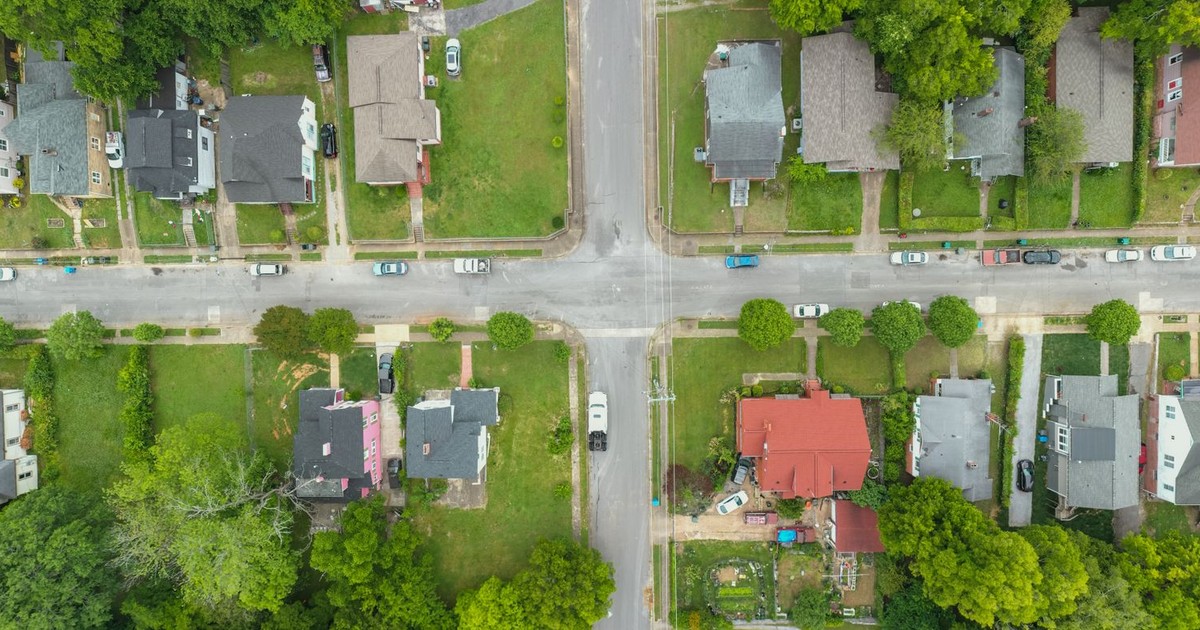
The national housing price figure is real, but it hides a story that’s becoming more significant every month. The U.S. is not experiencing one housing market story right now. It’s experiencing several distinct markets that are moving in opposite directions.
A clear split is emerging in 2026: the Northeast and Midwest are expected to see continued price growth, supported by tight inventory and stable labor markets. Meanwhile, markets in the Sun Belt that saw explosive growth during the remote-work boom, places like Austin, Phoenix, and parts of Florida, are softening as new supply hits the market and migration patterns normalize.
Domestic migration has reshaped regional housing demand over the past three years, with Americans consistently moving toward mid-sized cities that offer affordability and job access. North Carolina, South Carolina, and Tennessee have topped inbound migration lists for four consecutive years, keeping prices supported even as national sales volume stalls. Someone in Hartford, Connecticut or Columbus, Ohio is in a fundamentally different market than someone in San Antonio or Jacksonville, and those differences are widening, not closing. The national headline number tells you almost nothing about what your specific home is worth or where it’s headed.
5. A Major Federal Housing Law Just Passed, and Few Homeowners Know What’s in It

Bipartisan legislation intended to increase the U.S. housing supply and improve affordability is now law, though experts say homebuyers and sellers shouldn’t expect fast relief. The 21st Century ROAD to Housing Act became law after President Donald Trump neither signed it nor vetoed it within the required timeframe. It’s the most significant federal housing legislation in decades, and most of the country barely noticed it pass.
The legislation implements a range of policies to lower home prices, including removing regulatory barriers to construction, restricting institutional investors from purchasing single-family homes and encouraging zoning reforms to accelerate homebuilding. That last piece, restricting institutional investors, is the one most homeowners in competitive neighborhoods will feel most directly. Large investors buying single-family homes and converting them to rentals have been a visible force in markets across the South and Midwest. A federal restriction on that activity, if enforced, could meaningfully change the buyer pool in those neighborhoods.
The legislation also creates a four-year pilot program to expand the availability of small mortgages, those under $100,000, which some lenders avoid due to compliance costs. Supporters say improving access to smaller loans could help buyers in lower-cost markets and those purchasing less expensive homes. The catch is that the law doesn’t take official effect until January 2027, and its impact depends almost entirely on how aggressively it gets implemented. For now, it’s a signal of political intent more than a market force.
Read More: The 5 Safest and Cheapest Places in Asia for Solo Senior Travel
6. The Housing Market Is Being Re-Anchored to Income, Not Cheap Credit
For roughly a decade before 2022, home prices were effectively set by the availability of cheap credit. Low rates made large mortgages manageable, and that kept buyers stretching further than income alone would justify. That era is over, and the adjustment has been slower and messier than almost anyone predicted.
Harvard’s Joint Center for Housing Studies 2026 report describes a market where activity remains subdued, demand is weakening, and high costs are sidelining many would-be buyers and renters, even as new construction slowly chips away at supply shortfalls. Buyers can no longer rely on low rates to close the gap between what they earn and what homes cost. Instead, the market has been gradually re-anchoring itself to income fundamentals, a process that’s more grinding than it sounds. Sellers have had to become more price-sensitive. Buyers have adjusted their expectations down. Neither side loves the result.
Current homeowners haven’t fully felt the consequence yet: the pool of people who can afford to buy their home has shrunk. Not because their home got less desirable, but because the math of getting a mortgage is harder for more people than it was three years ago. According to PNC Economics Research, housing affordability remains low under slowing wage growth and stronger home price growth. When wages aren’t keeping pace with home prices, the market eventually has to find a new equilibrium. Whether that equilibrium comes through income growth, rate drops, or a genuine price correction in overextended markets depends heavily on which of those factors moves first.
What to Do With All of This
Six consecutive all-time price highs while sales sit at 30-year lows. Builders trapped between regulatory costs, tariff pressures, and a buyer pool that can’t quite stretch to new construction price points. A federal law that could reshape who buys your neighbor’s house, but not until 2027, and only if it gets implemented.
For existing homeowners, the key number to watch isn’t the national price index. It’s inventory in your specific market. NAR chief economist Lawrence Yun has warned that progress on long-term housing affordability could be hampered if inventory growth continues to stall. Without consistent gains in inventory, home prices can accelerate. Markets with tight supply will likely hold or grow. Markets where new construction has been aggressive over the past three years, particularly in parts of the South and Southwest, are already showing price softening as those new homes finally absorb demand.
The supply shortage goes back further than pandemic-era rates do. The regulatory cost buildup has been decades in the making. The geographic divergence between a Hartford or an Indianapolis and a Phoenix or an Austin reflects labor market and migration trends that predate the rate shock by years. Knowing which forces are actually driving your local market is usually where the real financial decisions start.
Disclaimer: This information is not intended to be a substitute for professional medical advice, diagnosis, or treatment and is for information only. Always seek the advice of your physician or another qualified health provider with any questions about your medical condition and/or current medication. Do not disregard professional medical advice or delay seeking advice or treatment because of something you have read here.
AI Disclaimer: This article was created with the assistance of AI tools and reviewed by a human editor.