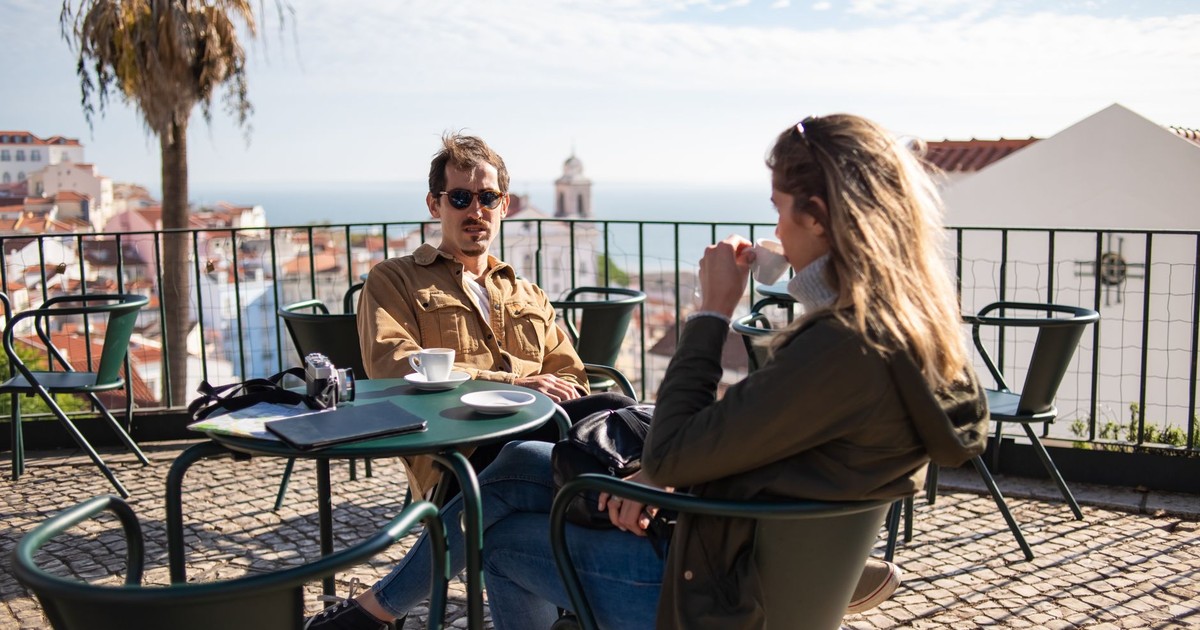

Portugal keeps appearing at the top of European travel wish lists. Weekly spring flights from New York or Boston to Lisbon fill with couples in their sixties who’ve already done Italy twice, France three times, and are looking for somewhere that doesn’t feel like a repeat. The country is more coherent than they expected, more accessible, and more genuinely unhurried than almost anywhere else left in western Europe.
Boomers spend a massive $157 billion a year on travel, and a growing share of that is moving toward Portugal. Portugal ranked 6th globally for English proficiency in the EF EPI 2025 study, ahead of Denmark. Reading a pharmacy label, flagging down a waiter, or asking for directions rarely involves guesswork. The country scores consistently high on safety rankings, and it turns up regularly on value-for-money comparisons such as Skyscanner’s best-value destinations for 2026, even if prices have risen from the bargain-basement levels of a decade ago.
The ten destinations below span the full range of what Portugal offers: coastal and inland, urban and rural, easy and adventurous. Some are famous. A few get talked about less than they deserve.
1. Lisbon
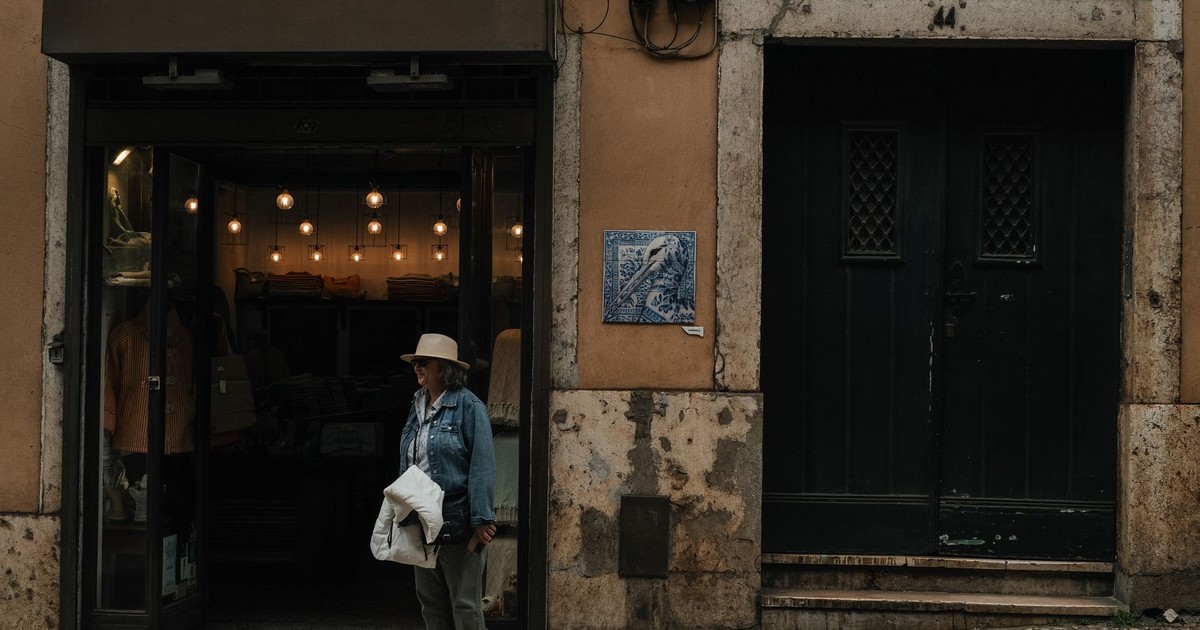
Lisbon sits across seven hills above the Tagus estuary and packs an unlikely amount of history into a walkable area. A single afternoon can take you from a Moorish castle built in the 12th century to a riverside wine bar that opened last spring.
The historic Alfama district, with its narrow lanes and terraced viewpoints called miradouros, is best explored on foot. The city’s famous yellow trams cover the hillier routes. The Belém district, a short ride west of the center, holds the UNESCO-listed Jerónimos Monastery and the Tower of Belém within easy walking distance of each other, surrounded by riverside gardens.
Fado, Portugal’s national music tradition, was born in Lisbon’s Alfama. An evening at a casa de fado puts you close enough to see the musicians’ expressions while dinner arrives between performances. Most houses in Alfama take reservations, and the quality difference between booked and walk-in is significant.
2. Porto
Porto does everything Lisbon does, but at lower volume. Fewer crowds at the main sites, lower restaurant prices, and a city center compact enough that most of what matters is a walk or a short taxi away. The Dom Luís I Bridge spans the Douro River on two tiers, the upper level being a pedestrian walkway with views that have earned their reputation.
The UNESCO-listed Ribeira waterfront, Clérigos Tower for panoramic views, and the iconic Dom Luís I Bridge at sunset are among Porto’s unmissable stops. The blue-and-white azulejo tiles inside São Bento Station deserve their own visit. The port wine lodges, including Graham’s, Sandeman, and Taylor’s, offer free or low-cost tastings, with staff who seem genuinely pleased to explain the difference between ruby, tawny, and vintage.
The Mercado do Bolhão, recently restored after years of renovation, is one of the best covered markets in Europe, with fresh produce, local charcuterie, and bacalhau (salt cod) in forms you didn’t know existed. A bowl of francesinha, Porto’s famous beer-and-meat-sauce sandwich, is obligatory at least once.
3. The Algarve
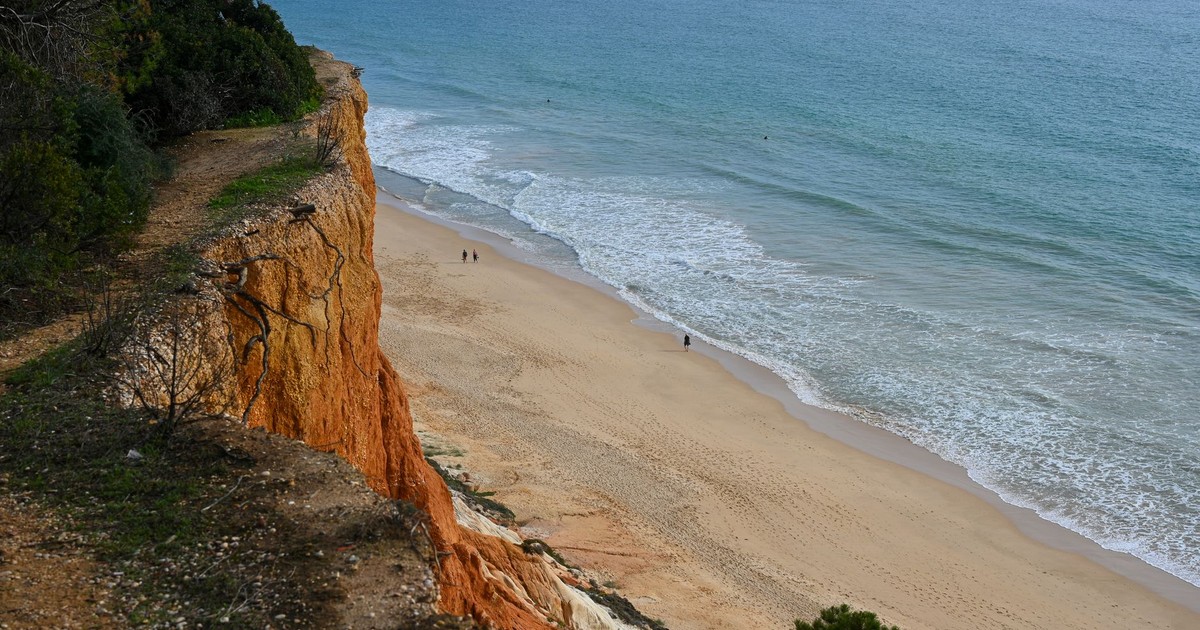
The Algarve is Portugal’s southernmost region, drawing northern European visitors for decades. The sun, warmth, and beach geography require no improvement. Golf courses here stay open year-round, and the beaches remain swimmable well into November.
Lagos, on the western stretch of the coast, rewards a full day or two. The walled old town leads down to the cliffs of Ponta da Piedade, best seen by boat. The naturally sculpted Benagil Cave, whose domed limestone ceiling opens to the sky, consistently looks better in person than in photographs. Small boat tours from Lagos harbor get you inside the chamber.
Tavira, in the eastern Algarve, moves at a notably quieter pace. The town’s medieval bridge, sheltered island beaches reached by short ferry rides, and a relaxed tempo make it the best option in the region for travelers who find Albufeira’s resort strip exhausting.
4. Sintra
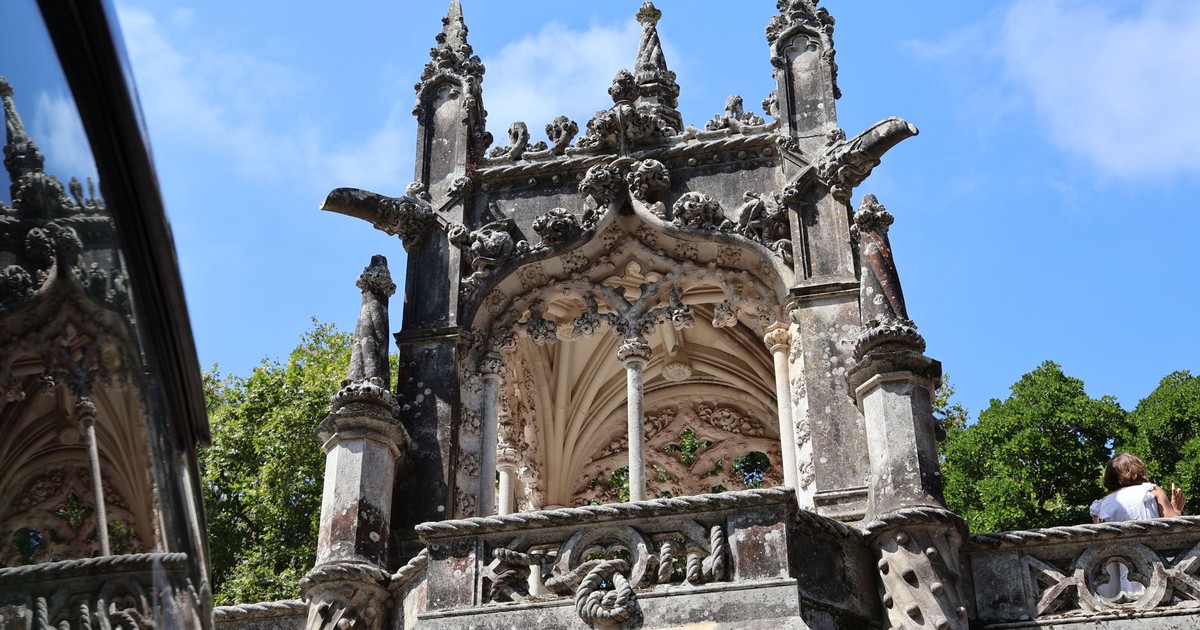
Sintra sits in the hills about 30 kilometers west of Lisbon, and it has drawn visitors since long before tourism was an industry. The poet Lord Byron wrote about it admiringly in Childe Harold’s Pilgrimage in 1812. The description still holds. The town is dotted with royal palaces, Moorish ruins, and private estates built by 19th-century aristocrats who wanted somewhere that felt removed from ordinary life.
Sintra is day-trippable from Lisbon by train in 30 minutes. Most visitors arrive in the morning and work through the Pena Palace, a vividly colored Romanticist building on a hilltop above the clouds, the Moorish Castle ruins, and the Quinta da Regaleira with its extraordinary initiation well, a spiral staircase that descends nine levels into the earth, before heading back to Lisbon for dinner.
Arriving early matters in Sintra. By 10am the main road through town is full. By 8:30am it belongs to you and a handful of other early risers. Taking the old tram through the surrounding countryside to the coastal village of Praia das Maças, then having a lunch of grilled fish before the afternoon crowds peak, is a combination that works every time.
5. The Douro Valley
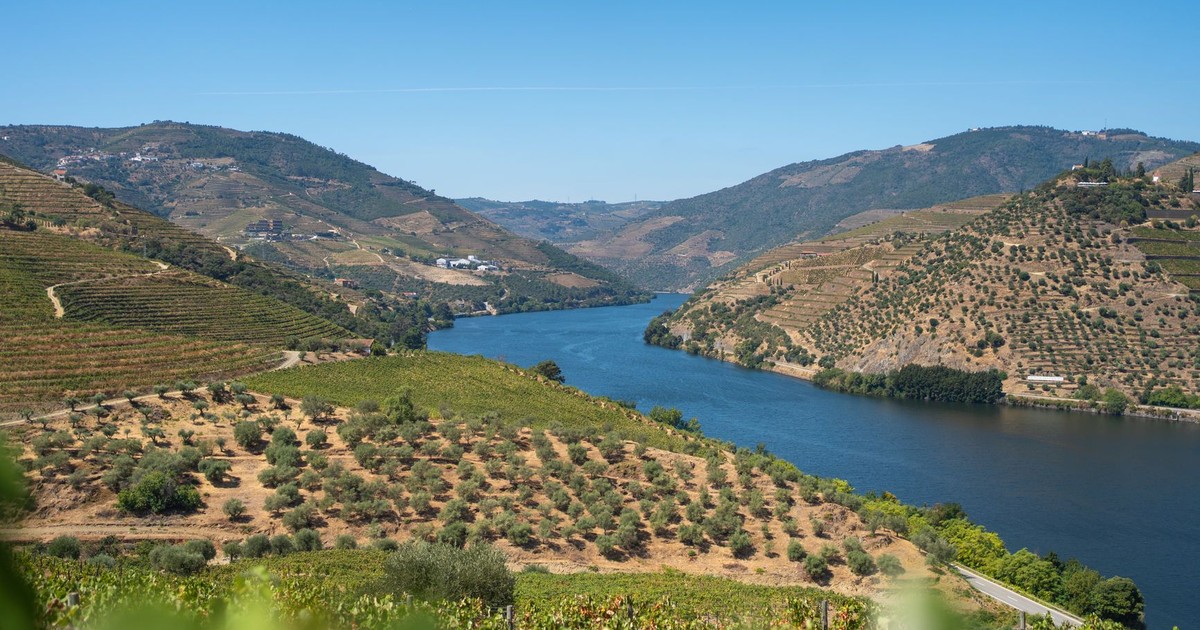
The Douro River begins in Spain and cuts west through northeastern Portugal in curves so dramatic that the terraced vineyards carved into the valley walls look less like agriculture and more like something planned. The region provides exceptional wine experiences, while nearby Madeira adds levada trails and the Azores volcanic hiking for those wanting more active options.
The most satisfying way to see the valley combines boat and train. The train from Porto to Pinhão, a small village deep in port wine country, takes around two and a quarter hours and runs along the riverbank for much of the route. From Pinhão, a river cruise back downriver lets you see the terraced estates, called quintas, from water level. These aren’t gentle slopes. They are near-vertical stone-walled terraces that generations of families built by hand.
Wine tastings at the quintas tend to be unhurried and personal in a way the big Porto lodges can’t quite replicate. Sitting on a terrace overlooking the river with a glass of late-harvest white and no particular schedule is the specific kind of luxury that Portugal does better than almost anywhere else in Europe.
6. Madeira
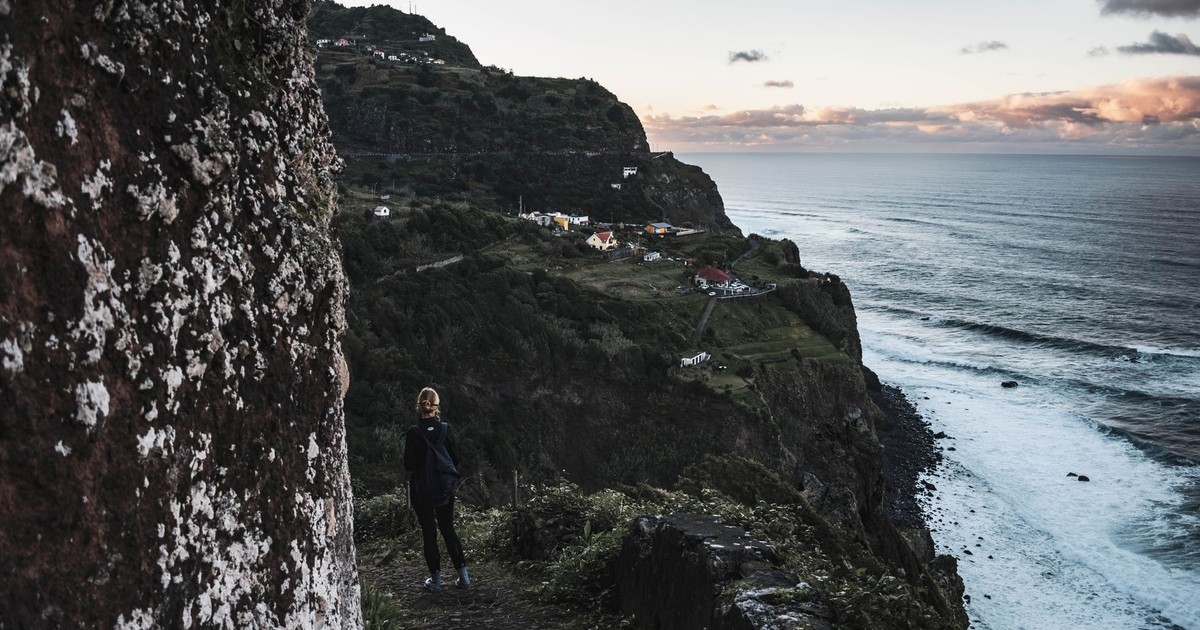
Madeira is a Portuguese island in the Atlantic, about 1,000 kilometers southwest of mainland Europe. According to the Madeira Islands Tourism Board, average temperatures range from around 15 degrees Celsius in winter to 25 degrees Celsius in summer, making it a mild destination in any season. Between April and October, whale and dolphin watching tours run regularly from the island’s coast.
The island’s signature walking routes are the levadas, narrow irrigation channels, some built in the 15th century, that run across the mountain terrain carrying water from the wet north to the drier south. Hundreds of kilometers of paths run alongside them, ranging from flat valley-floor walks accessible to almost anyone to more dramatic highland routes with vertiginous views. Most levada walking requires only good shoes and a willingness to go slowly.
Funchal, the island’s capital, has a covered market that rivals Porto’s Bolhão for atmosphere, a cable car that climbs from the old town up to Monte with views over the bay, and a restaurant scene that punches well above the island’s size. Madeira wine, made through a controlled heating process that gives it its distinctive flavor, is served in small glasses as an aperitif in most traditional restaurants.
7. The Azores
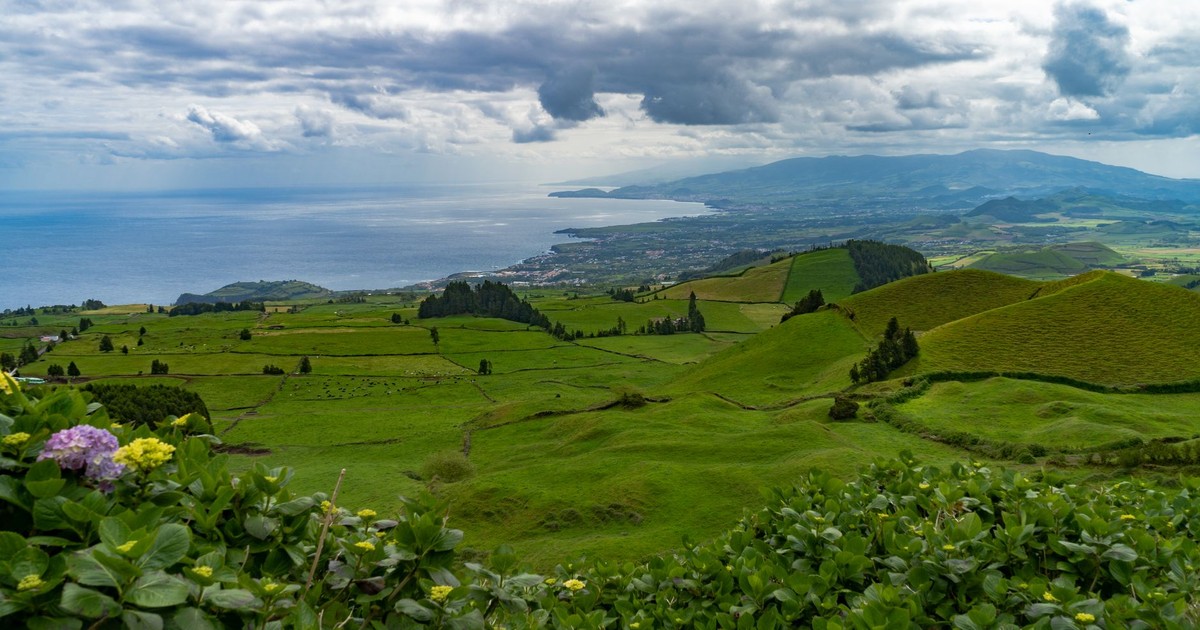
The Azores are nine volcanic islands scattered across the mid-Atlantic, about 1,500 kilometers west of Lisbon. They are the least traveled of Portugal’s major destinations despite being among its most dramatic.
São Miguel, the largest island, contains two volcanic crater lakes, Sete Cidades and Furnas, surrounded by hydrangea-lined roads that turn the island an implausible blue-green in summer. At Furnas, a village built around a geothermal hotspot, the restaurant Tony’s has been slow-cooking a traditional meat stew called cozido das Furnas in volcanic steam pits since the 1960s. The meal takes six hours to cook and about twenty minutes to eat.
Whale watching tours run year-round, and the islands remain one of the most reliable locations in the world for encounters with sperm whales and blue whales. Walking trails are well-marked with a range of difficulty levels that most people find manageable. The pace here is unhurried, warm, and genuinely local in a way that Lisbon’s most touristed neighborhoods no longer are.
8. Évora
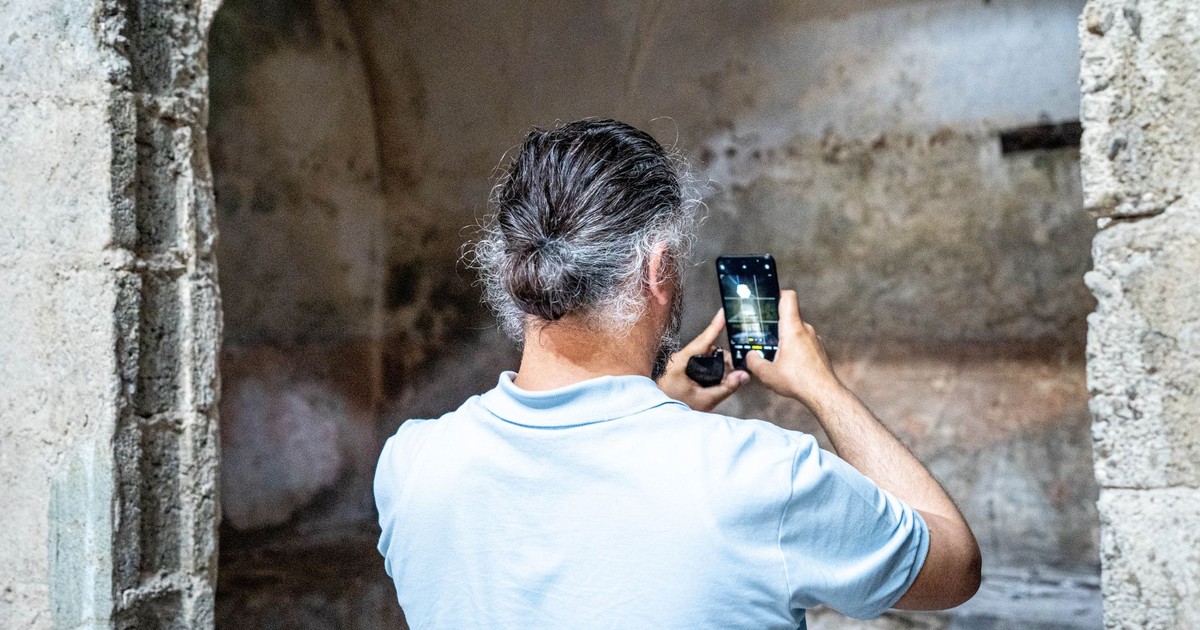
Évora is one of the most complete Roman sites anywhere in western Europe. The Temple of Diana, a 1st-century Roman structure with 14 Corinthian columns still standing in the center of town, sits next to a 12th-century cathedral that sits next to a medieval university now housing a modern café.
Évora holds UNESCO World Heritage status, and the density of historical layers within the old walled town is remarkable for a city of its size. Medieval streets and surrounding countryside vineyards make it ideal for cool-weather exploration over a day or two.
The Alentejo wines produced in the vineyards surrounding Évora have earned genuine international recognition in recent years. A wine tour through the region’s estates is a legitimate alternative to the Douro Valley for anyone who prefers red-focused tasting over port. The cork forests between estates, where bark is stripped in precise geometric patterns from the trees, are a sight in themselves.
9. Coimbra
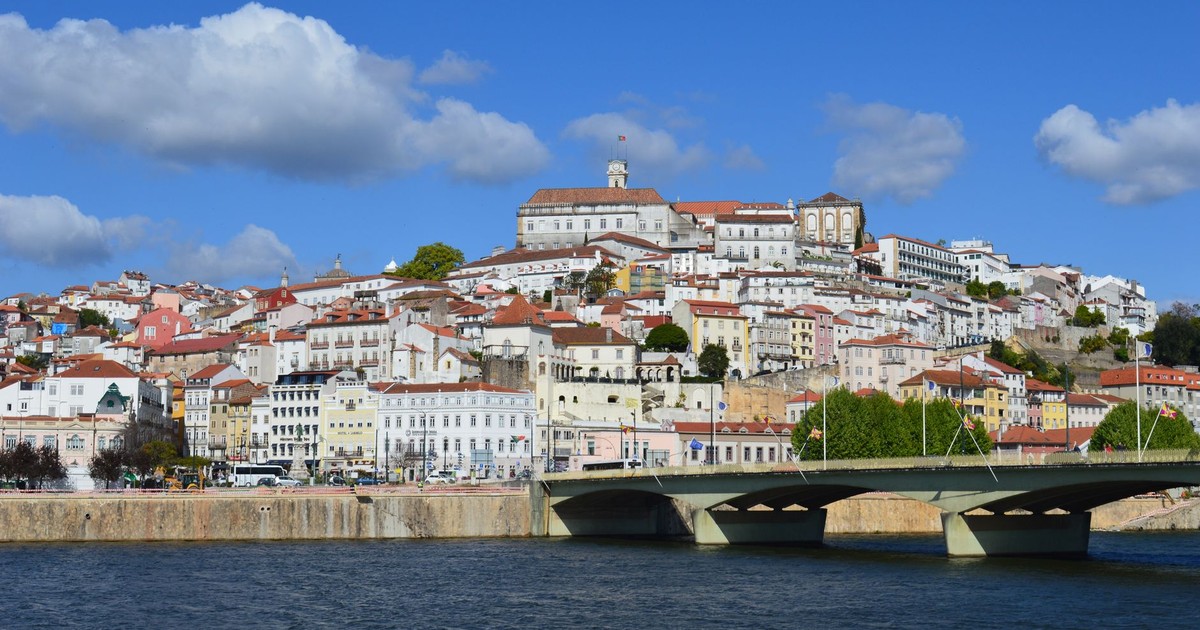
Coimbra sits midway between Lisbon and Porto on the Mondego River and has been home to one of Europe’s oldest universities since 1290. The Biblioteca Joanina, the university’s baroque library, is routinely listed among the most beautiful libraries in the world: a gilded 18th-century interior stacked floor to ceiling with ancient books, populated during the night by a colony of bats that patrol the shelves for insects that would otherwise damage the manuscripts. Tours are timed and limited, which means booking ahead is essential.
Students still wear black capes as part of a centuries-old tradition, and the Coimbra style of fado, distinct from Lisbon’s and sung exclusively by male students, is performed in the old town on evenings when it sounds as though the whole city is echoing.
The old town climbs steeply up from the riverbank, so sensible shoes are non-negotiable, but the hilltop views over the Mondego Valley are the payoff for the climb. A lunch of chanfana, slow-braised goat and a regional specialty, at one of the restaurants just below the university steps is as close to a mandatory Coimbra experience as exists.
10. Óbidos
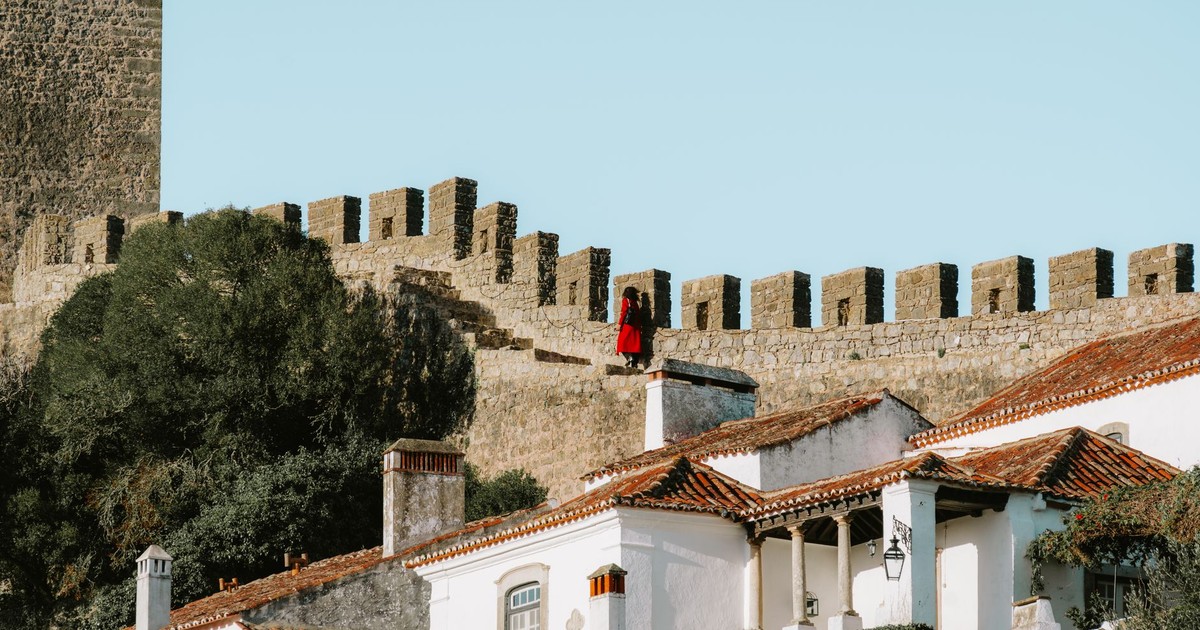
Óbidos is a medieval walled town about 80 kilometers north of Lisbon. The scale is human-sized. The whole walled area takes about an hour to walk, and real people still live here, with flowerpots on windowsills and laundry on lines between whitewashed houses.
The town is famous for ginja, a sour cherry liqueur traditionally served in a small edible chocolate cup. It’s sold from tiny hatches in doorways throughout the town. The first cup goes down quickly. The second requires negotiation with yourself about what the afternoon has in store. The castle, converted into a pousada (a government-managed heritage hotel), is one of the more unusual accommodation options in Portugal, and a night inside the castle walls changes the experience considerably.
Óbidos is reachable as a day trip from Lisbon in about an hour, easy to fold into a broader Lisbon-based itinerary. By mid-morning the single main street through the old town is crowded; before 9am, it’s still and extraordinary.
Why These Portuguese Travel Destinations Keep Coming Up
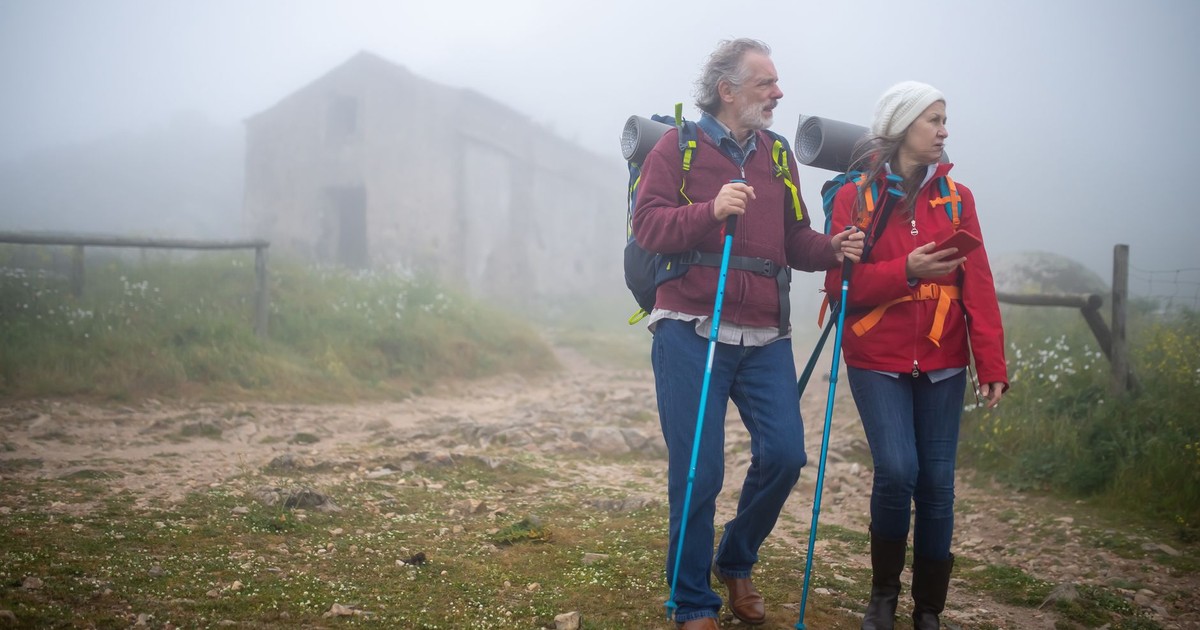
Why these Portuguese travel destinations resonate so strongly with boomers isn’t any single thing. A mid-range hotel in Lisbon that might cost $120 a night runs $250 in Paris. A three-course dinner with wine in Porto for $35 per person would be twice that in Rome. The money goes further, and it goes further somewhere that doesn’t feel like a compromise.
Portugal attracts sophisticated travelers with luxury hotels in converted palaces, high-end spas, and exclusive wine experiences. Its emphasis on authenticity and local culture creates more distinctive experiences than standard international hotel chains. The country is genuinely unhurried in a way that most of western Europe has stopped being. The pace of a meal, a walk through a wine estate, an evening of fado: none of it feels engineered for throughput.
You notice it in the way a waiter will explain a menu without being asked, or a local will redirect you when you’re clearly going the wrong way without making it a performance. Portugal’s long tradition of maritime trade and outward-looking exploration gave it a natural ease with visitors that feels less like hospitality as a business strategy and more like a cultural default. The country has been welcoming people from elsewhere for centuries. It’s had time to get comfortable with it.
Disclaimer: This information is not intended to be a substitute for professional medical advice, diagnosis, or treatment and is for information only. Always seek the advice of your physician or another qualified health provider with any questions about your medical condition and/or current medication. Do not disregard professional medical advice or delay seeking advice or treatment because of something you have read here.
AI Disclaimer: This article was created with the assistance of AI tools and reviewed by a human editor.