The argument that spies are lone wolves motivated by ideology turns out to be wrong in almost every documented case. The people who did the most damage to Western intelligence over the past century were insiders, trusted colleagues, senior officers who held top-secret clearances and attended their children’s school plays on the weekend.
Espionage betrayal is not one story. It’s several, about money, about belief, about grievance, and occasionally about something that doesn’t fit any of those categories neatly. The people below represent some of the most consequential cases of infamous spies defection and betrayal in modern history, drawn from both sides of the Atlantic and spanning decades of Cold War tension and post-Cold War disorder.
They were not cartoon villains. Several were decorated. Several were liked.
Kim Philby and the Cambridge Five: Betrayal by Design

Harold “Kim” Philby (1912-1988) was a British intelligence officer who was exposed as a Soviet double agent in the 1960s. What made his case singular was not the length of his deception but how early it began. Philby was recruited by Soviet spotters at Cambridge in 1934, though his status as a Soviet agent was not publicly confirmed until he defected in 1963.
All five were graduates of Cambridge University, recruited by Soviet intelligence during the 1930s. During the Second World War and after, they passed highly classified information to the Soviet Union. By the early 1950s they had penetrated all the major institutions of British state security. Philby worked for a while as a journalist and in 1940 was recruited by MI6, which was unaware of his Soviet affiliations. He eventually moved into the British foreign service, serving in Istanbul and Washington, D.C., while actively serving his Soviet handlers. The position in Washington was particularly significant. Stationed there as MI6’s liaison officer in Washington D.C., Philby placed Soviet intelligence at the apex of transatlantic relations as the Cold War set in.
He also used his position in the Foreign Office to warn Burgess and Maclean that the authorities were beginning to suspect them, causing both men to defect to the Soviet Union in 1951. Following the disappearance of Burgess and Maclean in 1951, Philby fell under suspicion and was summoned home from Washington for interviews. That act of warning, deliberately tipping off colleagues while under suspicion himself, bought Philby more than a decade of continued freedom. In 1962, proof emerged that Philby was indeed a Soviet agent, and in January 1963, an MI6 officer went out to Beirut to confront him.
One late January evening in 1963, Philby disappeared while ostensibly working as a journalist in Beirut. He had just confessed to his friend and fellow MI6 officer Nicholas Elliott that he had been acting as a Soviet double agent for three decades. It later became clear that Philby had fled on a Soviet freighter to Moscow, where he lived in comfort for the rest of his life. It is believed he shared tens of thousands of classified documents with his Soviet handlers throughout his career. Harold “Kim” Philby, Guy Burgess, Donald Maclean, Anthony Blunt and John Cairncross formed the most infamous spy ring of the 20th century: the Cambridge Five. Nicknamed “Kim” after a spy character in a Rudyard Kipling story, Philby had attended Westminster School, then Trinity College, Cambridge. As for Kim Philby, the most notorious of the Cambridge Five, he passed away in 1988 at the age of 76, having spent the last 25 years of his life in Moscow.
Julius and Ethel Rosenberg: The Case That Split a Nation
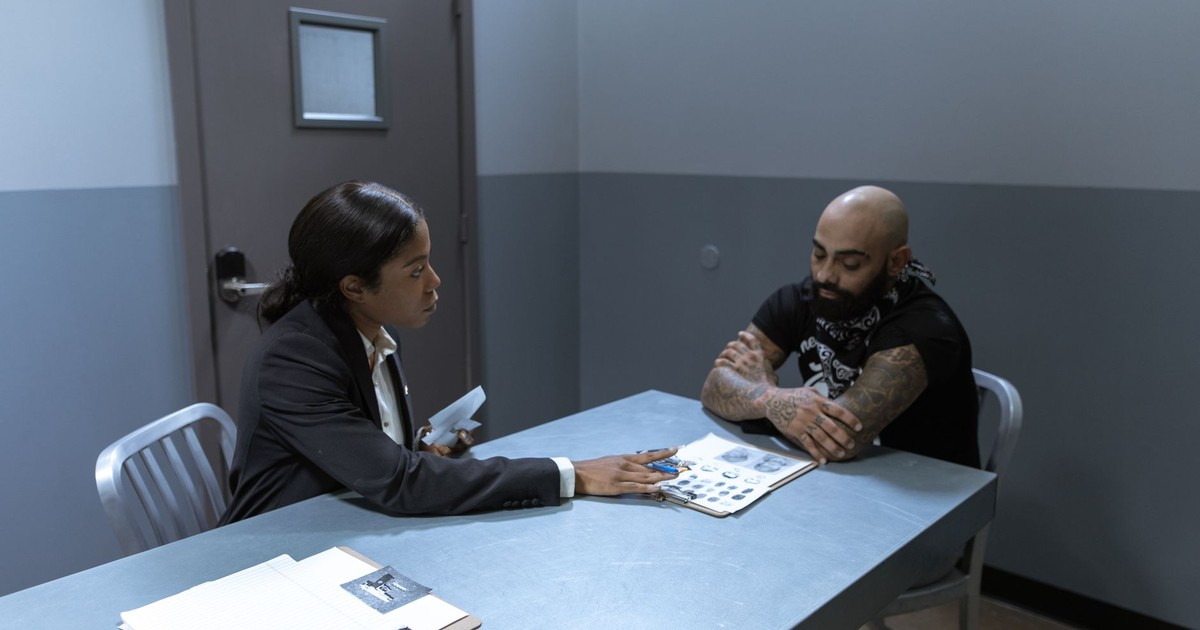
Few espionage cases in American history generated the kind of sustained, anguished public debate that surrounded Julius and Ethel Rosenberg. According to the Atomic Heritage Foundation, Julius Rosenberg was arrested on July 17, 1950, on suspicion of espionage and accused of heading a spy ring that passed top-secret information concerning the atomic bomb to the Soviet Union. Ethel was arrested a month later. The Rosenbergs were implicated by David Greenglass, Ethel’s younger brother and a former army sergeant and machinist at Los Alamos, the secret atomic bomb lab in New Mexico.
According to the FBI, Julius Rosenberg was an engineer for the U.S. Army Signal Corps. Within two years he was involved in espionage. Julius’s Soviet handler gave him the codename “Liberal.” He provided numerous classified documents, including a model of a proximity fuze. The case became a defining moment of Cold War America, when the Red Scare made the distinction between genuine espionage and political persecution almost impossible to draw cleanly.
Ethel Rosenberg’s guilt, in particular, has been contested ever since. One government prosecutor at the time said that the case against Ethel for conspiracy to commit espionage contained “insufficient evidence” to convict her, but that she could be used “as a lever against her husband.” Many years later, David Greenglass admitted that he had lied at the trial and that notes attributed to Ethel were probably typed by his own wife, Ruth.
On June 19, 1953, Julius and Ethel Rosenberg, who were convicted of conspiring to pass U.S. atomic secrets to the Soviets, were executed at Sing Sing Prison in Ossining, New York. Both refused to admit any wrongdoing and proclaimed their innocence right up to the time of their deaths, by the electric chair. President Eisenhower declined clemency, stating that the pair may have “condemned to death tens of millions of innocent people” by accelerating the Soviet nuclear program. Historians still debate whether the atomic secrets the Rosenbergs passed were significant enough to genuinely accelerate Soviet bomb development, or whether the whole case was partly constructed on perjured testimony in a climate of national hysteria.
Aldrich Ames: The CIA’s Most Expensive Mole
Aldrich Ames was an American official in the CIA who became one of the most successful double agents for the Soviet Union and Russia, selling intelligence information. Some consider him the most damaging mole in the history of the CIA. Unlike ideologically motivated spies, Ames was driven by something far more ordinary. In a jailhouse interview with The Washington Post the day before he was sentenced, Ames said he was motivated to spy by “financial troubles, immediate and continuing.”
Ames secretly provided classified materials to the KGB using “dead drops,” concealed locations where documents were left to be retrieved later by Soviet intelligence officers operating out of the USSR Embassy in Washington. A 31-year CIA veteran, Ames admitted being paid $2.5 million by Moscow for U.S. secrets from 1985 until his arrest in 1994. His disclosures included the identities of 10 Russian officials and one Eastern European who were spying for the United States or Great Britain, along with spy satellite operations, eavesdropping, and general spy procedures.
The human cost was severe. At least 10 CIA agents within the Soviet Union were executed as a result of Ames’s spying; ultimately, he revealed the name of every U.S. agent operating in the Soviet Union. The KGB moved fast once Ames started talking. Though Ames was terrified by the KGB’s rapid arrest and execution of CIA sources, he passed two CIA polygraph tests in 1986 and 1991 and initially skirted the scrutiny of a team assembled to investigate the leaks.
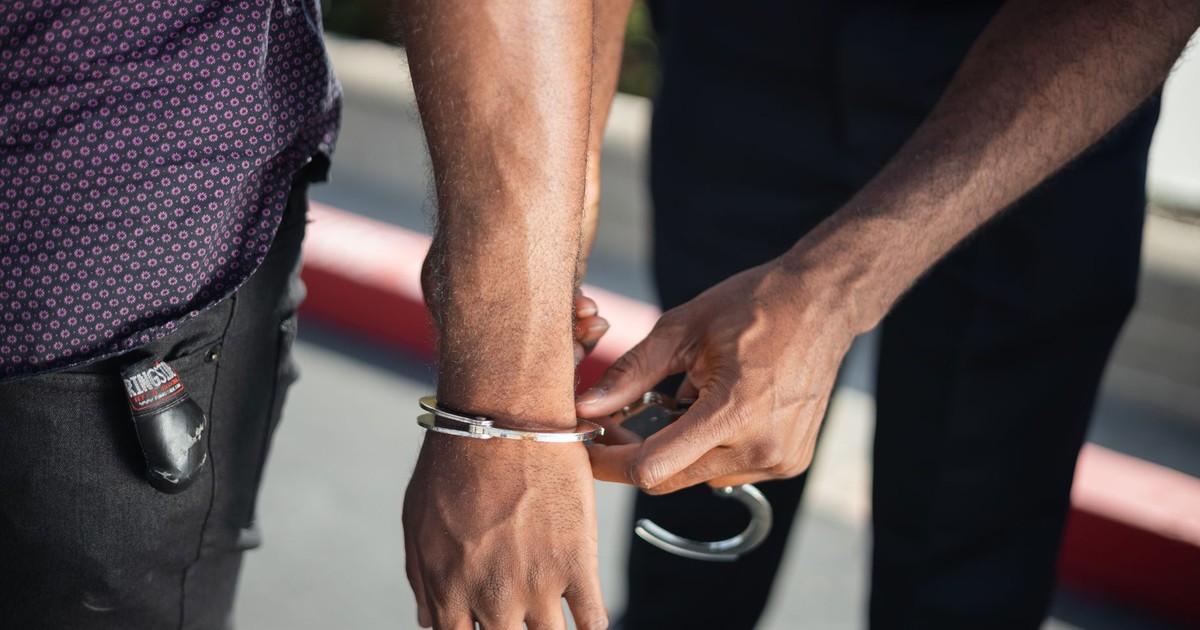
What finally ended his run was patient investigative work. The FBI opened a formal investigation in May 1993, focusing on Ames’s unexplained wealth. Agents conducted intensive surveillance, searched his home, and in October 1993 caught him leaving a signal mark on a neighborhood mailbox intended for his KGB handlers. FBI surveillance then observed him meeting a Russian agent in Bogota, Colombia, confirming his espionage. He was arrested in February 1994. Ames was imprisoned at the Federal Correctional Institution in Cumberland, Maryland, at the time of his death in January 2026. He was 84 years old.
His story overlaps with another. The CIA was simultaneously dealing with a second mole so well-placed that even the Ames investigation failed to uncover him.
Robert Hanssen: The FBI Agent Who Investigated Himself
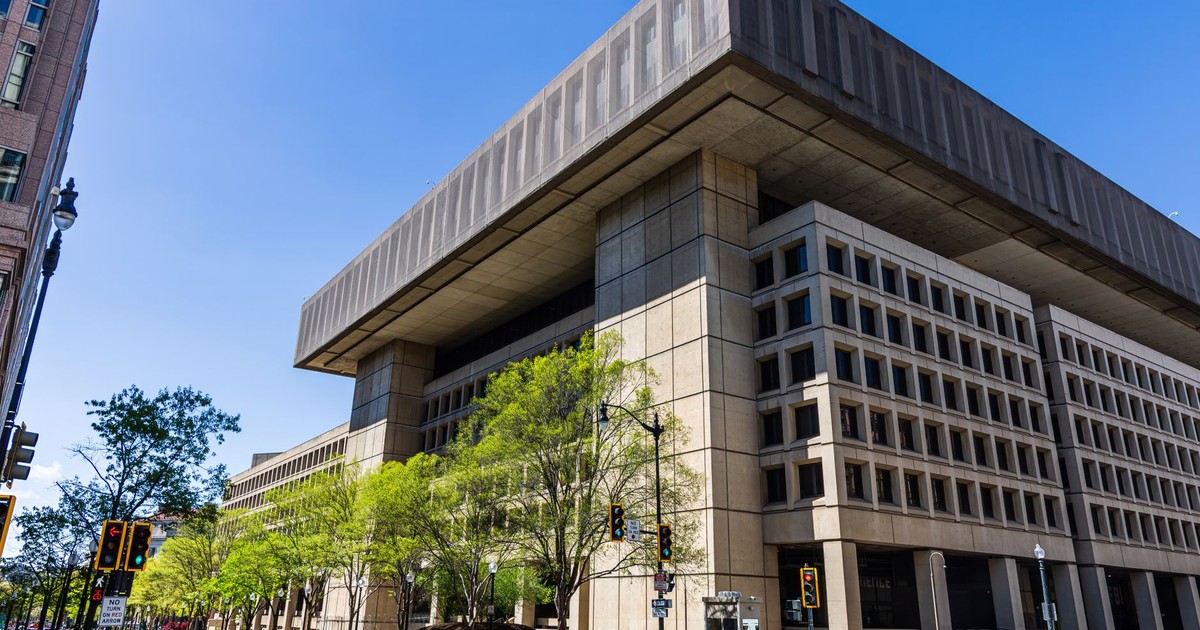
Robert Hanssen (1944-2023) was a U.S. Federal Bureau of Investigation (FBI) agent who spied for the Soviet Union and Russia. He was arguably the most damaging spy to ever penetrate the FBI. The detail that captures his case most precisely: in 1987, Hanssen was called in to search for the mole who had betrayed the agents working for the FBI in Russia. Unbeknownst to his supervisors, Hanssen was searching for himself. He steered the investigation away from his own activities and the investigation was closed without making any arrests.
Over more than two decades, Hanssen had given the Soviets and Russians close to six thousand pages of documents and more than twenty computer disks of highly sensitive, classified information from the FBI, the CIA, the Pentagon, and perhaps most damaging, the National Security Agency. He is accused of selling information related to satellites, early warning systems, U.S. means of defense or retaliation against large-scale nuclear attacks, communications intelligence, and defense strategy.
He was also, by all accounts, a deeply religious man who attended daily Mass. The dissonance between his public persona, devout Catholic, family man, senior federal law enforcement officer, and his private reality is something investigators noted repeatedly. Hanssen began working with the Soviets in 1979, providing information that exposed an FBI mole and selling secrets for about $20,000. After a confession to an Opus Dei priest, he stopped spying, but in 1985, he began working with the KGB, delivering documents and computer files and receiving $500,000 plus jewelry in return. He stopped selling secrets again in 1991. Then started again.
Investigators learned that Hanssen was set to make a dead drop on February 18, 2001. An FBI arrest team moved into position at Foxstone Park, a location where Hanssen had been spotted before by FBI surveillance. Hanssen parked on a residential street and walked down a wooded path to a footbridge with the classified materials wrapped in a plastic bag. When the arrest team closed in, Hanssen’s reported first words were “What took you so long?”
By the time of his arrest, Hanssen had been paid some $600,000 in cash and diamonds, along with two Rolex watches and another $800,000 that had been promised was deposited in a bank on his family’s behalf. He died in prison in June 2023.
Ana Montes: The Spy Who Never Took a Dollar
Most of the spies on this list were paid. Ana Montes was not. Montes accepted no money for passing intelligence. She did it because she believed the United States was wrong about Cuba and felt morally justified in helping the island nation defend itself. That ideological clarity made her, in some ways, more dangerous than someone motivated by greed, because no financial audit was ever going to catch her.
Montes was recruited by Cuban Intelligence Services in 1984, after which she became an analyst for the Defense Intelligence Agency. She rose to prominence, becoming the DIA’s top Cuban analyst and finding respect for her expertise in the region. She continued to spy for Cuba until her arrest in 2001. From her first day in that role, she was already working for Havana.
Her tradecraft was unusual. To escape detection, Montes never removed any documents from work, electronically or in hard copy. Instead, investigators said she memorized classified information on the job, typed it on a laptop computer in the evenings at her apartment, stored it in coded form on disks, and passed the information to her Cuban handlers. After receiving instructions from the Cubans in code via shortwave radio, she’d meet with her handler and turn over the disks.
She was arrested in September 2001, just 10 days after the 9/11 attacks. Michelle Van Cleave, who was head of U.S. counterintelligence under President George W. Bush, told Congress in 2012 that Montes was “one of the most damaging spies the United States has ever found.” During her sentencing, Montes told the judge and courtroom that she had chosen to follow her “conscience rather than the law.” Montes, who acknowledged revealing the identities of four American undercover intelligence officers working in Cuba, pleaded guilty in 2002 and was sentenced to 25 years in prison.
When Ana Montes was released from prison in January 2023, she immediately spoke out against the U.S. economic embargo on Cuba. She now lives off the radar in Puerto Rico, and remains defiant that what she did was right.
The Part That Doesn’t Fit Neatly
What connects these cases is not ideology, money, or method. It’s access. Every single one of these people was trusted. They held clearances. They attended briefings. They wrote the reports that shaped policy. The systems that were supposed to catch them, polygraphs, financial audits, behavioral monitoring, failed repeatedly, sometimes for decades. Ames passed two polygraphs. Hanssen steered his own investigation. Philby was cleared publicly by the British government in 1955, eight years before he fled to Moscow.
The instinct after each of these cases was to build more checkpoints, add more oversight, demand more loyalty oaths. None of it addressed the actual problem, which is that trust is structurally necessary for any intelligence apparatus to function, and trust is exactly what spies exploit. These stories don’t resolve into a lesson about how to build a better security system. They resolve into something more uncomfortable: that the people doing the most damage were, by design, the ones no system was looking at closely enough. That remains true today.
AI Disclaimer: This article was created with the assistance of AI tools and reviewed by a human editor.