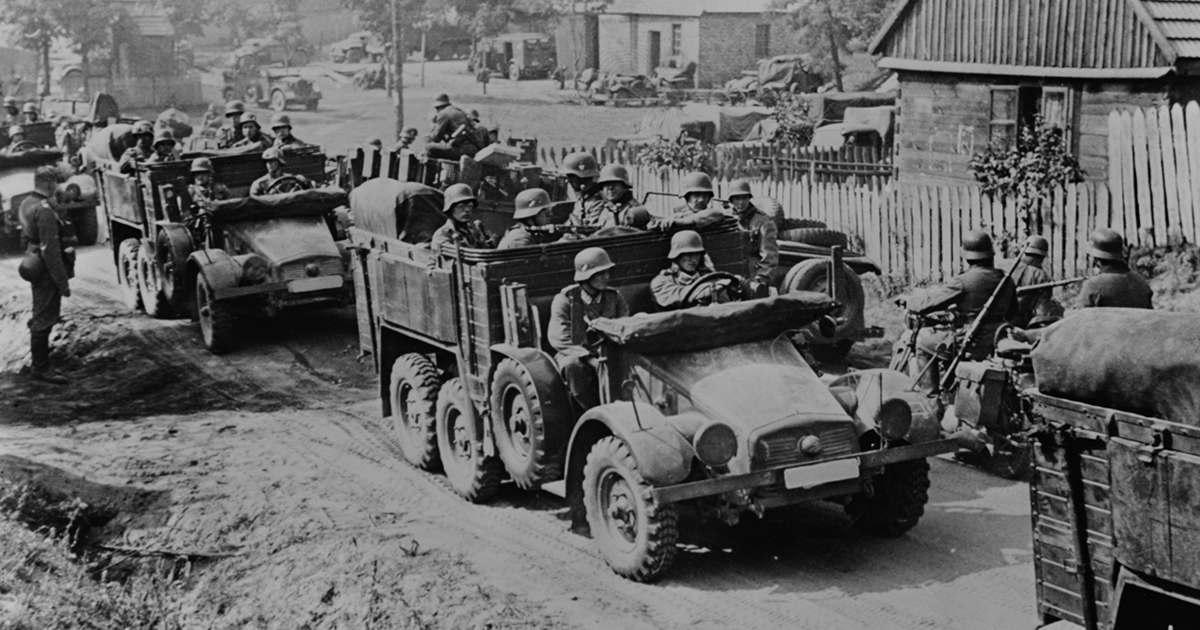

For the children and grandchildren of Holocaust survivors, family history arrives early, often without words, and stays. The argument that happens most in long-term relationships isn’t about money or sex. It’s about who noticed the thing that needed doing and who didn’t.
The ten famous figures covered here range from those who learned the details in childhood to those who discovered them only in adulthood, sometimes through archival documents they had never seen. Several broke down crying when they did. Others built careers that, looking back, seem to have been shaped by those histories from the start.
1. Jerry Springer
World Jewish Relief rescued Jerry Springer’s parents and brought them to safety in the UK in 1939. According to World Jewish Relief, fifteen members of Springer’s family were murdered in the Holocaust.
Jerry Springer was born in 1944 in London’s Highgate underground station, which was being used as a bomb shelter during WWII. His Jewish parents escaped Nazi Germany just before the outbreak of the Second World War, but both of Jerry’s grandmothers perished. In 2008, Springer investigated his relatives’ fates on the BBC1 program “Who Do You Think You Are?” Springer’s paternal grandmother and great-uncle died at the Theresienstadt concentration camp, and his maternal grandmother was gassed at the Chelmno extermination camp.
In Germany’s Potsdam Archive, he found a record of his paternal grandmother Selma’s deportation dated 1942, showing she was sent to Theresienstadt, a Jewish ghetto outside Prague. In 2017, Jerry Springer attended World Jewish Relief’s Annual Business Dinner to speak with Emily Maitlis about his family history, the impact of the Holocaust on his family, and how the organization saved his life. Springer, who died in April 2023, never let his tabloid-TV persona obscure any of that.
2. Gene Simmons
Before he was the fire-breathing co-founder of KISS, Gene Simmons was Chaim Weitz, the son of a Hungarian woman who had survived things most people can’t bring themselves to imagine. According to Aish.com, a teenage girl in Hungary lost her entire family in Auschwitz, endured slave labor, and somehow survived. She built a new life out of the ashes, immigrated with her only child to America, and raised him as a single mother in Queens.
Simmons’s mother, Flora Klein, was born in Hungary in 1925 and died in December 2018 in the United States at age 93. She survived living in a ghetto in Budapest and three Nazi concentration camps. Klein was 19 when she was liberated from Mauthausen on May 5, 1945.
In interviews, Simmons recalled the story of his grandmother and great-grandmother, who went to the gas chambers together. His grandmother told his mother in Hungarian: “Live and survive.” It became the family’s creed. Accepting the Legacy Award from Yad Vashem in 2017 on his mother’s behalf, Gene gave a stark warning: “The Holocaust happened yesterday. Hate speech against any group is a threat to you. We are all somebody’s ‘them.'” He said his mother hardly ever talked about her past. As he put it: “I knew almost nothing.”
3. Steven Spielberg
Spielberg’s father lost an estimated sixteen to twenty relatives from Ukraine and Poland during the Holocaust. Spielberg has described hearing fragments of those losses at the family dinner table growing up, an accumulation of names and places that eventually demanded something from him.
The director wanted to make Schindler’s List specifically as a movie “that would confirm my Judaism to my family and myself.” Beyond that film, Spielberg is also the founder of the Shoah Foundation, which archives testimonies of Holocaust survivors. That foundation, now housed at the University of Southern California, has collected more than 55,000 testimonies in 45 languages. A filmmaker making a movie is one thing. Building an institution to ensure that survivor voices outlast the survivors themselves is another.
The relatives his father lost in Poland and Ukraine weren’t abstract historical casualties to a boy growing up in suburban New Jersey. They were the unnamed people at the edges of family conversation, the ones whose absence shaped the room. That absence eventually became Schindler’s List, and then the Shoah Foundation, and then decades of advocacy.
4. Wolf Blitzer
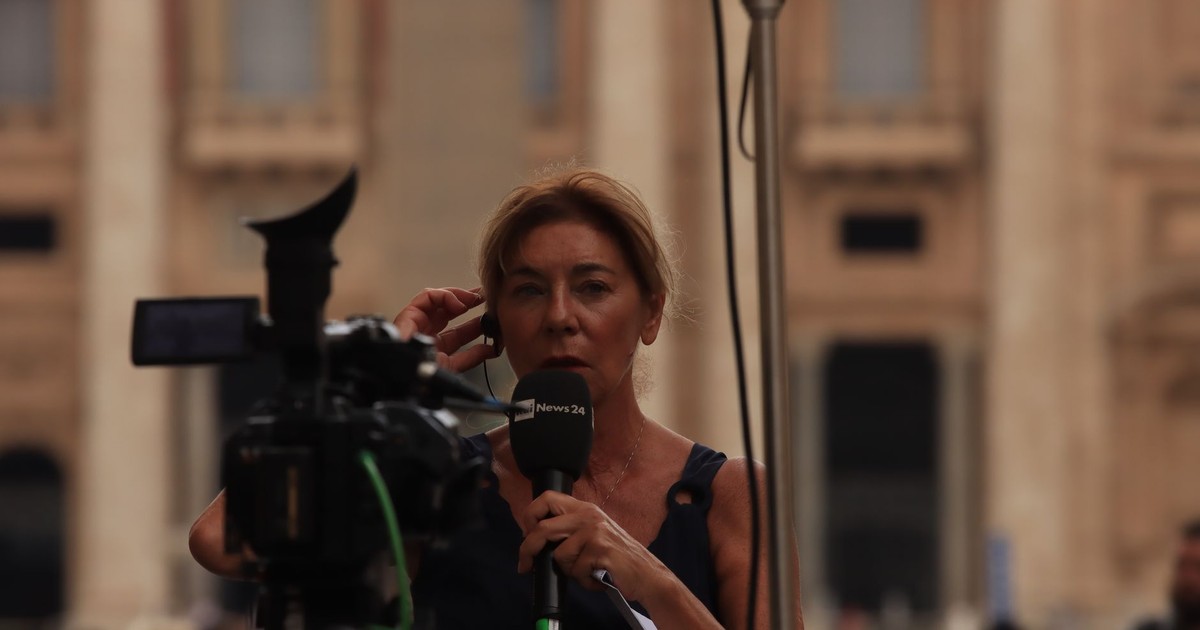
Wolf Blitzer is most recognized as the lead anchor of CNN’s The Situation Room. Growing up in Buffalo, he always knew he was the child of Holocaust survivors. His parents, both Polish Jews, told him often about their experiences surviving the concentration camps.
His parents Cesia and David Blitzer, both from Poland, survived Nazi persecution. His father David was held at Auschwitz. They met on a train while traveling between Poland and Germany, each looking for surviving relatives. Two people who had both lost nearly everything, independently traveling the same route, trying to find out who was left. They found each other instead.
Blitzer discovered a video survivor testimony his father, David Blitzer, had recorded in the 1990s when he made a CNN special about the U.S. Holocaust Memorial Museum. Filmed at the Holocaust Documentation and Education Center in Dania Beach, Florida, David Blitzer discussed growing up in the Polish city of Oświęcim, later “Germanized” into Auschwitz, where his parents were murdered. Blitzer has spoken in interviews about how his parents’ history shaped his sense of why bearing witness matters, a thread that runs through more than four decades of covering the world’s crises.
5. Mila Kunis
During the Nazi occupation of Ukraine, where Mila Kunis was born, an estimated 1.5 million Jews were murdered. Speaking to the British press in 2012, the actress revealed that her grandparents were Holocaust survivors. She described her family’s experience with the directness that tends to come only when something has been thought about for a very long time.
Kunis also spoke about her upbringing in Ukraine, recalling anti-Semitic graffiti in her school in Chernivtsi and a school friend going home crying after someone put a swastika on the back of her seat. As she put it: “After the Holocaust, in Russia you were not allowed to be religious. So my parents raised me to know I was Jewish. You know who you are inside.”
Kunis and her family immigrated to the United States in 1991 when she was seven years old, eventually settling in Los Angeles. She landed the role of Jackie Burkhart on That ’70s Show at 14. Her grandparents’ survival, and the cultural identity her parents preserved, remained a thread running through a very American success story.
6. Gal Gadot
Gal Gadot is most famous for playing the lead role in the film Wonder Woman. She was raised in Rosh Ha’ayin in Israel. The connection between her family history and the role that made her a global star is one she has addressed directly.
Gadot narrated a short film for the Auschwitz-Birkenau Memorial and Museum. Her grandfather Abraham Weiss was born Adolf Weiss in 1928 in what was then Czechoslovakia. He was 13 when the Nazis invaded his native country. Weiss’ father was drafted into the army, where he died, while Weiss, his mother, and brother were deported to Auschwitz. His mother and brother were murdered in the gas chambers at Auschwitz, and after World War II, Weiss traveled alone to Israel.
According to the Algemeiner, Gadot described narrating the memorial film as a “full circle” moment with her grandfather’s history. He died in 2013. Gadot served in the Israel Defense Forces before pursuing modeling and acting. She was named Miss Israel at 18, was cast as Wonder Woman in 2013, and became one of the highest-grossing actresses in the world. Through it all, she has kept her grandfather’s story close and spoken publicly about why that matters to her.
7. Josh Gad
Josh Gad is best known internationally as the voice of Olaf in Frozen, but the role he has been most public about wanting to honor wasn’t an animated snowman. In 2017, Gad took the role in the film Marshall as an opportunity to honor his grandparents, who survived the Holocaust. He expressed a wish that his grandparents were alive to see the film, and paid tribute to his grandfather Joseph Greenblatt, who died in 2016: “Born in 1919, he fought through and survived the unthinkable during the Holocaust. After watching his entire family get slaughtered, he defied pure evil, and survived against all odds to meet my grandmother, another survivor, and build a whole new life in New York.”
On Holocaust Remembrance Day, Gad posted a family photo with his grandparents who, during the Holocaust, were separated from their parents and placed into concentration camps. For years they were forced to work for their oppressors while surviving on little more than scraps of bread. Only by sheer strength and willpower did they both manage to escape the Nazis on their respective death marches.
What makes Gad’s public testimony unusual is its specificity. He doesn’t speak in generalizations about “the horror of the Holocaust.” He speaks about his grandfather Joseph, born in 1919, who watched his family die, who kept going, who eventually made it to New York. The named individual is much harder to look away from than the statistic.
8. Jared Kushner

Donald Trump’s son-in-law Jared Kushner is the grandson of Holocaust survivors. His grandmother, Rae Kushner, escaped to a refugee camp in Italy and then managed to move to the US with the help of relatives.
Rae Kushner, born Rea Stadtmauer in Novogrudok (in what is now Belarus), was one of a small number of Jews who survived what became one of the most heavily targeted communities in Eastern Europe. She later gave detailed testimony about her experiences, which are preserved in archives. Her husband Joseph Kushner also survived the Novogrudok ghetto and subsequent Nazi massacres by hiding in the forests and eventually making it to the United States. Jared Kushner grew up with his grandparents’ story as part of family life and has spoken in interviews about the weight of that inheritance.
The Kushner family’s history has been the subject of public scrutiny, particularly during Jared Kushner’s time as a senior White House adviser under the Trump administration. Whatever assessments people make of his politics, the historical foundation his family stands on is documented and sobering.
9. Roman Polanski

Roman Polanski’s connection to the Holocaust is not the distant kind. Polanski was born in Paris, but his family moved to Poland when he was three. Polanski escaped the Krakow Ghetto in 1943 and avoided a concentration camp, but the Nazis deported both his parents. While his father survived, his mother was killed in Auschwitz.
Polanski was around eight years old when he escaped the ghetto, slipping through a gap in the fence and surviving the war years in rural Poland, sheltered by a series of Polish families. He was separated from his father for years and learned only after the war that his mother had not survived. That sequence of events, the escape, the separation, the discovery of what had happened, shaped a director who would spend his career returning again and again to themes of persecution, survival, and the grotesque indifference of power.
His 2002 film The Pianist, which follows a Polish-Jewish musician surviving the Warsaw Ghetto and its destruction, drew directly on his own childhood memory of Nazi-occupied Poland. It won the Palme d’Or at Cannes and the Academy Award for Best Director. Polanski has never had a simple relationship with legacy, given the separate and serious legal matters that have defined his later reputation. But his biography as a survivor’s child, and as a child who partly survived the Holocaust himself, sits at the core of his most significant work.
10. Geddy Lee
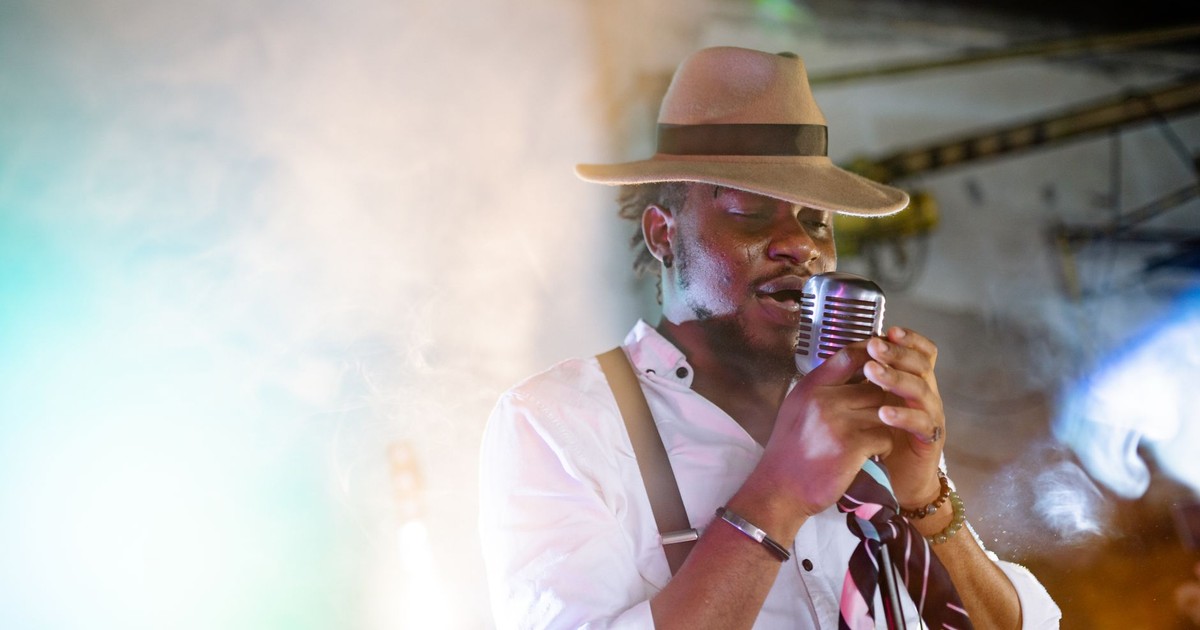
Geddy Lee is the Canadian-born lead singer, bassist, and keyboardist for the band Rush. His parents, Morris and Mary Weinrib, both around age 13, met in Poland at a Jewish work site before the concentration camps were fully operational. Both went on to survive the camps: Morris Weinrib survived Auschwitz and Dachau; Mary Weinrib also survived Auschwitz. After the war, they emigrated to Canada and built a life in Toronto, where Geddy was born in 1953.
He has said in interviews that his parents almost never spoke about what they had been through. The protection ran in one direction: keep the children out of it. For much of his childhood, he understood he came from something terrible without being able to name it precisely. In adulthood, he learned enough to understand that his own existence was the result of two people surviving things that most people around them did not survive.
Lee has spoken in recent years about his parents’ reluctance to discuss the camps, a pattern common among first-generation survivors.
What These Stories Actually Share
Across these ten lives, the most consistent detail isn’t the fame. It’s the silence. A mother who never explained what happened in Hungary. A father who changed the subject. Grandparents who smiled through Passover and said nothing about where the rest of the family had gone. The silence was protective, or it was a refusal to relive something unlivable, or it was the only way to keep moving. Usually it was all three at once.
What the children and grandchildren eventually did with that silence varies. Some built institutions. Some made films. Some stood at train stations and wept on television. Some just carried it privately, the way Geddy Lee’s parents carried Auschwitz through decades of Canadian winters without ever talking about it, the information passing sideways into a son who would one day play arenas full of people who had no idea what was underneath the music. Gene Simmons never took drugs or alcohol because, as he put it, “Life had already done enough to her.” Jerry Springer broke down at a train station in Germany tracing the deportation record of a grandmother he never knew. Gal Gadot cried in a car on the way to a stunt rehearsal when her assistant found a video of the two of them together.
The number of people belonging to Holocaust survivors’ families reaches into the millions. For all of them, the inheritance is the same: not just grief, but a specific kind of knowledge about how quickly the world can turn on people. The famous figures on this list happen to have platforms. But the thing they carry is not particular to any of them. It belongs to an entire generation, and to the one coming after it.
Disclaimer: This information is not intended to be a substitute for professional medical advice, diagnosis, or treatment and is for information only. Always seek the advice of your physician or another qualified health provider with any questions about your medical condition and/or current medication. Do not disregard professional medical advice or delay seeking advice or treatment because of something you have read here.
AI Disclaimer: This article was created with the assistance of AI tools and reviewed by a human editor.