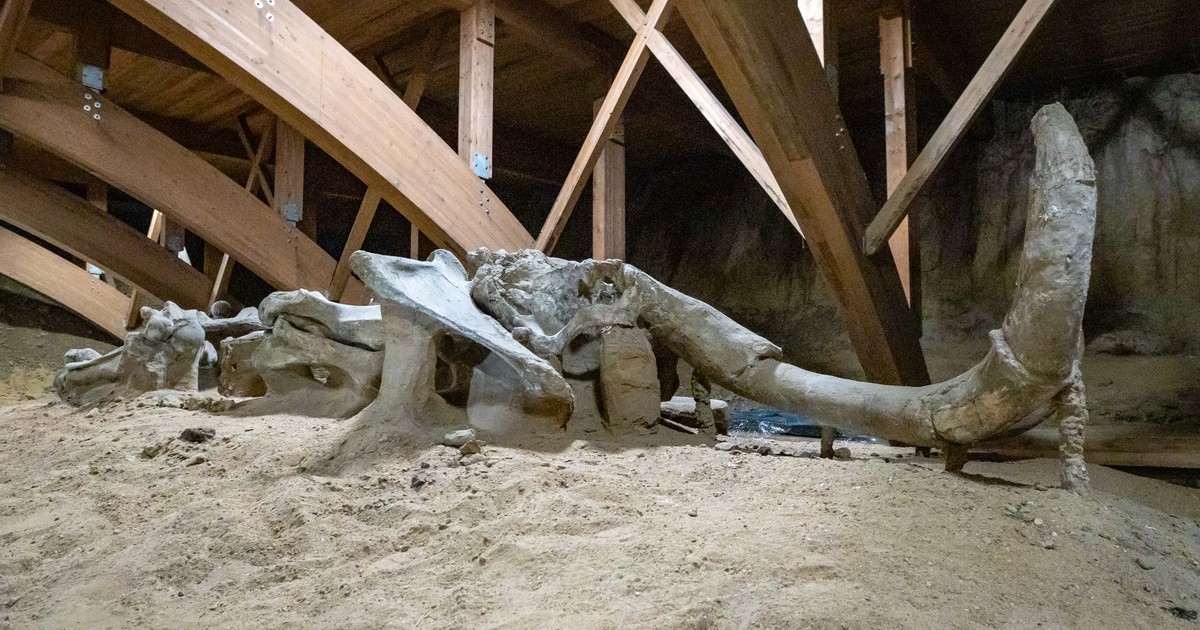

Paleontologists and mythologists have argued for centuries about where Chinese dragons come from. Nobody expected the fossils to start weighing in.
In roughly a year, two separate Chinese dragon discoveries landed on the world’s front pages. One was pulled from the earth of Inner Mongolia, carved from jade and buried with deliberate care 5,000 years ago. The other was a 16-foot marine reptile that swam shallow Triassic seas 240 million years ago and bore an uncanny resemblance to the sinuous, serpentine dragons of Chinese legend.
The Living Dragon That Wasn’t Alive
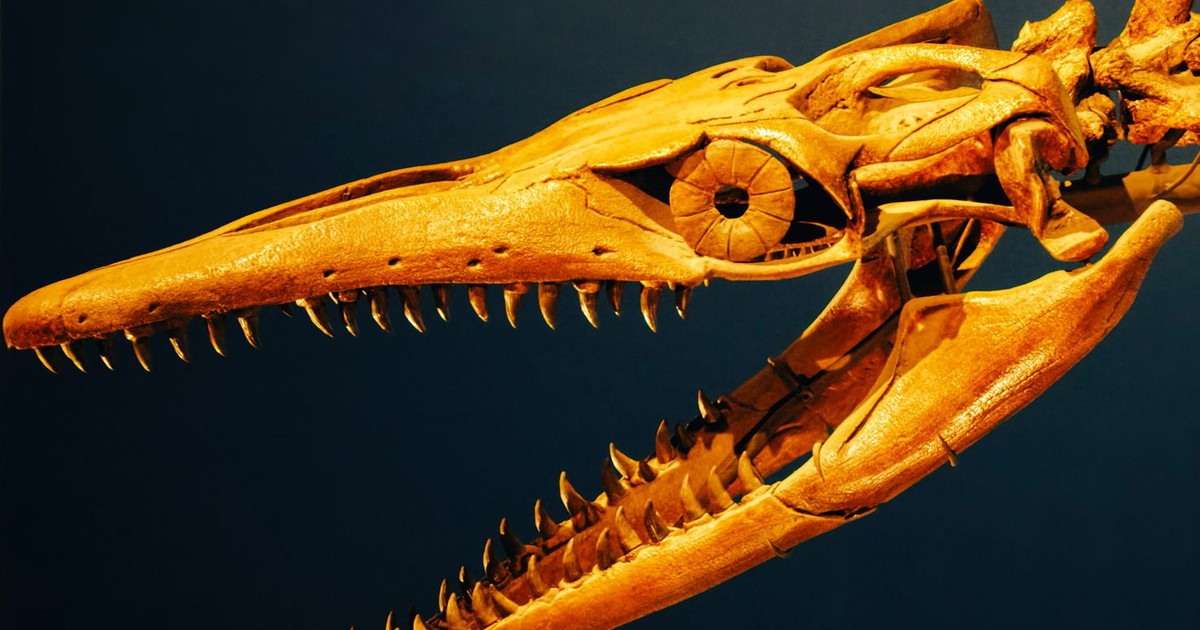
Scientists in Scotland revealed a 240-million-year-old Chinese dragon fossil: the Dinocephalosaurus orientalis, a five-meter-long aquatic reptile from the Triassic period discovered in Guizhou Province in southern China. The announcement came during the Chinese Year of the Dragon.
The reptile was originally identified in 2003, but the discovery of additional specimens finally allowed scientists to depict the long-necked creature in full for the first time. For more than twenty years, Dinocephalosaurus existed in the scientific record as a skull and three neck vertebrae. In the years following the first identification, paleontologists discovered additional fragments of the species but were never able to piece together a complete picture, until this latest find, which produced the first full skeleton.
The creature had 32 separate neck vertebrae, giving it an extraordinarily long neck that drew immediate comparisons to the mythical Chinese dragon. A giraffe has seven neck vertebrae. A human has seven. Dinocephalosaurus had thirty-two, and its neck was longer than its body and tail combined.
The discovery was detailed in the journal Earth and Environmental Science Transactions of the Royal Society of Edinburgh, produced by an international team including scientists from China, the United States, and Europe, among them Dr. Stephan Spiekman of the State Museum of Natural History in Stuttgart. The research project involved scientists from Scotland, Germany, the US, and China, who studied the fossils for over ten years at the Institute of Vertebrate Palaeontology and Palaeoanthropology in Beijing.
What the Body Tells Us
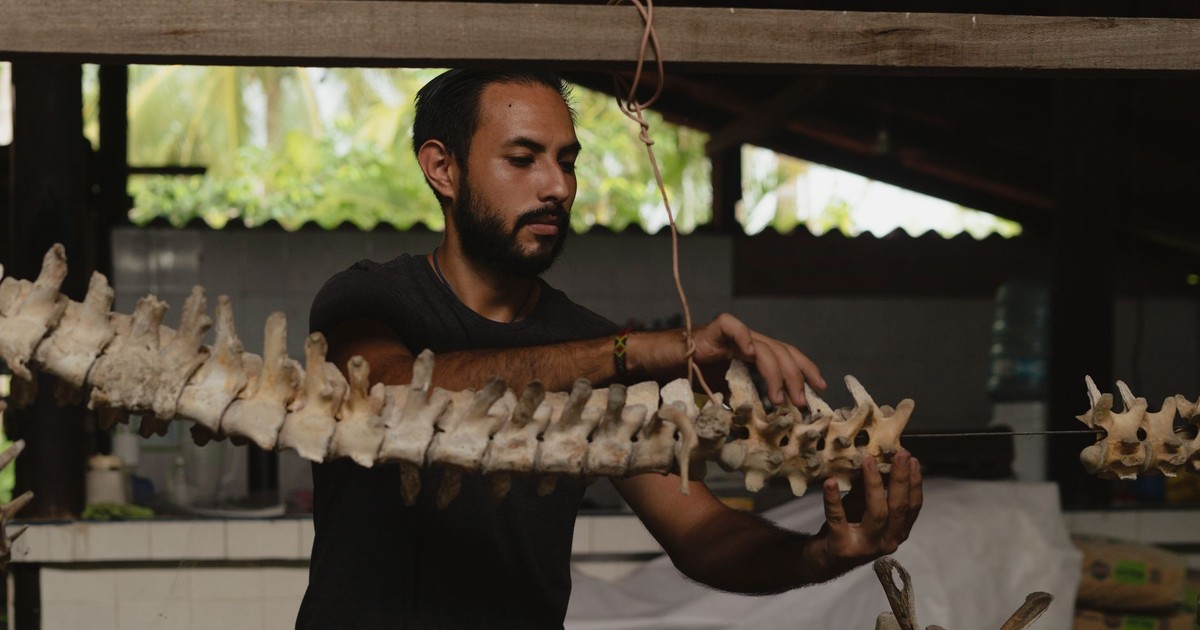
The complete fossil revealed a creature far stranger than the partial bones had suggested. Dinocephalosaurus gave birth to live young, a rare trait for reptiles, and was highly adapted to marine life, with fin-like limbs. Preserved fish remains in the stomach of at least one specimen confirmed it was an active ocean predator.
Unlike plesiosaurs, which evolved nearly 40 million years later and inspired legends like the Loch Ness Monster, the Dinocephalosaurus was a distinct species with its own extraordinary anatomical structure. Dr. Nick Fraser, Keeper of Natural Sciences at National Museums Scotland, acknowledged what everyone was thinking: “We are certain that it will capture imaginations across the globe due to its striking appearance, reminiscent of the long and snake-like, mythical Chinese dragon.”
The question researchers have not settled is whether ancient people in southern China ever encountered the fossilized remains of animals like this one. China has a long tradition of “dragon bones” (long gu), fossilized animal remains that were ground up for use in traditional medicine and, long before that, interpreted as the bones of mythical creatures. The paleontological record of Guizhou Province is extraordinarily rich.
The Jade Dragon That Changed the Record
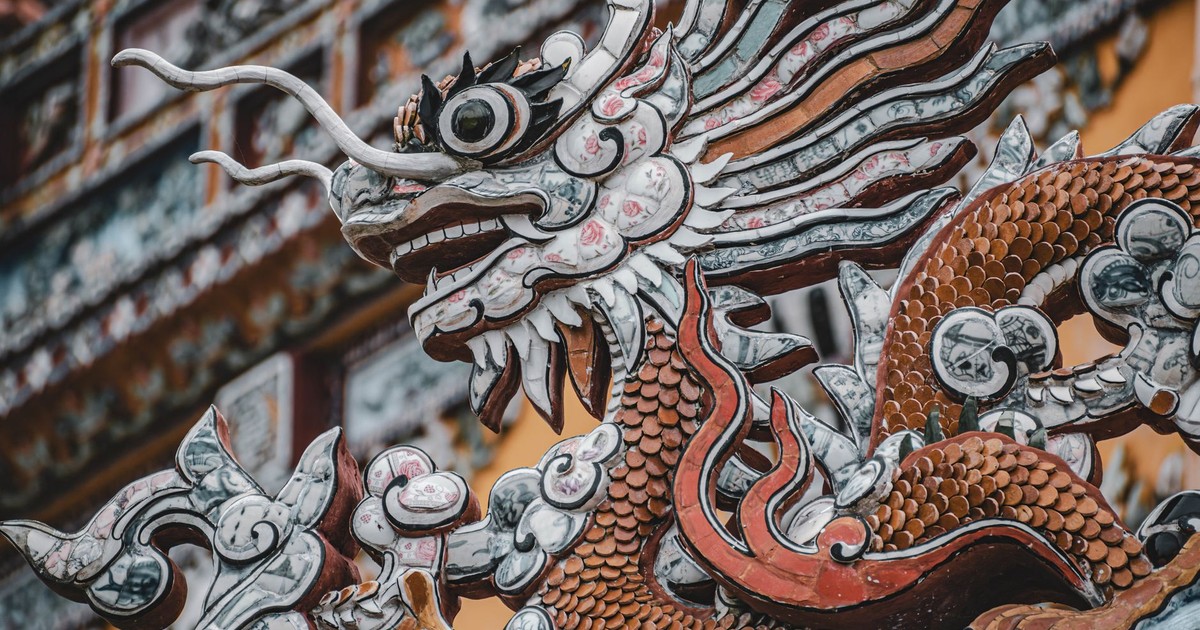
While the fossil story was capturing headlines in February 2024, a separate Chinese dragon discovery was taking shape in the ground of Inner Mongolia. Three new jade dragons were unearthed in 2024 from the Hongshan culture, a Neolithic civilization that emerged around 6,500 years ago in northern China. These discoveries marked the largest number of such artifacts found in a single year in recent memory.
In mid-July 2024, archaeologists excavating stone mound tombs at the Yuanbaoshan site in Aohan Banner, Chifeng City, finally broke through. After removing the top stone slabs and internal fill from one of the tombs, a set of jade artifacts came into view, including a jade coiled dragon, a hoof-shaped jade piece, and a headdress-shaped ornament.
The dragon discovered at the Yuanbaoshan stone mound tomb measured 15.8 cm long, 9.5 cm wide, and 3 cm thick, making it the largest jade dragon ever excavated. It was slightly longer than the previous record-holder, unearthed about 150 kilometers away at the Niuheliang archaeological site in Chaoyang, Liaoning Province. Both of them look unmistakably like dragons: coiled, pig-snouted, carved with the specific visual vocabulary of a culture that clearly understood what it was trying to depict.
More than 100 other jade artifacts were found alongside the dragon at the Yuanbaoshan site, including rings, discs, silkworms, and owls. The sheer volume of jade in a single tomb tells you something about the status of whoever was buried there. Jade in Hongshan culture wasn’t decorative in the casual sense. It was cosmological currency, the physical form of sacred belief.
The Culture Behind the Dragon
According to Dang Yu, a researcher at the regional institute of cultural relics and archaeology, the Yuanbaoshan site dates back approximately 5,000 years and represents a late Hongshan culture burial and ceremonial complex. It features a unique architectural layout with a circular tomb in the north and a square altar in the south, the only structure of its kind ever discovered in Inner Mongolia.
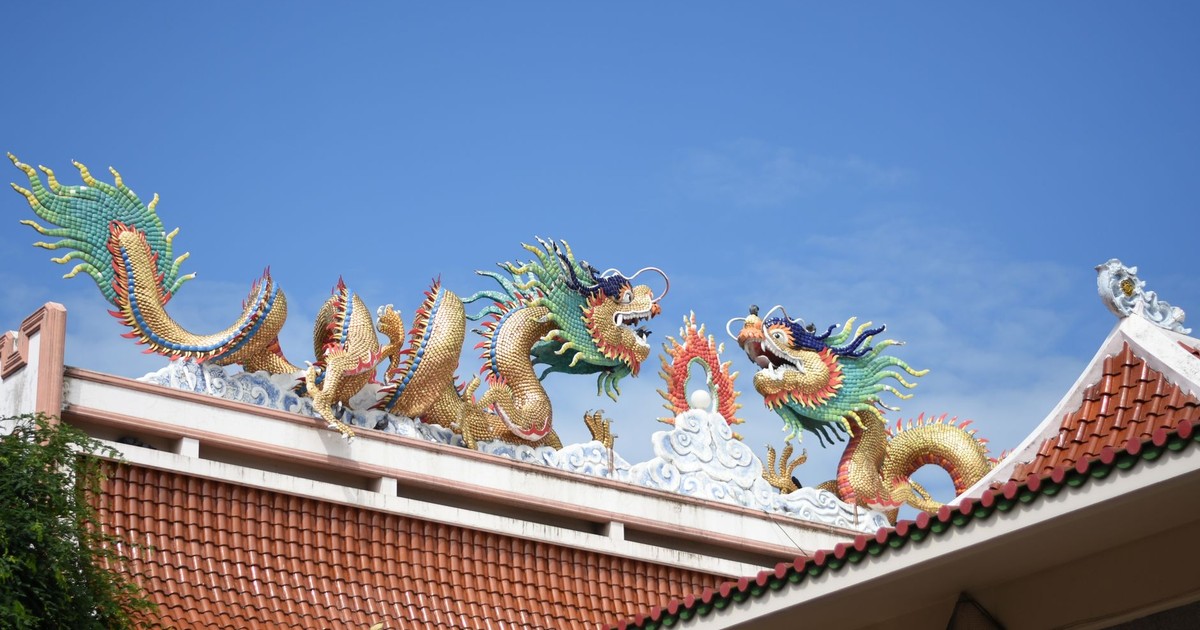
The Hongshan culture flourished in what is now Inner Mongolia and Liaoning between roughly 5,000 and 5,100 years ago. Its people grew crops, built sizable towns with large buildings, and created intricate artifacts. They were, by the standards of their time, a highly organized society with a sophisticated ritual system. The dragon was at the center of it. Jade dragons are iconic of the Hongshan culture and symbolize the formation of over 5,000 years of Chinese civilization. In Chinese tradition, the dragon is a totem of the nation and, according to legend, possesses the divine power to summon rain.
Remarkable finds from ancient burial sites have a way of reframing everything a culture previously believed about itself. The Hongshan dragons push the dragon as a deliberate, culturally significant symbol back to a time when the great dynasties that most people associate with Chinese history didn’t yet exist.
A ritual complex with a similar layout was previously discovered at the Niuheliang site, about 90 miles from Chifeng. As Smithsonian Magazine notes, researcher Jia Xiaobing of the Chinese Academy of Social Sciences’ Institute of Archaeology explained: “Such consistency in an expanded area proves that a shared belief system existed among the Hongshan ancestors.” Dragon worship wasn’t an isolated local habit. It was a coordinated spiritual system spread across a wide geographic area, consistently expressed through the same carved jade forms, the same tomb layouts, the same altar orientations.
The Yuanbaoshan site itself was confirmed as a Hongshan stone mound only in 2015, and it wasn’t until 2024 that a full-scale rescue excavation was initiated by the Cultural Heritage Bureau of Inner Mongolia. “Rescue excavation” is the term used when a site is under threat, typically from construction or development.
Why These Two Discoveries Keep Getting Mentioned Together
It would be too neat to say the fossilized Dinocephalosaurus and the Hongshan jade dragons are directly connected, that some ancient person in Guizhou found a long-necked Triassic skeleton and carved it in jade 240 million years later in Inner Mongolia. The geography doesn’t align. The timeline is absurd. Scientists aren’t making that claim.
But the two discoveries do converge on the same question: where does a dragon come from?
The most straightforward answer has always been that humans, across many cultures, independently invented serpent-dragon imagery from a shared fear of large predators: snakes, crocodiles, monitor lizards. The Chinese dragon, in this reading, is an imaginative collage. But the Hongshan jade dragons are not collages. They’re specific. The pig-snouted coiled form is consistent across thousands of years and hundreds of kilometers, which suggests something more deliberate than folklore accumulation. And then along comes a 240-million-year-old marine reptile with 32 neck vertebrae, and the question gets a little more open-ended again.
Gideon Shelach-Lavi, a professor of East Asian Studies at the Hebrew University of Jerusalem, was candid about the interpretive risks of the jade dragon finds: “We do not really know what their meaning was during the Neolithic period, so calling them ‘dragons’ is anachronistic,” he noted. Projecting the cultural meaning of the imperial-era Chinese dragon backward onto 5,000-year-old Neolithic objects carries real scholarly risk. The Hongshan people left no written records.
What We’re Left Holding
Every civilization that has produced dragon mythology has also produced theories about where those dragons came from. The paleontological theory, the predator-fear theory, the crocodile-sighting theory all have evidence behind them, and none of them fully closes the case.
The two 2024 Chinese dragon discoveries make the question more pressing without making it easier to answer. A 240-million-year-old sea creature with a neck longer than its own body swam Chinese waters long before anything resembling human consciousness existed. Five thousand years ago, a highly organized Neolithic people in the same country were burying their dead with exquisitely carved jade objects in the unmistakable shape of coiled dragons, at sites spread across a geographic area the size of a small country, in tombs arranged with specific astronomical and ritual intent.
The fossil doesn’t explain the jade. The jade doesn’t explain the fossil. But they share a country, a shape, and a question that turns out to be much older than anyone expected.
Disclaimer: This information is not intended to be a substitute for professional medical advice, diagnosis, or treatment and is for information only. Always seek the advice of your physician or another qualified health provider with any questions about your medical condition and/or current medication. Do not disregard professional medical advice or delay seeking advice or treatment because of something you have read here.
AI Disclaimer: This article was created with the assistance of AI tools and reviewed by a human editor.