

The argument most people make about military spending is that it pays for weapons. That’s the least interesting part of the story.
From the way you navigate to a new restaurant to the tape that fixes your kid’s broken lunch box to the device that could save your life during an allergic reaction, the American military’s research budget has funded some of the most ordinary objects in modern life. Not as a side effect, and not by accident. Pressure, urgency, and the need to solve life-or-death problems on a deadline reliably produce breakthroughs that peacetime research budgets just don’t.
These origins have been so completely absorbed into civilian life that the products now feel inevitable, as though they’d always existed exactly as they are. Nobody thinks about cold-war satellites when they type an address into their phone. Nobody thinks about WWII ammunition cases when they patch a leaky pipe with duct tape. They hadn’t always been there. Someone built them, under pressure, for a very different purpose.
1. The Microwave Oven

The microwave oven originated in the laboratories of wartime America and owes its existence to a radar engineer named Percy Spencer. Before he stumbled onto cooking with microwaves, Spencer was already a key figure in one of World War II’s most critical technological efforts, rising to prominence at the American defense and aerospace company Raytheon despite having no formal education beyond grammar school.
His wartime contribution centered on redesigning the magnetron so it could be mass produced. In 1941, magnetrons were being produced at a rate of 17 per day. Spencer set out to create a simpler magnetron, replacing precision copper bars with lamina and replacing soldered internal wires with a simple solid ring. These improvements and others allowed for faster production of 2,600 magnetrons per day, a breakthrough that significantly advanced radar capabilities during the war.
In 1945, Spencer noticed that a candy bar in his pocket had mysteriously melted while testing an active magnetron. Where others might have dismissed it as a trivial quirk, Spencer saw possibility. His curiosity led him to experiment further, placing popcorn kernels near the magnetron. When they began to pop, his suspicion was confirmed: microwaves could penetrate food and heat it quickly. The first commercially produced microwave oven, in 1947, stood about 6 feet tall, weighed around 750 pounds, and cost roughly $5,000. It took more than two decades of refinement before the countertop model most households now own became affordable enough for ordinary kitchens.
2. GPS
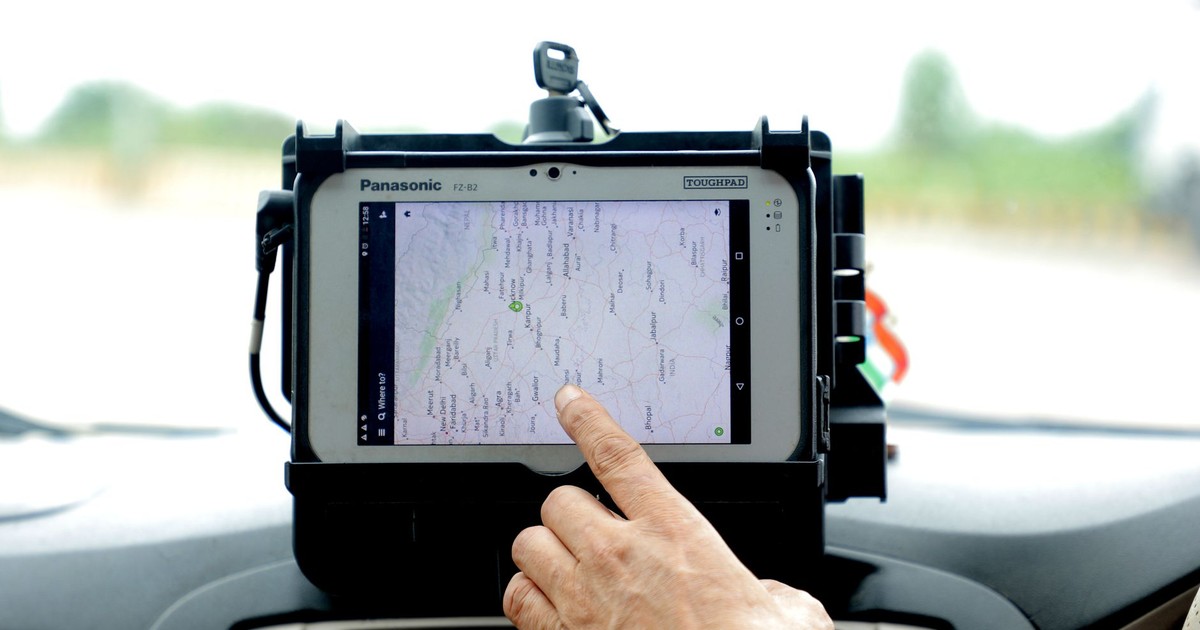
The satellite navigation system on your phone is used roughly 4 billion times a day around the world, in cars, delivery trucks, hiking trails, and emergency services. Its roots are entirely military, and the decision to share it with civilians was a deliberate policy call, not a natural evolution.
The Global Positioning System started as a military project by the U.S. Department of Defense, with full operational capability declared in 1995. President Clinton then opened GPS to civilian users, and the military turned off “selective availability” in 2000, giving civilians access to the same positional accuracy that had previously been reserved for military use. Before that switch, civilian GPS signals were intentionally degraded, accurate only to within about 100 meters. The military version was precise to within meters. When Clinton ended that restriction, the technology became genuinely useful for navigation, and the GPS industry exploded almost overnight.
GPS is now maintained by the U.S. Space Force, the branch created in 2019, making it the only constellation of navigation satellites actively managed by a military branch and freely handed to every smartphone user on the planet. The economic value of that handoff is almost impossible to calculate. Logistics, agriculture, aviation, emergency response, and mapping all depend on it.
3. The Internet

ARPANET, the precursor to the internet, was developed by the Advanced Research Projects Agency (now DARPA), and the first computer-to-computer signal on this nascent network was sent between UCLA and the Stanford Research Institute on October 29, 1969. The Cold War logic was straightforward: if a Soviet strike knocked out one node of the network, communications would simply route around it. The message text was meant to be the word “login,” but only the L and O were transmitted before the system crashed. The internet’s very first transmission ended in a crash. That detail has aged well.
In 1983, ARPANET split into two separate networks: MILNET for military communications and a civilian network that gradually evolved into the internet billions of people use today. Nearly 20 years after that split, in 1991, computer scientist Tim Berners-Lee created the World Wide Web, the collection of documents and files that people access through the internet, while working at CERN, the European Organization for Nuclear Research in Switzerland. So the internet’s architecture came from the Pentagon, but the web that most people think of when they picture “the internet” was built by a physicist trying to share research papers with colleagues. Both are true, and neither cancels the other.
4. Duct Tape
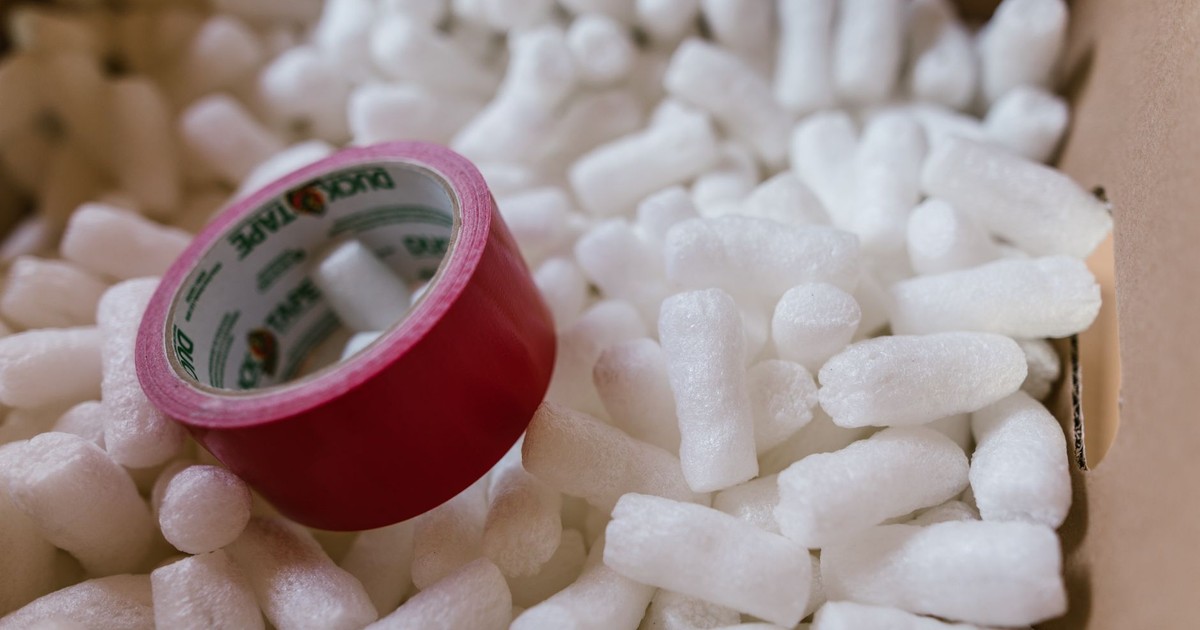
The iconic tape was invented by an Illinois mother named Vesta Stoudt, who wanted to save soldiers’ lives in World War II. The year was 1943, and Stoudt, who had two sons serving in the U.S. Navy, was working at the Green River Ordnance Plant near Amboy, Illinois. She noticed that the boxes of ammunition she was packing and inspecting had a flaw. They were sealed with paper tape, with a tab to open them, and workers dipped the entire box in wax to make it waterproof. But the paper tape was very thin, and the tabs often tore off, leaving soldiers unable to access the boxes under fire. Stoudt wrote directly to President Franklin D. Roosevelt with a proposal for a stronger, cloth-based waterproof tape.
The idea was approved, and Johnson & Johnson began mass production of what was called “duck tape,” supposedly named for the duck cloth from which it was made. The name shift to “duct tape” came after the war, when civilians repurposed the same product for sealing air ducts in the postwar housing boom. It also changed color, from military green to the iconic gray most people associate with it today. One woman’s letter to a president, written because she was afraid for her sons’ lives, turned into a product found in virtually every American garage and junk drawer.
5. Ray-Ban Aviator Sunglasses

Of all the military inventions products on this list, Ray-Bans might be the one that has most completely shed its functional origins. They are fashion objects now, worn on the streets of every major city. They started as protective gear for pilots whose eyes were being damaged at altitude.
In 1929, U.S. Army Air Corps Colonel John Macready approached optics manufacturer Bausch & Lomb with a specific problem: pilots were suffering headaches and altitude sickness from the intense glare above the cloud line. Existing goggles were bulky, fogged easily, and reduced pilots’ field of vision at the exact moment when visibility mattered most. Bausch & Lomb’s solution was a thinner, lighter frame with lenses large enough to cover the full orbital area. The prototype, known as “Anti-Glare,” was completed in 1936.
Bausch & Lomb rebranded the sunglasses in 1937 as Ray-Ban, a name reflecting the idea of banning the sun’s rays, and sold them to the civilian population. By World War II, aviators had become a standard accessory for U.S. soldiers. General Douglas MacArthur was photographed wearing them so consistently during the Pacific campaign that the association became inseparable. The glasses were further popularized by Hollywood stars in the 1950s, and the cultural momentum carried them through every decade that followed. From cockpit to catwalk to the face of a teenager at a music festival in 2026, the lineage is unbroken.
6. The EpiPen

EpiPens, the auto-injecting syringes that allow someone to deliver a quick shot of epinephrine during an allergic reaction, sprang from a device originally designed to protect soldiers from nerve agents and chemical weapons. The backstory behind one of the most commonly prescribed emergency devices in American medicine is rooted entirely in Cold War chemical warfare preparedness.
Engineer Sheldon Kaplan developed the auto-injector while working at Survival Technology, Inc. in Bethesda, Maryland. In 1973, when Kaplan’s design concept was almost complete, the Pentagon approached Survival Technology looking for a delivery method for a nerve agent antidote. Kaplan’s invention became the ComboPen for the Department of Defense and the EpiPen for consumers. Before that technology existed, soldiers had to carry kits containing syringes, rubber bands, and vials of medicine that were tricky to administer in the field and potentially lethal if used incorrectly.
Kaplan later adapted the device to allow the delivery of epinephrine, the life-saving drug for people suffering from allergy-induced anaphylactic shock (a sudden, severe allergic reaction that causes the immune system to flood the body with chemicals, dropping blood pressure and swelling the airways). He received little recognition while alive but was posthumously inducted into the National Inventors Hall of Fame. The FDA approved the EpiPen for commercial use in 1987, and since then many other medications and treatments have adopted auto-injector technology for quick civilian use. Every child sent to school with an EpiPen in their backpack is carrying a piece of Cold War engineering repurposed for a completely different kind of emergency.
What the Military Got Right

Percy Spencer didn’t have the luxury of a ten-year product development cycle. Vesta Stoudt wasn’t writing a grant proposal. The engineers at DARPA were trying to prevent a communication blackout in the event of nuclear war. Necessity wasn’t just the mother of invention here; it was a very specific, very serious kind of necessity – and that urgency produced results that decades of normal research funding simply hadn’t.
What happened next is the part that’s easy to overlook. In each case, the technology escaped its original purpose and became something far more widespread and far more ordinary than anyone who created it could have imagined. The same magnetron that helped Allied forces detect enemy aircraft now reheats your leftovers. The same network architecture designed to survive a Soviet attack is how you read this sentence. Military R&D has been funding civilian life for longer than most people realize, and the distance between a battlefield solution and a kitchen drawer staple has, again and again, turned out to be shorter than anyone expected.
Disclaimer: This information is not intended to be a substitute for professional medical advice, diagnosis, or treatment and is for information only. Always seek the advice of your physician or another qualified health provider with any questions about your medical condition and/or current medication. Do not disregard professional medical advice or delay seeking advice or treatment because of something you have read here.
AI Disclaimer: This article was created with the assistance of AI tools and reviewed by a human editor.