
The documents she was carrying never arrived. On November 13, 1974, Karen Silkwood was headed to a meeting with a New York Times reporter, carrying a folder full of documents and photos she said would demonstrate the extent of the safety problems at the Kerr-McGee plutonium plant where she worked. She died in a one-car crash before she got there. The documents were gone. That combination has kept her name in the conversation about people killed for knowing too much for fifty years running.
The phrase gets used loosely. Sometimes it describes genuine whistleblowers whose evidence threatened powerful institutions. Sometimes it describes journalists who pulled on threads that powerful governments would rather have left alone. Sometimes it describes lawyers, auditors, and soldiers who simply knew the wrong thing at the wrong moment. Ten cases below share a specific logic: each person had documented knowledge that was dangerous to someone with far more power than they had, and each died before they could fully deploy it. In most cases, the official explanation has never fully held.
These are not ghost stories or forum speculation. Every case here has been investigated by governments, intelligence agencies, courts, and major news organizations. In several, the conclusions were unambiguous. In others, the questions remain officially open decades later.
Karen Silkwood: The Missing Documents
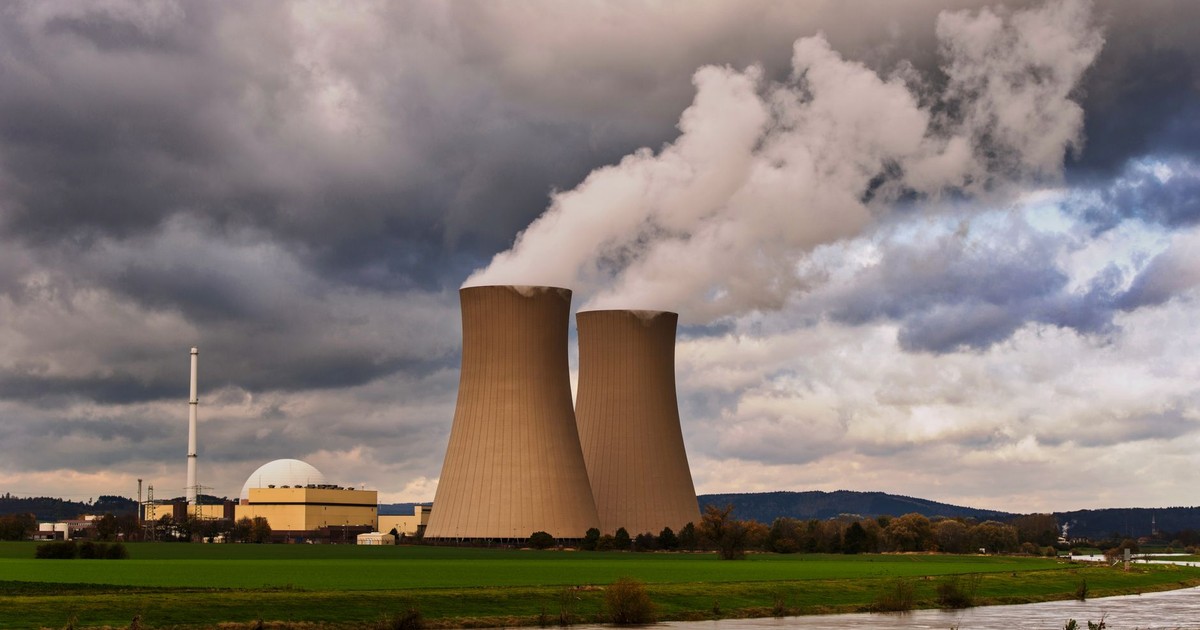
Silkwood had been assigned by her union to monitor health and safety practices at the Kerr-McGee Cimarron River nuclear plant near Crescent, Oklahoma, and through that role she found spills, falsified records, inadequate training, health-regulation violations, and missing quantities of plutonium.
Several days before her death, her apartment was contaminated with plutonium from the nuclear plant where she worked. The company had put her and her roommates under constant surveillance. Documents about problems at the plant that two witnesses had seen before Silkwood’s drive were missing from her car after the crash. The circumstances of the crash itself remained disputed, with independent analysts and the official investigators reaching different conclusions about what caused the car to leave the road.
According to a 2024 ABC News report, her allegations, contamination, and death sparked an investigation by the Oklahoma Highway Patrol, an FBI inquiry, a civil lawsuit, several appeals, a congressional hearing, and two appearances before the U.S. Supreme Court. Her son, who was five years old when she died, said decades later: “There’s never been a definitive answer.”
Alexander Litvinenko: Tea in London
Alexander Litvinenko was a former Russian Federal Security Service agent who defected to the United Kingdom. In 2006, he died in a London hospital after being poisoned with radioactive polonium-210, a rare and highly toxic substance. He had been investigating corruption and organized crime and had publicly accused Russian President Vladimir Putin of various crimes.
Polonium-210 is produced in nuclear reactors and is extraordinarily difficult to obtain outside state control. Litvinenko had been living in exile in London when he fell ill after drinking tea with two fellow Russians at a London hotel in 2006. He died three weeks later, but named Putin from his deathbed.
British police charged Andrei Lugovoi, a former KGB officer and current pro-Kremlin lawmaker, and businessman Dmitry Kovtun with murdering Litvinenko. A statutory public inquiry ordered by the British government concluded in 2016 that Putin and Nikolai Patrushev, the former head of the FSB, “probably” ordered the assassination, a finding the UK Home Office published in January of that year. Russia refused to extradite the suspects. Lugovoi was subsequently elected to the Russian parliament.
Sergei Magnitsky: The Auditor in the Cell
Sergei Magnitsky was a lawyer who exposed large-scale tax fraud involving Russian officials and died in pre-trial detention in 2009 after being denied medical treatment and beaten. His death sparked international outrage and led to the passage of the U.S. Magnitsky Act, which sanctions Russian officials implicated in human rights abuses.
Magnitsky had been arrested on what his supporters described as trumped-up charges in 2008 after exposing corruption by Russian government officials. According to Human Rights Watch, he was tortured, denied medical attention, and found dead in his Moscow jail cell. He was 37 years old. In 2012, the Russian government posthumously convicted him of tax evasion, the very crime he had spent months documenting against others.
Nobody has ever been tried in connection with his death. The case remains a template for how authoritarian states deal with people killed for knowing too much: arrest them first, discredit them second, and let the legal process bury whatever truth they uncovered.
Anna Politkovskaya: Shot in Her Own Elevator

As a journalist, Anna Politkovskaya’s coverage of the conflict and human rights situation in Chechnya earned her international recognition. It also brought harassment and intimidation from authorities. She was detained, threatened, and poisoned because of her work. In October 2006, she was shot dead at her home in Moscow.
Politkovskaya, a sharp critic of the Kremlin and its policies in Chechnya, was shot in the elevator of her Moscow apartment building on October 7, 2006. The killing drew global outrage and highlighted the dangers for journalists in Russia. The date was not coincidental to many observers: it was Vladimir Putin’s birthday.
In June 2014, five men were sentenced to prison for the murder, but it remained unclear who ordered or paid for the contract killing. The investigation failed to determine who ordered her slaying. The men who pulled the trigger went to prison. The person or persons who commissioned the killing have never been publicly identified, named, or charged.
Georgi Markov: The Umbrella on Waterloo Bridge
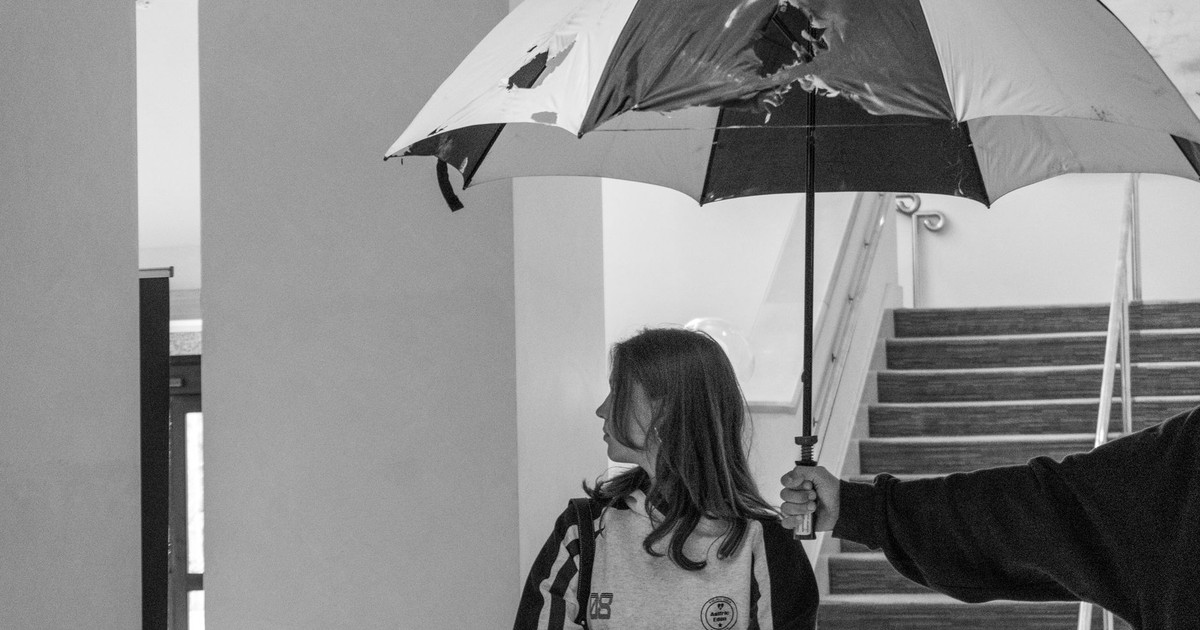
Bulgarian émigré, writer, and broadcast journalist Georgi Markov died in London on September 11, 1978, jabbed in the thigh with a poison-tipped umbrella while waiting for a bus on Waterloo Bridge. The umbrella tip contained a tiny pellet of ricin, a toxin derived from castor beans that is lethal in tiny doses. The pellet-gun umbrella was reportedly developed at the highly secret KGB laboratory known as the “Chamber.”
Markov had been an acclaimed literary figure in Bulgaria before he defected to the West in 1969. He subsequently began broadcasting for the BBC World Service and Radio Free Europe, using his intimate knowledge of the Bulgarian Communist Party to produce broadcasts that embarrassed the regime. KGB agents and senior members of Bulgaria’s secret police were suspected of being involved in the killing, but Markov’s killers have never been brought to justice.
Gary Webb: Two Bullets to the Head

Gary Webb’s troubles began in August 1996, when his employer, the San Jose Mercury News, published an investigation he had worked on for more than a year. Carrying the full title “Dark Alliance: The Story Behind the Crack Explosion,” Webb’s series reported that elements of CIA-backed Contra rebels were involved in trafficking cocaine to the U.S. in order to fund their counter-revolutionary campaign against Nicaragua’s Sandinista government.
The reports set off a firestorm of protests as African Americans became outraged by the assertion that the U.S. government could have supported, or at least turned a blind eye to, a drug epidemic that had ravaged their communities. The CIA broke its policy of not commenting on individual agency affiliations and denied Webb’s story entirely.
Webb was demoted and his career effectively destroyed. A 1998 CIA inspector general’s report denied any ties between the U.S. government and the specific drug dealers Webb named, but ultimately confirmed his central thesis that the CIA had worked with Contras despite drug-dealing allegations against them.
On December 10, 2004, Webb was found dead in his apartment with two .38-caliber bullets to the head. The Sacramento County coroner ruled it a suicide. The question of how a person fires two shots to their own head has been raised repeatedly by journalists, investigators, and Webb’s own family. Webb had been a Pulitzer Prize-winning reporter with a reputation for meticulous research. He is remembered now as someone who was proven right about government corruption after being systematically discredited for saying so.
Danny Casolaro: The Man Who Called It “The Octopus”

On an August day in 1991, the body of freelance reporter Danny Casolaro was found dead in a Martinsburg, West Virginia motel bathtub. Ruled a suicide, Casolaro’s death was just a small piece of a larger conspiracy theory he had called “The Octopus.”
Prior to his death, Casolaro had warned friends that if they were ever told he had committed suicide, they should not believe it and should know he had been murdered. He was in Martinsburg investigating a story that had become his obsession, a book that would allegedly uncover a web of intrigue involving crime, politics, power, espionage, and the “October Surprise” that some believe helped sweep Ronald Reagan into the White House.
His body was illegally embalmed before his family was notified. The briefcase containing his investigative notes, which he took everywhere, was missing. The hotel room was quickly cleaned, potentially destroying evidence, and police issued a preliminary suicide ruling before learning Casolaro was a reporter investigating a major story. Anonymous phone calls reported his death to both a journalist and the FBI before it was publicly known, mentioning his work. These irregularities, combined with reports of death threats he had received and his family’s insistence that he was far from suicidal, led many to question the official verdict.
Jamal Khashoggi: Inside the Consulate
The details of what happened to Jamal Khashoggi on October 2, 2018 were not gradually revealed over years of investigation. They were known, or strongly suspected, within days. Khashoggi was a Saudi journalist and Washington Post columnist who was critical of Saudi Arabia and Crown Prince Mohammed bin Salman’s policies. He was killed and dismembered inside the Saudi consulate in Istanbul by men with close ties to the highest levels of the Saudi government.
Turkish intelligence officials alleged that Khashoggi was killed and dismembered with a saw inside the consulate by a 15-man Saudi hit team dispatched to Istanbul. The Washington Post reported in November 2018 that the CIA had concluded Crown Prince bin Salman ordered the murder, after U.S. intelligence intercepts found that he had ordered Khashoggi to be brought home.
In November 2018, the U.S. Treasury sanctioned 17 individuals for their role in the killing. In December 2018, the U.S. Senate passed a resolution holding bin Salman responsible for Khashoggi’s death. His dismembered body has never been recovered. Saudi Arabia initially denied any involvement, then said he had died in a “fistfight,” then convicted five unnamed lower-level officials while the crown prince faced no personal legal consequence.
Roberto Calvi: God’s Banker Under Blackfriars Bridge
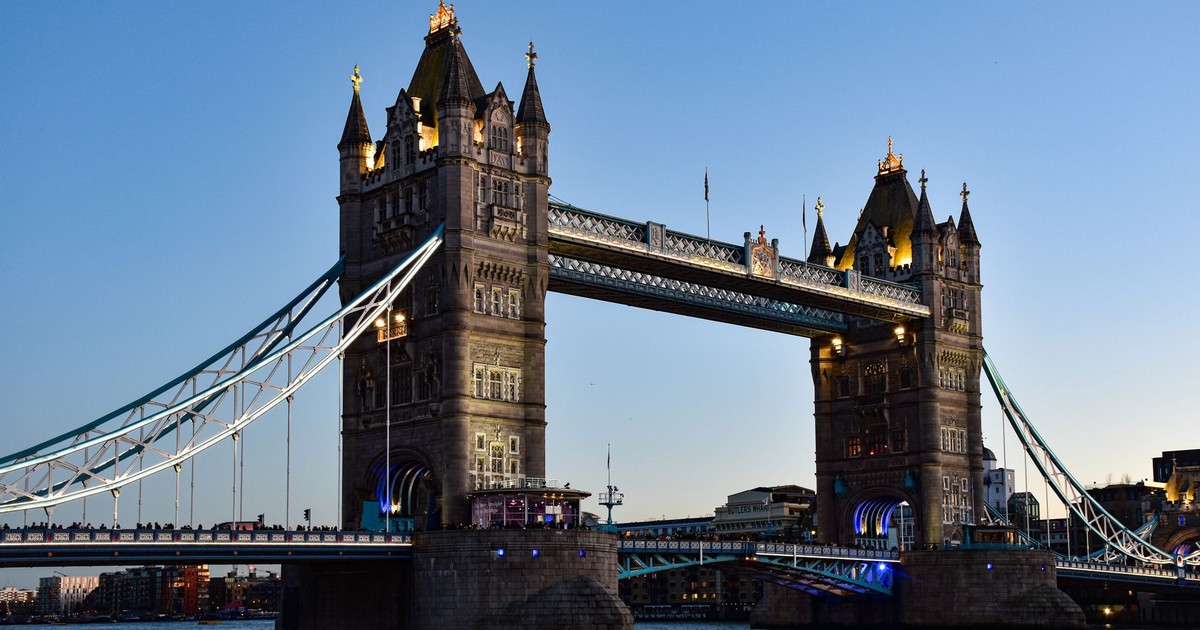
Roberto Calvi was chairman of Banco Ambrosiano, Italy’s largest private bank, and was known as “God’s Banker” due to his close ties to the Vatican. On June 18, 1982, a postal worker discovered his body hanging from Blackfriars Bridge in London, his pockets weighted down with bricks and containing nearly £15,000 in cash. British authorities initially ruled it a suicide. Italian authorities disagreed.
Calvi had been managing a vast web of illegal financial transfers, much of it routed through Vatican-linked accounts and connected to the Freemasons, the Mafia, and Italian political parties. He had fled Italy days before his death after being convicted of currency violations, and had reportedly told associates he feared for his life. His secretary jumped from her office building in Milan the same week he disappeared.
A 2002 Italian investigation concluded that Calvi had been murdered, and in 2005 five people were charged with his killing, including figures with alleged ties to organized crime. All were acquitted in 2007 due to insufficient evidence. The case was ultimately closed without a conviction, leaving unanswered the central question of what Calvi knew about the Vatican Bank’s involvement in the money flows that ran through his institution.
Pat Tillman: What the Army Knew
Pat Tillman walked away from a $3.6 million NFL contract in 2002 to enlist in the U.S. Army Rangers after the September 11 attacks. He was killed in Afghanistan on April 22, 2004. The Army told his family and the public that he died heroically in an enemy ambush. That story was false, and the Army knew it within hours.
Tillman was killed by friendly fire from his own unit. The Army destroyed evidence, including his uniform and personal journal. Senior officers suppressed the truth for weeks while the White House was preparing to use Tillman’s death as a recruitment and morale story. His family was repeatedly lied to, and when the truth emerged, no one was criminally charged.
Tillman’s family later disclosed that in the months before his death, he had expressed serious doubts about the Iraq War and had arranged to meet with prominent war critics, including academic and activist Noam Chomsky, after his deployment ended. Whether that context is relevant to how aggressively the Army managed the story of his death remains an unanswered question, though it sits uncomfortably alongside the documented willingness of senior officials to conceal what actually happened.
The Pattern That Keeps Repeating
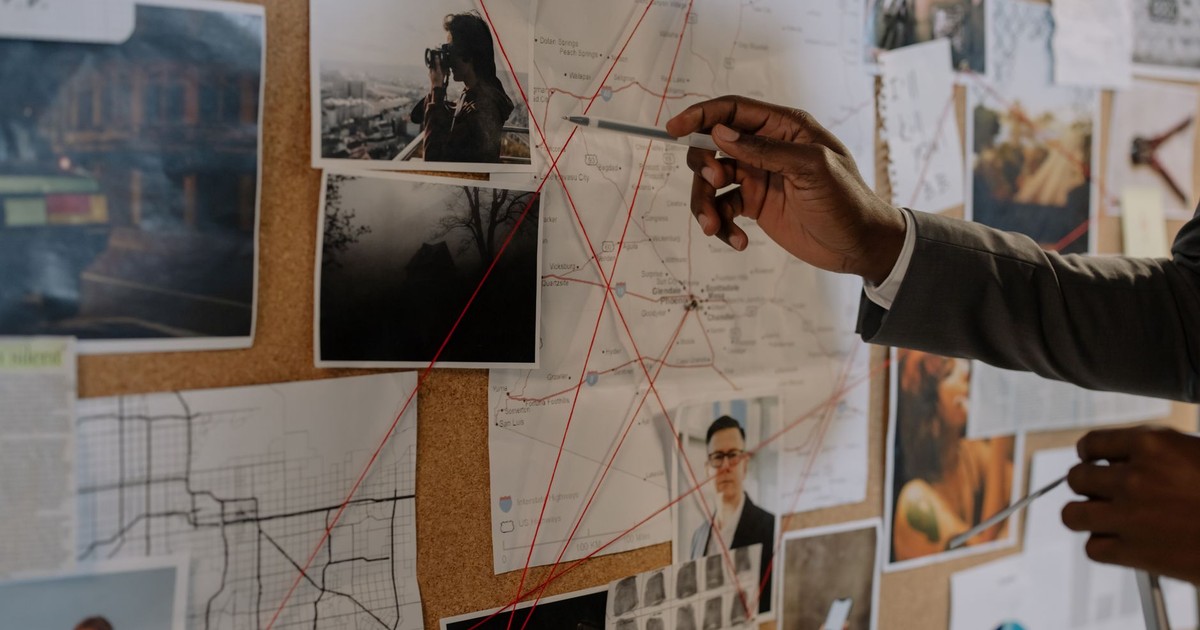
The cases above span five decades, six countries, and nearly every category of institution: a nuclear company, intelligence agencies, a military, a government, a royal court, a media empire, a bank. A single network doesn’t connect them. A recurring logic does: knowledge is dangerous when the wrong person has it, and the most reliable way to manage that danger is to discredit the person who has it before they can share it, and if that fails, to make sure they can’t share it at all.
Most of the people on this list were not naive. Karen Silkwood knew she was being watched. Danny Casolaro told his friends to assume the worst if he died. Gary Webb knew what had been done to his career and his reputation. Looking at all ten together, what stands out is how little protection any of them had, not because they didn’t understand the danger, but because understanding danger and being shielded from it are two entirely different things. The people with the most to hide tend to also be the people with the most resources to deploy.
The cases that get resolved, Khashoggi, Litvinenko, Politkovskaya, are usually the ones where a foreign government did the killing and a domestic government had political reasons to pursue it. The cases that stay open are the ones where the institution being exposed is also the institution responsible for investigating. That pattern repeats too consistently across too many countries and too many decades to be coincidence.
AI Disclaimer: This article was created with the assistance of AI tools and reviewed by a human editor.