

The man who texts to make sure you got home safe. The one who remembers that your sister’s surgery was last Tuesday and asks how she’s doing. The one who holds the door not because he thinks you can’t open it yourself, but because that’s just how he moves through the world. You notice him not because he’s performing some grand romantic gesture, but because the way he behaves is so consistent, so unrehearsed, that it stops you a little.
Chivalry has a PR problem. The word gets tangled up in outdated images of knights and damsels, which makes it easy to dismiss the whole concept as a relic. Strip away the armor and the courtly theater, and what you’re left with is something that has nothing to do with gender roles: a man who genuinely considers the experience of the people around him. That turns out to be rarer, and more recognizable, than most people admit.
The traits that make a man genuinely chivalrous and kind aren’t mysterious. They cluster together in a way that researchers who study prosocial behavior and relationship quality would recognize immediately. These aren’t men performing decency when someone’s watching. The qualities run through everything they do, from how they treat strangers to how they argue, apologize, and show up on ordinary Tuesday evenings when there’s nothing romantic at stake at all.
1. He Notices What Needs Doing Without Being Asked

The argument that happens most often in long-term relationships isn’t about money or sex. It’s about who noticed the thing that needed doing and who didn’t. The chivalrous men traits that women describe most consistently tend to start here: with a man whose attention genuinely lands on the world around him. He sees the bag you’re struggling with before you mention it. He notices the friend at the table who went quiet. He refills your glass when it’s half empty, not empty.
This isn’t about small service tasks. It’s about the quality of attention. A man who truly pays attention to other people isn’t performing consideration; he’s exercised it so often it’s become instinctive. A 2025 study in Frontiers in Psychology found significant positive correlations among self-acceptance, self-esteem, and prosocial behavior, with researchers describing prosocial acts performed voluntarily “by thinking of others” as crucial in maintaining relationships. The voluntarily part is what distinguishes genuine attentiveness from compliance. Nobody asked him to notice. He just does.
He moves his bag off the seat on the train before being told. At a group dinner he checks in with whoever went quiet, not whoever’s loudest. These aren’t heroic acts. They’re the accumulated evidence of someone who has oriented himself outward.
2. He Listens to Understand, Not to Respond

Most people listen while composing their answer. The man who listens to actually understand what’s being said is operating differently, and you feel it immediately. He doesn’t interrupt. He asks follow-up questions about what you said, not about what he wants to discuss next. He remembers the thing you mentioned in passing two weeks ago and brings it back. That kind of listening isn’t a technique; it’s a consequence of genuine interest.
Active, empathic listening is the delivery vehicle for empathy. Without it, care remains an internal experience that never actually reaches the other person.
This trait tends to reveal itself most clearly during conflict. A man who listens to understand will pause when you say something that surprises him instead of barreling through his own argument. He might ask you to say more. He might sit quietly for a moment before responding, which in an argument can feel almost disorienting if you’re not used to it. It’s not weakness or passivity. It’s someone who cares more about getting to the truth of the situation than about winning.
3. He Treats Everyone in the Room the Same Way

Watch how a man treats the waiter, the parking attendant, the person at the counter who is visibly having a bad day. These interactions are where character shows up unedited. He’s not auditioning for anyone. There’s no status calculation happening. He says please and thank you and makes brief eye contact because that’s how he treats people, not because someone important might be watching.
This consistency is one of the most reliable indicators of genuine kindness rather than strategic kindness. A man who is charming to some people and dismissive to others isn’t kind; he’s calculated. Research from a 2025 Frontiers in Psychology cross-sectional study found that individuals with high self-acceptance tend to view themselves more positively and perceive themselves as worthy of love and respect. That security is what makes the consistent courtesy possible. He doesn’t need to rank people because he isn’t threatened by them.
Relationships with a man like this tend to feel genuinely safe, because you know the warmth he shows you isn’t a performance calibrated to your usefulness. He treats the person bringing the food with the same basic humanity as the person signing his contract. That applies to you too, which means you’re not always waiting for the version of him that shows up when the stakes change.
4. He Keeps His Word on Small Things

Anyone can show up for the dramatic moments. The man worth paying attention to shows up for the minor ones. He said he’d call at 7 and he calls at 7. He said he’d look into that thing and he looked into it. He said he’d be there at 6:30, so when 6:25 arrives he’s already thinking about parking.
Reliability on small commitments is how trust is actually built. The grand gestures are memorable, but they’re also episodic. The daily track record of following through on minor promises is what tells you whether someone can be counted on when it genuinely matters. When a man makes a commitment, he follows through with dedication and responsibility. This reliability builds trust and respect in relationships, because others know they can count on him.
The man who consistently overpromises and under-delivers on minor things is sending a signal that his word is a social currency he spends freely. He doesn’t mean to let you down; he just doesn’t think his small commitments carry weight. The chivalrous man does. He knows that trust is assembled from small, kept promises stacked over time.
5. He Apologizes Without Maneuvering

A real apology contains no clause beginning with “but.” It doesn’t explain why the other person’s reaction was the real problem. It doesn’t end with “if you were offended.” A man who can say “I was wrong, I’m sorry, here’s what I’ll do differently” without immediately needing to be reassured that it’s forgiven is doing something that sounds simple and turns out to be genuinely rare.
The capacity to apologize cleanly comes from the same psychological ground as the other traits on this list. Self-acceptance, as an individual’s positive self-attitude and affirmation of self-worth, enhances self-esteem and in turn promotes prosocial behavior. The man who needs to defend himself at all costs after making a mistake is, underneath it, managing a fragile sense of self. The man who can absorb the impact of having been wrong, own it, and move forward doesn’t need the apology to be a negotiation. He just makes it.
This matters in relationships not just at crisis moments but in the dozens of small frictions that accumulate over months and years. The ten-second acknowledgment when he snapped because he was tired, the genuine “I didn’t handle that well” the morning after an argument. These small acts of accountability keep resentment from settling in.
6. He Protects Your Energy Without Being Asked

He doesn’t tell the story at your expense for a laugh. If someone at a dinner makes a comment about you that lands wrong, he notices and says something, not loudly, but he says something. He doesn’t invite drama into your shared life or pass along things that would only upset you without purpose. He manages what comes through the door.
This isn’t overprotectiveness or control. The line is clear: he’s not managing what you know or think. He’s thoughtful about what he brings into your shared space. He doesn’t process his work stress by unloading it on you the moment you walk in. He doesn’t forward the critical text from his mother just to watch you react to it.
This kind of protective consideration for someone’s emotional experience is what women tend to describe when they talk about feeling safe in a relationship. Not safe from physical danger, but safe from the low-grade exhaustion of being constantly exposed to chaos. He keeps his side of the street calm.
7. He Celebrates You Without Feeling Diminished
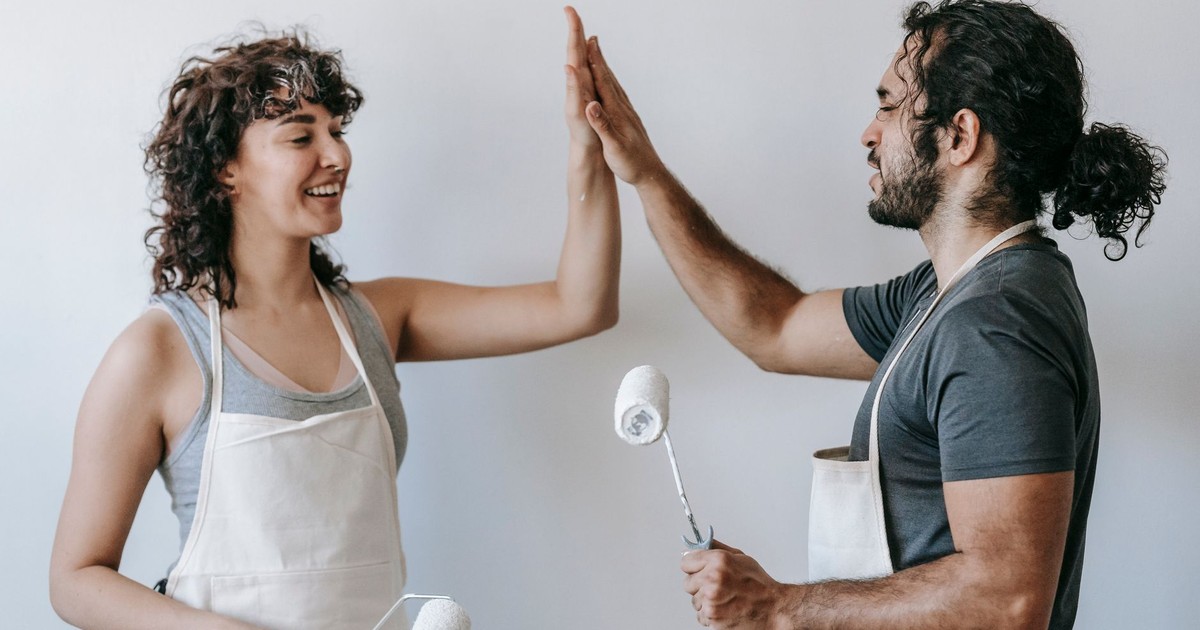
He forwards your good news with genuine enthusiasm. He brags about your accomplishments to his friends. When you succeed at something he couldn’t do or didn’t achieve himself, he’s proud of you. There’s no undercurrent of competition. He doesn’t immediately pivot to a story about himself. He lets your moment be your moment.
This is one of the more telling chivalrous men traits because it only reveals itself when circumstances could trigger insecurity. Most men can celebrate their partner’s wins when the wins are smaller than their own. The interesting data point is what happens when yours is bigger. A 2024 study published in Evolutionary Psychology led by a team of Polish and Italian researchers analyzed reported dynamics between 148 heterosexual couples and found that personality, and specifically kindness, is a major driver in mate selection. Part of that equation is emotional security. A man who can hold space for your success without needing to rebalance the ledger immediately is operating from genuine security rather than a fragile self-image.
He also doesn’t make a performance of his support. He’s not proud of himself for being supportive. He just is.
8. He’s Consistent Whether You’re There or Not

How a person behaves when they think no one relevant is watching is the real measure of their character. The genuinely kind man is largely the same in both situations. His friends describe him the way you’d describe him. His behavior at a work event isn’t a different character from the one who shows up at your parents’ kitchen table.
This consistency connects directly to how researchers define prosocial behavior as an identity rather than a strategy. A 2023 analysis in Psychology Today reported that singles who frequently engaged in prosocial behavior were substantially more likely to find themselves in a stable relationship the following year, and that this held true even after accounting for differences in social involvement and individual personality traits. Prosocial behavior that is truly dispositional, meaning it’s who a person is rather than what they’re performing, tends to show up this consistently across contexts.
The absence of this is something most people have experienced: a man who is warm and attentive when he’s dating you and progressively less so once the relationship feels secure. That’s performance responding to incentive. The man who stays consistent isn’t performing. He’s just himself.
9. He Admits When He Doesn’t Know

Certainty is easy to perform. Sitting with “I don’t know” requires something different. The genuinely kind man doesn’t need to have the right answer to every question. He’ll say “that’s a good question, let me think about it” and actually mean it. He’ll say “I’m not sure I understand that well enough to have an opinion” and be comfortable with where that lands. He’ll change his mind when presented with good information and not treat the change as a defeat.
This intellectual honesty is closely related to emotional honesty. Both require a degree of self-security that doesn’t depend on always being the most impressive person in the room. The APA Monitor in 2025 reported that researchers are actively reconsidering behaviors traditionally coded as weakness in men, including admitting uncertainty or seeking help, as prosocial acts that signal personal responsibility and community orientation. Saying “I got that wrong” or “I don’t know enough to weigh in” isn’t weakness. It’s a refusal to perform a confidence that isn’t real.
Conversations with him don’t feel like debates you need to win. He’s actually curious about what you think, not just waiting to assert what he already knows.
10. He Makes the People Around Him Feel Capable

He doesn’t solve problems on your behalf when you haven’t asked him to. He doesn’t offer advice when you’re venting and just need to be heard. He trusts you to handle your own life and pitches in when invited, not when he decides it’s necessary. When his instinct is to step in, he checks first: “do you want help with this, or do you just need to talk it through?”
This particular quality is harder to develop than it sounds. The APA’s 2025 coverage of men’s mental health noted that researchers Ethan Hoffmann, PhD, and Michael Addis, PhD, distinguish between reconstructive and deconstructive approaches to supporting healthier outcomes in boys and men. A reconstructive approach reframes traditional norms like toughness or stoicism into adaptive, prosocial behaviors. The impulse to fix, protect, and solve is deeply embedded in how many men were socialized. Choosing to support rather than rescue, even when he could solve the problem in thirty seconds, is a more refined version of strength.
You don’t shrink around him. You feel more capable, not less, because he assumes your competence as a baseline.
11. He Doesn’t Keep Score

He did the dishes three times this week and hasn’t mentioned it once. He gave you a ride to the airport at 5am and has no interest in cataloguing that in some internal ledger of things owed. His generosity toward people he loves is genuinely given, not loaned. This doesn’t mean he’s a pushover who ignores imbalance forever. It means his first instinct isn’t to track.
Score-keeping in relationships is one of the less obvious forms of resentment, and it usually signals that generosity was never really free. The man who gives genuinely doesn’t need the transaction acknowledged every time. Research consistently shows that people feel better about themselves after helping others, and that prosocial behavior as a whole, the intent to benefit others, genuinely enhances personal well-being. When giving is its own reward, the ledger becomes irrelevant.
He expects reciprocity over time in a relationship, as anyone should. But he doesn’t weaponize his own kindness. He doesn’t bring up the airport run during an argument about something unrelated. What he gave, he gave. It’s done.
12. He Handles Rejection and Disappointment Gracefully

He asked and you said no. He wanted something and it didn’t happen. He got passed over for something he worked toward. The response in these moments is where character either holds or breaks. The genuinely kind man feels the disappointment, doesn’t pretend it doesn’t sting, but doesn’t punish anyone for it. He doesn’t go cold. He doesn’t make the other person feel guilty for saying no. He doesn’t catastrophize.
This kind of emotional regulation is less about suppressing feeling and more about not making your feelings someone else’s emergency. A secure sense of self-worth means external outcomes don’t determine internal value. A no is a no, not a verdict on who he is. Research from the Frontiers in Psychology 2025 cross-sectional study confirmed significant positive correlations among self-acceptance, self-esteem, and prosocial behavior, findings consistent with prior research suggesting that self-acceptance and self-esteem are important predictors of how generously and gracefully a person can respond to disappointment.
In dating, this trait is easy to observe and tells you a great deal immediately. A man who handles your disinterest or your “I’d rather not” with genuine grace has a relationship with himself that is healthy enough to extend that grace outward.
13. He Notices and Names What He Appreciates
He says thank you and actually means it. Not as a social reflex, but as a specific acknowledgment. “That dinner was really good, I noticed you tried something different with it.” “I appreciate you listening to that whole thing without interrupting.” “You handled that situation better than I would have.” He notices what you do and he says so.
Appreciation stated out loud, specifically and genuinely, is one of the most reliably relationship-sustaining behaviors there is. Studies on relationship satisfaction consistently find that feeling genuinely seen and valued by a partner is one of the strongest predictors of long-term contentment. The chivalrous man makes that feeling concrete, not through grand declarations but through specific, accurate observations delivered in ordinary moments.
He also applies this outward. He tells the person at the coffee counter that they always get his order right. He thanks his friend for checking in during a hard week. His appreciation isn’t hoarded for people he’s trying to impress.
14. He Shows Up Differently for Different People’s Needs

He knows that his college roommate needs to be left alone after a hard day and that his younger brother needs to be called. He knows you process conflict by talking immediately and that his best friend needs to sleep on things before he can talk. He adjusts not because he’s performing sensitivity but because he has paid enough attention to actually know.
This adaptability, calibrating care to the specific person rather than applying a one-size approach, is one of the most sophisticated expressions of kindness. Prior research in evolutionary psychology suggests that prosociality is important when it comes to successfully attracting a long-term partner. Researchers describe prosocial behavior as a type of “courtship display” of good character or even good parenting qualities. The capacity to read what another person actually needs, rather than what you’d want in their position, is a skill that takes years of genuine attention to develop. The man who has it didn’t develop it from a book. He developed it by paying close attention to people he cares about for a long time.
He’s not the same with everyone because people aren’t the same. That’s not inconsistency. That’s precision.
What These Traits Actually Have in Common

None of the 14 traits above require money, status, physical strength, or a particular personality type. What they require is a genuine orientation toward other people, the kind that produces behavior consistently, across contexts, without an audience.
The through-line in all of them is security. Not confidence as a performance, but the deep, unshowy version: a man who doesn’t need constant external validation and therefore has attention and energy available to spend on the people around him. The psychological groundwork that produces chivalrous behavior in a man is often the same groundwork that makes him a genuinely good partner: emotional security, self-awareness, and the capacity to put someone else’s experience ahead of the need to look good.
These traits also tend to travel in clusters. The man who keeps small promises also apologizes cleanly. The man who listens to understand also celebrates your wins without keeping score. That’s not a coincidence. It’s character operating as a system rather than as a set of isolated behaviors. When you meet someone who has most of these, you’re not looking at a list of virtues. You’re looking at a person who has done enough internal work that kindness has become his default, not his strategy.
Some of these patterns go back further than any single relationship does. A man who grew up in a house where accountability was modeled, where listening was considered a form of love, and where showing up consistently was just what people did, had a head start most people never talk about. That doesn’t mean someone without that foundation can’t develop these qualities. It just means the work required is real, and it doesn’t happen by accident. The man who is genuinely chivalrous isn’t performing an ideal. He’s built something over time, and the evidence of it shows up on a Wednesday morning when nobody is watching.
Disclaimer: This information is not intended to be a substitute for professional medical advice, diagnosis, or treatment and is for information only. Always seek the advice of your physician or another qualified health provider with any questions about your medical condition and/or current medication. Do not disregard professional medical advice or delay seeking advice or treatment because of something you have read here.
AI Disclaimer: This article was created with the assistance of AI tools and reviewed by a human editor.