

The history that got taught in school was, in many cases, a beautifully edited version of events. Not maliciously so, always – some of it was storytelling that hardened into fact over centuries, some was propaganda that outlasted the war that created it, and some was just a good tale that nobody bothered to check. The problem is that once a story is repeated enough times, it stops feeling like a story and starts feeling like something you know. And the things we feel we know are the ones we never think to question.
What’s remarkable about so many of these myths is how specific they are. They don’t just say “Napoleon was a tough guy.” They say he was short. They don’t just say Columbus was bold. They say he proved the Earth was round. The specificity is exactly what makes them stick – and exactly what makes them wrong. The myths tend to cluster around the biggest names in history, because those are the figures whose biographies attracted devoted mythmakers and credulous audiences in equal measure.
These are 27 of the most elaborately constructed historical myths debunked – the ones that aren’t just minor misattributions but full-blown fictions that have been repeated in classrooms, movies, and dinner table conversations for generations. Some of the real stories are stranger than the myths. Most of them are considerably more interesting.
1. Napoleon Bonaparte Was Unusually Short

The number most people picture when they hear “Napoleon” is five foot two. It was recorded in French documents from his lifetime, it was mocked by British cartoonists, and it launched a psychological concept – the “Napoleon complex” – that has outlasted the man by two centuries. The only problem is that the measurement was in old French units, and when converted to modern imperial measurements, Napoleon’s height translates to around five feet six or seven inches – perfectly average for a Frenchman of his era.
The myth tells us something precise about British wartime propaganda and how it operates. Caricaturists like James Gillray deliberately drew Napoleon as a tiny, ranting figure dwarfed by his enormous hat, and the image stuck with a tenacity that the truth never managed to match. Images of Napoleon surrounded by his notoriously tall Imperial Guard also contributed – standing next to men selected partly for their height, he inevitably looked compact by comparison.
The psychological theory that short men compensate with aggression – the “Napoleon complex” – is built on a foundation of a myth. Napoleon’s military ambition had many plausible causes: the political circumstances of revolutionary France, his outsider status as a Corsican among French elites, the dynamics of late 18th-century European power. His height was not among them.
2. Vikings Wore Horned Helmets Into Battle
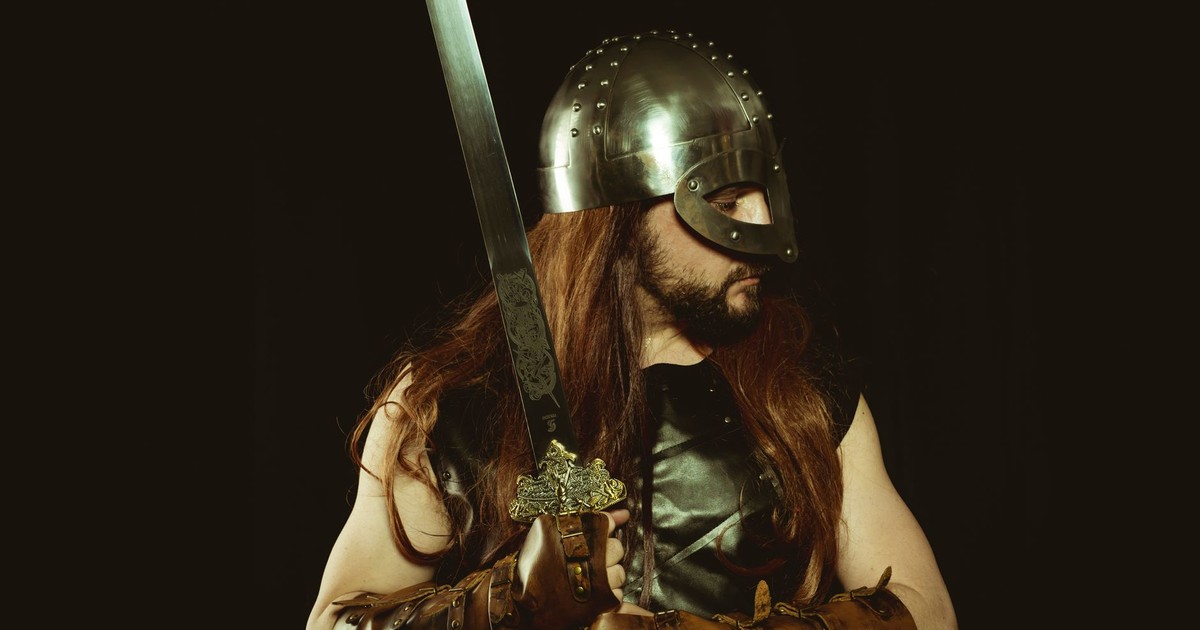
Pick up almost any Halloween costume catalogue or fantasy novel and you’ll find the same image: a Viking warrior in a horned helmet, looking like he wandered out of an opera. The helmeted figure feels ancient and authentic. It is neither. Archaeologists have never found battlefield helmets with horns from the Viking Age. The image was created in the 19th century by artists and costume designers working on Romantic-era operas and paintings.
Real Viking helmets were simple, functional, and designed purely for protection. The Gjermundbu helmet, dating to the 10th century and found in fragments in Norway in 1943, is among the most significant Viking Age helmet discoveries and provides rare physical evidence of how Viking warriors actually protected themselves in battle. According to Viking Times, the helmet features a rounded cap made of four iron plates joined with rivets, forming a spangenhelm-style construction. No horns. No drama. Just a piece of practical protective gear that would have looked completely at home on a battlefield and completely out of place on a stage.
The horned helmet myth did such thorough work that it now defines how most of the Western world pictures an entire civilization of people. The Norse were seafarers, traders, settlers, poets, and lawgivers – a genuinely complex culture – but they get remembered as the guys in the horny hats. That’s the power of a good costume designer with a flair for spectacle.
3. Columbus Proved the Earth Was Round

The story goes that Columbus set out to prove the Earth wasn’t flat, battled superstitious skeptics who feared sailing off the edge, and vindicated reason over ignorance with a bold Atlantic crossing. It’s a compelling narrative. It’s also wrong. Europeans in Columbus’s time already accepted a spherical Earth based on ancient Greek knowledge. The real disagreement was about the size of the Earth and whether Asia could be reached by sailing west – not about its shape.
Medieval scholars, sailors, and educated people knew the Earth was round. Around 240 BC, the Greek scholar Eratosthenes, chief librarian at Alexandria, measured the angle of the noon sun on the summer solstice in two Egyptian cities, and since that angle was 1/50 of a full circle, he reasoned that Earth’s circumference must be 50 times the Alexandria-to-Syene distance – arriving at a figure within a few percent of the modern measurement. That was more than 1,700 years before Columbus set sail. This elegant calculation, detailed by a 2026 explainer from ScienceABC, had been part of educated European knowledge throughout the medieval period.
The Spanish scholars who reviewed Columbus’s proposal and initially rejected it were largely correct: they calculated that the westward route to Asia would be far longer than Columbus claimed, making it impractical given the provisions and technology of the time. Columbus was wrong about the distance. He just got lucky that a continent happened to be in the way.
4. Albert Einstein Failed Math at School

Few myths have comforted more struggling students than this one. Einstein, the story goes, was a mediocre pupil who flunked mathematics – proof that academic failure is no barrier to genius. It’s a beautiful message. It also has no factual basis. The myth began circulating after early biographers misread an official Swiss academic transcript. The school system in his region had recently inverted its grading scale, turning the highest possible score of one into a failing mark. Einstein had actually achieved straight top marks in advanced algebra, calculus, and geometry.
Einstein actually excelled in math and physics from a young age, teaching himself advanced calculus by age 15. He was, by any measure, a mathematical prodigy from childhood. What he did struggle with was the rigid, rote-memorization style of traditional schooling – a real tension, but a very different story from “failed math.”
The myth persists because it’s useful. It tells people what they want to hear. The trouble is that it accidentally misrepresents how Einstein actually thought, which was rigorously, precisely, and with enormous mathematical sophistication from a very early age.
5. George Washington Had Wooden Teeth

The myth holds that George Washington, the first president of the United States, had wooden teeth. In fact, when he took the oath of office, Washington had just one original tooth remaining in his mouth. His dentures were real – he had at least four sets over his lifetime – but they were made from materials including ivory from hippopotamus and elephant tusks, human teeth, and metal alloys. Not a splinter of wood anywhere.
The wooden teeth story has been around since at least the 19th century, possibly because “ivory and human teeth” is a more uncomfortable truth than the clean, craft-workshop image of wooden dentures. Washington’s dental problems were severe and genuinely painful – historians believe the medications used to treat his various illnesses may have accelerated the deterioration. The wooden version lets people joke without sitting with the grimmer reality.
What the dentures actually reveal, if you want a real takeaway, is something about 18th-century medicine and the physical cost of public life before modern dentistry. That’s more interesting than wood. It just doesn’t fit on a novelty coffee mug as neatly.
6. People in the Middle Ages Thought the Earth Was Flat

This one requires a villain, and history handed us one in the form of Washington Irving, the American author who wrote a fictionalized biography of Columbus in 1828. Irving invented a dramatic scene in which Columbus faces down a council of ignorant medieval clerics who insist the Earth is flat. The scene never happened. The myth that people believed in a flat Earth during medieval times was actually created in the 1800s. Most medieval maps and scholarly works clearly showed the Earth as a sphere.
The actual medieval church had no official position that the Earth was flat. Thomas Aquinas, one of the most influential theologians of the period, described a spherical Earth in his writings without controversy. Dante’s 14th-century “Divine Comedy” depicts a spherical Earth as an unremarkable given – the cosmological background assumption of his entire narrative architecture.
The flat Earth myth matters because it’s still used to paint the Middle Ages as a period of ignorance that the Renaissance had to rescue the world from. That framing is itself a myth, one that distorts our understanding of medieval intellectual life and what the Renaissance actually was and wasn’t.
7. Columbus Discovered America

Columbus didn’t “discover” a new world. Millions of Indigenous people already lived across the Americas, with advanced cities, trade routes, and farming systems. His 1492 arrival connected Europe to a world that had been thriving for thousands of years – but it wasn’t a discovery, it was a contact event.
Norse explorers, including Leif Erikson, had sailed to North American shores centuries before Columbus arrived. The Norse settlement at L’Anse aux Meadows in what is now Newfoundland, Canada, dates to around 1000 CE and was excavated and confirmed by archaeologists in the 1960s. That’s roughly 500 years before Columbus. And before Leif Erikson, Indigenous populations had been crossing the continent for at least 15,000 years.
Columbus’s voyages opened the Americas to European exploration, but he never landed on what is now the United States mainland – he explored parts of the Caribbean and Central America. So even within the narrower, Eurocentric frame of the myth, it doesn’t hold up geographically.
8. The Great Wall of China Is Visible From Space

This claim has been floating around since at least the 1930s, repeated in guidebooks, textbooks, and tourist brochures as a testament to the Wall’s staggering scale. The Great Wall of China is not visible to the naked eye from low Earth orbit. It’s too narrow and blends with the natural landscape.
When Yang Liwei, China’s first man in space, returned from the 14-orbit Shenzhou 5 mission in 2003 and admitted to reporters that he had not seen the Great Wall, online forums exploded with disappointment. The Ministry of Education even moved to revise its elementary school textbooks, which had long claimed the ancient barricade was visible. According to Scientific American, while satellite imagery with high magnification can pick it out under the right lighting conditions, unassisted human vision cannot.
The myth endures partly because the Great Wall genuinely is one of the largest human-made structures on Earth – stretching thousands of miles across China – and our instinct is to assume that scale translates to visibility. It doesn’t. Width matters more than length from altitude, and at an average width of roughly 15 to 30 feet, the Wall is simply too narrow to register from 200 miles up.
9. Marie Antoinette Said “Let Them Eat Cake”

The line is irresistible: the pampered queen, told that the French peasants have no bread, responds with breezy indifference. It captures the spirit of pre-revolutionary French aristocracy so perfectly that historians spent a long time treating it as established fact. According to Britannica, the first person to put the phrase into print may have been the philosopher Jean-Jacques Rousseau, who in his Confessions (written around 1767) attributed the quote to “a great princess” – at a time when Marie Antoinette was still a child and unlikely to have been the princess Rousseau had in mind.
The earliest known source connecting the quote with the queen was published more than 50 years after the French Revolution. Marie Antoinette didn’t arrive in France until 1770 and didn’t become queen until 1774 – years after the sentiment appeared in Rousseau’s text.
What makes the misattribution stick is that it fits the narrative arc too well. Revolutionary propaganda needed a villain, and a queen carelessly dismissing starving subjects serves that function perfectly. Whether or not she ever said it, Marie Antoinette became the sentence – and the sentence became history.
10. The Salem Witch Trials Involved Burning at the Stake

Mention Salem and most people picture bonfires. The image is so vivid and so consistent across film and fiction that it seems like it has to come from somewhere. It doesn’t come from Salem. The burning-at-the-stake execution method associated with Salem simply didn’t happen there.
Of the 20 people executed during the Salem witch trials of 1692, 19 were hanged and one – Giles Corey – was pressed to death under heavy stones when he refused to enter a plea. Not one person was burned. Burning was the method associated with witch trials in continental Europe, particularly Germany and Scotland, which may be where the confusion originates.
The distinction matters beyond historical accuracy. The burning image carries a particular visual horror – spectacle, public punishment, the slow death – and attaching it to Salem amplifies the narrative of religious hysteria in ways that aren’t quite accurate. The hangings were no less terrible. They just don’t produce the same dramatic image.
11. Isaac Newton Discovered Gravity When an Apple Hit Him on the Head

The apple story is so embedded in scientific folklore that it’s printed in children’s textbooks on every continent. An apple falls. Newton has his eureka moment. Gravity is discovered. History is full of stories that feel too good to check. This is one of them.
Newton himself mentioned the apple in correspondence late in his life – specifically that seeing an apple fall made him think about whether gravity extended beyond the Earth’s surface. He never said it hit him. The story of a blow to the head appears to have been embellished by later biographers, and the “hit on the head” detail is entirely apocryphal.
More importantly, Newton didn’t discover gravity in a single afternoon. He developed his theory of universal gravitation over more than two decades, building on the earlier work of Galileo, Kepler, and others, and publishing his landmark “Principia Mathematica” in 1687 – roughly 20 years after the famous orchard walk. The apple moment, if it happened at all, was a beginning of a thought, not a conclusion.
12. The Roman Thumbs-Down Meant Kill the Gladiator
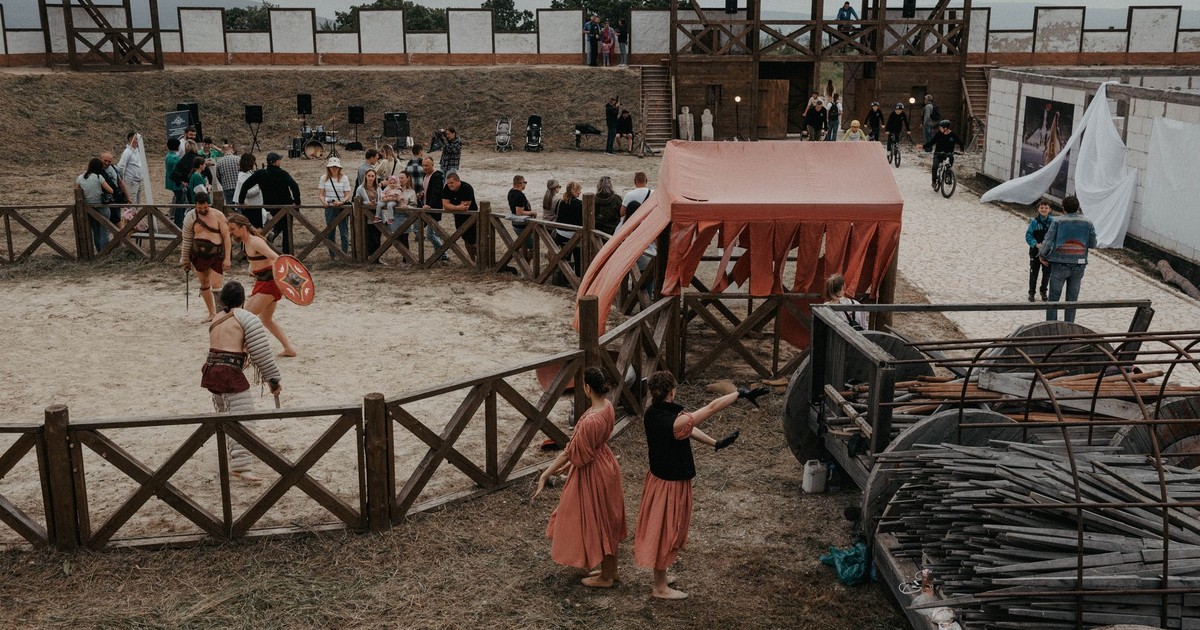
Every gladiator film has the moment: the crowd turns, thumbs go down, and the fallen fighter’s fate is sealed. It’s a compelling image – clean, democratic, final. Historians have largely concluded it’s wrong. The Latin phrase “pollice verso,” which translates roughly as “turned thumb,” appears in Roman sources, but the direction of the thumb – and what it signified – was never clearly established as down meaning death.
Art historian Anthony Corbeill and others have argued that the killing gesture was more likely a thumb turned upward or sideways, mimicking a sword thrust. The downward thumb, by contrast, may have signified hiding the thumb as if sheathing a sword – meaning mercy, not death. The confusion appears to trace largely to a single 1872 painting by French artist Jean-Léon Gérôme, titled “Pollice Verso,” which depicted downward thumbs so vividly that it became the visual reference for the gesture in popular culture.
Film adaptations of Roman history, from “Ben-Hur” to “Gladiator,” borrowed from Gérôme rather than from the historical record – which means millions of people learned Roman crowd etiquette from a 19th-century French painting that may have gotten it backwards.
13. Nero Fiddled While Rome Burned
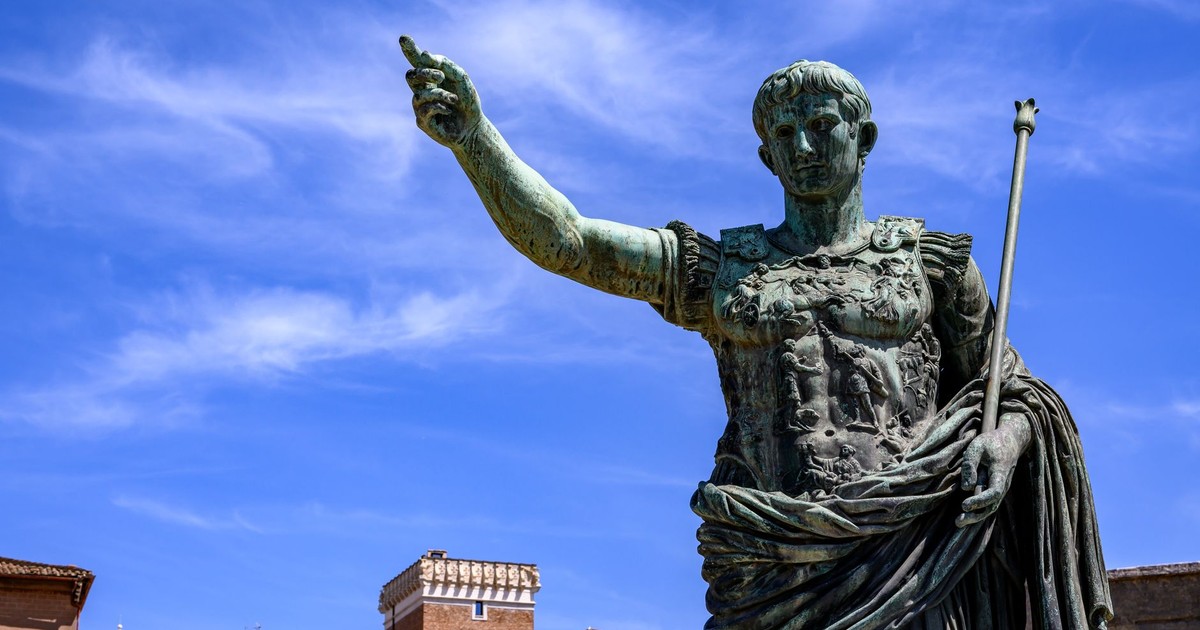
The Great Fire of Rome in 64 CE burned for six days and destroyed around two-thirds of the city. The story attached to it – that Emperor Nero played his fiddle on a rooftop, or sang from a stage, while watching Rome burn – has been a go-to image of callous, indulgent leadership ever since. Most historians doubt it significantly.
For one thing, the fiddle wasn’t invented until the 16th century. The instrument associated with the story is usually a lyre, which Nero did play – ancient sources say he fancied himself an artist. But even the lyre-playing version has problems: the ancient historian Tacitus, who was a primary source for the Great Fire, reported that Nero was actually in the city of Antium, about 35 miles from Rome, when the fire started, and rushed back when news reached him.
Tacitus also recorded that Nero opened his private gardens as shelter for displaced Romans and organized food relief from neighboring areas. He’s not the most reliable narrator and had his own biases, but even the hostile ancient record doesn’t quite support the image of a ruler serenading a burning capital. The fire was blamed on Nero for political reasons – and eventually on early Christians for reasons even more suspect.
14. Einstein Was a Poor Student Generally

Separate from the math myth, there’s a broader version of the Einstein underachiever story: that he was just generally a bad student who didn’t fit the system. This holds a grain of truth – he was famously contemptuous of rote learning and clashed with at least one teacher – but “poor student” is a significant stretch. Einstein did struggle with strict memorization and traditional teaching styles. He did not, however, struggle with his actual subjects.
He passed his university entrance exam to ETH Zurich on the first attempt in most subjects, failing only in French and botany – areas outside his core interest. He was admitted the following year after completing preparatory studies. His academic record at ETH was strong. The pattern isn’t “genius who couldn’t pass exams” – it’s “specialist who had little patience for the parts of school that didn’t interest him.” That’s a rather different story.
The underachiever version of Einstein persists because it democratizes genius. It makes the story accessible. But it quietly removes the uncomfortable part of the real narrative: that Einstein worked with extraordinary discipline and mathematical precision from childhood, and that genius at this level tends to involve enormous amounts of focused effort alongside whatever natural talent is at work.
15. The Pilgrims Were the First Europeans to Celebrate Thanksgiving

American Thanksgiving is framed as originating with the 1621 feast between the Pilgrims and the Wampanoag people at Plymouth Colony – and that event was real. What’s less accurate is the claim that it was the “first” Thanksgiving, either in the Americas or even among European settlers on the continent.
Spanish explorers held documented harvest celebrations in Florida in 1565, more than 50 years before Plymouth. In 1619, English settlers at Berkeley Plantation in Virginia celebrated a day of thanks that predates the Plymouth feast by two years. Indigenous peoples across the continent had their own elaborate harvest ceremonies long before European contact. The “first Thanksgiving” framing required erasing a lot of prior events to work.
The mythology around Plymouth also involved considerable later embellishment. The idea of Pilgrims in black-and-white buckled outfits eating turkey around a long table was largely a 19th-century construction, popularized in part by a campaign by writer and editor Sarah Josepha Hale to make Thanksgiving a national holiday. The actual 1621 event likely featured venison, fish, and shellfish rather than roast turkey.
16. Catherine the Great Died in a Romantic Encounter With a Horse

This is perhaps the most gleefully repeated historical lie about any monarch in history, and it was entirely false. Catherine the Great, Empress of Russia from 1762 until her death in 1796, died of a stroke – she collapsed in her bedroom at the Winter Palace and never regained consciousness. She was 67 years old.
The horse story was deliberate smear propaganda, likely originating with political enemies and foreign critics who wanted to discredit a powerful female ruler by weaponizing sexuality against her. Catherine did have a number of well-known lovers over the course of her reign – something male monarchs did routinely without commentary – and her enemies used that as the basis for ever-more-lurid fabrications.
What makes the myth worth examining is exactly this: it says nothing about Catherine and everything about how history treats powerful women. The story stuck and circulated for centuries because it performed a specific cultural function – reducing an enormously capable ruler, who modernized Russia, expanded its borders, reformed education, and corresponded with Voltaire, to a punchline. That’s not an accident.
17. Walt Disney’s Body Was Cryogenically Frozen

The image of Walt Disney’s body stored in a cryogenic facility, waiting for future medical technology to revive him, has been internet legend since before there was much internet. It is completely false. Walt Disney died of lung cancer on December 15, 1966, and was cremated two days later. His ashes are interred at Forest Lawn Memorial Park in Glendale, California.
The first known human cryonic preservation in the United States happened on January 12, 1967 – almost a month after Disney’s death. Even the pioneering organization that performed that first freezing, the Cryonics Society of California, had no record of Disney as a client. The myth appears to have been invented sometime in the 1970s, with no credible sourcing ever attached to it.
It persists partly because it suits what people imagine about Disney – the man who believed in second acts, in magic, in the idea that nothing has to end – and partly because it’s just strange enough to feel like something that might be true. It isn’t.
18. The Great Wall of China Was Built as a Single Continuous Structure

Even people who know the basic facts about the Great Wall tend to picture it as a single unified project – one emperor’s vision executed across a continuous stretch. The reality is considerably messier. The wall was built over roughly 2,000 years, by multiple dynasties, using different materials, different designs, and in some cases without connecting the sections at all.
The earliest walls date to around the 7th century BCE, constructed by individual Chinese states to defend against each other, not against northern invaders. Emperor Qin Shi Huang, who is usually credited with “building” the Great Wall after unifying China in 221 BCE, actually connected and extended existing walls rather than starting from scratch. The most photographed sections – the ones that appear on tourism posters and in films – were largely built during the Ming Dynasty, between the 14th and 17th centuries CE.
Calling it “the Great Wall” implies a single monument with a single origin. The real story is a 2,000-year accumulation of defensive construction projects by competing and successive dynasties, with large gaps, multiple layers, and significant stretches that have crumbled into ruin. That’s actually a richer history – it just doesn’t condense into a single sentence.
19. Medieval People Had Very Short Lifespans (Everyone Died at 35)
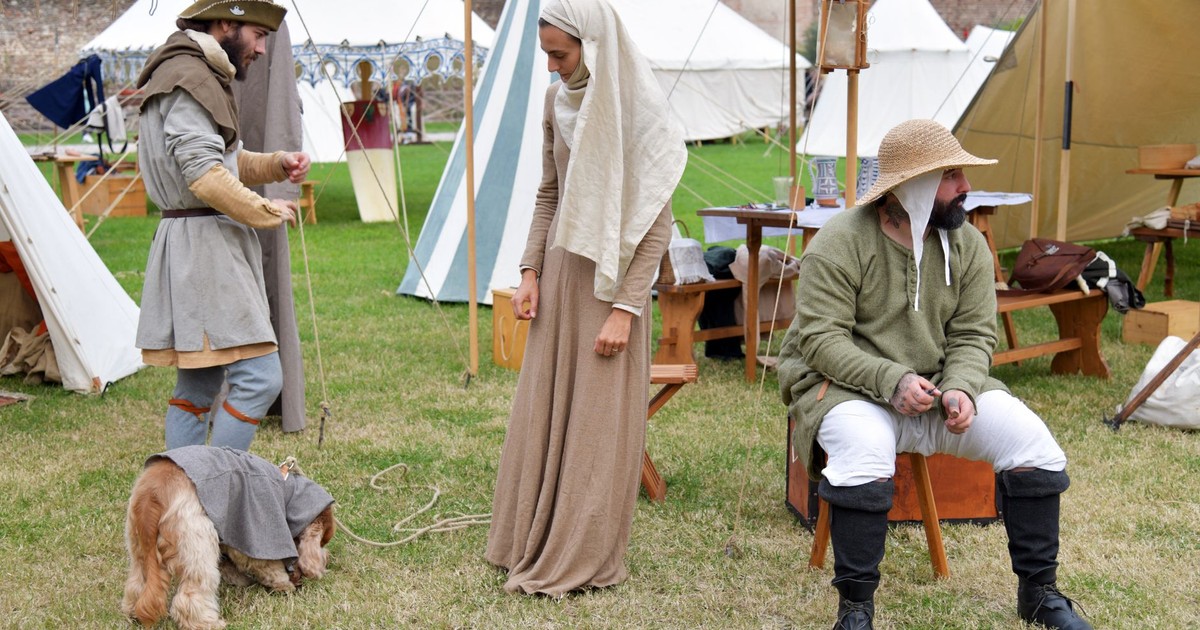
The “average life expectancy in the Middle Ages was 35” claim shows up constantly and is almost always misunderstood. The figure is accurate as a mathematical average. What it doesn’t mean is that people routinely dropped dead in their mid-thirties.
Medieval infant and child mortality rates were catastrophically high by modern standards – diseases that are now preventable killed enormous numbers of children before their fifth birthday. Those early deaths drag the average down significantly. A medieval person who survived childhood to, say, age 15 had a reasonable statistical chance of living into their 50s or 60s. Historical records are full of people living into their 70s and 80s, including multiple popes, scholars, and rulers.
The short-lifespan myth matters because it shapes how people understand historical behavior – “they married young because they died young” being one of the most common derivative myths. The truth involves far more nuance about what life stages meant in different cultural contexts, what “young” meant in terms of marriageable age across different social classes, and why infant mortality statistics don’t tell you much about adult experience.
20. The Pilgrims Came to America for Religious Freedom

This one isn’t entirely wrong – religious motivation was genuinely part of the picture – but the complete story is considerably less idealistic. The Separatists who sailed on the Mayflower in 1620 were indeed fleeing religious persecution. But they had already found religious freedom in the Netherlands, where they’d been living for over a decade.
The move to the Americas was driven by a mix of concerns: economic anxiety, fear that their English identity and culture would be diluted by life in a Dutch city, and the desire to establish a community on their own terms rather than as guests in someone else’s country. They had investors to satisfy – the Mayflower voyage was a commercial enterprise funded by a group of London merchant adventurers who expected a return on their investment.
“Religious freedom” as a founding national narrative is also complicated by what happened once the Pilgrims established themselves. The Massachusetts Bay Colony that followed was not notably tolerant of religious dissent. Roger Williams was expelled in 1636 for advocating separation of church and state. Anne Hutchinson was banished in 1637. The founders of religious freedom built a theocracy almost immediately upon arrival.
21. Cowboys Wore Wide-Brimmed Hats and Spurs Every Day

The Hollywood cowboy – ten-gallon hat, jingly spurs, dusty boots – is one of the most recognizable cultural images in the world. It’s also a fairly loose relationship with the historical record. Many real cowboys preferred bowler hats or other lower-crowned hats. What’s now thought of as the classic cowboy hat didn’t become widely popular until the end of the 19th century, and the term “ten-gallon hat” didn’t arrive until the 1920s.
The ubiquitous saloon-style swinging doors were also largely a myth. Nearly all watering holes in the West had normal doors to keep out chilly winds. The swinging door became a cinematic convention because it allowed cameras to film action coming into a building without a door blocking the shot – a practical filmmaking solution that became a defining visual shorthand for an era.
The real American frontier was considerably less cinematically composed than its reputation. Cowboys were primarily agricultural laborers doing difficult, low-paid seasonal work. Their lives involved more mud, repetitive labor, and financial insecurity than gunfights and sunsets. The mythology of the frontier was, in large part, a product of dime novels and touring Wild West shows that were already romanticizing the era while it was still happening.
22. The Spanish Inquisition’s Primary Weapon Was Surprise (and Torture as a Main Tool)

Monty Python made the line immortal, but the popular image of the Spanish Inquisition as a uniquely horrifying torture machine operating in secret darkness is more complicated than most people realize. The Inquisition was undeniably brutal – it used torture and executions – but by the standards of contemporary secular courts across Europe, it was in some respects more regulated than most.
The Inquisition operated under formal procedures: the accused had the right to know the charges, to present a defense, and to appeal decisions. Torture was technically limited – it could not result in the drawing of blood, could not be used more than once, and had to be stopped if the accused confessed or if it appeared life-threatening. These rules were frequently violated, but they existed, which was more than could be said for most secular courts of the period.
The total number of executions carried out by the Spanish Inquisition over its approximately 350-year history is estimated by historians at between 3,000 and 5,000 – a terrible number, but considerably lower than earlier estimates of tens of thousands that circulated in Protestant propaganda. The propaganda version, like most propaganda, served a specific political purpose and outlasted the political moment that created it.
23. Benjamin Franklin Discovered Electricity With a Kite

Benjamin Franklin did fly a kite in a thunderstorm in 1752. That part is real. What he didn’t do was discover electricity. Electricity had been studied by European natural philosophers for decades before Franklin’s experiment – the word “electricity” itself was coined by English scientist William Gilbert in 1600.
What Franklin’s kite experiment actually demonstrated was that lightning was electrical in nature, which was a significant finding. It led directly to his invention of the lightning rod, which had enormous practical consequences for reducing fire damage to buildings. But “discovered electricity” is a category error – it’s like saying Neil Armstrong discovered outer space.
The Franklin electricity myth is interesting because the real story is actually more impressive, not less. He didn’t stumble onto a natural phenomenon by accident – he designed an experiment to test a specific hypothesis about the electrical nature of lightning, which was a piece of genuine scientific reasoning. The “discovery” frame undersells the actual intellectual achievement.
24. Cleopatra Was Egyptian
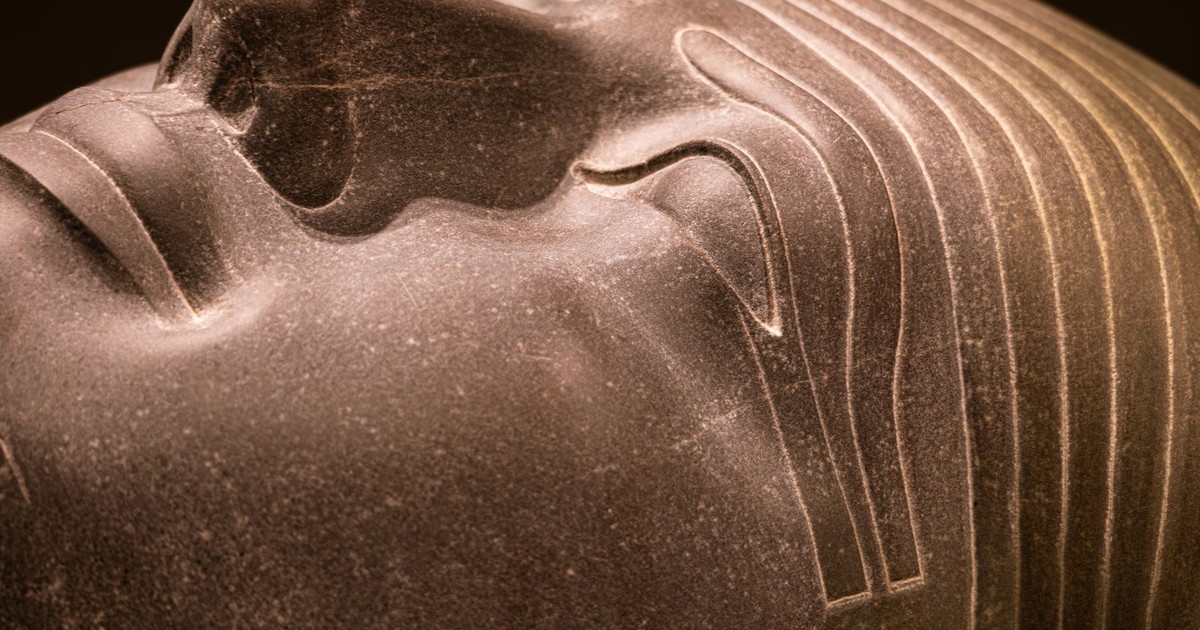
Cleopatra is one of the most iconic figures in ancient history, and she is almost universally depicted as Egyptian – dark-skinned, wearing the regalia of the pharaohs, quintessentially of the Nile. Her actual ethnic background was Macedonian Greek. She was the last ruler of the Ptolemaic dynasty, which had governed Egypt since 305 BCE following the death of Alexander the Great, and which was descended from one of Alexander’s Macedonian generals.
The Ptolemies famously refused to learn Egyptian for the first 250 years of their rule, conducting all official business in Greek. Cleopatra was reportedly the first member of her dynasty to actually learn the Egyptian language – a fact that was considered remarkable enough to note at the time. She also learned several other languages, including Ethiopian and Hebrew.
None of this diminishes Cleopatra. She was an extraordinary politician, strategist, and ruler who governed one of the ancient world’s most powerful kingdoms at a time of extraordinary upheaval. But the image of her as ethnically Egyptian is a later construction, shaped partly by Renaissance art, partly by Elizabeth Taylor, and partly by the human tendency to assume that the ruler of a place must look like that place.
25. Thomas Edison Invented the Light Bulb

Edison didn’t invent the light bulb. He invented a commercially viable, long-lasting version of it – which is a genuinely important distinction. Practical incandescent bulbs existed before Edison: Joseph Swan, a British inventor, demonstrated a working incandescent light bulb to an audience in Newcastle in 1879, months before Edison’s famous demonstration of the same year.
What Edison actually built was a system – the whole infrastructure of electrical generation and distribution that made electric lighting practical at scale. The bulb was the product at the end of a very long chain that included generators, wiring standards, metering systems, and the Pearl Street generating station in Lower Manhattan, which Edison opened in 1882 and which powered the first commercial electrical district in the United States.
Edison and Swan eventually acknowledged the parallel development and formed a joint company in Britain. The invention of the light bulb is less a single eureka moment than a competitive race between multiple inventors working on the same problem simultaneously – which is, in fact, how most technological progress actually works.
26. The Ponce de León Expedition Was Searching for the Fountain of Youth
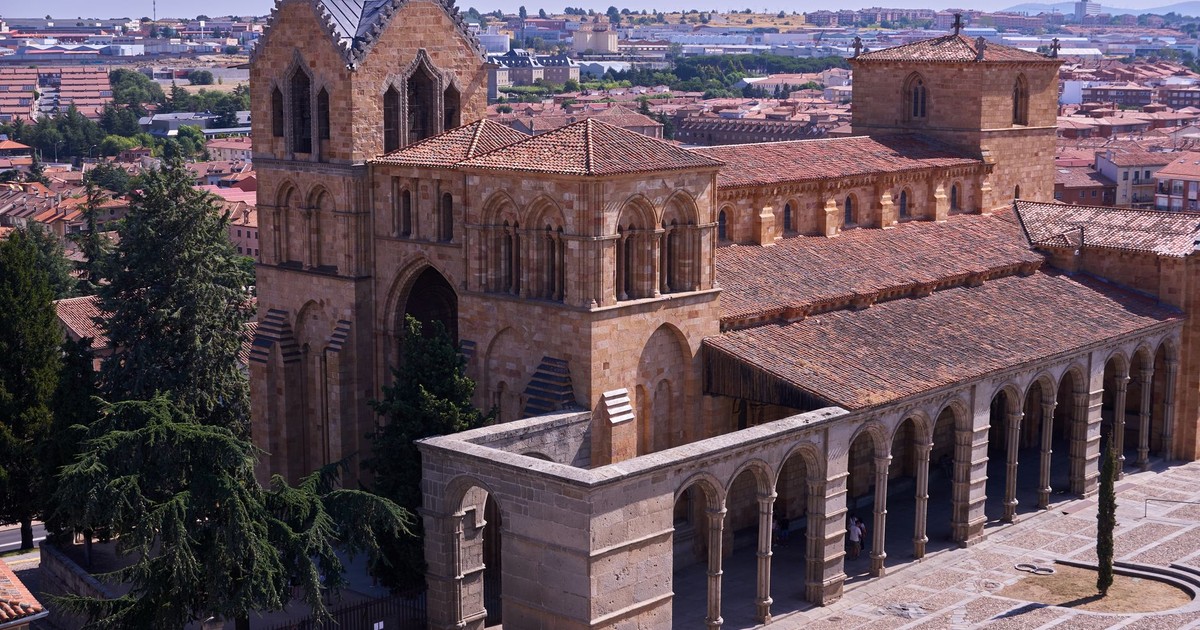
The Fountain of Youth story has Juan Ponce de León sailing to Florida in 1513 specifically in search of a legendary spring that could restore youth. It’s a neat narrative – the conquistador chasing immortality, finding nothing but land. There’s no evidence that Ponce de León ever set out looking for a Fountain of Youth.
The Fountain of Youth story appears to have been attached to his expedition retrospectively by a Spanish historian named Gonzalo Fernández de Oviedo y Valdés, writing in the 1530s – about two decades after the Florida voyage. Oviedo had personal and political reasons to mock Ponce de León, and the Fountain of Youth story was apparently part of that effort. It was a joke that got taken seriously by subsequent historians who didn’t check the sources carefully enough.
Ponce de León’s actual motivations for the Florida expedition were straightforwardly colonial: he was looking for new territory to claim, new populations to subjugate, and new sources of wealth. Those are less poetic reasons than the pursuit of immortality, which is precisely why the Fountain of Youth story replaced them in the popular imagination.
27. The “Dark Ages” Were Intellectually Barren

The term “Dark Ages” was coined by the Italian scholar Petrarch in the 14th century to describe what he saw as a period of cultural decline following the fall of the Roman Empire. Later historians adopted the term and extended it to describe the Early Medieval period (roughly 500 – 1000 CE) as an era of ignorance, stagnation, and decline. Most modern historians have largely abandoned it, and for good reason.
The Islamic world during this same period was producing some of the most significant advances in mathematics, astronomy, medicine, and philosophy in human history. The House of Wisdom in Baghdad – a major intellectual center – was translating and extending Greek knowledge at a time when Petrarch assumed all learning had gone dark. The concept of zero, algebra, advances in optics, the accurate mapping of stars – much of what the European Renaissance later “rediscovered” had been preserved and extended in the Islamic world during the supposed darkness.
Even within Europe, the picture is far more complex than the “Dark Ages” label implies. Monasteries preserved manuscripts, Irish monks helped re-Christianize and re-educate much of Northern Europe, and the Carolingian Renaissance of the 8th and 9th centuries brought a significant revival of learning under Charlemagne. “Dark Ages” says more about Petrarch’s attitude toward the centuries before him than it does about what people were actually doing during them.
Why the Myths Outlast the Facts
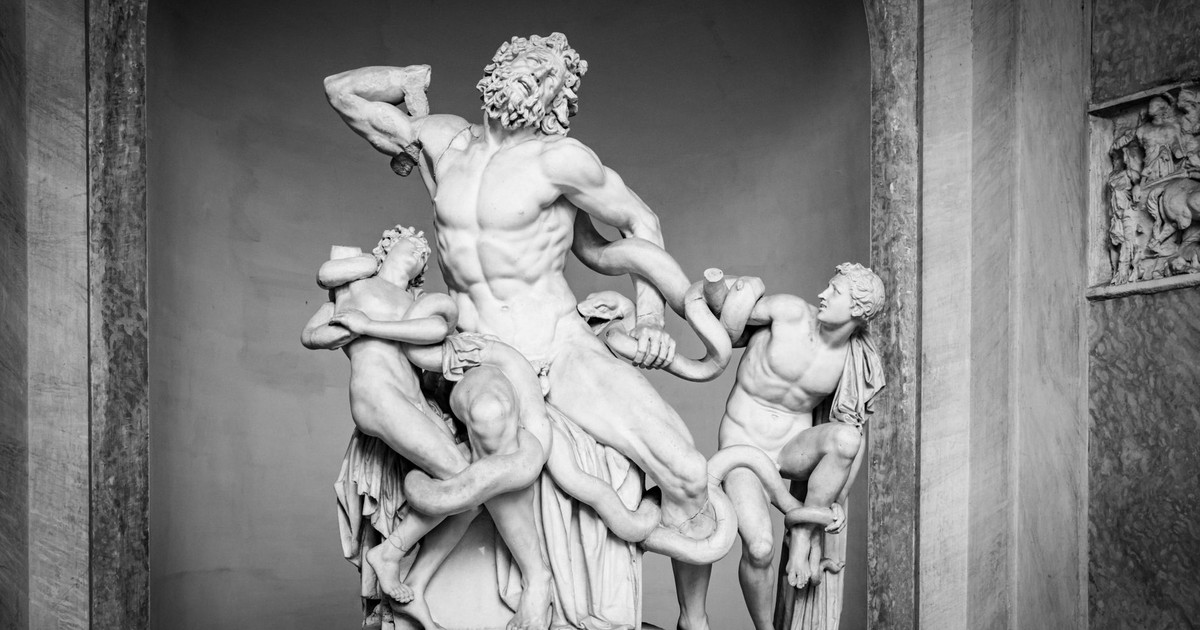
The consistent pattern across all 27 of these myths is that the false version was simpler, more satisfying, or more useful to someone than the true version. Napoleon’s height became shorthand for a psychological concept. Columbus’s flat-earth battle made him a hero of reason. Einstein’s academic failure made struggle feel redeemable. The myths didn’t survive by accident – they survived because they were doing work.
Real histories rarely resolve cleanly. Columbus actually miscalculated catastrophically and got lucky. Newton spent 20 years developing a theory that started with a walk in an orchard. The actual story of Viking warrior culture is richer than a helmet with horns. And any account of Napoleon that replaces “height” with “the political dynamics of post-revolutionary France” turns out to be a far better explanation of everything he actually did. In many cases, these myths originated from propaganda, misread documents, artistic interpretations, or translation errors. Over time, repetition replaced verification.
Catching a historical myth doesn’t make you cynical about the past – it tends to do the opposite. Every myth, once pulled apart, leaves a real story in its place. And the real stories, even when they’re messier and harder to fit on a textbook page, tend to hold up considerably longer.
Disclaimer: This information is not intended to be a substitute for professional medical advice, diagnosis, or treatment and is for information only. Always seek the advice of your physician or another qualified health provider with any questions about your medical condition and/or current medication. Do not disregard professional medical advice or delay seeking advice or treatment because of something you have read here.
AI Disclaimer: This article was created with the assistance of AI tools and reviewed by a human editor.