

The share of families classified as upper-middle class jumped from 10% in 1979 to 31% in 2024, according to a January 2026 AEI report. For the first time in U.S. history, more families now fall above the core middle class than below it. The middle class isn’t dying. A large slice of it got richer.
Income thresholds tell only part of the story. The upper-middle class is defined as households earning between $153,864 and $461,592 for a family of four, a band wide enough to include a two-income household of teachers in suburban Ohio and a senior tech manager in San Jose. What actually marks someone as upper-middle class is a constellation of financial behaviors, spending patterns, career trajectories, and daily habits that, taken individually, seem unremarkable. Taken together, they tell a different story.
The upper middle class indicators that matter most are rarely the ones people expect. They show up in how households save, invest, spend, and navigate systems rather than in what they earn.
The Income Picture: Numbers That Vary Widely by Zip Code

Working from Pew Research Center’s framework, upper-income households are those earning more than $169,800 annually for a three-person household, with the middle-income band running from $56,600 to $169,800. That’s a useful baseline, but a deeply imprecise one, because where you live reshapes everything.
Across the U.S., the income required to reach the upper-middle-class tier ranges from under $100,000 in some Southern states to over $160,000 in the Northeast. In high-cost states like Massachusetts, New Jersey, Maryland, and Hawaii, the threshold tops $166,000. A household earning $130,000 in Mississippi is firmly upper-middle class. The same household in Boston is not.
The upper-middle class has tripled in size, growing from roughly 10% of families in 1979 to over 31% today, based on households earning $153,864 to $461,592 in 2024 dollars for a family of four. Rising housing costs and inflation mean that even six-figure incomes may not deliver the same level of financial comfort they once did.
Household structure matters. Two professionals each earning $75,000 in a mid-sized city clear the upper-middle-class bar easily. A single earner at $130,000 in Manhattan may not feel it. An increase in dual-earner families, combined with professional gains for women, has fueled the income gains of the past several decades.
Education and Occupation: The Professional Foundation

Some economists define upper-middle class as college-educated households earning in the top 15% of the income distribution, though income thresholds for that tier vary considerably by source and methodology. Upper-middle-class households are disproportionately built on professional and managerial careers that require advanced degrees: law, medicine, engineering, finance, technology, and senior corporate management.
These occupations confer significant autonomy over how and when work gets done. Upper-middle-class professionals are conceptualizing, consulting, and making decisions, not clocking in. That autonomy has economic value, and it shapes spending habits, health outcomes, and how families allocate time. The person who can take a Tuesday afternoon off to attend a child’s recital without asking permission is signaling something real about their economic position.
More families now sit above the core middle class than below it, with the movement driven largely by the growth of professional opportunities. Graduate degrees, professional licensing, and dual-income professional partnerships are the engine behind that movement.
Net Worth and the Wealth-Building Indicators

Income is what you earn. Net worth is what you’ve accumulated. For the upper-middle class, the gap between those two numbers is where the real financial picture comes into focus.
The upper-middle class, sometimes called the “mass affluent,” is loosely defined as individuals with a net worth or investable assets between $500,000 and $2 million. Investable assets means money outside of your primary residence. Someone sitting on $400,000 in home equity but with $12,000 in a retirement account is not financially positioned the same way as someone with $180,000 in a 401(k) and a brokerage account they contribute to quarterly.
Among households aged 65 to 69, entering the upper-middle class in retirement means having a net worth around $550,000, while those aged 70 to 74 hit that mark closer to $700,000. These numbers result from consistent, long-term investment behavior: maximizing employer 401(k) matches, holding index funds through down markets, and treating retirement contributions as non-negotiable line items.
Nearly one in four U.S. households lives paycheck to paycheck, according to a 2025 Bank of America Institute report, which defines paycheck-to-paycheck as necessity spending exceeding 95% of household income. Among middle- and higher-income households, the increase in paycheck-to-paycheck living has been minimal compared to lower earners. An upper-middle-class household is one that has broken out of that consumption trap, where savings and investments represent a meaningful percentage of gross income every year.
Homeownership: Still a Marker, Now Harder to Reach
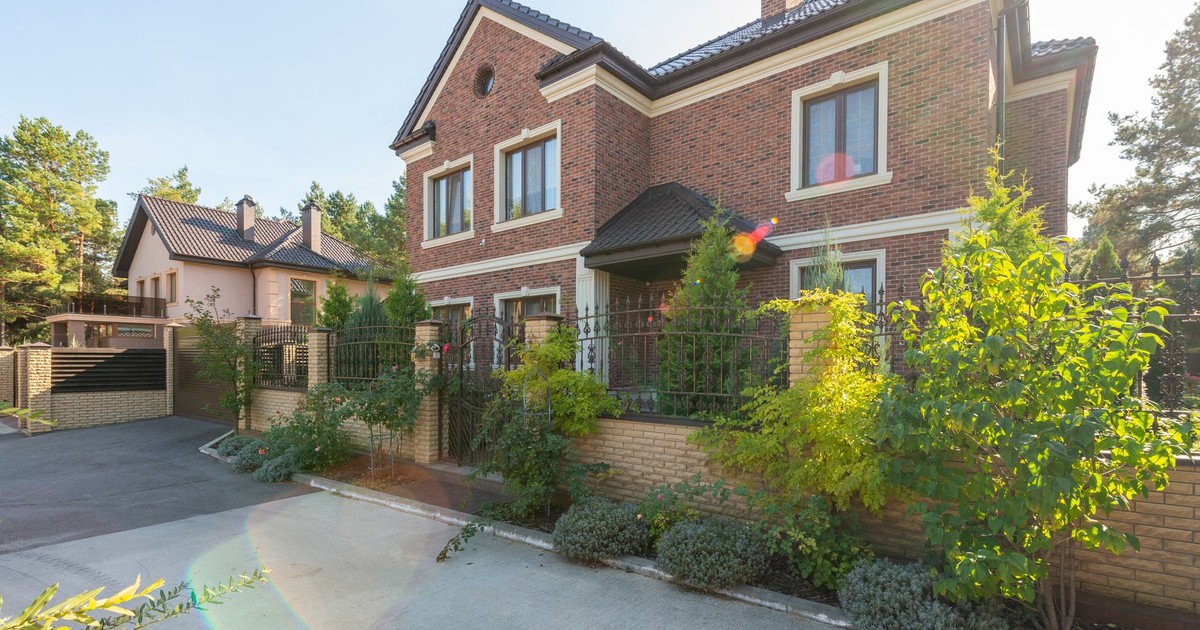
Owning a home has historically been the most visible upper middle class indicator in America. That signal still holds, but reaching it has gotten significantly harder. Home prices surged roughly 50% since 2020, and the annual salary required to purchase a median-priced home has risen 78% over the same period, assuming a traditional 20% down payment.
For upper-middle-class households, owning a home in a sought-after school district, not just any home, is the defining marker. Homeownership has become so aspirational in the last five years that it’s now viewed as an “upper-class achievement” by younger middle-income generations.
Cotality’s Q4 2025 Homeowner Equity Report found that the average mortgaged homeowner holds $295,000 in accumulated equity. That equity functions as both a financial buffer and an intergenerational wealth transfer vehicle: helping adult children with down payments, covering emergencies without touching investment accounts, and serving as a retirement backstop.
Spending Patterns: Where the Money Actually Goes

Upper-middle-class spending is a particular set of choices that are expensive enough to be inaccessible to median households, but understated enough that they don’t look like wealth from the outside.
Annual international or domestic travel is one of the clearest visible signals. Upper-middle-class households budget travel as a recurring, expected expense rather than a once-in-a-decade aspiration. The trip may be well-researched and booked months ahead, and it may be priced carefully, but it happens, it happens regularly, and canceling it due to a budget shortfall would feel like a financial setback.
Private extracurricular activities for children are another high-spend category: competitive sports leagues, music instruction, tutoring, test-prep courses, academic enrichment programs. These are considered baseline investments in a child’s future positioning. The monthly cost of one child’s structured extracurricular schedule often runs into the hundreds of dollars.
Healthcare spending is also a marker, though a counterintuitive one. Upper-middle-class households typically carry employer-sponsored insurance with manageable out-of-pocket limits, but they also spend above the average on elective healthcare: therapy, annual physicals, specialist consultations they don’t avoid, and dental and vision care they don’t defer. Health spending is treated as maintenance rather than crisis response. The upper-middle-class household’s financial advantage lies in the slack that lets it absorb a $3,000 car repair or a medical bill without restructuring its budget.
Financial Behavior: The Habits That Actually Define the Tier
The most reliable upper middle class indicators are not possessions or addresses. They are financial behaviors, most of which are invisible to anyone outside the household.
Maxing or near-maxing tax-advantaged retirement accounts is one of them. A household contributing the 2026 IRS maximum to a 401(k) ($23,500 per person under 50) is making a choice that requires both the income to sustain it and the financial discipline to prioritize it over consumption. Upper-middle-class households typically treat this as automatic, set up as a payroll deduction and left alone.
Holding multiple investment accounts (a 401(k) or 403(b), a Roth IRA, and often a taxable brokerage account) is another marker. These households are not just saving; they are investing across different tax treatments with at least a rudimentary awareness of why. They have relationships with financial advisors, or at minimum, they have read enough to make informed decisions without one.
An emergency fund covering six months or more of household expenses is standard. The upper-middle-class buffer is qualitatively different from the median American household’s savings: large enough that a job loss triggers stress but not immediate financial catastrophe.
The upper-middle-class household also tends to carry debt strategically rather than reactively. Mortgage debt is a choice, not a trap. Car loans, if they exist, are on late-model vehicles at reasonable interest rates. Credit card balances are typically paid in full monthly. Student loan debt may exist for graduate or professional degrees, but it’s managed against a salary that makes repayment tractable rather than overwhelming.
Social Capital and the Intangibles

Upper-middle-class status is partly a function of the company you keep, and this is more concrete than it sounds. Access to professional networks that open doors, knowledge of how institutions work (how to appeal a health insurance denial, how to negotiate a job offer, how college admissions actually function), and comfort using bureaucratic systems are all features of upper-middle-class life that don’t appear in income data but translate directly into better outcomes.
The upper-middle-class parent who knows to call the school’s gifted coordinator directly, the professional who knows that job listings are often a formality and the hire is usually already identified through a referral network, the household that knows to get a second opinion from a specialist rather than accepting the first diagnosis: these are not personality traits. They are habits acquired through education, professional exposure, and social environment. They are also self-reinforcing. The outcomes they produce tend to keep households within the upper-middle-class bracket across generations.
The social capital dimension, inherited knowledge about how systems work and how to use them, is harder to quantify than income but probably just as consequential in explaining why upper-middle-class status tends to reproduce itself.
What the Upper-Middle Class Can No Longer Afford

Some things the upper-middle class once reliably afforded are getting harder to sustain. Upper-middle-class families with incomes of $250,000 to $500,000 have reported being financially strained by the cost of owning a second property. Property insurance in flood and fire-prone zones, escalating property taxes, and maintenance costs on a second home have made what used to be a standard upper-middle-class aspiration into a financial liability for many.
Privately funded college education without substantial debt is another casualty. At private institutions, average tuition has roughly doubled in inflation-adjusted terms over the past two decades. The upper-middle-class household that expects to send two children to private universities without significant borrowing faces costs that can realistically run $600,000 to $800,000 in total, depending on institutional financial aid policies. Many households in the $150,000 to $250,000 income range earn too much to qualify for need-based aid and too little to absorb those costs without meaningful sacrifice elsewhere.
What to Make of Where You Land

The upper-middle class in 2026 is larger, more geographically dispersed, and harder to define by income alone than at any previous point in American economic history. The share of Americans in this tier nearly tripled, rising from just 10% in 1979 to 31% in 2024, a structural shift driven by the growth of professional and knowledge-based work, increased workforce participation by women, and rising dual-income household formation.
Membership in this tier has never been purely about salary. The most reliable upper middle class indicators are behavioral: consistent investment across tax-advantaged and taxable accounts, homeownership in supply-constrained markets entered before prices surged, a financial buffer large enough to absorb shocks without restructuring, professional autonomy that allows time to be allocated intentionally, and access to social networks that generate compounding returns on career and opportunity. A household earning $130,000 with strong savings habits and no consumer debt may be more securely positioned than one earning $300,000 that is leveraged against a second property, private school tuition, and a lifestyle calibrated to an income that leaves no margin.
Upper-middle-class status is a set of ongoing decisions. Some of the clearest markers (the emergency fund, the maxed retirement account, the absence of consumer debt) have less to do with income than with what a household decides to do with what it earns. The households that stay in this tier tend to be the ones that resist the pressure to spend at the level their income technically permits, and treat the gap between what they earn and what they spend as the asset itself. Earning more doesn’t guarantee that position. Spending less than you could, consistently, is what actually does it.
Disclaimer: This information is not intended to be a substitute for professional medical advice, diagnosis, or treatment and is for information only. Always seek the advice of your physician or another qualified health provider with any questions about your medical condition and/or current medication. Do not disregard professional medical advice or delay seeking advice or treatment because of something you have read here.
AI Disclaimer: This article was created with the assistance of AI tools and reviewed by a human editor.