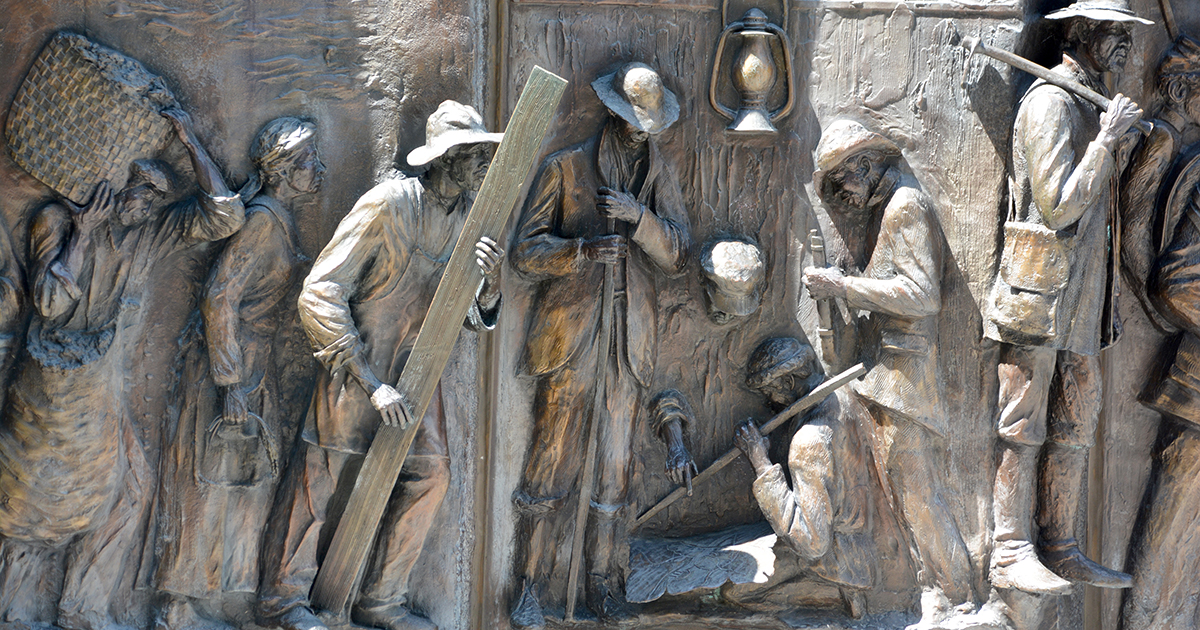

The standard history of the Civil War gives you battles, generals, and turning points. What it rarely gives you is the full weight of what it meant to fight for a country that had legally defined you as property. Initially, African Americans were barred from enlisting in the Union Army, but as manpower shortages became acute, attitudes shifted, and the Emancipation Proclamation of January 1, 1863, officially sanctioned the recruitment of Black soldiers into the Union forces. Once the door cracked open, men flooded through it.
By the end of the Civil War, roughly 179,000 Black men served as soldiers in the U.S. Army and another 19,000 served in the Navy. Thousands more served in support roles as nurses, spies, surgeons, and scouts. Nearly 40,000 Black soldiers died over the course of the war, 30,000 of infection or disease.
These were men, and women, who fought under a flag that had not promised them anything, and many of them knew it. They fought anyway, in segregated units, for lower pay than their white counterparts, under officers who sometimes doubted them, against an enemy that had pledged to re-enslave them if captured. Some were spies. Some were surgeons. Some were journalists. Some commandeered enemy warships at gunpoint in the dark.
The 12 African American Civil War heroes below represent the full range of what that service looked like. Their courage was real, their circumstances were brutal, and the country they helped save took another hundred years to begin acknowledging what they’d done.
1. Harriet Tubman

Before she led a military raid, Harriet Tubman had already built the most consequential intelligence network the Union Army didn’t know it needed. Best known for leading hundreds of enslaved people north to freedom through the Underground Railroad, Tubman turned those same skills toward the Union Army once the Civil War started in 1861. She had spent years memorizing routes, reading terrain, and trusting contacts she couldn’t always verify. The Union got all of that, for free, starting in 1862.
She traveled to a Union camp in South Carolina, working initially as a cook and nurse, but also gathering intelligence, organizing scouts to map waterways, and pinpointing the locations of Confederate troops and ordnance. Then, in the summer of 1863, she did something no woman had ever done in American military history. Tubman partnered with Colonel James Montgomery, an abolitionist who commanded the Second South Carolina Volunteers, a Black regiment, and together the two planned a raid along the Combahee River to rescue enslaved people, recruit freed men into the Union Army, and obliterate some of the wealthiest rice plantations in the region.
On June 2, 1863, Tubman led 150 Black Union soldiers in the Combahee River Raid and liberated more than 700 enslaved people. The Union Army never formally compensated her. She applied for a pension and was denied for decades. Congress finally awarded her $20 a month in 1899, roughly 36 years after the raid.
2. Frederick Douglass
Frederick Douglass did not carry a rifle in the Civil War, but the argument could be made that he did more to put rifles in hands than almost anyone else. He used his self-published newspaper, Douglass’ Monthly, as a powerful recruitment tool, both to enlist Black men and to convince skeptical white audiences of Black soldiers’ capability to fight. Douglass traveled, spoke, and lobbied the Lincoln administration directly, pushing for equal pay, equal treatment, and the right for Black prisoners of war to be treated under the same protections as white soldiers.
Douglass believed strongly that Black men must be allowed into the armed forces to end slavery, and a significant portion of his energies in 1863 went to the successful recruitment drives for the 54th and 55th Massachusetts Volunteer Infantry regiments, in which his own sons Lewis and Charles served. He didn’t just ask other people’s sons to go. He sent his own.
Recruitment into Black regiments was slow until leaders like Douglass encouraged Black men to become soldiers, framing military service as the path to eventual full citizenship. That argument landed. Within months, enlistment surged, and on May 22, 1863, the War Department issued General Orders 143, establishing a Bureau of Colored Troops in the Adjutant General’s Office to recruit and organize African American soldiers to fight for the Union Army.
3. Robert Smalls
In the early hours of May 13, 1862, an enslaved man named Robert Smalls dressed in a captain’s uniform, memorized the Confederate naval passwords, and sailed a Confederate steam transport ship called the CSS Planter straight out of Charleston Harbor. He collected his wife, children, and the families of his crew along the way. Then he surrendered the ship, its guns, its codebooks, and himself to the Union Navy blockade waiting offshore.
The intelligence value of the codebooks alone was considerable. The political value was enormous: here was an enslaved man demonstrating, in a single act, the kind of tactical intelligence and nerve that white Southerners had long insisted Black men did not possess. He later served as a pilot in the Union Navy and became captain of the very same ship.
Smalls used his postwar celebrity wisely. He was elected to the South Carolina state legislature, then to the U.S. House of Representatives, where he served five terms. He spent decades fighting for the voting rights of Black citizens in a state that had tried to make him its property.
4. William Harvey Carney
The Battle of Fort Wagner on July 18, 1863, was a disaster for the Union. The 54th Massachusetts Infantry was ordered to lead the assault on a heavily fortified Confederate position, charging across open beach in darkness, taking fire from multiple directions. The regiment lost nearly half its men in the attack. They didn’t take the fort.
What Sergeant William Harvey Carney did during that assault became one of the most enduring images of Black military service in the Civil War. Fort Wagner was situated on Morris Island in Charleston Harbor, South Carolina, and had already been unsuccessfully assaulted by the Union Army a week earlier. When the regiment’s flag bearer was shot down, Carney grabbed the Union flag and carried it forward, continuing to advance while wounded. He refused to let the flag touch the ground. He was shot again. He kept going.
Carney was awarded the Medal of Honor on May 23, 1900. The timing deserves attention. Carney performed his act of extraordinary courage in 1863. He received formal recognition nearly 37 years later. He had been working as a letter carrier in Massachusetts in the decades between.
5. Christian Fleetwood
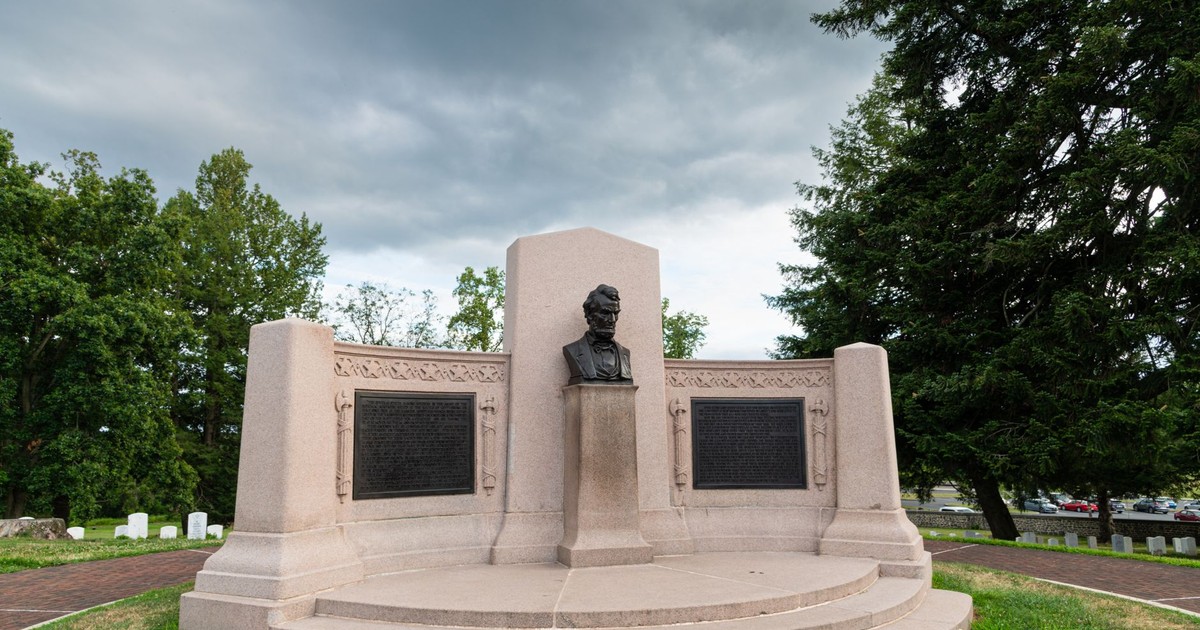
Christian Fleetwood was born free in Baltimore in 1840, which made him unusual among the men in this list. A free African American from Baltimore, Fleetwood helped found one of the first Black-owned newspapers in the South before enlisting in the 4th USCT in 1863. He could have sat the war out. He chose not to.
Fleetwood enlisted in the 4th United States Colored Troops and saw some of the most brutal fighting of the final years of the war. Fourteen African American soldiers were awarded the Medal of Honor for their actions during the Battle of New Market Heights, the largest group of African Americans from a single battle to be so recognized. Fleetwood recorded in his diary that he “Charged with the 6th at daylight and got used up..saved colors.” He was one of those fourteen, a single-day record that stands alone in the history of the conflict.
After the war, Fleetwood built a distinguished civilian life in Washington, D.C., becoming a community leader, organizer of the Washington Cadet Corps, and writer. In 1895, he wrote “The Negro As a Soldier” for the Atlanta Exposition. His argument was simple and backed by the record: Black men had fought, bled, and distinguished themselves in every major theater of the war, and the country had a responsibility to remember it.
6. André Cailloux
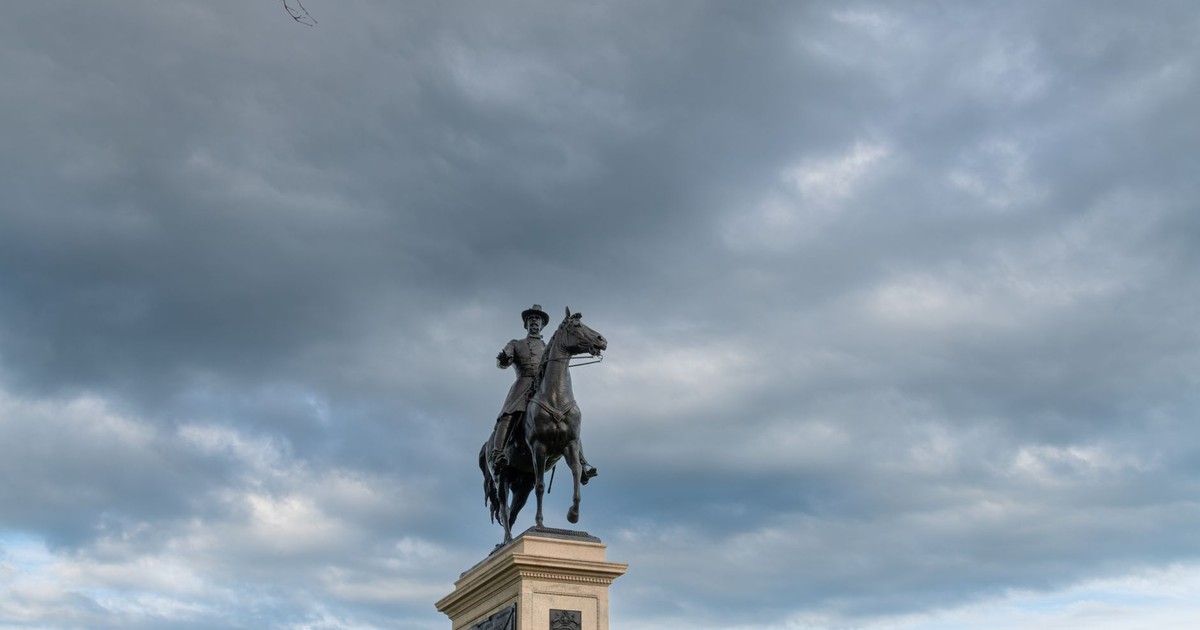
André Cailloux occupied an unusual position in the Civil War’s social geography. Born a slave in 1825, he was freed in 1846 and quickly became a leader within the free Afro-French community of New Orleans. He was fluent in English and French, was recognized as a skilled boxer, and moved in circles that included both free Black businessmen and white Creole elites. When the war came, he joined up.
In September 1862, Cailloux joined the Union’s 1st Louisiana Native Guard and was made captain of Company E, which was considered one of the best-drilled in the regiment. On May 27, 1863, General Banks ordered an assault on the Confederate stronghold at Port Hudson, Louisiana. The plan was poorly conceived and the Confederate position was formidable. Cailloux’s company was sent in first.
Despite suffering heavy losses, Cailloux inspired his men to press on, even leading further charges after his arm was blown off by cannon fire. He was killed in the assault, one of the first African American officers to die in combat in the Civil War. His funeral in New Orleans drew thousands of mourners.
7. Susie King Taylor

Susie King Taylor was fourteen years old when she escaped enslavement in Georgia and reached a Union camp in South Carolina. Within weeks, she was teaching soldiers in the 1st South Carolina Volunteers to read. Officially employed as a laundress for Company E, she served as both teacher and nurse to the troops throughout the conflict. She had learned to read and write during her years in slavery and taught these skills to many soldiers in the company.
Her nursing work was constant, and often grim. She tended to men wounded at Fort Wagner and in the skirmishes along the South Carolina coast for the duration of the war. She served without pay for most of the war, the same unpaid, uncounted service that characterized how the Union treated Black women who supported the effort.
Years later, Taylor did something that made her permanently irreplaceable as a historical source. In 1902, she became the first and only African American woman to write a memoir about her experiences in the Civil War, titled Reminiscences of My Life in Camp with the 33d United States Colored Troops, Late 1st S.C. Volunteers. The book is a clear-eyed account of war, nursing, racism, and survival. Because she wrote it, we have a first-person record of what the war looked like from inside the regiment.
8. Martin Delany
Martin Delany arrived at the Civil War already having done more in one lifetime than most people manage in three. He had studied medicine at Harvard, been ejected mid-program when white students petitioned for his removal, become a newspaper editor, written one of the first African American novels, and traveled to West Africa to explore the possibility of Black emigration as an alternative to fighting for dignity in the United States. Then the war changed his calculus.
Delany served as the first African American field officer in the Union Army, holding the rank of major in the 104th Regiment of Colored Troops. He was an abolitionist, journalist, physician, soldier, and writer, and is widely regarded as one of the first proponents of Black nationalism. His commission in 1865 came after a personal meeting with President Lincoln, making him one of the highest-ranking Black officers of the entire conflict.
His post-war legacy is complicated, which is often true of people who think seriously about what freedom actually requires. He worked as a Freedmen’s Bureau officer in South Carolina, ran for lieutenant governor of the state, and continued to argue that Black Americans needed not just legal freedom but economic independence.
9. Abraham Galloway
Abraham Galloway escaped from slavery in 1857 by hiding in the cargo hold of a ship heading north. Three years later, he was back in the South as a spy for the Union. Fearless and tireless in his quest to better the lives of African Americans, Galloway posed as a slave to gather intelligence from Confederate troops, set up a spy network across parts of the South, and encouraged thousands of enslaved men who had sought protection behind Union lines to take up arms.
His intelligence work was genuinely dangerous in a way that battlefield service, at least, was not. Galloway moved through Confederate-held territory with no uniform, no protection under the laws of war, and a death sentence waiting if he was recognized. He helped raise three regiments of United States Colored Troops, a contribution that is easy to understate. Those three regiments represented thousands of men armed and organized for the Union cause, recruited directly from the enslaved population the Confederacy depended on.
After the war, Galloway went into politics. He was elected to the North Carolina state senate in 1868, where he fought for Black voting rights and public education. He died in 1870 at roughly 33 years old, having compressed an extraordinary amount of consequence into a very short life.
10. Corporal James Henry Gooding
James Henry Gooding fought at Fort Wagner with the 54th Massachusetts Infantry and survived it. He was also the regiment’s war correspondent, sending dispatches to the New Bedford Mercury that gave northern readers a ground-level account of what Black soldiers were actually experiencing. His writing was clear, specific, and unsparing.
Black soldiers protested when Congress initially awarded them lower pay than white soldiers, inferior benefits, and poorer food and equipment. Corporal Gooding wrote directly to Lincoln reminding him that “we have done a Soldier’s duty” and demanding to know why they could not receive equal treatment. It was a precise, dignified letter that made its argument without flinching. Gooding had enlisted on February 14, 1863, meaning he fought through some of the regiment’s hardest campaigns before his letter ever reached the president.
On February 20, 1864, Gooding fought at the Battle of Olustee in Florida. His comrades believed he had been killed, and his commander notified his wife accordingly. But he was not dead. He had been captured and sent to Andersonville, the Confederate prison camp with a mortality rate that shocked even contemporaries. He died there in July 1864. His letter to Lincoln had arrived, read, and filed. Pay equity for Black soldiers was finally enacted in June 1864, one month before Gooding died.
11. Robert Brown Elliott
Robert Brown Elliott didn’t fight in the Civil War with a rifle, but he spent the years immediately after it fighting the war’s central argument with everything else at his disposal. Born in Boston in 1842, Elliott served in the Union Navy during the war, then moved to South Carolina during Reconstruction, where he became one of the most formidable political minds of the era.
He was elected to the U.S. House of Representatives in 1870 and 1872, and his January 1874 speech on the House floor in support of the Civil Rights Act became one of the most celebrated pieces of American oratory of the nineteenth century. The speech was a point-by-point dismantling of the constitutional arguments against federal civil rights legislation, delivered from memory, without notes, in response to a speech by Alexander Stephens, the former vice president of the Confederacy. Elliott left Stephens with nothing to say.
His war was the political one that followed the shooting war, and he fought it with the same absolute conviction. The ground he helped gain during Reconstruction was subsequently dismantled during the decades that followed, but the record of what he argued for, and how brilliantly he argued it, remains fully intact.
12. Aaron Anderson
Aaron Anderson joined the U.S. Navy in 1863 at the age of 53, which made him one of the oldest men to enlist in either the Union Army or Navy during the Civil War. His age made what he did in March 1865 all the more striking.
Anderson was an oarsman on a small boat equipped with a howitzer, sent to attack Confederate forces in Mattox Creek, Virginia. After finding three abandoned enemy ships, the crew was preparing to destroy them when they came under fire from approximately 400 Confederate soldiers on the shore. The barrage was so intense that it destroyed most of the oars and the only musket on board, and heavily damaged the boat. Anderson and the few remaining men with working oars maneuvered to safety under intense fire, ensuring that only one man was injured.
He was awarded the Medal of Honor for his actions. The citation recognized his coolness, determination, and his role in keeping the boat operational and the crew alive against overwhelming odds. Anderson represents something important about who actually showed up to fight this war: not just young men looking for glory, but people of every age who decided, when the moment came, that they would not let their side down.
What These Stories Actually Tell Us
The twelve people in this list were not exceptional in the way that word usually gets used, meaning rare or freakish in their courage. They were exceptional in the sense that the historical record happened to preserve what they did. For every Harriet Tubman who led a gunboat raid up a Confederate river, there were hundreds of unnamed scouts who fed her the intelligence. For every William Carney whose flag-carrying was witnessed and recorded, there were men who died in the same assault and left no record at all.
Robert Smalls went from enslaved man to congressman. Susie King Taylor went from unpaid war nurse to the only Black woman to publish a Civil War memoir. Abraham Galloway went from escaped slave to state senator, and died at 33. Some of these patterns go back further than the war itself. The fight that followed, for citizenship, for pay equity, for the vote, for the right to be treated as the soldiers they actually were, didn’t end in 1865.
AI Disclaimer: This article was created with the assistance of AI tools and reviewed by a human editor.