
History has never been kind to wives who stepped out of line. The woman who married the wrong man, or the right man at the wrong moment, or who simply refused to disappear when it suited everyone else tends to end up in two places: the history books, and the wrong side of them. Some of the most notorious women who ever lived weren’t queens or generals or revolutionaries. They were wives first, and then, when things went spectacularly sideways, they became something else entirely.
The stories below span roughly two thousand years and three continents. They involve beheadings, poisonings, murders, abdications, and at least one contest with a Roman prostitute. Not all of these women were villains. Some were pawns, some were survivors, and a few were genuinely monstrous. What they share is a talent for generating scandal on a scale that centuries haven’t been able to bury.
A few caveats before we begin. History is written by the people who survived it, which often means it was written by men who had reasons to paint these women in the worst possible light. In more than one case here, the “scandal” was a political invention, the charges were fabricated, and the only real crime was being married to a man who wanted out. That context matters. But it doesn’t make the stories any less extraordinary.
1. Anne Boleyn
On May 19, 1536, Anne Boleyn, the second wife of King Henry VIII, was executed on charges including adultery, incest, and conspiracy against the king. She had been queen for less than three years. The charges were almost certainly invented.
Anne’s marriage to Henry had already set England on fire: it led to profound political and religious changes, including the establishment of the Church of England. Henry needed a divorce that Rome wouldn’t grant, so he created his own church to get one. The entire English Reformation, at least in its institutional form, traces back to this one marriage. After a brief but turbulent reign as queen and the birth of Elizabeth I, Anne’s fortunes collapsed due to her inability to produce a surviving male heir. As Henry’s interest shifted to Jane Seymour, courtiers conspired to accuse Anne of adultery and treason, leading to her trial and execution.
Most contemporary scholars agree that the charges of adultery, incest, and conspiring to kill her husband were contrived. Less than 24 hours after the execution, Henry was formally betrothed to Jane Seymour; they married some ten days later. Anne’s name was literally chiselled out of history. Her badges and heraldry were replaced throughout Hampton Court by those of her successor. She went from queen to cautionary tale in a matter of weeks.
2. Catherine Howard
Anne Boleyn’s first cousin managed to follow the same path to the same scaffold just six years later. Probably just a teenager when Henry chose her to be his queen, he was more than 30 years her senior. The king called Catherine his “rose without a thorn,” though it soon became clear that she had a scandalous past, and present.
After being sent to live with her wealthy step-grandmother, Catherine had become involved in romantic affairs, notably with musician Henry Manox and later with Francis Dereham. These weren’t crimes. But they became weapons. When the affairs came to light after her marriage to Henry, Parliament passed a bill of attainder making it treason, and punishable by death, for a queen consort to fail to disclose her intimate history to the king within twenty days of their marriage. They essentially made a law specifically to kill her.
Catherine, who had been fourteen at the time of her relationship with Dereham, denied any pre-existing contract between them and claimed throughout her trial that he had raped her. Modern historians have largely come to see her not as an adulteress but as a child who was exploited by adults from the beginning of her life to the end of it. She was beheaded on February 13, 1542, in the Tower of London. She was probably not yet twenty years old.
3. Mary, Queen of Scots
Mary Stuart managed to scandalise two countries, lose three husbands, start a civil war, and get herself executed by her own cousin, all before the age of 45. Her reign collapsed under the weight of murder and suspicion. In the early hours of February 10, 1567, an explosion destroyed the building at Kirk o’ Field in Edinburgh where Lord Darnley was recuperating from illness. Darnley was found dead in the garden. Mary herself was implicated in the plot, but the prime suspect was James Hepburn, Earl of Bothwell. Just weeks later, she married him.
The marriage to Bothwell was the final straw for Scottish Protestant nobles who had already been watching Mary’s Catholic sympathies with deep unease. She was forced to abdicate in favour of her infant son James, then fled to England seeking protection from her cousin, Queen Elizabeth I. Elizabeth’s response was to lock her up for nineteen years and then order her executed. The charge was conspiracy to assassinate Elizabeth, a plan Mary may or may not have actively supported.
While there is no definitive answer to who murdered Lord Darnley, most historians agree that Bothwell, with or without Mary’s complicity, concocted the plot. Mary, Queen of Scots, reportedly became the first woman to play golf publicly in Scotland shortly after her husband’s assassination, a detail that either proves she was cold-blooded or that she needed a very long walk after an extremely bad week. History has never quite settled which.
4. Lucrezia Borgia
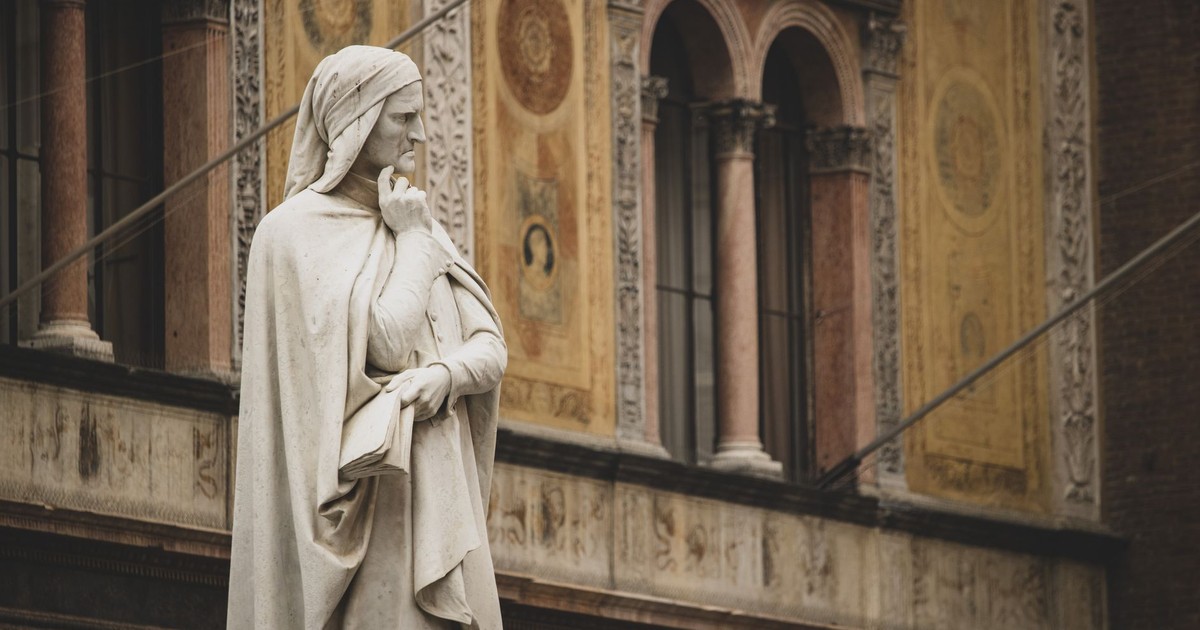
The name Borgia has been shorthand for poison and depravity for five hundred years, and no member of that family carried more of the reputation than Lucrezia. Born into the infamous Borgia family and daughter of Pope Alexander VI, she was married three times for purely political reasons before she turned 22. Each marriage served her family’s ambitions more than her own happiness.
Rumors swirled during her lifetime that she carried poison in a hollow ring and used it to dispose of enemies. She was also accused of inappropriate relationships and involvement in her family’s political schemes. People whispered about an incestuous connection with her brother Cesare. The Florentian historian Francesco Guicciardini produced a report accusing Lucrezia of incest, though his account was motivated by his hatred for Pope Alexander VI and the Borgias. His views proved influential, persisting for centuries and inspiring later writers’ judgements of her. None of it was ever proven.
The myth took its modern form in the 19th century: Victor Hugo wrote a play called “Lucrèce Borgia” in 1833, Gaetano Donizetti turned it into an opera in the same year, and both presented her as the archetypal poisoning seductress. The Victorians needed a Renaissance villainess, and Lucrezia fit the role they’d written. She was above all a victim of dynastic power politics, a young woman repeatedly married against her will, who gained a measure of self-determination only in Ferrara. She was mourned intensely by the people of Ferrara when she died. The earlier rumors evaporated after the death of her scheming father in 1503; it was the 19th century that rebuilt her infamy from scratch.
5. Valeria Messalina
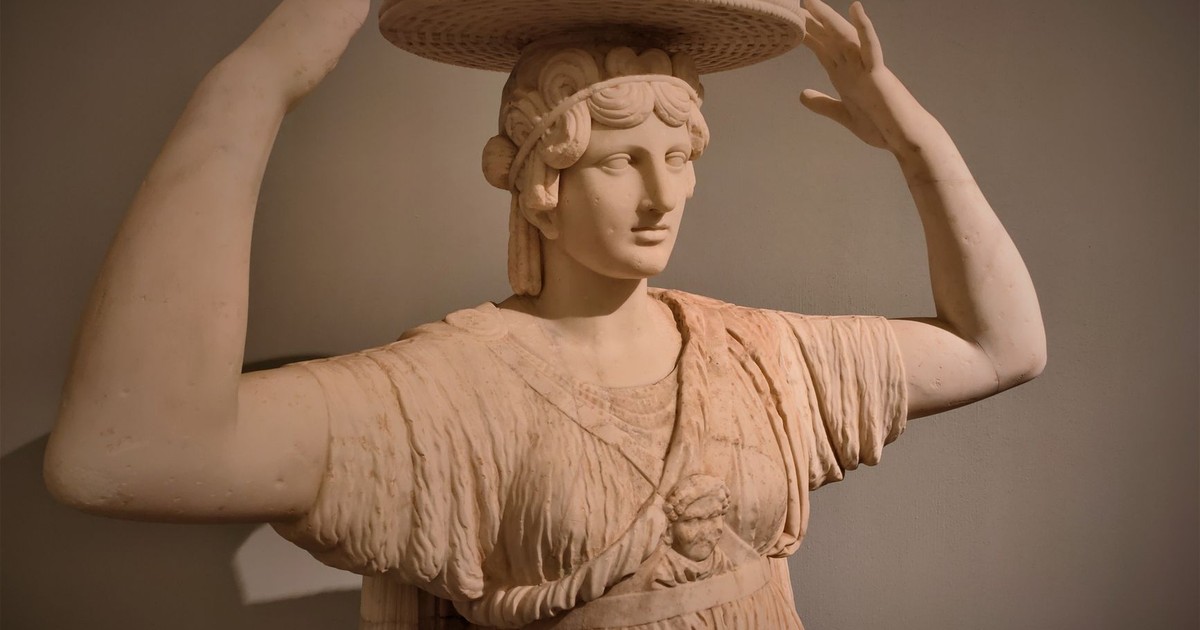
Most of the women on this list have had their scandals exaggerated, their crimes invented, or their motives flattened by hostile chroniclers. Valeria Messalina is a partial exception. Few women in ancient Rome stirred as much scandal as the wife of Emperor Claudius. Historical accounts portray her as a controversial figure, often depicting her as scandalous and manipulative, with claims of numerous affairs. The narratives from ancient historians such as Tacitus present her in a harsh light, often reflecting the biases of their time, especially against women who defied societal norms. She reportedly used her position to eliminate political rivals and accumulate personal power in ways that alarmed even Rome’s elite.
The most spectacular episode in her story wasn’t an affair, it was a marriage. In 48 CE, while Claudius was away at Ostia inspecting his new harbor, Messalina married her lover, Senator Gaius Silius, in Rome. When Claudius found out, she was executed. The exact motivations for Messalina’s actions are unknown. It has been interpreted by some as a move to overthrow Claudius and install Silius as Emperor, with Silius adopting her son Britannicus to secure his future accession. Whether the marriage was a genuine coup attempt, a reckless romantic obsession, or something in between, no one has satisfactorily explained in two thousand years.
The ancient sources are not neutral. Messalina is infamously known for her clandestine affairs, but most notable for her alleged all-night competition with a prostitute, a story almost certainly invented or wildly embellished by writers who had their own reasons to discredit her. Suetonius may have falsely characterized Messalina as dominating and adulterous in order to present Claudius as cowardly and subservient to his wife, and he most likely exaggerated her character and actions to highlight Claudius’s negative attributes. She was the wife of a living emperor, which made her both powerful and politically dangerous. The history written about dangerous women by the men they threatened should always be read with some skepticism.
6. Catherine de Medici

She arrived in France as a fourteen-year-old bride with no political standing and spent decades being ignored, dismissed, and underestimated. By the time Catherine de Medici was done, she had outlived her husband, outlived three of her sons who became kings, and remained at the center of French power for thirty years. The price of that survival was extraordinary.
Catherine is primarily associated with the St. Bartholomew’s Day Massacre of 1572, in which thousands of French Huguenot Protestants were slaughtered over several days following a royal wedding. Traditionally believed to have been instigated by Catherine, the mother of King Charles IX, the massacre started a few days after the marriage of the king’s sister Margaret to the Protestant King Henry III of Navarre. Modern estimates place deaths across France between 5,000 and 30,000 people. Modern historians are still divided over the responsibility of the royal family, with the traditional interpretation making Catherine and her Catholic advisers the principal culprits. That traditional interpretation has been largely abandoned by some modern historians, including Janine Garrisson.
She was also accused, as most powerful women of her era were, of poisoning her enemies. Her nickname in Protestant Europe was “the Florentine serpent” and “Madame la Serpente.” The Italian-born queen who wore black for the rest of her life after her husband’s death in a jousting accident, who raised three kings and married off her daughter to secure a peace that ended in massacre, remains one of the most contested figures in French history.
7. Isabella of France

Isabella of France earned a nickname that has stuck for seven centuries: “the She-Wolf of France.” It was not meant affectionately. Married at twelve to the English King Edward II, Isabella spent years watching her husband openly favour his male favourites, first Piers Gaveston, then Hugh Despenser, while she was systematically stripped of her lands, income, and access to her own children.
Her response was methodical. While on a diplomatic mission to France in 1325, she began an affair with the exiled English nobleman Roger Mortimer and never went back. The following year, she and Mortimer invaded England with a small force, Edward’s support collapsed almost immediately, and he was captured, forced to abdicate in favour of his son, and imprisoned. He died in Berkeley Castle in 1327 in circumstances that remain murky, officially of illness, though a later tradition claimed he was murdered on Isabella and Mortimer’s orders.
Isabella then ruled England as regent for her young son Edward III, with Mortimer as her partner in power. The arrangement lasted until 1330, when the now eighteen-year-old Edward III had Mortimer arrested and executed. Isabella retired to a life of relative comfort and lived until 1358. She had taken the worst marriage in medieval European history and, against all odds, survived it on her own terms.
8. Joséphine de Beauharnais

Napoleon Bonaparte wrote love letters that have been reproduced in every language on earth. The woman who received them spent most of their marriage conducting an affair with a young hussar officer named Hippolyte Charles. Political marriages pulled her across France and Europe, but the situation at home was considerably less grand than the correspondence suggested.
Joséphine had been widowed by the guillotine during the Terror. Her first husband, Alexandre de Beauharnais, found political success as President of the National Constituent Assembly but could not escape the Reign of Terror, and was guillotined in 1794. Joséphine, who had also been imprisoned, barely missed the same fate due to the timely fall of Robespierre. By the time she met Napoleon, she was a survivor by instinct and calculation. She married him in 1796 and almost immediately took up with Charles. A letter Charles wrote about the affair was intercepted by the British and published widely in order to embarrass Napoleon. His own affairs followed, partly in retaliation.
The marriage survived the infidelity but not the politics. On November 30, 1809, Napoleon told Joséphine over dinner that he had made the difficult decision to annul their marriage. He needed an heir she had not produced, and he divorced her to marry the Austrian princess Marie-Louise, who gave him a son within a year. Joséphine retained her title as Empress and her rank at court and received an annual pension of 5 million francs. Napoleon would learn of her death by pneumonia in May 1814 while he was in his first exile in Elba. He reportedly wept when he heard the news.
9. Wallis Simpson
The abdication of Edward VIII in December 1936 is one of the most dramatic moments in modern British royal history, and at the center of it was a twice-divorced American woman from Baltimore. Wallis Simpson had already been married twice, first to a Navy pilot, then to a shipping executive, when she began her relationship with the Prince of Wales sometime around 1934. By 1936, when he became king, she was still legally married to her second husband.
The British establishment’s opposition to the relationship was absolute. The Church of England, of which the king was the supreme governor, did not permit remarriage after divorce. The prime minister, Stanley Baldwin, made clear that the government would not support a marriage to Wallis. Edward’s response was to broadcast a radio address to the nation in December 1936, announce that he could not carry out his duties “without the help and support of the woman I love,” and hand the throne to his brother.
Edward and Wallis married in France in 1937 and spent the remainder of their lives mostly in France and the Bahamas. The marriage lasted until his death in 1972. The scandal that attached itself to Wallis went beyond the divorce issue: she was accused by some in royal circles of having a prior relationship with the German foreign minister Joachim von Ribbentrop, and both she and Edward attracted suspicion for their apparent sympathies with Nazi Germany, including a visit to Hitler in 1937. None of it has ever been conclusively proven, but it has never entirely gone away either.
10. Mary Ann Cotton
Most entries on this list involve political scheming, romantic scandal, or the misfortune of being married to a powerful and dangerous man. Mary Ann Cotton is different. She was a serial killer, and her victims were primarily her own family members.
Cotton was a Victorian-era English woman who went through four husbands, several children, a stepchild, and a mother-in-law over the course of roughly twenty years in the mid-nineteenth century. Most of them died of “gastric fever.” The real cause, established after her arrest in 1873, was arsenic poisoning. The exact number of her victims is disputed, but estimates range from fifteen to twenty-one people, nearly all of them insured for small sums.
She was convicted of the murder of her seven-year-old stepson Charles Edward Cotton in 1873 and hanged at Durham Prison on March 24, 1873. The execution was botched, the drop was too short, and she died slowly. Cotton remains one of Britain’s earliest identified serial killers. The scale of what she did, carried out inside the domestic spaces of Victorian working-class life, made her simultaneously terrifying and invisible for years. Nobody looked for a pattern because nobody expected one from a wife.
11. Florence Maybrick
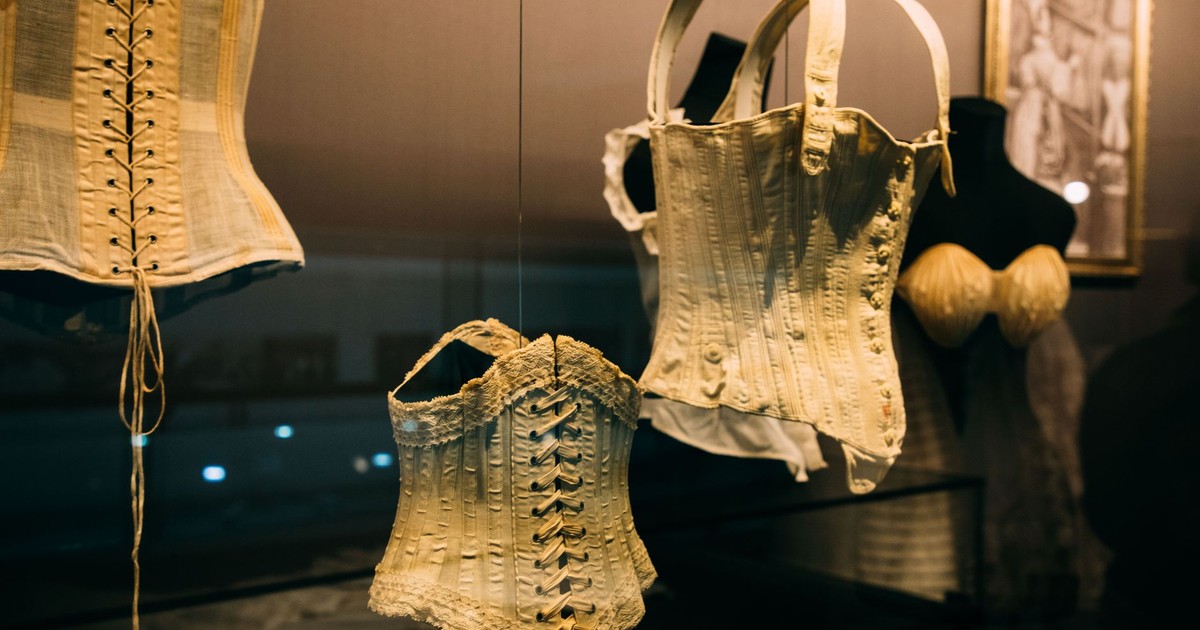
The Cotton case was horrifying. The Maybrick case was horrifying for different reasons. Florence Maybrick was a twenty-six-year-old American woman living in Liverpool in 1889 when her husband, cotton merchant James Maybrick, died. He was a known hypochondriac who had been self-medicating with arsenic for years, a common, if alarming, Victorian practice. Arsenic was found in the house. Florence had been purchasing arsenic-soaked flypaper, apparently to use as a cosmetic. She had also been conducting an affair.
The combination was enough to convict her. Florence Maybrick was found guilty of murder and sentenced to death, though the sentence was commuted to life imprisonment after a public outcry in both Britain and the United States. She served fifteen years before being released in 1904. The case became an international cause célèbre, Queen Victoria herself reportedly opposed any clemency, and the question of whether Florence was actually guilty has never been definitively settled.
The double standard at the heart of her trial is not in dispute. Her affair was treated as evidence of moral depravity. James Maybrick’s own extramarital activities, which were extensive, were barely mentioned. Florence Maybrick spent fifteen years in prison for a crime that, if it happened at all, may have been impossible to distinguish from her husband’s own self-destructive habits.
12. Empress Wu Zetian
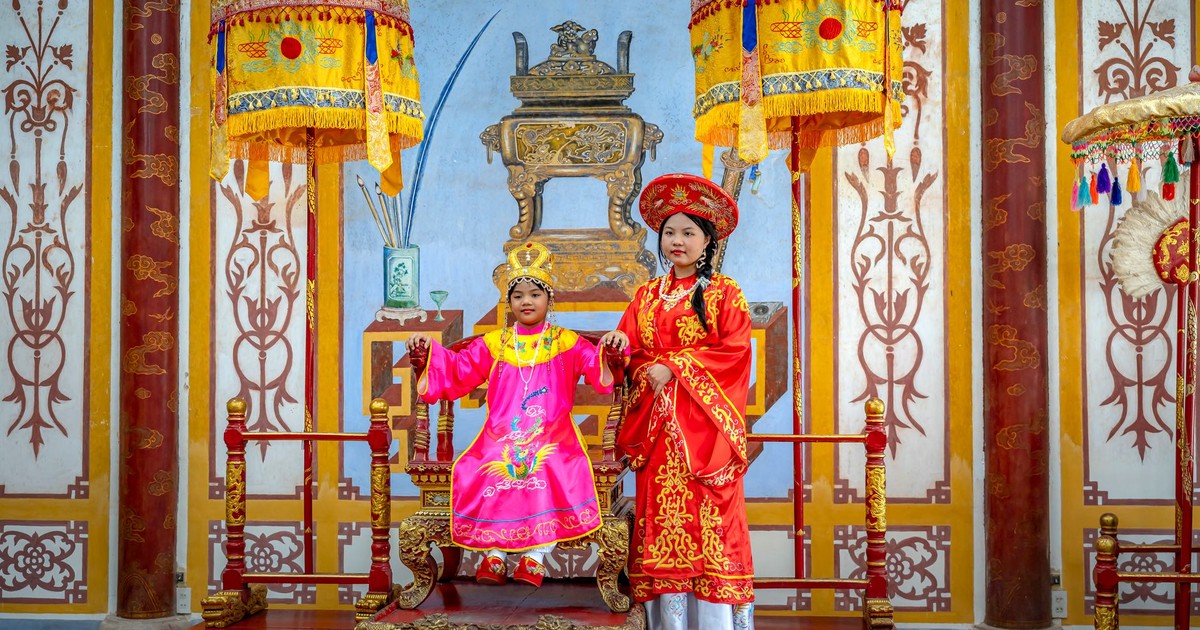
Wu Zetian is the only woman in Chinese history to have ruled as empress in her own name, and she got there through a path that left her contemporaries, and historians ever since, genuinely divided. She started as a concubine in the court of Emperor Taizong, then became a concubine of his son Emperor Gaozong after Taizong’s death, which violated the strict rules governing the emperor’s former consorts. She married Gaozong, displaced his existing empress, and rose to de facto co-ruler of the Tang dynasty.
After Gaozong’s death in 683, she ruled through two of her sons before deposing the second and declaring herself emperor, not empress consort, but emperor, of a new Zhou dynasty in 690. She was sixty-six years old. Among the accusations levelled at her by political opponents and later historians: that she smothered her own infant daughter to frame the empress she wanted to replace, that she maintained a series of younger male lovers, and that she ran a network of secret informants who terrorised the court.
Some of these accusations almost certainly reflect the hostility of Confucian male scholars who found her rule intolerable on principle. Others may have a basis in fact. What is undeniable is that her reign was, by most measurable standards, effective. The empire expanded, the economy grew, and she promoted officials on merit rather than birth. She died in 705, having reigned for roughly fifteen years. The scandal that followed her name was inseparable from the simple fact that she had taken power at all.
13. Roxelana
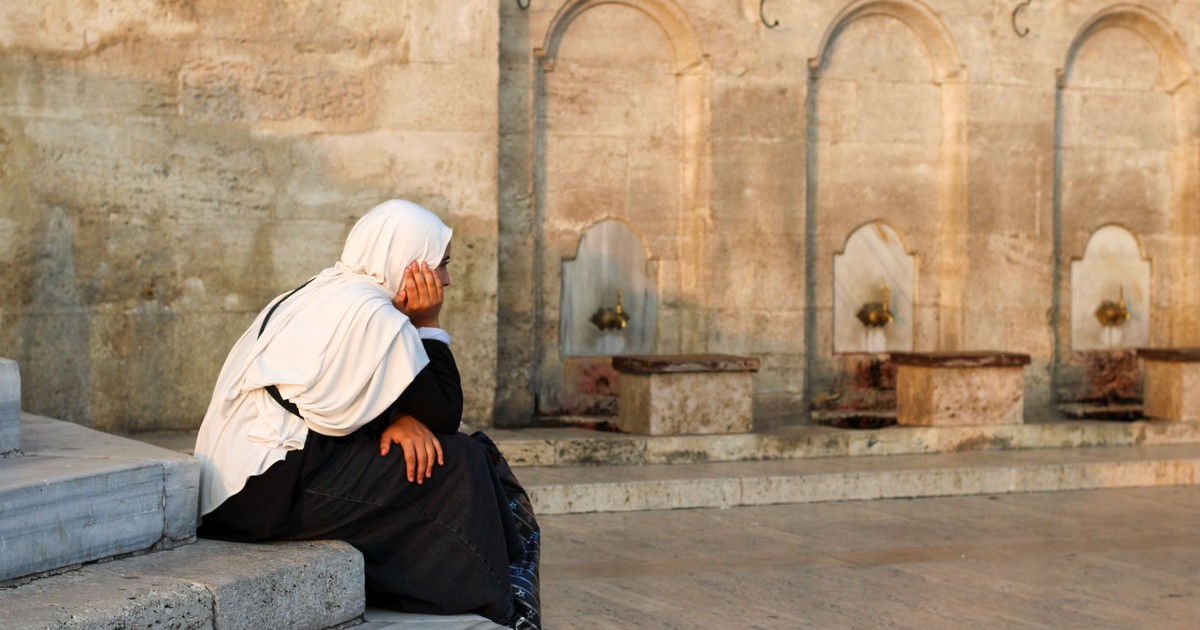
Roxelana arrived at the Ottoman court as a slave. She left it as the most powerful woman in the empire, and the manner in which she got there produced a scandal that Ottoman historians were still writing about a century later.
Born in what is now Ukraine, she was captured during a raid and sent to the harem of Sultan Suleiman the Magnificent, probably in the 1520s. Harem women were not wives, they were concubines, property of the sultan, legally unable to marry him. Roxelana changed that. She converted to Islam, became Suleiman’s favourite, bore him multiple sons, and then, in an act that astonished the Ottoman court, he freed her and married her. Legally. In a public ceremony. It was the first time an Ottoman sultan had married a former slave in at least a century, and it violated conventions that had governed the empire for generations.
The scandal that attached itself to Roxelana after her marriage centred on the question of how she had secured her position. Her enemies credited her with witchcraft. Later accusations, some of them recorded by Venetian ambassadors whose reports survive, claimed she had orchestrated the execution of Suleiman’s eldest son Mustafa, born to a previous favourite, to secure the succession for her own sons. Whether she drove that decision or simply benefited from it, historians still debate. What is not debated is the outcome: Mustafa was strangled on Suleiman’s orders in 1553, Roxelana’s son Selim eventually became sultan, and Roxelana herself died in 1558 having rewritten the rules of what a woman could be at the center of the most powerful empire on earth.
The Pattern Underneath All of It

The thirteen women above did very different things and lived in very different centuries. What connects most of their stories is less the scandals themselves than the speed with which those scandals were weaponised against them. Power, in the periods most of these women inhabited, flowed almost entirely through men, which meant that women who accumulated influence had to do it indirectly, through marriage, through children, through alliances. When those alliances frayed, the same influence that had made them dangerous became the evidence against them.
That doesn’t mean all of them were innocent. Mary Ann Cotton poisoned her own children. Catherine de Medici’s fingerprints are on one of the worst mass killings in French history. Roxelana probably knew exactly what she was doing when Suleiman’s eldest son went to his death. Some of these women played the game as brutally as the men around them played it. The same impulse to flatten a complicated woman into a single story, either the victim or the monster, was as powerful in 1536 as it is now. Most of these women were neither. They were people who made decisions, some catastrophic, some ruthless, some simply wrong, inside systems that gave them almost no room to do otherwise. The scandals stuck. The full human beings behind them are still being recovered.
Disclaimer: This information is not intended to be a substitute for professional medical advice, diagnosis, or treatment and is for information only. Always seek the advice of your physician or another qualified health provider with any questions about your medical condition and/or current medication. Do not disregard professional medical advice or delay seeking advice or treatment because of something you have read here.
AI Disclaimer: This article was created with the assistance of AI tools and reviewed by a human editor.