
When people talk about printing money inflation, they usually imagine it as something that happens to economies in other countries, not to their grocery budget or their rent check. The gap between the policy and its consequences is wide enough that most people never connect the two. But those consequences are real, specific, and land differently depending on where you sit in the financial order.
Monetary expansion is one of those policy tools governments and central banks reach for in a crisis. The 2008 financial crash. The COVID-19 shutdown. Each time, the response involved flooding the financial system with new money to prevent total collapse. Each time, ordinary people were left to absorb the downstream effects without much of an explanation. The 13 ways this plays out in daily life are less about abstract macroeconomics and more about what happens to the dollars in your pocket, the balance in your savings account, and the price of your next lease renewal.
Not all of these effects arrive immediately. Some hit within weeks. Others take years to surface in a retirement account or a mortgage rate. But they all trace back to the same starting point: more money was created than the economy produced things to spend it on.
1. Your Groceries and Everyday Goods Cost More

When more money enters circulation but businesses are still producing the same amount of goods, prices rise. Producers don’t suddenly have more goods to sell; they simply have more buyers with more dollars, and they raise prices accordingly. More dollars chasing the same number of goods is, at its most basic, why a loaf of bread costs more than it did three years ago.
Track a single shopping cart over time and the point becomes hard to argue with. The items haven’t changed. The store hasn’t improved. What changed is how much a single dollar can buy, and that buying power shrinks every time the money supply grows faster than the production of actual goods and services. Printing more money doesn’t increase economic output, it only increases the amount of cash circulating.
The people who feel this most are the ones spending the highest proportion of their income on essentials. If 60% of your budget goes to food, rent, and utilities, a 7% price rise across those categories hits you far harder than it hits someone spending 10% of their income on the same things.
2. Your Real Wages Fall Even When Your Pay Goes Up

Your employer gave you a raise. The number on your paycheck is bigger. And yet, somehow, you feel poorer. That’s the real wage effect, and it’s one of the blunter consequences monetary expansion has for working people.
From January 2021 through June 2022, prices rose 12.3% while wages rose only 7.3%, producing a 5% decline in the purchasing power of wages, according to PERC at Texas A&M. You earned more dollars. Those dollars bought less. The net result was a pay cut dressed up as a raise.
Wages tend to adjust more slowly than prices. A company reviews salaries once a year. Prices at the grocery store, the gas station, and the landlord’s rent renewal notice can change every month. The gap between those two speeds is where your standard of living quietly erodes.
3. Your Savings Lose Value While Sitting in the Bank

A savings account balance doesn’t go down. The number is right there, unchanged. But under meaningful inflation, its real value, what it can actually buy, shrinks every month. When a savings account’s annual percentage yield falls below the rate of inflation, the money in that account loses purchasing power, according to Bankrate.
If inflation runs at 5% and your savings account earns 1%, you are losing 4% of your purchasing power every year. A $20,000 emergency fund that earns almost nothing in interest is worth the equivalent of $19,200 in real terms after twelve months of 4% net erosion. After five years, that gap becomes significant enough to change what you can afford to do in an emergency.
The people who hold financial assets, stocks, property, commodities, are protected because their money is earning a return that can outpace inflation. The people holding cash savings absorb the loss without an obvious label explaining why their money doesn’t stretch as far.
4. Housing Becomes Less Affordable

When central banks pump money into the financial system, interest rates tend to fall. Cheap borrowing is supposed to encourage economic activity. But cheap borrowing also means cheap mortgages, and cheap mortgages push up the price of homes. When mortgage rates drop toward historic lows, every buyer can afford to borrow more. That extra borrowing capacity gets competed away in bidding wars, driving sale prices up until the monthly payment absorbs whatever the low rate had freed up.
First-time buyers, who don’t have equity from a previous home to bring to the table, often find themselves permanently locked out of neighborhoods they could have afforded a decade earlier. They didn’t get priced out by wages failing them, they got priced out by cheap money inflating the assets they were trying to buy.
For renters, the situation compounds. When asset prices rise, landlords who own the building capture the gain. The tenant doesn’t own the asset, and absorbs the higher rent that follows. The gap between homeowners and renters becomes one of the clearest expressions of who benefits and who pays when monetary expansion runs hot.
5. The Stock Market Rises, but Not for Everyone
The U.S. stock market reached repeated all-time highs through 2024, with valuation multiples rising to historically elevated levels by several measures. Some broad metrics, including the Shiller P/E and price-to-sales ratios, approached or exceeded their dot-com era peaks, though tech sector P/E ratios remained well below 2000 levels. If your retirement account is in index funds, your balance is up. The problem is that stock ownership is not evenly distributed across the population.
When central banks push interest rates near zero, bonds and savings accounts offer almost nothing. Investors chase returns wherever they can find them, which drives money into stocks, real estate, and other assets. The Federal Reserve describes large-scale asset purchases, quantitative easing, as one of its tools for influencing financial conditions beyond what interest rate changes alone can achieve, per the Federal Reserve. Someone who owned a diversified portfolio before the post-2020 monetary expansion and held it saw substantial gains. Someone who owned nothing but their paycheck saw the prices of those same assets rise out of reach.
This doesn’t mean a stock market boom is worthless. 401(k) balances matter to middle-class households. But the distribution of the gain is steep. The wealthier you were before monetary expansion began, the more you owned the assets it inflated.
6. Wealth Inequality Widens

New money created through monetary expansion enters the financial system first, flowing to banks, bond markets, and institutional investors. Those at the top of the financial food chain get access to cheap capital before prices have fully adjusted. By the time the stimulus trickles through to wages and consumer spending, the parts of the economy that affect ordinary workers, the inflationary effects have already arrived. Asset owners have been paid. Everyone else is managing the price increases.
Financial stress from widening inequality connects directly to the pressures people feel at home. When money is tight and assets feel unreachable, the strain shows up everywhere, in households, in relationships, in the math of what gets cut from the family budget first.
Federal Reserve monetary intervention devalues the dollar, inflates the prices of financial assets, and produces greater wealth inequality. It runs in one direction for people who own things and in the opposite direction for people who don’t.
7. Interest Rates Eventually Rise, and Everything Gets More Expensive to Borrow

Printing money inflation doesn’t stay painless forever. When inflation runs hot for long enough, central banks respond by raising interest rates. That’s the medicine, and it’s necessary. But it costs people money in very direct and immediate ways.
In June 2022, the U.S. Federal Reserve raised its benchmark interest rate by 0.75 percentage points, the biggest single hike since 1994, as a first step toward its 2% inflation target. That one move immediately increased the monthly payment on every new variable-rate mortgage, every car loan taken out after the announcement, and every credit card balance carried month to month. The person who had been putting groceries on a card and carrying a balance saw their interest costs jump overnight.
Higher rates are the hangover after the stimulus binge. They are the correct response to inflation, and they work, but the cost falls on borrowers, small businesses needing credit, and anyone hoping to refinance. By the time rates go up, the policy window that created the original inflation is long closed. The people still paying are not the same ones who made the decisions.
8. The Dollar Loses Purchasing Power Internationally
When the U.S. expands its money supply faster than other economies, the dollar weakens relative to other currencies. That sounds like something that matters to traders but not to ordinary families. In practice, it turns up in the price of anything imported.
The U.S. imports an enormous range of consumer goods, from electronics to clothing to food. When the dollar loses value, those imports cost more in dollar terms. An iPhone assembled in Asia, a bottle of wine from France, a batch of bananas from Ecuador, all of these get more expensive when the purchasing power of the dollar falls. Many of the raw materials used to manufacture domestically produced items are also imported, which means the weakening dollar feeds into the price of things that never crossed an ocean.
For Americans who travel internationally, the effect shows up at the point of purchase. A dollar that used to buy a comfortable lunch in Portugal barely covers a coffee after significant monetary expansion. For everyone else, it’s built into the price of almost everything they buy without any obvious label explaining why.
9. Fixed-Income Retirees Get Squeezed

Inflation is probably hardest on people whose income is fixed, retirees living on a pension, an annuity, or a set amount drawn from savings. Their income doesn’t adjust. The prices around them do. When inflation rises, the real value of a fixed income erodes: the same monthly payment covers progressively less as prices climb.
A retiree who locked in an annuity paying $2,500 a month in 2019 is still receiving $2,500 a month in 2025. But what that $2,500 covers has changed dramatically. The grocery run, the utility bills, the prescription copays, all of them have risen. The income hasn’t. This is the particular cruelty of inflation for people who can no longer increase their earnings by working more hours or asking for a raise.
Social Security does include a cost-of-living adjustment, but it tracks the Consumer Price Index (CPI, the standard measure of consumer price changes), which critics argue understates the inflation experienced by older households. Retirees spend a higher share of their income on healthcare and housing than the average consumer the CPI is designed to measure, meaning the adjustment often doesn’t fully compensate.
10. Government Debt Becomes More Attractive to Inflate Away, at Your Expense
Governments that carry large debts benefit, in a specific and seldom-discussed way, from inflation. A government that owes $30 trillion in nominal dollar terms owes less in real terms after a period of meaningful inflation, because the dollars being repaid are worth less than the dollars originally borrowed. This is sometimes called “inflating away the debt,” and it’s one reason governments throughout history have reached for the money-printing lever during fiscal stress.
When a government covers its deficits partly by having its central bank create money rather than borrowing it at market rates, it shifts the real cost onto the holders of that currency, ordinary savers and wage earners whose money is worth less as a result.
This is sometimes described as the most regressive tax in existence, because it’s levied without a vote, without a named line item, and without any way to opt out. The people who hold the most cash and fixed-income assets relative to their total wealth, typically middle and lower-income households, bear the greatest burden. People holding real assets like land, equities, or commodities are, to a significant degree, insulated.
11. Consumer Debt Becomes a Bigger Trap
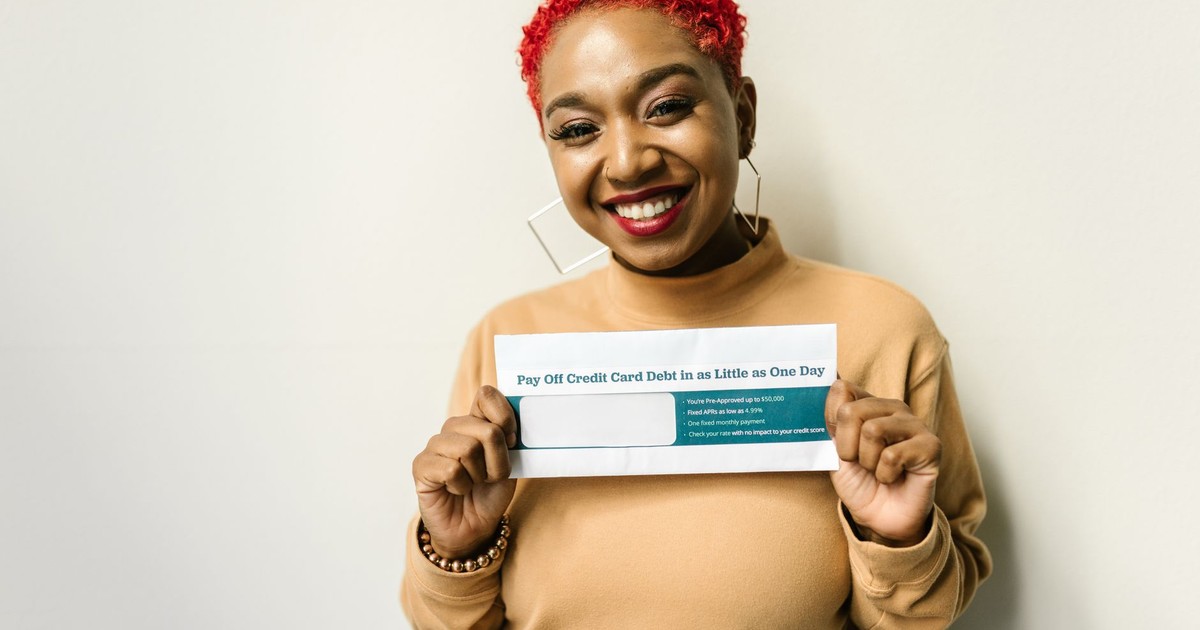
During periods of easy money, credit is cheap and available. People borrow more, mortgages, car loans, credit cards, buy-now-pay-later plans. That borrowing fuels consumption, which is part of the intended effect of expansionary policy. But the debt doesn’t disappear when the policy ends.
When interest rates rise in response to the inflation that easy money helped create, all that variable-rate debt reprices upward. The person who took out a home equity line of credit at 3% suddenly faces a rate closer to 7 or 8%. The credit card minimum payment climbs. Households that managed their debt comfortably at low rates find the same balances genuinely difficult at higher ones, and they didn’t change a single spending habit to get there.
This trap is especially common among younger households, who tend to carry more variable-rate debt relative to their assets and have had less time to build the savings buffer that would allow them to absorb higher servicing costs without cutting elsewhere.
12. Small Businesses Face a Cost Squeeze

Inflation from money printing hits small businesses differently than it hits large corporations. A multinational retailer can renegotiate supplier contracts at scale, hedge against currency movements, and absorb short-term cost increases across hundreds of product lines. A local restaurant, a small manufacturer, or an independent retailer doesn’t have those options.
For a bakery paying more for flour, butter, and packaging, for a contractor whose lumber costs have doubled, for a cafe whose staff need higher wages to keep pace with rising rents, the margin compression is immediate. They can raise prices, and many do, but each increase risks losing customers to larger competitors who can absorb more of the cost.
The businesses that survive an inflationary period are usually the ones with pricing power: the kind of established brand loyalty that lets you pass costs along without losing customers. Small businesses frequently don’t have that. They get squeezed between rising input costs and a customer base with its own budget constraints.
13. Long-Term Trust in the Currency Erodes
When people believe that money will continue to lose value, they change their behavior. They spend faster, save less, and look for alternative stores of value. As the economist Milton Friedman once observed, inflation is always and everywhere a monetary phenomenon, produced by a more rapid increase in the quantity of money than in output. Extreme versions of that dynamic don’t end with higher grocery prices. They end with people losing faith in the currency itself.
Most developed economies are nowhere near hyperinflation. But trust in a currency runs on a spectrum, and even moderate inflation that persists for years shifts behavior in ways that compound. The U.S. M2 money supply rose to a record $22.02 trillion in June 2025, up from $21.94 trillion in May, with year-on-year growth at 4.53%, according to dlacalle.com. In 2021, money supply growth soared to 26.6%, while economic growth was only 5.7% during the pandemic reopening. The question economists debate is not whether money supply growth matters, but when it matters enough to start reshaping expectations, and once those expectations shift, they are difficult to reverse without the kind of sharp rate increases that bring their own set of costs.
When a population stops trusting that the money it earns and saves will hold its value over time, the economic and social consequences extend well beyond financial inconvenience. Investment decisions change. Long-term planning becomes harder. People who can move their wealth into real assets do. People who can’t are left holding currency that is, in small but accumulating ways, working against them.
What Nobody Tells You at the Time

Most of the effects of monetary expansion on ordinary people are invisible at the moment the decision is made. The Fed buys bonds. A balance sheet entry changes. A politician announces that relief is on the way. None of that looks like a grocery price increase. None of it looks like a rent hike or a falling savings balance. The connection between cause and effect is real, but it’s separated by months or years and filtered through a dozen intermediate steps.
That gap, between the policy and its consequences, is why printing money inflation often feels like something that happened to people rather than something done to them. It was done to them. The effects outlined here aren’t side effects or accidents. They are the predictable, documented results of creating money faster than an economy can produce things worth buying with it.
None of this means monetary expansion is always wrong. Sometimes it’s the least bad option available, and economists continue to debate where the line between necessary intervention and reckless expansion sits. But ordinary people deserve to understand the full cost of the trade-off. Not to assign blame, but because understanding the cause is the only way to make sense of why your money keeps feeling like it doesn’t go as far as it used to. It isn’t your imagination. The math works out the way it always has.
AI Disclaimer: This article was created with the assistance of AI tools and reviewed by a human editor.