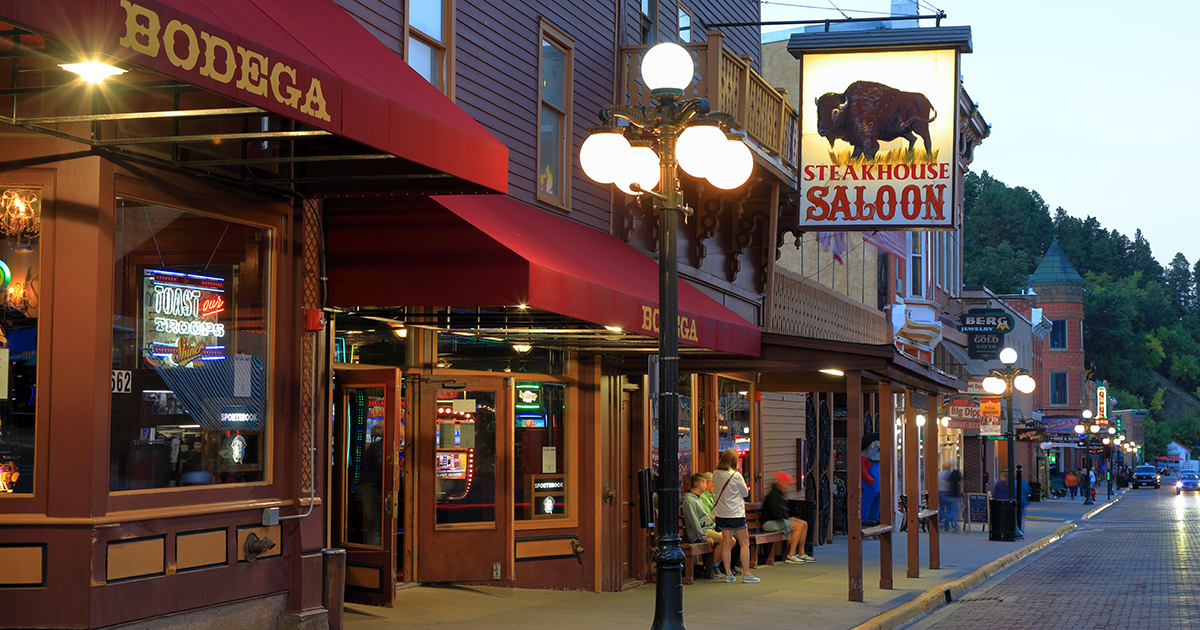

Most of the bars on this list share one stubborn quality: they were never supposed to last. The towns that built them were boomtowns, by definition temporary, places that existed because gold or silver or cattle briefly made them worth existing. When the money moved on, most of the saloons went with it. The ones that didn’t have been absorbing history for 150 years, and in several cases, they’re still pouring drinks on the same ground where gunslingers, gamblers, and gold miners made decisions they couldn’t take back.
For much of the 19th century, the saloon was the organizing institution of frontier life. It was a post office, a courthouse, a hotel lobby, a gambling hall, a place to cash a gold nugget and spend it in the same afternoon. In towns where there was nothing else, there was usually a saloon. Most of them are long gone, swallowed by fire, floods, Prohibition, or simple neglect. But a surprising number are still pouring drinks right now, the original bars worn smooth by 150 years of elbows.
These 15 aren’t theme parks or replicas. They’re the real article: establishments that opened in the 1860s, 1870s, and 1880s and never closed for good. Some have been restored, some look like they haven’t been touched since Custer rode through, and at least one has a poker table that allegedly drove gamblers to their deaths. Pull up a stool.
1. Old Style Saloon No. 10, Deadwood, South Dakota
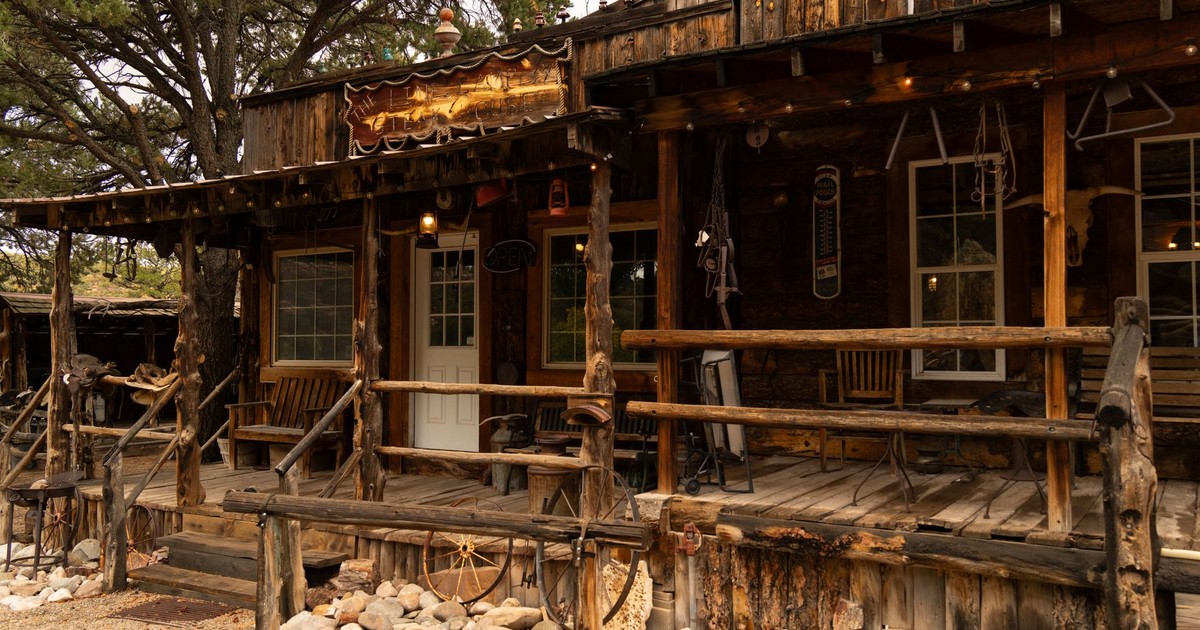
Saloon No. 10 bills itself as the only museum in the world with a bar, and it’s built its identity around being the replica of the original where Wild Bill Hickok met his end at the hands of Jack McCall. The original burned down in 1879 along with much of Deadwood’s Main Street, but the establishment was rebuilt on the same ground and has been trading on that legend ever since.
Wild Bill’s death chair still sits above the front door, and the whiskey flows while sawdust lines the floors, with walls packed with relics from the rowdiest days of the old West. Visitors can take in historical reenactments, live nightly music, live-action gambling, and South Dakota’s largest whiskey selection, with over 171 bourbons, Scotches, and whiskeys.
What makes this place hold up beyond its famous name is the sheer volume of collected artifacts. Thousands of artifacts and antiques grace the walls and ceiling, with hundreds of historical photographs of Deadwood’s most famous and infamous characters. In the summer, they reenact the shooting of Hickok every day at 1:00 p.m., 3:00 p.m., 5:00 p.m., and 7:00 p.m.
2. Buffalo Bodega, Deadwood, South Dakota
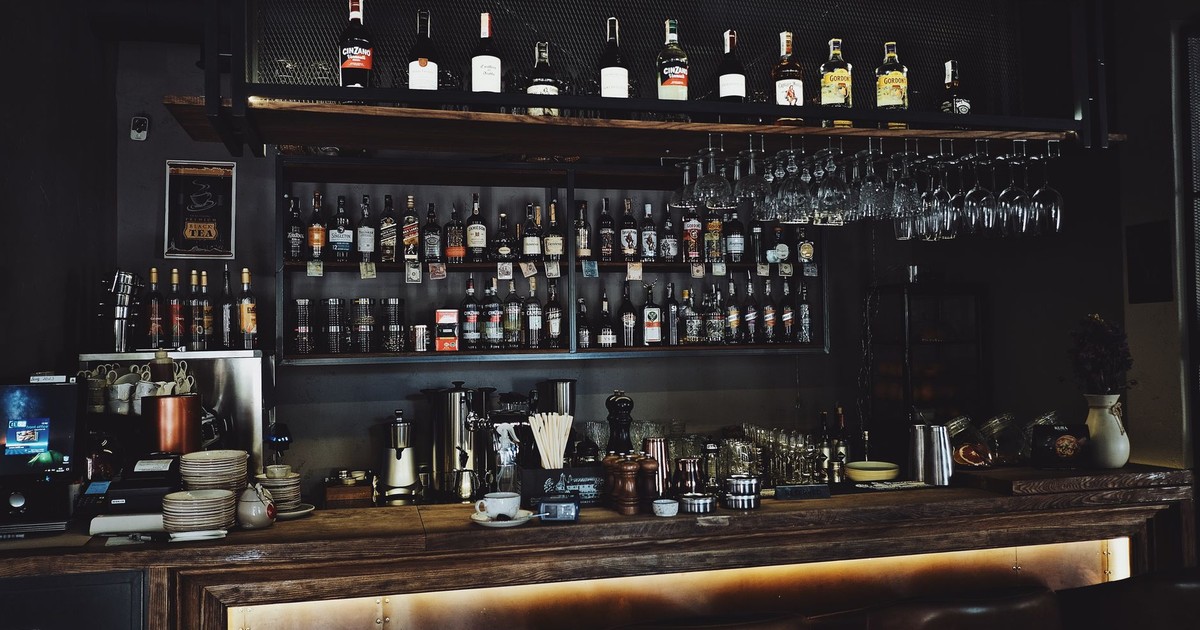
The Buffalo Bodega, originally known as the Buffalo Bar, is one of the oldest establishments in Deadwood and has been located at its current site since its founding in June of 1877. According to its own history, Mike Russell arrived by stagecoach to Deadwood on March 6, 1877, and at the time there were at least 17 saloons in town, but he thought there was room for one more. He established the Buffalo Bar, named for his good friend and hunting partner Buffalo Bill Cody.
Of those original 17 establishments, the Buffalo Bodega is one of the very few that remain today. Over the past 135 years the building has housed everything from prostitutes to brass lights, crystal glassware, and a full-sized stuffed buffalo, a gift from Buffalo Bill himself.
Deadwood was already a hard-drinking town when Russell opened his doors, and the Buffalo Bar immediately carved out a reputation as a cut above. It has been located at this site since its founding, making it one of the oldest establishments in Deadwood with a continuous address. Today it operates as part of the Buffalo Bodega complex, serving drinks on the same ground where Cody himself once raised a glass in his honor.
3. Delta Saloon, Virginia City, Nevada
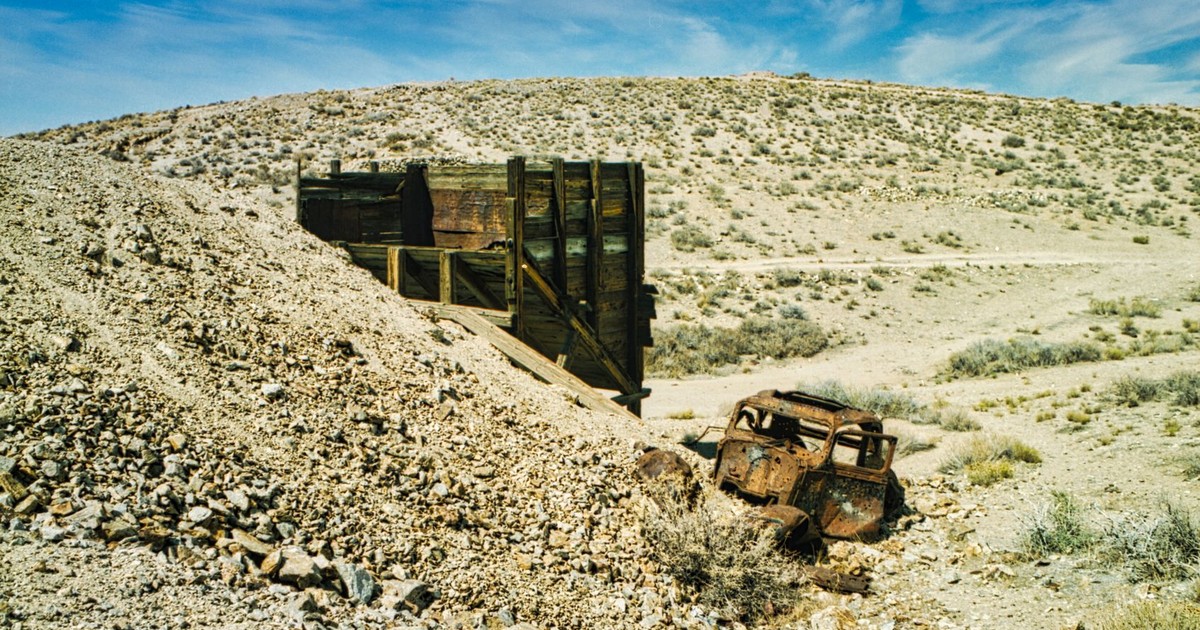
The Historic Delta Saloon has been a legendary gathering place since the 1860s, welcoming miners, gamblers, and adventurers in the heart of Nevada’s famous mining town for over 150 years. Famous for its Wild West history, the saloon holds tales of fortunes won and lost, including the eerie legend of the Suicide Table, a faro card game table said to have driven unlucky gamblers to despair. Mark Twain himself frequented the Delta, sharing drinks and stories that helped shape his early writings.
Before becoming one of America’s most celebrated writers, a young Samuel Clemens worked just across the street at the Territorial Enterprise, Virginia City’s leading newspaper. It was there that he first adopted the pen name “Mark Twain” and honed his storytelling skills. Having Twain as a regular next door gives the Delta a literary credibility few bars in the country can claim.
The Delta went through a rough patch after losing its gambling license and suffered significant damage from a gas leak explosion in 2019. It finally reopened under new ownership. The Delta Saloon is undergoing a revival under new owner Jim Grimes, who took over in May 2024, restoring the saloon’s iconic charm while revitalizing it as Virginia City’s premier destination.
4. Ponderosa Saloon, Virginia City, Nevada
Virginia City’s underground secrets don’t end with silver. A fully functional saloon in Virginia City, Nevada contains an 1860s bank vault and an underground mine, and the beloved watering hole has been offering tours of the mine shaft since the 1900s.
The Best & Belcher mine was not profitable in the gold rush of the 1800s but became profitable 100 years later in an entirely different way. The owners of the Ponderosa Saloon realized that the mine shaft was only a short distance away from their bar, so they dug a tunnel to the abandoned shaft and began offering tours. The saloon also features an old walk-in bank vault, and the now 150-year-old establishment offers tours of both the vault and the mine. The 25-minute mine tour guides visitors through the shaft and past more than 300 pieces of vintage mining equipment on display.
Few bars anywhere in the world let you finish your whiskey and then descend into the actual working mine that financed the town above it. The Ponderosa occupies a specific niche: it’s a legitimate historical experience as much as it is a place to drink, and it pulls both off without feeling like either one is faking it.
5. Gold Hill Saloon, Gold Hill, Nevada
The Gold Hill Saloon is rooted in history, beginning as The Riesen House and known as the oldest operating hotel in Nevada. A historical marker on the property references 1859, but local historians and the hotel’s own records agree that 1861 is the more accurate founding date. Legend has it Mark Twain and The Monumental Liars Club hung out here.
Visitors to Virginia City and its neighboring Gold Hill will feel as if they’ve stepped back into the Gold Rush days of the American West. One mile outside of Virginia City, the Gold Hill Hotel and its saloon stand as a historic gem offering fine dining and cozy rooms. The Gold Hill Hotel was known as the Riesen House when it first opened its doors in the newly discovered mining town. Some records put the year at 1859, while others point to 1861 as more accurate.
Former hotel guests and residents Rosie and William, who died at a ripe old age, are said to still frequent the rooms and rearrange items belonging to guests. Whether you believe in that sort of thing or not, the Gold Hill Saloon is the kind of place old enough to have earned a ghost story or two.
6. Crystal Palace Saloon, Tombstone, Arizona
The Crystal Palace is the only original saloon left standing in Tombstone. Built originally in 1882, it rose from the ashes of the first brewery in Tombstone, the Golden Eagle Brewery, which burned down that same year. The Crystal Palace was known for opulence, featuring rich furnishings and an elaborate menu that included delicacies like fresh oysters.
Local notables like U.S. Deputy Marshal Virgil Earp and gunshot wound expert Dr. George Goodfellow swung through the doors of this Tombstone drinking hole, which served its first drink in 1879 as the Golden Eagle Brewery. Another character who haunted the establishment was gunfighter Buckskin Frank Leslie, known for his trademark buckskin jacket and his deadly blows, who did a short stint as a night watchman.
This is the saloon that survived the Tombstone fire of 1882, Prohibition, the slow death of the mining industry, and a century of tourism pressure. Tombstone remains one of the most iconic Wild West towns in American travel culture, famous for the legendary gunfight at the O.K. Corral, and visitors walk wooden sidewalks and explore original saloons. The Crystal Palace is the anchor of all of it.
7. Big Nose Kate’s Saloon, Tombstone, Arizona
Built in 1880 as the Grand Hotel, this historic establishment was frequented by the likes of Doc Holliday and the Clanton Gang, burned down just two years later, and was then reconstructed. It now operates as Big Nose Kate’s Saloon. Named after Mary Katherine Horony-Cummings, the common-law wife of outlaw Doc Holliday, the saloon contains the original long bar from the short-lived Grand Hotel, serves Southwestern cuisine and draft beers, and hosts Wild West reenactments.
The hotel housed some of Tombstone’s most famous residents, including Wyatt and Virgil Earp, Doc Holliday, and the Clanton Gang. Ike Clanton and two of the McLaury brothers were registered guests the night before the famous O.K. Corral gunfight.
It is said that the saloon is haunted by Swamper, the hotel’s former handyman and a miner living in the basement. He was said to be a friendly man but was very protective of “his” basement, never allowing anyone in his room. After his death, a mine shaft tunnel was discovered, and it was alleged that Swamper had been digging late at night in search of his own treasure. The bar now sitting over that basement tunnel still pulls a good beer.
8. Buckhorn Exchange, Denver, Colorado
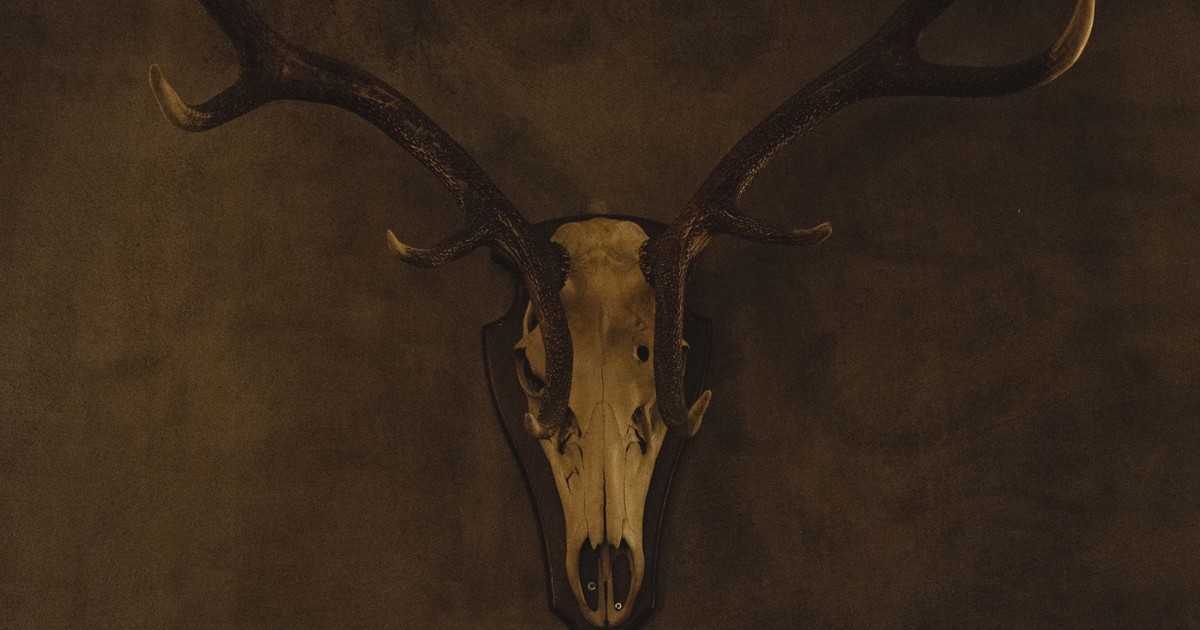
Founded in 1893 by Henry H. “Shorty Scout” Zietz, the Buckhorn Exchange is Denver’s oldest continually operating restaurant. With a spot on the National Register of Historic Places, it has hosted five presidents and features a mounted trophy head of an African Cape Buffalo shot by President Teddy Roosevelt.
Not even Prohibition, which started in 1916 in Colorado, could halt this establishment’s steady march. Once alcohol was banned, Zietz converted the saloon into a grocery store but would allow favorite customers up a private staircase to partake in certain libations, according to local lore. When Prohibition was finally repealed, the Buckhorn was issued Colorado’s liquor license no. 1, which is still on display today.
There are more than 500 taxidermied pieces in total inside the Buckhorn Exchange: elk, buffalo, bears, covering nearly every inch of wall space alongside antique firearms and Native American artifacts. Five presidents of the United States have dined at the Buckhorn: Teddy Roosevelt, Franklin Roosevelt, Dwight Eisenhower, Jimmy Carter, and Ronald Reagan. Nowhere else in the American West can you eat a buffalo steak under the same roof where presidents have done the same.
9. Long Branch Saloon, Dodge City, Kansas
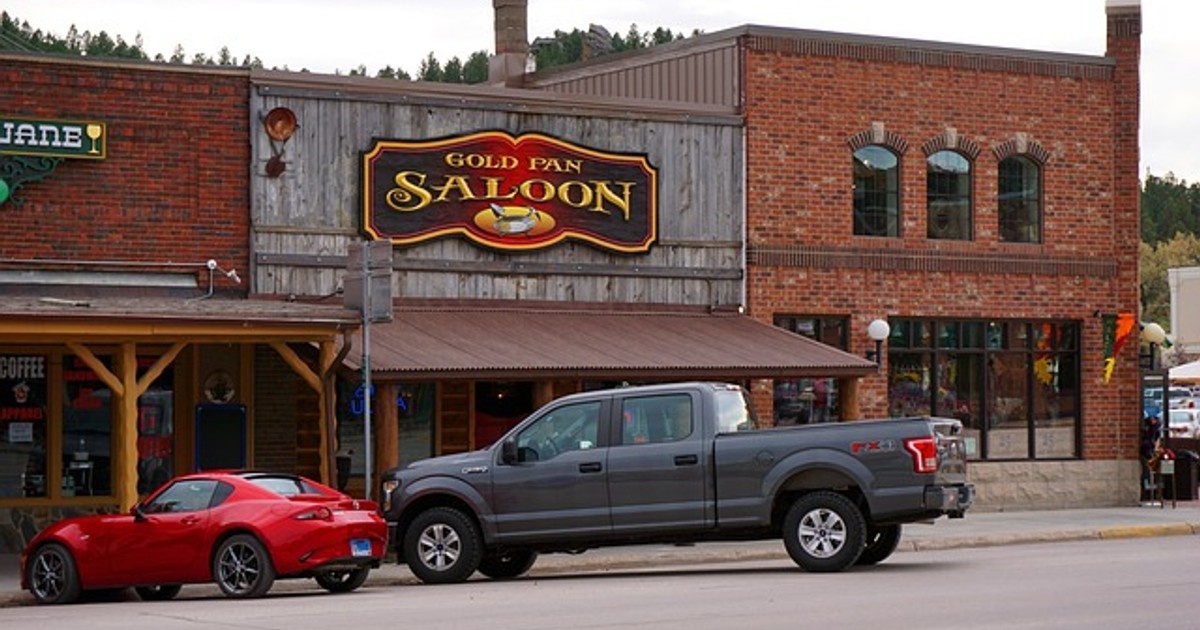
The name “Long Branch” is shorthand for everything the Wild West stood for in its most lawless decade. The story goes there was a friendly ball game between cowboys and soldiers that led to the establishment of the Long Branch Saloon. The wager was that if the soldiers lost, they would buy building materials to build a saloon. The soldiers did in fact lose, and a saloon was built in 1874. In 1878, the saloon was acquired by wealthy rancher Chalkley Beeson along with his business partner William Harris.
Dodge City was the quintessential frontier cattle town, immortalized in countless Western films and television shows like Gunsmoke. As the end of the Western cattle trails, it earned its reputation as the “Wickedest Little City in America” during the 1870s and 1880s. The Long Branch stood at the heart of all of it, serving trail hands who’d driven cattle up from Texas and lawmen who’d ridden in to manage the chaos.
Today the new Long Branch Saloon at the Boot Hill Museum is an active bar and show room. The museum context adds history without sterilizing it: this is still a place where you come to drink and watch a show, exactly as it was intended.
10. Pioneer Saloon, Goodsprings, Nevada
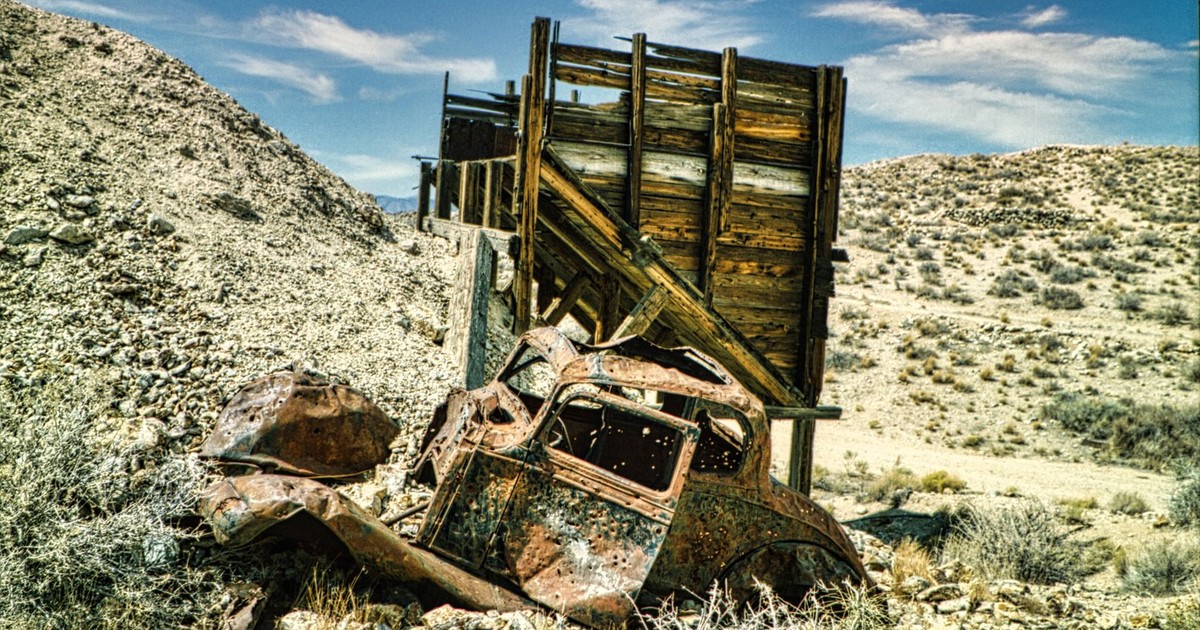
Goodsprings, Nevada is a blink-and-miss-it desert town 35 miles south of Las Vegas, and the Pioneer Saloon has been its center of gravity since 1913. Clark Gable reportedly waited heartbroken at the Pioneer Saloon for news of his wife Carole Lombard’s plane crash on nearby Mount Potosi in 1942. Cigarette burns allegedly from his anxious vigil remain preserved on the bar, alongside bullet holes from gambling disputes.
Though featured as a backdrop in films like Fear and Loathing in Las Vegas and The Mexican, Pioneer Saloon enjoys a vibrant life in the real world as a popular stop for barbecue or a spirited game of horseshoes. The long bar stretches beneath a massive mirror shipped around Cape Horn during frontier days, while vintage photographs of mustachioed gamblers and corseted ladies adorn the walls.
The Pioneer Saloon is the least famous entry on this list, but arguably the most atmospheric. It sits in the desert looking exactly like what it is: a place that has been absorbing the weight of hard nights for over 110 years.
11. Bird Cage Theatre, Tombstone, Arizona
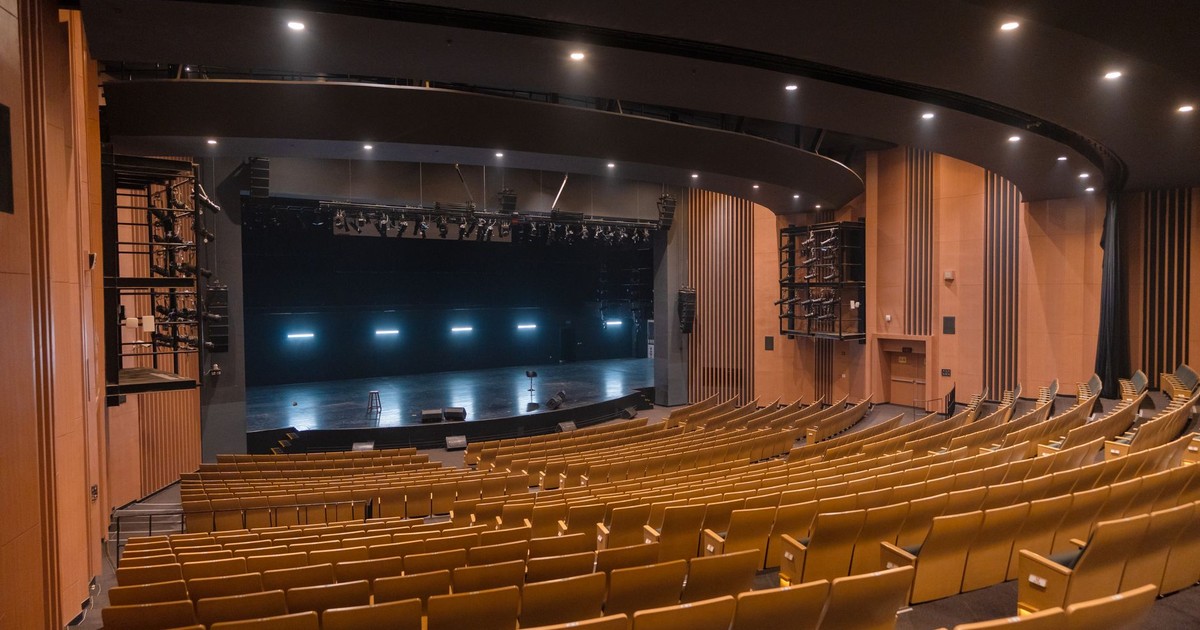
The Bird Cage Theatre operated continuously for eight years as a combination theater, saloon, gambling parlor, and brothel. Eight years doesn’t sound like much, until you realize those eight years ran from 1881 to 1889, in the most violent stretch of Tombstone’s history, and the Bird Cage never once shut its doors.
The theater’s walls still contain 140 bullet holes from its rowdy days. Those aren’t decorative. They’re the actual record of what happened inside on any given night when tempers ran high and everyone in the room was armed. The Bird Cage hosted performers, gamblers, outlaws, and lawmen under the same roof, often simultaneously.
Today the Bird Cage operates as a museum and bar, preserved largely as it was left when Tombstone’s silver mines dried up. The original gambling tables, the cribs where the “soiled doves” worked upstairs, and the theater stage are all still there. Of all the venues on this list, the Bird Cage is the one that has changed least since the 1880s.
12. White Elephant Saloon, Fort Worth, Texas
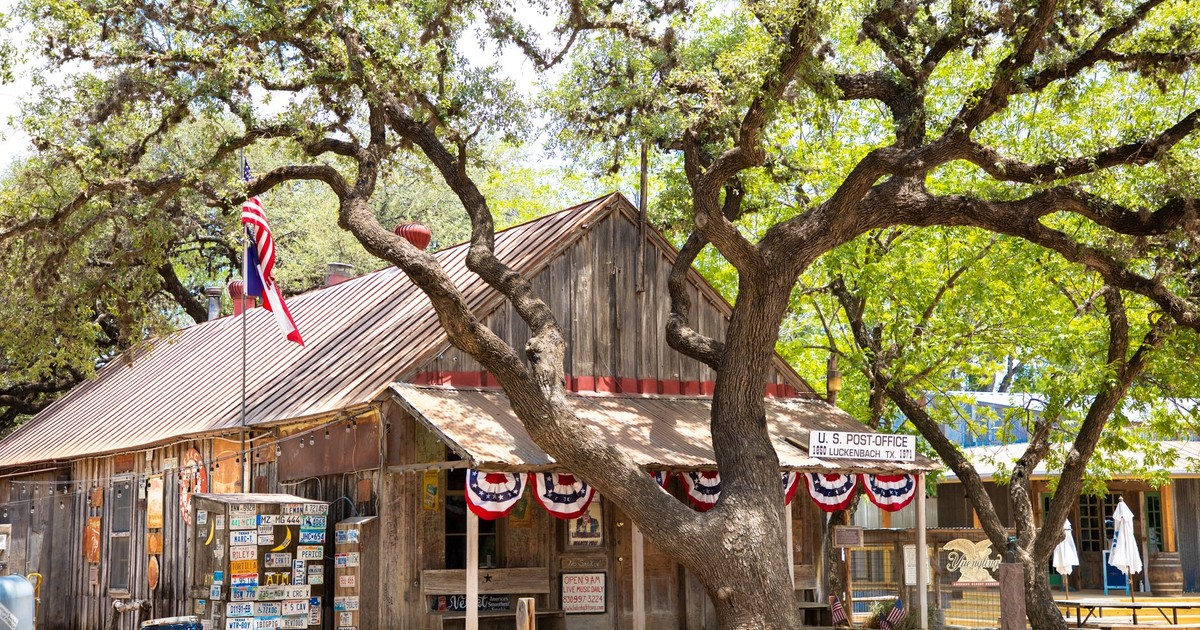
The White Elephant in Fort Worth, Texas was one of more than 60 Wild West saloons in the city at the end of the 19th century. It’s still open today, albeit in a different building. The name alone carried weight in its era: the White Elephant was Fort Worth’s prestige drinking establishment, the place where cattle barons and gamblers mixed with the occasional gunfighter.
The original White Elephant was the scene of a famous 1887 shootout in which gambler Luke Short killed former marshal Jim Courtright in a gunfight on the street outside. Short was a friend of Wyatt Earp’s and a known figure across the frontier saloon circuit. The building eventually gave way to time, but the brand survived, and the current White Elephant on Exchange Avenue in the Fort Worth Stockyards carries the name and the legacy into the present day.
For anyone visiting the Stockyards, which remain one of the most intact examples of 19th-century cattle-trade infrastructure in the United States, the White Elephant is the natural endpoint of the afternoon.
13. Mark Twain Saloon, Virginia City, Nevada
Virginia City earns multiple entries on any honest list of surviving Wild West saloons, and the Mark Twain Saloon is one of the more distinctive ones. Tucked away along the boardwalk in the Comstock Lode Mining District, it’s the only 24/7 spot in town.
The Comstock Lode silver strike of 1859 turned Virginia City into one of the wealthiest boomtowns in the American West almost overnight. Nevada became known as the “Silver State” when the largest discovery of silver occurred during the Comstock Lode in 1859, in the historic town of Virginia City. The saloons that opened in its wake served a population that was flush with silver money and looking to spend it, and many of those saloons survived long after the silver ran out because the buildings were too good to tear down.
The Mark Twain Saloon trades specifically on its connection to the writer who put Virginia City on the literary map. Twain worked at the Territorial Enterprise just steps away, and his time in Virginia City during the 1860s produced some of the sharpest journalism of his early career. The saloon keeps those hours that mining towns always kept: round the clock, no exceptions.
14. Bucket of Blood Saloon, Hazen, Nevada
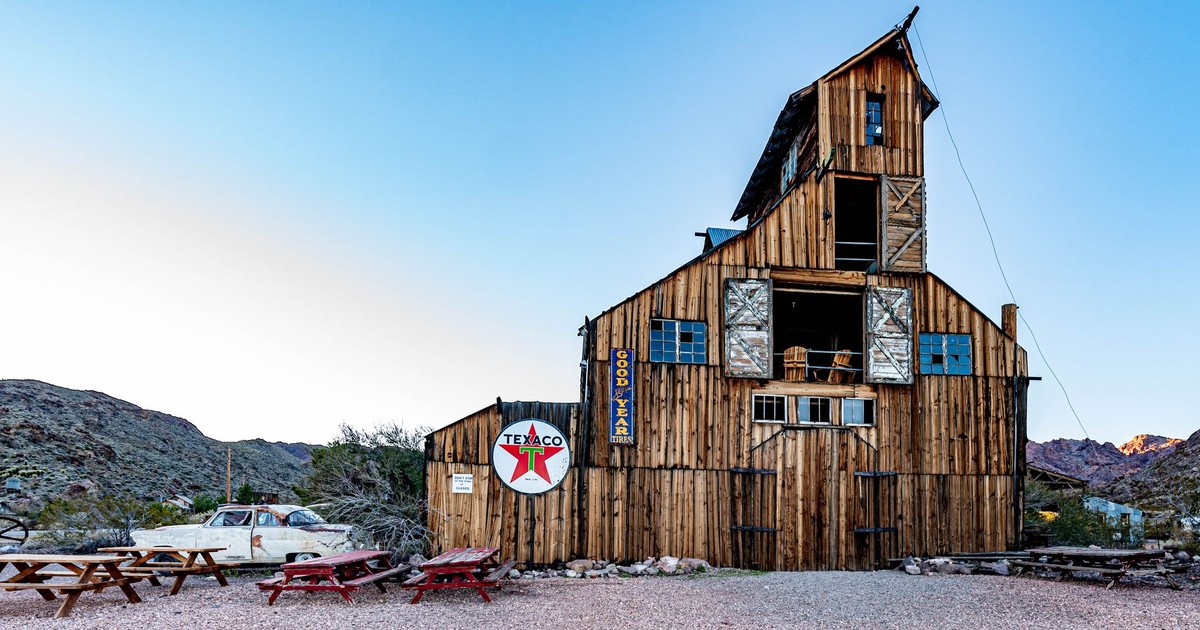
The name is not metaphorical. The Bucket of Blood Saloon in Hazen, Nevada earned it the hard way, as a fixture of the rough Nevada desert towns that grew up along rail lines and cattle routes in the late 19th century. It remains one of the most authentically preserved rural saloons in the state, still drawing ranchers, railroad workers, and travelers off the highway the way it has for generations.
Despite its sinister name, the Bucket of Blood Saloon gives off an old-time charm of the heyday of the Wild West with its many hanging lamps and mirrors. The interior looks like someone made a decision at some point to simply stop updating it, which turns out to be exactly right. The pressed tin ceiling, the worn wooden bar, and the collection of old photographs give the place the feel of a saloon that the 20th century just sort of forgot to modernize.
Picture a Western saloon where whiskeys slide across old wooden bars, once delivered by train or wagon, where locals and adventurers alike rub elbows, swap tips, and share stories. It all still happens in Nevada’s sagebrush saloons. The Bucket of Blood is the purest example of that tradition still running.
15. No Scum Allowed Saloon, White Oaks, New Mexico
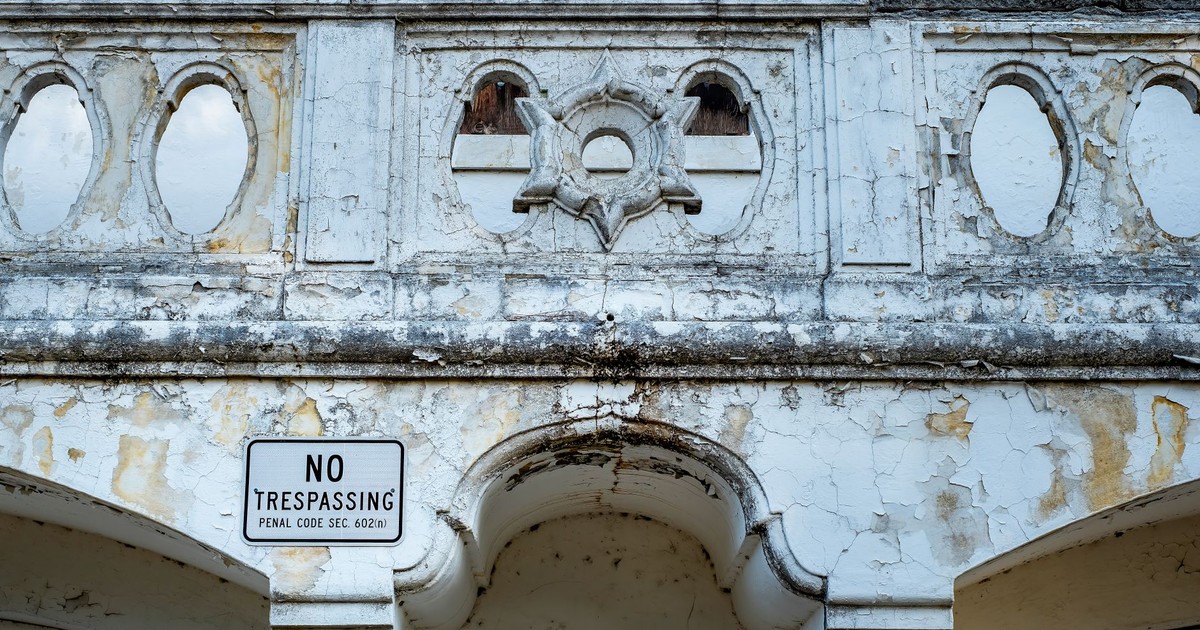
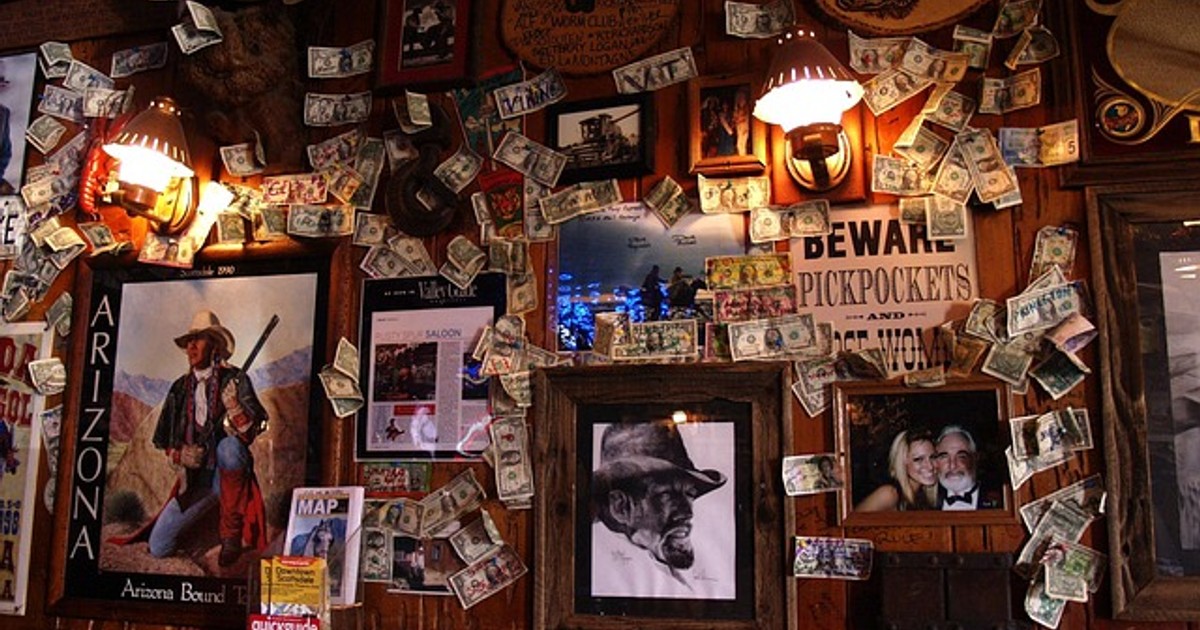
The No Scum Allowed Saloon emerged from an 1880s mining boom when White Oaks briefly rivaled nearby Lincoln in notoriety. The name originated with former owner Wilma Capps, who established clear standards for customer behavior. Handwritten signs with house rules cover the walls alongside dollar bills signed by visitors from around the world.
White Oaks was a gold mining town that hit its peak in the 1880s and faded when the ore ran out and the railroad bypassed it. At one point, Billy the Kid was a frequent presence in the surrounding territory. The town is now a community of a few hundred people living among remarkably intact 19th-century adobe and stone buildings, and the No Scum Allowed Saloon is its still-beating heart.
The name says everything about how Wild West saloons actually operated. They weren’t lawless free-for-alls: they had rules, they had codes, and the bartender was often the closest thing to an authority figure in town. Capps just had the good sense to put the policy on the sign out front.
The Bar Is Still Open
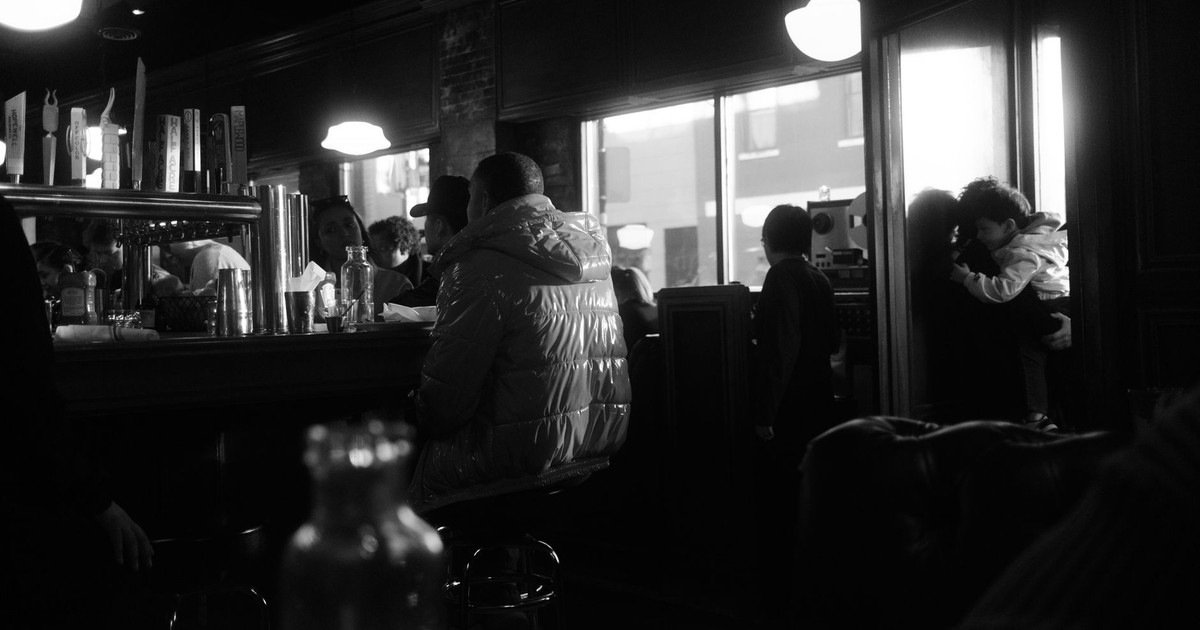
Most of what we think we know about Wild West saloons comes from movies, and movies tend to collapse them into one archetype: sawdust floors, a piano player in the corner, a poker game about to turn violent. The real thing was both less cinematic and more interesting. According to Nevada Humanities, archaeologists excavated the remains of four saloons in Virginia City, Nevada between 1993 and 2001 and discovered a far more complex story. Nearly 300,000 artifacts emerged from the sites, including evidence of an African American saloon called the Boston Saloon, a place of leisure for a community that most history tends to skip over entirely.
The fifteen saloons on this list survived because they held real value for the communities around them. Some were lucky. Some were careful. Some burned down and were rebuilt on sheer stubbornness. Those excavations recovered artifacts including fine crystal glassware, gambling devices, and high-quality cuts of meat that challenged the standard image of the rough-and-tumble frontier dive. The details remind you these weren’t just drinking dens: they were the social infrastructure of an entire era.
Walking into any of these places today, you’re not just drinking in a historic building. You’re standing where people made decisions that mattered, where news traveled, where fortunes changed hands. The bar has just been wiped down for the 50,000th time. Order something.
Disclaimer: This information is not intended to be a substitute for professional medical advice, diagnosis, or treatment and is for information only. Always seek the advice of your physician or another qualified health provider with any questions about your medical condition and/or current medication. Do not disregard professional medical advice or delay seeking advice or treatment because of something you have read here.
AI Disclaimer: This article was created with the assistance of AI tools and reviewed by a human editor.