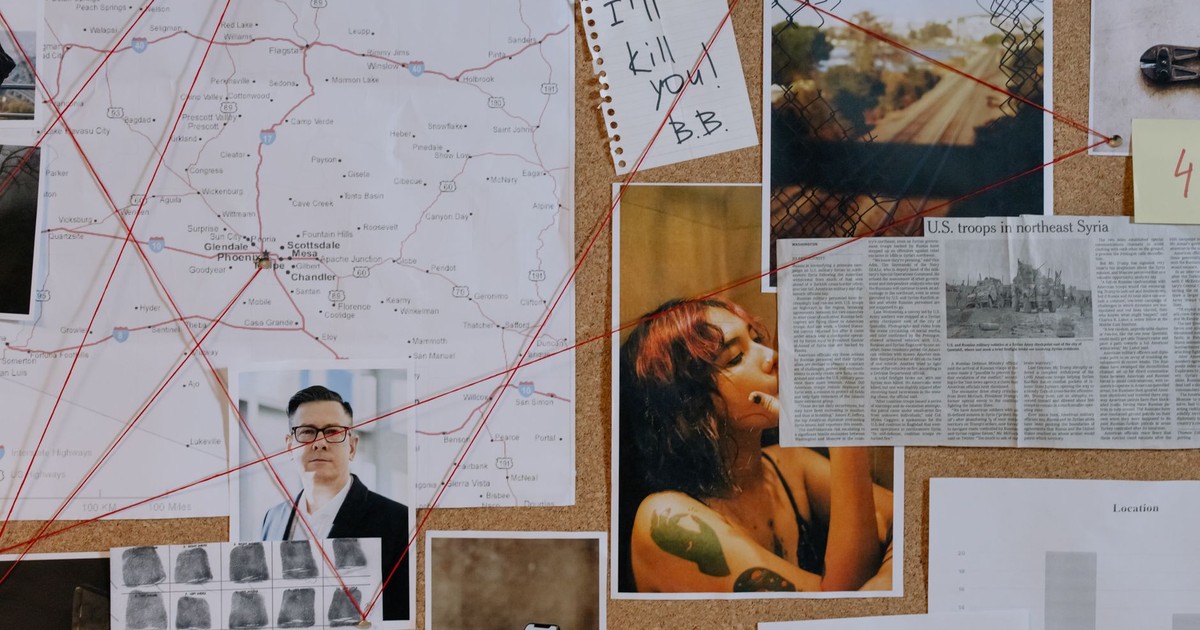
The murder happened in 1979. The victim was 17 years old. She was found just off Highway 243 in Riverside County, California, and for 45 years, nobody was charged. Then, in November 2024, the Riverside County Regional Cold Case Homicide Team announced the killer’s name: Lewis Randy Williamson. He had died a decade earlier, in 2014, never having faced a courtroom. The technology that finally identified him didn’t exist when Esther Gonzalez was killed. Forensic genealogy, a method of tracing DNA back through family trees built from public ancestry databases, had only become a practical investigative tool in the years before her family got the call.
Esther’s older sister Elizabeth said the family reacted with mixed emotions. “We are very happy that we finally have closure,” she wrote in an email published by CNN. But Williamson was already dead. There would be no trial. The case was solved in every technical sense and resolved in almost none of the human ones.
A case being officially closed and a family actually getting something they can hold onto are not the same. The question of why some cold cases solved take decades isn’t just forensic. It’s about how investigations stall, what it takes to restart them, and what it actually means to solve something 45 years after the fact.
The Scale Of The Problem
More than 352,390 cases of homicide and non-negligent manslaughter went unsolved from 1965 to 2024, according to FBI Uniform Crime Report data studied by the Murder Accountability Project. That number has been climbing for decades. The homicide clearance rate, which sat at 83.7 percent in 1964, dropped steadily to around 50 percent in recent years. Experts estimate the nation now has approximately 250,000 unsolved murders, a number that continues to grow each year, according to the National Policing Institute.
Those numbers don’t mean investigators are getting lazier or less skilled. They reflect structural problems that have made modern homicide investigations genuinely harder than they were sixty years ago. Detectives carry caseloads that would stagger most people. Veterans in some major city homicide divisions handle two dozen or more cases at a time, far above the federal recommendation of four to six new homicide cases per detective per year. When a new murder comes in, older cases get shelved. Not abandoned, officially, but shelved. The file stays open. The phone stops ringing.
Contributing factors include a weakening relationship between police and the public, more murders being committed by strangers, and slower police response rates. Stranger homicides are particularly difficult because they leave investigators without the social network that usually generates leads. When a victim and their killer knew each other, there’s somewhere to start. When they didn’t, the investigation often stalls at the first dead end, and stays there.
Law enforcement agencies don’t have endless resources to combat this problem. Most police departments are doing more with less as retirements outpace the hiring of new officers, and some agencies are eliminating their cold case units entirely as they face budgetary cuts and staffing shortages. The backlog, in other words, is partly a funding problem dressed up as a technology problem.
Why Old Evidence Is Being Revisited Now
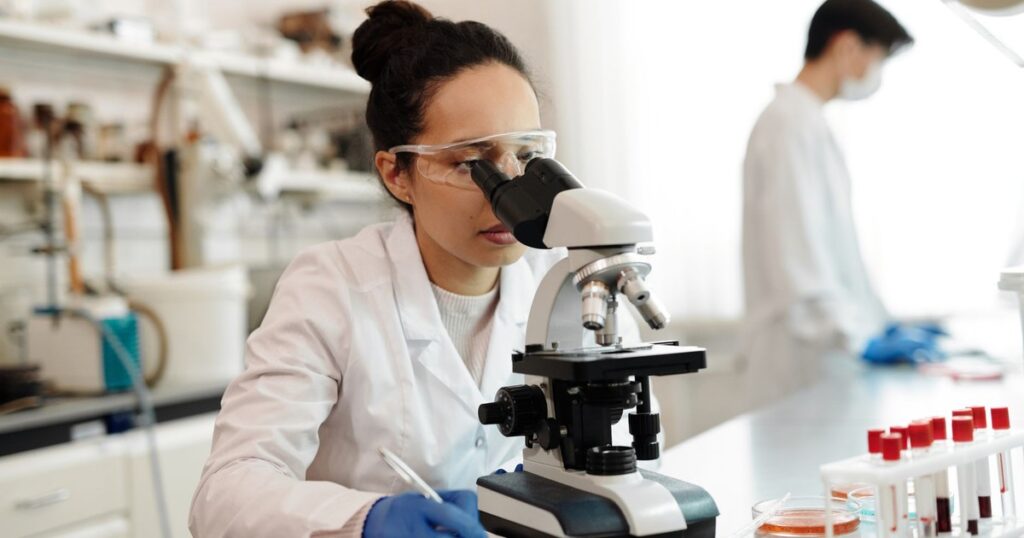
The single biggest reason cold cases solved today are being cracked decades after they were committed is that the forensic tools available now are fundamentally different from what existed when the crimes occurred. According to the National Institute of Justice, advances in DNA technologies have substantially increased the successful analysis of aged, degraded, or otherwise compromised biological evidence, meaning crime scene samples once thought to be unsuitable for testing may now yield usable DNA profiles.
If a DNA analysis from eight or nine years ago showed a good mitochondrial DNA profile but the nuclear DNA was a little light, it may be worth retesting now, since scientific capabilities have improved significantly over the past decade. A sample that told you nothing in 2005 might tell you everything in 2025. The evidence hasn’t changed. The tools have.
The first stage in that process is running newly extracted DNA through the national Combined DNA Index System, known as CODIS. Newly uncovered DNA detected on degraded or previously unusable samples can be entered into CODIS, where it can be checked against thousands of samples from known offenders. When a match exists in the database, it can close a case within days. The problem is that CODIS only works when the suspect has previously been arrested. If someone committed a crime, was never caught, and never touched the system, their DNA isn’t there to match.
That limitation led investigators toward something else entirely.
The Genealogy Breakthrough
In cases where newly extracted DNA samples do not find a match in CODIS, forensic genealogy offers another option. It uses DNA databases alongside genealogical research tools like birth records, death records, obituaries, and newspaper archives.
The method works by taking crime scene DNA and uploading it to publicly available ancestry databases, where it can be compared not to the suspect directly, but to the suspect’s relatives. Those relatives, who have voluntarily shared their own genetic data to trace their family history, may not even know they’re helping to identify a killer. Investigators can connect the found DNA to a suspect’s blood relatives, and from there, genealogists build family trees, often working backward through generations to find the person in question.
The process is slow and labor-intensive. It requires careful documentation and legal oversight. It is not a shortcut, and it does not guarantee arrest or prosecution. A genealogy tree can narrow a suspect pool from millions to dozens. Investigators still have to do the rest of the work using conventional methods: surveillance, obtaining discarded DNA samples, comparing evidence, interviewing people. The genealogy is a map, not an answer.
The case that made this technique impossible to ignore was the Golden State Killer. In April 2018, Joseph James DeAngelo, a former cop alleged to be the Golden State Killer and responsible for at least 13 murders and more than 50 rapes in California in the 1970s and 1980s, was arrested. Police in California, working with a professional genealogist, matched a crime scene DNA sample to profiles in GEDmatch who were the killer’s third or fourth cousins. From there, investigators built a family tree that eventually narrowed to DeAngelo. They collected his discarded DNA from outside his home, confirmed the match, and arrested him. He had been hiding in plain view for four decades.
The reverberations from that case are still being felt. Among the most active players in current cold case investigation are private forensic genealogy laboratories that help law enforcement solve cases cold for decades, using advanced DNA extraction and forensic-grade genome sequencing to build DNA profiles with hundreds of thousands of markers, allowing investigators to search genealogical databases for matches.
The Evidence That Gets Overlooked
Technology is not the only reason cold cases sit unsolved. Sometimes the problem is much simpler: evidence that existed at the time was never properly submitted, tested, or preserved.
Investigators stress the importance of not only submitting evidence for an initial round of forensic testing but also considering retesting, given how quickly the power and sensitivity of scientific analysis evolves. A rape kit collected in 1989 and never tested wasn’t necessarily neglected out of carelessness. In many cases, backlogs were enormous, budgets were thin, and detectives prioritized active cases over old ones. The result was thousands of pieces of evidence sitting in storage, carrying answers nobody had gone looking for yet.
The benefit of revisiting old evidence comes from knowing that everything re-evaluated and entered into investigative repositories will live on in perpetuity for future investigators to build on. Not as a failure to be corrected, but as an ongoing process where the work of one generation of investigators lays groundwork for the next.
Digital evidence has added a new dimension to cases from the late 1990s and 2000s. As cases from those eras enter cold case territory, evidence lockers contain something that didn’t exist in earlier decades: digital devices. Old computers and phones can now be forensically examined in ways that weren’t possible when they were first collected. Metadata, deleted files, location data, and communication logs that were technically there all along are increasingly accessible to investigators with the right tools.
What Still Gets In The Way
The BTK Killer, Dennis Rader, murdered 10 people between 1974 and 1991 in Wichita, Kansas. His crimes seemed untraceable, and he had haunted the city for over three decades. What eventually gave him away was not DNA, not genealogy, but a floppy disk he mailed to a television station in 2004. Digital forensic experts traced the metadata embedded in a deleted document on that disk to a computer at a local church, and to Rader himself, a member of the congregation. The most sophisticated forensic science in the world didn’t crack that case. His own need for recognition did.
That story points to something real about cold cases generally. Technology helps. Resources help. But some of the most durable barriers to solving old crimes are human ones: witnesses who won’t come forward, communities where cooperation with police carries serious social risk, and suspects who simply got lucky in ways that no database can undo. A lack of trust in police and more killings committed by strangers have been major factors in the rising rate of unsolved murders, according to retired law enforcement officials.
DNA and genetic genealogy continue to be used to solve cold cases, but not all of them, and not always quickly. A 2024 review of recently resolved cases found that some of the oldest cold cases solved in 2024 had been open for nearly 50 years, and were only cracked because law enforcement agencies expanded their use of forensic genealogy tools and DNA databases in the years prior. The technology can identify a suspect who died a decade ago. It can name the killer. What it cannot do is produce an arrest, a trial, or a sentence. Those require a living suspect, a cooperating witness, a case strong enough to prosecute. Biology is only one piece of that.
The Long Wait For Families
The families of homicide victims don’t experience cold cases as investigative puzzles. They experience them as an ongoing condition. A mother who lost her daughter in 1985 has spent forty years fielding questions at family gatherings she can’t quite answer, avoiding certain conversations, watching detectives retire without resolution. When a case finally breaks, the response is rarely uncomplicated.
In the case of 17-year-old Esther Gonzalez, murdered in Riverside County in 1979, the killer Lewis Randy Williamson was finally identified in November 2024 by the Riverside County Regional Cold Case Homicide Team using forensic genealogy. But Williamson had died in 2014. The identification confirmed what happened. It could not deliver justice in any form the legal system recognizes.
That outcome, identification without prosecution, is increasingly common as forensic genealogy reaches further back. Another solved cold case from decades past involves Kathy Halle, for whom the North Aurora Police Department in Illinois determined that serial killer Bruce Lindahl was responsible. Detectives used an advanced DNA collection technique called MVAC, which works like a vacuum to extract trace DNA from degraded materials. A profile recovered from the victim’s clothing matched Lindahl with overwhelming certainty, and Illinois authorities officially declared the case solved in 2024. Although Lindahl had been dead for years, the resolution brought profound relief to Kathy’s family, who had fought for decades to preserve her memory.
Relief and justice are not always the same thing. Families often describe both at once, and the distinction matters.
What The Numbers Don’t Capture
The clearance rate for homicides has been falling for sixty years. The backlog of unsolved cases continues to grow. Forensic technology is genuinely transforming what’s possible, and still, most murders go unsolved. That’s not a contradiction. It’s the actual picture.
Cold cases solved get solved when three things align: preserved evidence that can be retested with better tools, an investigative team with time and funding to pursue it, and something in the database that closes the loop. Remove any one of those three and the file stays open. The forensic genealogy works beautifully when the evidence was properly collected forty years ago and the suspect happens to have a third cousin on Ancestry.com. When the evidence was degraded, or lost, or never submitted, the most sophisticated technology on earth can’t help.
Some of what keeps cases open is structural, a funding problem dressed up as an unsolvable mystery. Agencies that have eliminated their cold case units aren’t failing because the science isn’t there. They’re failing because no one is in the room to do the work. A case file doesn’t pursue itself. It waits for someone with a mandate and a budget, and in too many departments, that person doesn’t exist.
What the recent wave of solved cases does prove is that the passage of time isn’t always an enemy. Old evidence, reexamined with new science, can still speak. The question of whether there’s someone listening, with the resources and the mandate to act on what it says, is a different one entirely. Some cases from the 1970s are being solved in 2025. Cases being committed today will still be open in 2055. The technology will be better then. Whether the structural problems will be is much harder to predict.