

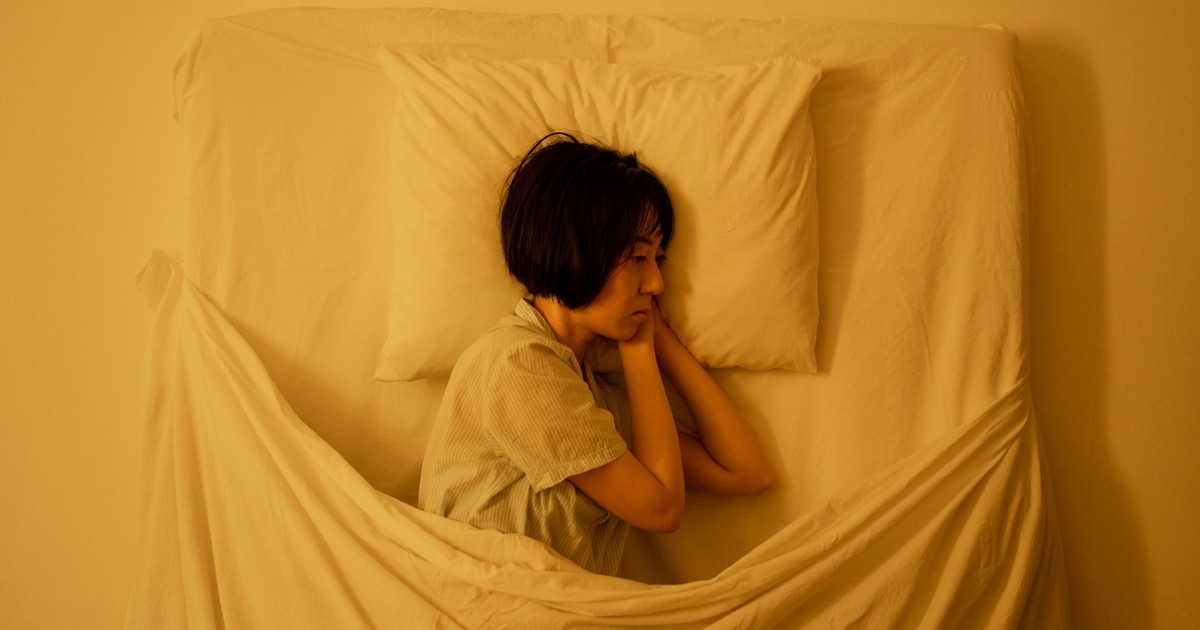
You’re somewhere between awake and gone, the day finally releasing its grip on you, and then the floor drops out. You’re falling, fast, with nothing to grab. You slam back into your body, heart hammering, sheets damp, staring at the ceiling of your bedroom at 2am.
The raw physical shock stays with you. So does the feeling it leaves behind: some vague and wordless sense that it meant something. That your brain was trying to tell you something it couldn’t say out loud.
The answer sits at the intersection of neuroscience, psychology, and a fair amount of genuine mystery.
The Body Does It First

A hypnic jerk is a brief, involuntary muscle twitch that happens as your body transitions from wakefulness to sleep. It’s the jolt that snaps you awake just as you were drifting off. Research has found that 60 to 70% of people experience hypnic jerks, usually just as they are about to fall asleep.
Muscle relaxation usually occurs progressively, but a faster relaxation when entering sleep can cause the sensation of falling in real life. The brain misreads this rapid relaxation as a warning before hitting the ground and triggers a hypnic jerk as a result. Your nervous system fires an alarm because it briefly misreads the process of letting go as an emergency.
Some researchers believe hypnic jerks may be remnants of an ancient survival reflex from our tree-dwelling ancestors, a reflex to prevent falling out of trees during sleep.
Hypnic jerks can be intensified by stimulants and anxiety, potentially leading to insomnia. According to the Sleep Foundation, common triggers include stress, caffeine, sleep deprivation, and evening overstimulation.
What Happens Inside the Dream Itself
The hypnic jerk is only part of the story. Falling dreams that happen during REM sleep (rapid eye movement sleep, the phase where vivid dreaming occurs) are a different phenomenon entirely. They don’t jolt you awake with a physical twitch. They unfold. You’re falling off a building, down an elevator shaft, off a cliff edge. The fall feels endless.
In psychology, falling dreams are typically linked to fear of failure, a worry about underperforming or disappointing others, loss of control relating to stress at work, in relationships, or with finances, and guilt or insecurity, wrestling with something unresolved or buried in the subconscious. Across different interpretations, the shared element tends to be a feeling of instability in some area of waking life.
In the early 1900s, Freud saw falling dreams as symbols of giving in to sexual temptation, but modern interpretations focus more on anxiety and vulnerability. Carl Jung took a different angle. In his framework, falling represented a disconnect between the conscious self and the unconscious, the ego losing its footing when something below the surface demands attention. Both point to the same underlying observation: we don’t dream about falling when life feels solid.
The specifics of the dream add texture to that. Falling from somewhere high and then stopping before impact often reflects a situation where the worst is feared but hasn’t materialized yet. Falling endlessly without ever landing maps more closely to chronic, unresolved stress, the kind that has no obvious source and no obvious solution. Falling and feeling calm rather than terrified sits in a different category altogether, sometimes described in psychology as a signal that someone is actively releasing something they’d been holding too tightly.
The Stress Connection Is Real

Dreams are more than random images or stories the brain conjures while asleep. They can be subtle mirrors reflecting emotional state. Especially during periods of anxiety or depression, the night-time mind becomes a stage for unresolved stress, fear, and sadness.
The Cleveland Clinic describes anxiety dreams as vivid, emotionally intense dreams that center on high-stress situations. They can leave you feeling uneasy, worried, or panicked when you wake up. You may not remember exactly what happened, but the emotional toll lingers. You wake up not quite knowing what you dreamed, but you carry the mood of it into the morning anyway.
Noradrenaline, the hormone that initiates stress and anxiety, is reduced during both NREM and REM sleep, with levels dropping lowest during REM. Sleep researchers describe REM as the brain’s built-in emotional processing window. Falling dreams intensify during high-stress periods. The brain is using sleep to work through feelings it couldn’t fully process during the day. But when stress levels are already elevated before bed, that processing becomes more turbulent, and the dreams that result are more vivid, more distressing, and more likely to wake you up.
The emotions attached to events stay intact as we dream, even though the events themselves are morphed in seemingly incomprehensible ways. As the memory is consolidated, the emotions get separated from it, so when we think about the events later, we don’t feel nearly the same emotional charge as we did while it was occurring. Falling dreams aren’t just symptoms of stress. In a functional sense, they’re part of how the brain tries to metabolize it.
Why Some People Have Them Constantly

A falling dream once in a while is essentially universal. Falling dreams every night for two weeks is something else, and it tends to track with something specific: a job that’s become unmanageable, a relationship in freefall, a period of transition where the ground genuinely doesn’t feel stable yet.
Falling dreams can be linked to anything that is subject to falling or going up and down, including finances, stocks, status, relationships, and expectations. The commonality is the presence of something in waking life that feels precarious. The subconscious doesn’t generate the same urgent signal when everything feels secure. It generates it when something doesn’t.
Frequent falling dreams can indicate ongoing stress or unresolved issues. If you’re experiencing these dreams regularly, it might be a sign that there are persistent fears or anxieties that need attention. A single falling dream is your brain doing its job. A cycle of them, night after night, is more like a repeated alarm that keeps going off because nobody has dealt with whatever triggered it.
Sleep quality compounds everything. Hypnic jerks are a type of myoclonus, a category of rapid, involuntary muscle contractions. For the most part they are painless, though some people do report a tingling or painful sensation. Sleep deprivation makes the brain’s transition into sleep less smooth, which makes the physical startle reflex more likely, which makes it harder to fall asleep, which leads to more sleep deprivation.
Context Changes the Meaning

The details matter. Where you’re falling from, who (if anyone) is there, whether you land, and what you feel during the fall all shift the picture significantly.
The difference isn’t the symbol itself, it’s context: where you fall, how fast, who is present, and how you feel during and after. From a psychological perspective, falling often points to a wobble in stability. That wobble can originate almost anywhere. A promotion that suddenly feels too big. A relationship that used to feel certain and now doesn’t. A health scare that resurfaced an old fear about control.
Falling and waking right before impact is one of the most commonly reported versions, and it’s also the one most linked to the hypnic jerk rather than to extended dreaming. Falling from a height in a dream that plays out slowly, with detail and setting, tends to come later in the sleep cycle, during deeper REM. Dreaming about someone else falling often reflects anxiety about that person, or about your role in their life.
A sudden drop while climbing or walking often points to an unexpected failure or fear of not being ready for success or change. Falling forever without hitting anything can indicate overwhelming stress, an inability to make a decision, or an emotional freefall in one area of life.
What to Do With All of This

The reflex most people have after a particularly vivid falling dream is to shake it off and get on with their day. That works, most of the time. But if the dreams are recurring, or if they’re leaving a mood that persists well into the morning, the more useful response is to take the emotional content seriously rather than the imagery.
Anxiety tends to fuel intense, vivid, and often distressing dreams. Paying attention to these dreams can provide insight into your emotional world, offering clues about areas of stress, unresolved conflicts, or emotional withdrawal. Not because dreams are prophetic, but because they tend to reflect what you’ve been carrying. The falling isn’t the thing. The thing is whatever has been making life feel unsteady.
On the physical side, the triggers for hypnic jerks and stress-heavy dreams share a common list: caffeine too late in the day, screens in the hour before sleep, sleep debt accumulated across the week. But there’s something clarifying about understanding that the falling you experience isn’t random. Cutting the afternoon coffee by two hours, keeping the phone out of the bedroom, getting to bed at a consistent time: these are genuinely structural changes that reduce the conditions that produce the jolt.
The Dream Behind the Dream

The recurring falling dream isn’t really about falling. It’s about what’s unsteady. And usually, the thing that’s unsteady has been unsteady for longer than the current stressor makes it seem.
A lifelong fear of failure can sit beneath a workplace crisis, making a situation feel more catastrophic than it is. The familiar sensation of losing grip resurfaces whenever life becomes uncertain, not because that’s what the brain does by accident, but because that’s the specific emotional residue the brain keeps returning to. Falling is just the shorthand it reaches for.
The brain, during REM, isn’t being dramatic. It’s being efficient. It takes the emotional weight of the day, finds the closest available image in memory, and builds a scenario around it. For a lot of people, that image is falling, because falling, physically and metaphorically, is one of the most wired-in fears in the human nervous system. It doesn’t need to have happened to feel real. It just needs to match the feeling.
So if the dream keeps coming back, the useful question isn’t “what does falling mean?” It’s “what in my waking life currently has no floor?” That question tends to have a much more specific answer than the dream does, and it’s usually the one that actually matters.
Disclaimer: This information is not intended to be a substitute for professional medical advice, diagnosis, or treatment and is for information only. Always seek the advice of your physician or another qualified health provider with any questions about your medical condition and/or current medication. Do not disregard professional medical advice or delay seeking advice or treatment because of something you have read here.
AI Disclaimer: This article was created with the assistance of AI tools and reviewed by a human editor.