

On Thursday, July 23, 2026, the European Commission imposed a €890 million ($1 billion) fine on Google, the largest penalty ever issued under the EU’s Digital Markets Act. The Trump administration announced sweeping new tariffs on dozens of countries, including the European Union, the following morning.
For the European Commission, the Google antitrust fine was the culmination of more than two years of investigation. For the Trump administration, it was one provocation too many in what it views as a systematic European campaign against American technology.
What the EU Actually Found

The European Union fined Google €890 million ($1 billion) for breaching rules designed to promote competition in digital services, making it the first time the company has been penalized under the bloc’s landmark Digital Markets Act (DMA). The DMA entered into force on November 1, 2022 and became applicable on May 2, 2023; it is the EU’s flagship attempt to prevent dominant digital platforms from leveraging their size to squeeze out competition. It designates large platforms as “gatekeepers” and imposes specific behavioral obligations on them.
The Commission opened the investigation in March 2024, one of the first three cases Brussels launched after the law took effect for designated gatekeepers. The investigation produced two separate findings of violation, each carrying its own financial penalty.
Self-Preferencing in Search
The EU fined Google €460 million for illegally favouring its own services, such as Google Flights and Google Hotels, over rivals in search results. When a user searches for a hotel or a flight, Google pushes its own integrated services to the top of the results page. Rival comparison sites, which may offer better deals, get buried.
“We found that Google harms businesses offering similar services, such as shopping or sports, by not granting them the same level of prominence on Google Search,” said Henna Virkkunen, the European commissioner in charge of tech sovereignty, according to CNN.
Anti-Steering in Google Play
A second fine of €430 million was levied because Google barred app developers from showing consumers offers, free of charge, outside the Google Play store. Under the DMA’s anti-steering provisions, app developers must be free to tell their users about cheaper prices or subscription options available on their own websites, without being blocked or penalized by the platform that hosts their app.
“The best products should succeed because they’re better, not because they’re owned by the company running the search engine,” European commissioner Teresa Ribera said in the statement.
The Commission pointed to a “constructive dialogue” with Google and significant progress made to comply with the DMA, indicating that daily penalties for non-compliance are likely off the table.
The Scale of the Fine in Context
Under the DMA, the EU can fine companies up to 10 percent of their global turnover for violations. An EU official said Thursday’s penalties amount to just 0.22 percent of Google’s turnover.
Google has now been penalized by the Commission across antitrust and DMA proceedings totaling approximately €10.38 billion over nearly two decades. That figure encompasses the €2.42 billion Google Shopping fine in 2017, the €4.34 billion Android fine in 2018 (reduced on appeal to €4.1 billion and confirmed by the EU Court of Justice on July 2, 2026), and a €2.95 billion ad technology penalty in September 2025. The current DMA fine is the opening chapter of a new enforcement framework, one with faster timelines and steeper consequences for repeat offenders.
Google’s Response: Product Degradation, Not Fair Competition
Kent Walker, president of global affairs at Google and Alphabet, responded to the EU fine in a statement, saying, “This implementation of the DMA continues to break everyday products. To comply, we are having to strip away real-time Search features Europeans love, like instant pricing and direct availability for hotels, flights, and restaurants, and dismantle safety protections on Google Play. This isn’t fair competition; it’s product degradation driven by a small group of self-serving complainants, with European businesses and consumers taking the hit.”
Google said it was reviewing the decision and evaluating whether to appeal.
The regulation requires Google to show competitors equal prominence on its search results page, but Google argues that the integrated “answer boxes” for hotels, flights, and restaurants that it built into Search are features, not anticompetitive conduct. Stripping them out, in Google’s telling, makes the product worse for ordinary users to satisfy the commercial interests of rival comparison websites whose complaints triggered the investigation in the first place.
Google has begun testing changes to its search result displays and updated its steering terms. While these actions represent substantial progress toward compliance, they were insufficient to avoid the fine for previous DMA violations.
A History of Enforcement: The DMA’s Escalating Bite

The Google fine doesn’t arrive in isolation. In 2025, the EU fined Meta €200 million and Apple €500 million under the same DMA rules. Those earlier decisions established the enforcement pattern: lengthy investigation, formal non-compliance finding, financial penalty, and a cease-and-desist order requiring the company to change its behavior. Both Apple and Meta disputed their fines; both were ordered to comply within 60 days.
In a letter sent earlier this week, 25 Republican members of the US Congress urged President Donald Trump “to encourage your administration to take decisive action before the EU further entrenches this anti-American regime.” The lawmakers argue that the EU’s enforcement of the DMA contradicts commitments made to Washington on digital trade barriers and dismiss the ongoing dialogue as a “delay tactic,” going as far as naming companies that could be targeted in retaliation: Nokia, Axel Springer, Volkswagen, BMW, Ikea, and Airbus.
Reports published in May 2026 indicated that Commission President Ursula von der Leyen had personally delayed the penalty by several months to avoid inflaming transatlantic trade tensions during sensitive negotiations. EU officials denied publicly that the timing was linked to trade pressures. Whether or not the timeline was deliberately managed, the Commission’s decision to proceed in July 2026 signals that the institution does not intend to suspend digital enforcement in response to political pressure from Washington.
The Tariff Dimension: 24 Hours That Shook the Relationship
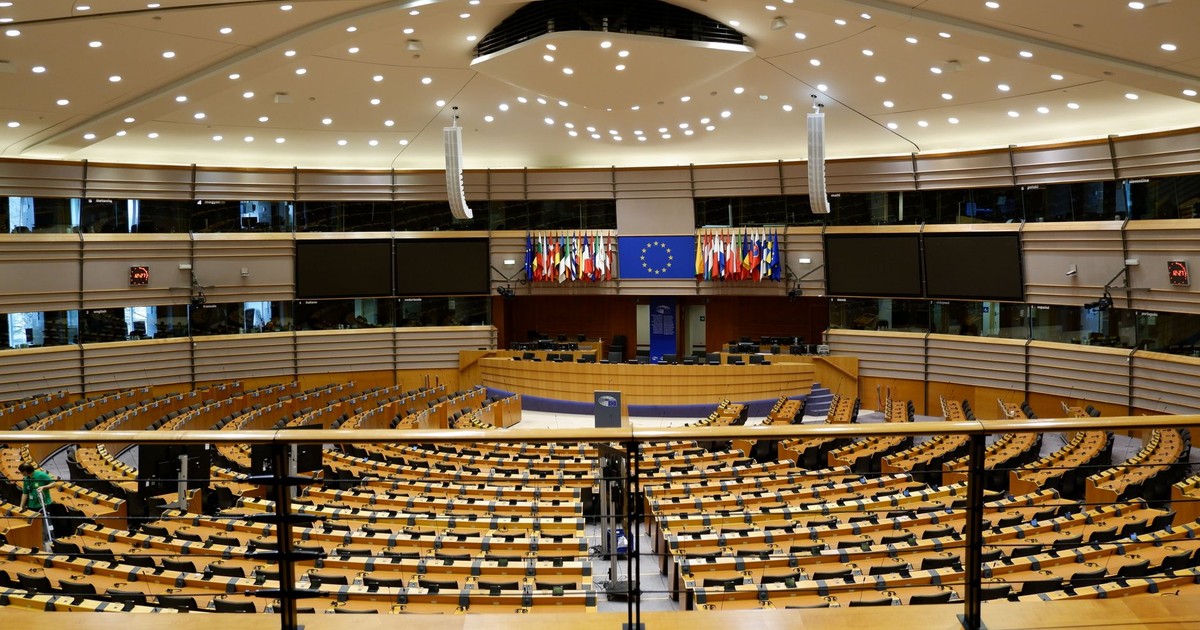
Dozens of America’s trading partners, from Europe to China to India, now face new tariffs of 10% to 12.5% on goods shipped to the United States, according to NBC News. The tariffs, announced Thursday, went into effect Friday morning. Goods from the 60 affected trading partners make up 99.4% of US imports.
The fines highlight Europe’s resolve to rein in the power of Big Tech, despite US President Donald Trump threatening to respond with “substantial additional tariffs” on European goods.
US Trade Representative Jamieson Greer criticized the penalty, saying the EU’s recent actions under the Digital Markets Act undermine “constructive dialogue” and “pose a real risk to the continuation of transatlantic stability with respect to trade.” That warning echoed earlier statements from the administration, but Greer’s language was notably sharper than anything Washington had said about the Apple or Meta fines.
Trump had turned to temporary levies after the Supreme Court struck down his biggest and boldest tariffs in February. Now he’s tapping more durable tariffs under Section 301 of the Trade Act of 1974, which permits the president to impose import taxes and other sanctions against countries engaged in unfair trade practices.
Some 25 Republican lawmakers urged Trump in a letter to use tools such as trade investigations against the EU’s “discriminatory” digital rules, a move that could trigger higher tariffs. Section 301 carries no statutory cap on tariff rates. Its use against the EU specifically over DMA enforcement would represent a significant escalation of the tech-trade nexus and a direct challenge to the EU’s right to regulate its own digital market.
The Trade Deal Backdrop
All of this unfolds against the backdrop of a hard-won EU-US trade framework. The agreement was reached in July 2025 by European Commission President Ursula von der Leyen and President Trump, followed by a Joint Statement in August 2025 that formed the basis for ongoing EU-US engagement. As part of that deal, the EU agreed to pay the United States a tariff rate of 15%, including on autos and auto parts, pharmaceuticals, and semiconductors.
Following formal approval by the European Parliament and the Council of the EU, the bloc eliminated all duties on imports of US industrial goods and improved market access for certain non-sensitive agricultural products from July 1, 2026. The agreement was designed to bring stability to a relationship destabilized by months of tariff brinkmanship. The fines land just days before the first anniversary of that tariff deal between Washington and Brussels.
Digital regulation was not included in the trade framework. That exclusion has become the single biggest source of friction in the relationship, more explosive, in diplomatic terms, than any dispute over steel or semiconductors, because it goes to the question of whether Brussels has the sovereign right to regulate American technology companies operating in its market, or whether doing so constitutes an unfair trade barrier.
In late June 2026, Trump threatened to impose 100% tariffs on European countries that implement a digital services tax, even if it means canceling existing trade agreements. The Google antitrust fine, issued less than a month later, is the EU’s answer to that threat: the Commission is not backing down.
The DMA’s Legal Architecture and What Comes Next

The DMA is an EU regulation designed to create fairer digital markets by limiting the power of dominant online platforms, called “gatekeepers.” Crucially, it is not a traditional antitrust law that requires proving consumer harm. The DMA imposes per se obligations: gatekeepers must do, or must not do, specific things regardless of whether their conduct can be proven to harm competition in a particular case.
The DMA’s statutory ceiling for a first violation is 10% of the company’s global annual turnover, a figure that, on Alphabet’s most recently reported revenues, would exceed $40 billion. No fine anywhere near that level has been imposed, but the ceiling hangs over every non-compliance proceeding as a standing threat.
The Commission has also signaled that fines are not its only tool. While Google plans to appeal, the Commission has warned of stronger remedies, including potential divestitures, if the company fails to address its conflicts of interest. Forced structural remedies have historically been the nuclear option in competition law. The DMA gives the Commission explicit authority to pursue them in cases of “systematic non-compliance,” defined as three DMA violations within eight years.
Under the DMA’s enforcement architecture, confirmed by a July 8, 2026 General Court ruling that closed the last avenue for pre-decision challenges, an appeal does not automatically suspend the fine or the 60-day compliance deadline. Google must comply first and litigate afterward.
Republican Pressure and the Section 301 Threat

The Republican lawmakers’ letter concluded: “It is important to make clear that the EU’s access to the US market is not guaranteed and can be limited should the EU continue to pursue discriminatory acts, policies, and practices in the digital sector.”
Beyond Trump’s own rhetoric, the congressional pressure is hardening. The letter from 25 House members represents a formal political signal that Republican lawmakers expect the administration to treat DMA enforcement as a trade issue, not merely a regulatory one. The practical effect is that each new DMA fine against a US company raises the domestic political cost for the administration of doing nothing.
Conversely, a cross-party coalition of MEPs has written to European Commission President Ursula von der Leyen urging faster enforcement of the DMA against Google. Brussels is facing pressure from both directions: Washington demanding it ease off, and its own parliament demanding it move faster.
Henna Virkkunen insisted Europe would not back down. “We are very committed to our rules,” she told journalists. The Commission’s restraint on the tariff question stands in contrast to its firmness on digital enforcement, a calculated attempt to hold two very different lines simultaneously.
What to Do With All of This
The €890 million Google antitrust fine is a story about regulatory sovereignty, and about who gets to set the rules for digital commerce in the world’s largest single market. The EU’s position is unambiguous: companies that operate in Europe are subject to European law, regardless of where their headquarters are, and regardless of what Washington thinks about it.
The DMA’s enforcement record in just over two years has been consistent. Apple fined €500 million in April 2025. Meta fined €200 million the same month. Google fined €890 million in July 2026. Each decision has drawn American objections; none has been reversed. The Commission has shown no sign of scaling back enforcement to preserve trade relations, and the EU-US trade deal’s explicit exclusion of digital regulation means there is no formal way to force it to do so.
What has changed with the Google fine is the scale and the timing. A $1 billion penalty against the world’s largest advertising platform, issued the day before the Trump administration’s latest tariff round, compresses two of the most consequential transatlantic disputes into a single 24-hour news cycle. Greer’s language about “transatlantic stability” is the most direct warning yet that the US is prepared to treat DMA enforcement as grounds for trade retaliation.
For Google, the immediate fight is over whether to appeal, and whether the compliance changes it rolled out are enough to avoid daily penalty payments under the Commission’s cease-and-desist order. For the broader tech sector, the question is whether Brussels will extend DMA scrutiny further, and whether the structural remedy threat will move from warning to reality in the next enforcement cycle. For the EU-US relationship, the question is simpler and harder: how long can two of the world’s largest trading partners sustain this level of friction across the exact sectors that define economic power right now.
The Commission issued its fine. Google called it product destruction. Washington called it a trade threat. And the tariffs arrived the next morning, right on schedule.
Disclaimer: This information is not intended to be a substitute for professional medical advice, diagnosis, or treatment and is for information only. Always seek the advice of your physician or another qualified health provider with any questions about your medical condition and/or current medication. Do not disregard professional medical advice or delay seeking advice or treatment because of something you have read here.
AI Disclaimer: This article was created with the assistance of AI tools and reviewed by a human editor.