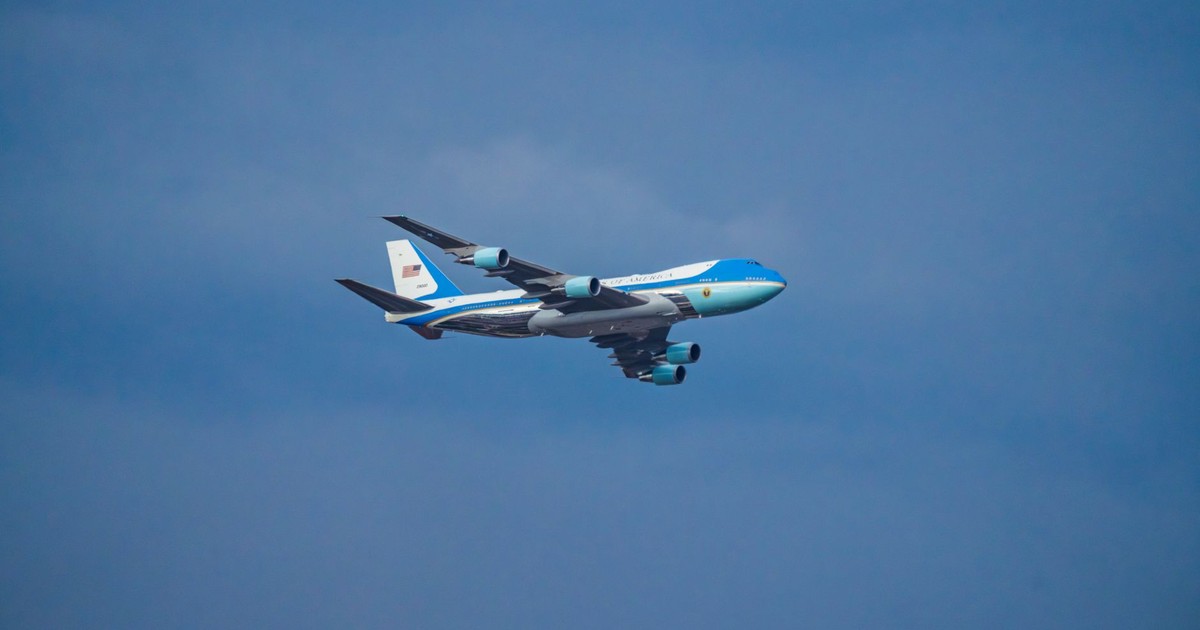

A presidential aircraft that has flown fewer than a dozen times is already being pulled from the skies. The plane is the Boeing 747-8 gifted to the United States government by Qatar’s royal family, now officially designated the VC-25B Bridge aircraft and serving as the new Air Force One. The jet, estimated to be worth about $400 million, generated legal, ethical, and national security questions almost from the moment it was announced. President Donald Trump called it “maybe the greatest commercial plane ever built” on its July 1, 2026 debut. Three weeks later, Trump was standing outside the aircraft at Joint Base Andrews, telling reporters it would be sent away for roughly a month to be “maxed out.”
By mid-July, federal subpoenas had been delivered to journalists at their homes, a senator was raising alarms at an international air show, and defense experts were openly questioning whether a one-month upgrade window could meaningfully fix what was missing.
How Qatar’s Boeing 747 Became Air Force One
The Boeing VC-25B Bridge is a military conversion of a single Boeing 747-8 airliner, serving as an interim Air Force One presidential transport. Originally built as a Boeing Business Jet, the aircraft was delivered to Qatar Amiri Flight in April 2012 and used by the House of Thani. Qatar donated the aircraft to the US government in 2025 after delays continued to affect Boeing’s VC-25B replacement program. Defense Secretary Pete Hegseth formally accepted the jet on behalf of the Air Force.
Thought to be one of the most expensive gifts ever received by the US government, critics argued the jet might violate the constitutional ban on gifts from foreign states. The White House and Department of Justice argued that the gift was not unconstitutional because it was not given to an individual. Trump said the plane would be used as the new Air Force One for the duration of his presidency, after which it would be transferred to his future presidential library. That post-presidential transfer arrangement added another layer of criticism from ethics watchdogs, who noted it would give Trump access to the aircraft as a private citizen after leaving office.
The conversion work was led by defense contractor L3Harris. According to Sen. Chris Murphy’s office, L3Harris was contracted by the Air Force to oversee the jet’s modifications with a White House deadline of July 4, 2026, which drove the company to commit 400 employees to working around the clock to complete in ten months a process that would normally take years. Air Force Secretary Troy Meink told a congressional panel in June 2025 that the conversion should cost around $400 million, with those funds being diverted from the Sentinel intercontinental ballistic missile program.
The Inaugural Flight and Early Warning Signs
On June 19, 2026, the aircraft was officially unveiled at Joint Base Andrews. The Air Force said the aircraft would undergo commissioning flights to allow the White House team to validate its capabilities and the Air Force to finalize its operation protocols. On July 1, 2026, the aircraft made its inaugural flight as Air Force One.
Gone was the trademark light blue hull that helped Air Force One blend into the sky. The refurbished jet was painted in Trump’s preferred color scheme of a navy belly and red and gold stripes. Trump told reporters that “frankly, we couldn’t build a plane like this because we wouldn’t be willing to spend the kind of money necessary,” adding “they spent top dollar.”
What was not discussed at that July 1 send-off was what the aircraft was still missing. A Reuters report from July 20, 2026 quoted Douglas Birkey, executive director of the Mitchell Institute for Aerospace Studies, saying “the standard Air Force One fleet carries a sophisticated suite of protections, including anti-missile systems, but the White House appears to have accepted a lower baseline of protection for the Qatari jet in order to get it flying quickly.” Birkey added that any work completed within a month was likely limited to non-kinetic systems such as electronic jammers, infrared “dazzler” devices designed to confuse heat-seeking missiles, and possibly chaff, metallic strips released to scatter radar signals. He was direct that a full security upgrade on this timeline was not feasible.
The NATO Summit Incident
CNN reported that Trump’s decision to depart Turkey on an older plane while sending his new, Qatari-gifted jet ahead to England was driven at least in part by security concerns around the escalating conflict with Iran. Four US officials confirmed the account to CNN. Two of those officials said security personnel felt more comfortable with the president aboard the older vessel, which was built from scratch with the commander-in-chief’s safety in mind, rather than the plane that had recently been retrofitted after being donated by Qatar.
There was no specific, new threat to Trump’s life, according to those sources. The decision was precautionary, made against the backdrop of fresh US strikes on Iran, which shares a border with Turkey. The president had himself mentioned the possibility of an assassination attempt from Iran during the NATO summit.
Trump’s public explanation for the switch was notably different from what officials were saying privately. He downplayed the idea that security was the reason, telling reporters: “There wasn’t a security concern, except we sent it a little early, same line going back.” He framed the stopover at RAF Mildenhall as a courtesy to US service members stationed there who wanted to tour the aircraft. CNN also noted the newer plane did not possess the same capabilities to ensure safety in international settings, though one source said it was equipped with many of the same features as the older plane. Trump then switched back to the Qatari-gifted jet for his return flight to Andrews Air Force Base.
What the New Plane Was Missing
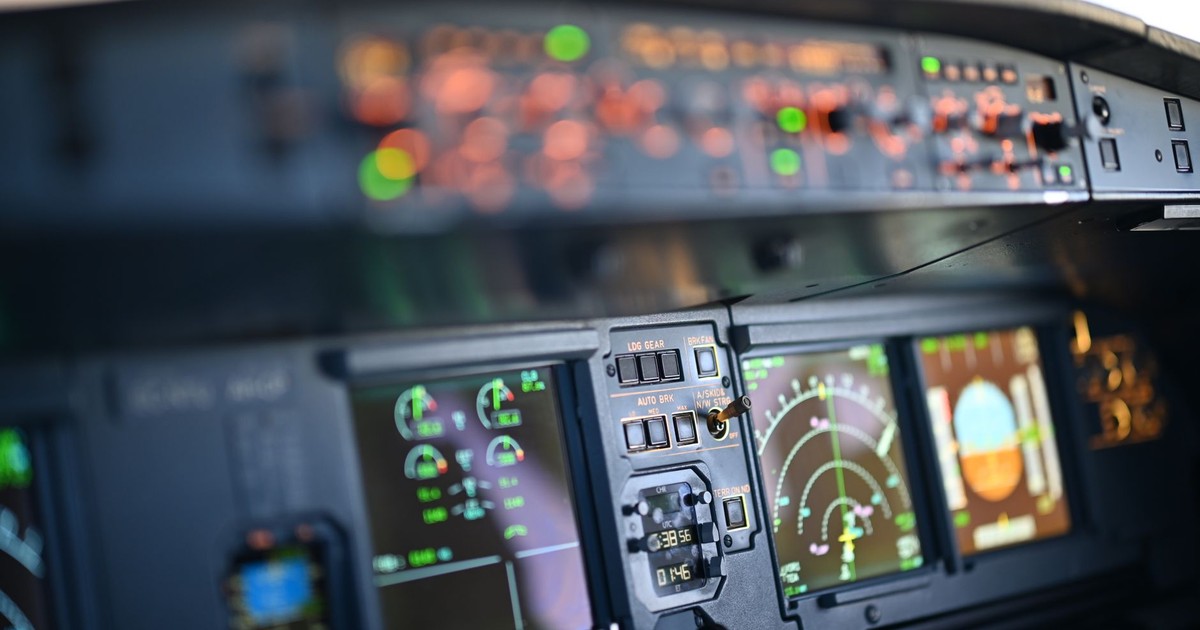
The older VC-25A aircraft, a pair of Boeing 747-200s that have flown as Air Force One since 1990, were purpose-built for presidential transport. They carry laser technology to blind incoming missiles, systems that can misdirect munitions, and a full suite of secure communications built for worst-case command scenarios. The VC-25B Bridge was meant to ease strain on that aging fleet.
The new plane also lacks aerial refueling capability, visible in the absence of a nose-mounted refueling receptacle. That feature, seldom used but strategically significant, gives the older jets a practically unlimited range for emergency scenarios. The compressed ten-month retrofit schedule meant that certain capabilities were deferred to meet the July 4 deadline.
The aircraft routinely carries government officials, military personnel, Cabinet members, members of Congress, and journalists. Any reduction in the plane’s defensive baseline is a risk distributed across everyone who boards it.
The Administration’s Response: Subpoenas and Source Hunting

CNBC reported that the Trump administration subpoenaed several New York Times journalists after their report on security concerns involving the new Air Force One. The Department of Justice ordered several of the paper’s journalists to testify before a federal grand jury. The four reporters bylined on the article, Julian E. Barnes, Eric Lipton, Tyler Pager, and Eric Schmitt, all received subpoenas. In some cases, federal agents delivered them to reporters’ homes. The subpoenas were signed by Jay Clayton, the US attorney in Manhattan, who had recently been nominated by Trump to lead the Office of the Director of National Intelligence.
The Times said the subpoenas were brought in “bad faith” and were an attempt to intimidate journalists and punish their reporting. Journalism advocacy groups condemned the move. The National Press Club urged the Justice Department to “immediately” withdraw the subpoenas, calling the sight of federal agents on reporters’ doorsteps “an extraordinary assault on the freedom of the press.” The Times subsequently asked a federal court to throw out the subpoenas. The Justice Department maintained the leaks were a threat to national security.
Forty-eight hours separated the publication of the security story and the delivery of those subpoenas. Reports that White House Chief of Staff Susie Wiles and FBI Director Kash Patel were personally involved in identifying the leakers suggested the administration viewed the reporting as an acute political threat rather than a national security matter to be managed through normal channels.
Congressional Pressure and Public Scrutiny
Thirteen Democratic senators wrote to Air Force Secretary Troy Meink and L3Harris CEO Chris Kubasik demanding transparency on whether money and resources were diverted from pressing national security requirements to accelerate the Qatari jet’s transformation. The letter, headed by Sen. Chris Murphy, raised concerns about the ten-month conversion timeline and accused the Trump administration of having “stonewalled” congressional requests for information about the aircraft.
Sen. Jeanne Shaheen, a Democrat from New Hampshire and member of the Senate Armed Services Committee, said during a media roundtable at the Farnborough International Airshow: “We knew there were some issues around security with the plane. We’ve known that from the very beginning. Obviously, there was an effort to address that.” Republican senators at the same event pushed back, describing the grounding as responsible caution rather than an acknowledgment of failure.
The “Maxed Out” Announcement and What Comes Next
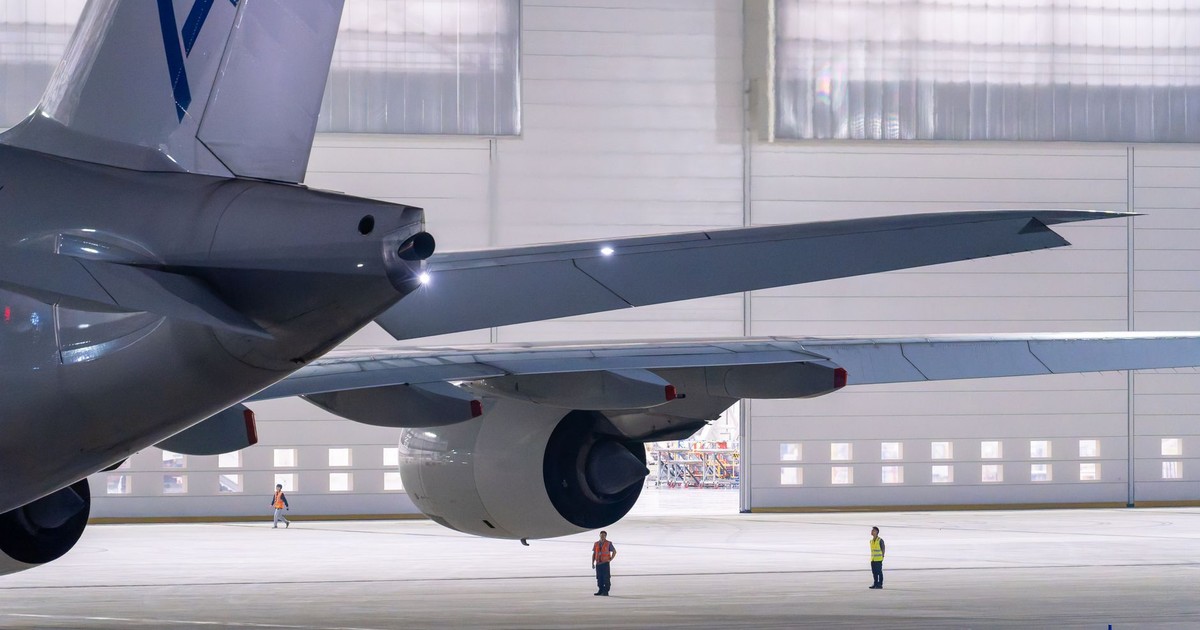
On July 19, 2026, returning from the FIFA World Cup final in New Jersey, Trump addressed the security questions directly for the first time. “It has a lot of capability,” he told reporters at Joint Base Andrews. “But as I understand it, in about a month or so, they’re going to send it to have it be maxed out.”
He did not identify the systems that would be installed or modified, and the US Air Force has not publicly detailed the planned upgrades. His comments came in response to a question about whether the aircraft lacked some of the missile-defense systems carried by the two older Boeing VC-25A aircraft that traditionally serve as Air Force One.
The backdrop to all of this is Boeing’s deeply troubled delivery of the permanent next-generation Air Force One fleet. Boeing is working to deliver two purpose-built 747-8s under a $3.9 billion fixed-price contract signed in 2018 that is now four years behind schedule and over budget. Delivery of the new planes is not expected until mid-2028. The Qatari plane was always intended as a bridge to those aircraft. The security shortcomings now requiring a supplemental upgrade sprint are a direct consequence of compressing what is normally a multi-year security integration process into ten months, in order to fill a gap that Boeing’s chronic delays created.
The bridge jet is slated to transfer to Trump’s future presidential library foundation before he leaves office, an arrangement critics have questioned on ethics and constitutional grounds. That means the aircraft’s current security deficiencies are being corrected at taxpayer expense on a plane that will ultimately leave government hands.
The Cost of Speed Over Security

The ten-month conversion sprint, driven by a White House desire to have a new presidential plane flying by the 250th anniversary of the United States, produced an aircraft that security personnel had reservations about putting the president on at a NATO summit during a period of active regional conflict. The compressed timeline, the diverted missile-program funds, the acceptance of a foreign government’s 13-year-old luxury jet as a presidential transport, those decisions were made months before Trump first boarded the plane in July.
The subpoenas issued to journalists who reported on these facts deserve attention in their own right. Federal agents at reporters’ doors within 48 hours of publication, grand jury subpoenas, and the personal involvement of senior White House and FBI officials. The Times is fighting those subpoenas in court, and the outcome of that legal challenge will have implications well beyond this particular aircraft.
A month in the hangar was always going to be on the schedule, whether or not anyone said so publicly.
Disclaimer: This information is not intended to be a substitute for professional medical advice, diagnosis, or treatment and is for information only. Always seek the advice of your physician or another qualified health provider with any questions about your medical condition and/or current medication. Do not disregard professional medical advice or delay seeking advice or treatment because of something you have read here.
AI Disclaimer: This article was created with the assistance of AI tools and reviewed by a human editor.