

Every ten years or so, the American middle class quietly stops being able to afford something it used to consider standard. Not because of a single bad decision, but because the math stopped working. The home that was a stretch became impossible. The car insurance renewal arrived and looked nothing like last year’s bill. The retirement account stayed flat while the grocery total climbed again.
That shift is happening faster now. What looks from the outside like ordinary financial stress is, for millions of households, a permanent narrowing of what a middle-class income can actually buy. The narrowing is concentrated in a handful of specific categories that keep getting more expensive regardless of what the broader economy is doing.
The categories themselves aren’t new. Housing, healthcare, childcare, transportation, retirement savings: every financial stress article for the past decade has mentioned them. What’s changed is the scale inside each one, and the numbers have moved so far from where they were a decade ago that the middle-class financial sacrifices being made today look less like adjustments and more like permanent surrenders.
The House That No Longer Belongs to the Middle Class
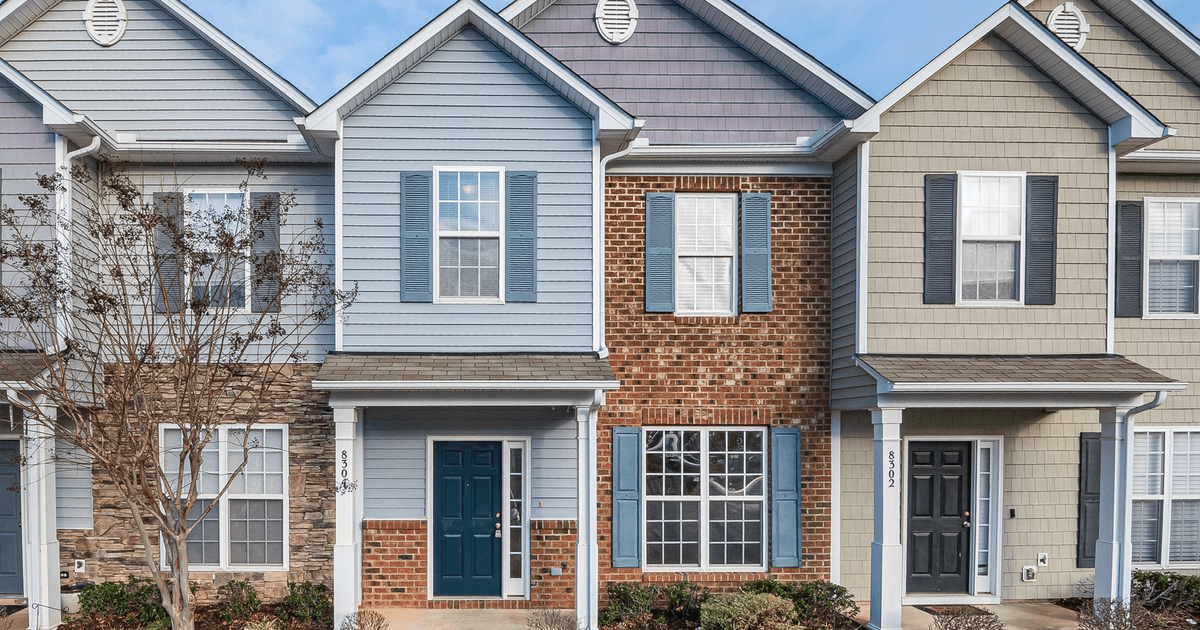
The Bureau of Labor Statistics reported in its May 2026 real earnings release that real average hourly earnings for all employees fell 0.7% from May 2025 to May 2026, after adjusting for inflation. Wages look fine on a pay stub. In purchasing power, they’re declining. That gap is widest in housing, where prices have shifted more dramatically than anywhere else in the household budget.
A 2025 housing report from Harvard’s Joint Center for Housing Studies found the median existing single-family home sold for nearly five times the median household income, compared to a ratio of 3.2 times averaged throughout the 1990s. Monthly mortgage payments on that median-priced home, at roughly $2,420 assuming a modest down payment and a 30-year fixed rate, were nearly double what they were at the end of 2020. Just 16% of renter households earned the $120,800 minimum annual income required to afford that purchase. Listings affordable to households earning $75,000 or less fell from 49% of national inventory in 2019 to just 23% in March 2026.
Homeownership is increasingly behaving less like something earned and more like something inherited. For families who do manage to buy, the cost of carrying that purchase is its own sacrifice. The down payment depletes savings built over years. The monthly mortgage payment crowds out retirement contributions. The home inspection deferred last spring becomes a $12,000 roof repair two winters later. Owning a home at today’s prices means committing a far larger share of household income than any previous generation had to, leaving almost no margin for anything else.
Renting isn’t a comfortable alternative. Prices in much of the country have followed homeownership costs upward, and in many metro areas, the salary required to rent a typical two-bedroom apartment has crossed six figures. Families renting while they wait for prices to drop may be waiting for something that never arrives.
The Retirement Savings That Keep Getting Postponed

Almost half of middle-class households – 46% – report they are not confident they will build sufficient retirement savings, according to the American Council of Life Insurers. That number carries real weight when you understand what sits beneath it: not just uncertainty, but an active redirection of money that should be going toward retirement into covering basic monthly expenses instead.
The ACLI’s January 2026 Financial Resilience Index, which draws on data from the third quarter of 2025,found that middle-class households are facing worsening cost pressures for the first time in over two years, though strong resource growth has kept the overall index in positive territory. Retirement readiness specifically is trending in the wrong direction even as broader financial indicators stay stable.
Even households earning $100,000 or more often find themselves unable to max out their 401(k) or IRA contributions. High cost-of-living expenses redirect money that should be going toward long-term security. Many people are dipping into retirement accounts just to cover emergencies. The sacrifice is compound growth: the kind that silently doubles and triples a balance over 20 years when left alone. Every year a retirement contribution gets skipped or raided is a year of compounding that never happens. By the time the household stabilizes its budget enough to resume saving, the mathematical window has narrowed considerably.
Retirement savings sit at the bottom of the hierarchy of immediate needs – not because people don’t value them, but because every other bill arrives first. The mortgage or rent comes due. The grocery bill follows. The car insurance renewal can’t be ignored. The 401(k) contribution, which feels abstract because retirement feels distant, is where the trimming happens, even though it’s the cut with the longest tail.
Healthcare: The Bill That Arrives Whether You’re Ready or Not

Healthcare expenses have transformed from a manageable budget item into a catastrophic financial burden for middle-class families. Health insurance premiums are experiencing historic increases in 2026, with some families facing more than double their previous costs. The expiration of enhanced subsidies combined with rising insurer rates has created a compounding problem.
Forty percent of middle-class households are not confident they will be financially protected in the event of a major medical expense. That’s nearly half the middle class living with the awareness that one serious diagnosis, one accident, one hospitalization could erase years of careful saving. People skip follow-up appointments they should make. They delay addressing symptoms because the cost of finding out what’s wrong feels too high. They choose the cheaper medication with worse side effects because the better one costs $340 a month.
For families who do have employer coverage, the increases still hit hard. The 2023 KFF Employer Health Benefits Survey, a nationally representative annual survey of private and public employers, found the average family health insurance premium reached $23,968 – a 7% jump from 2022. That’s before out-of-pocket costs: deductibles, co-pays, and prescription expenses on top of the premium. Healthcare isn’t an emergency fund drain anymore. It’s a fixed budget line that keeps growing regardless of whether the family actually gets sick.
Childcare: The Cost That Moves the Income Bracket

Full-time care for two children can cost over $20,000 per year, more than many families spend on housing in a given market. Roughly 446,000 middle-class families are pushed into a lower income bracket each year solely due to childcare costs. Parents face impossible choices between career advancement and financial survival, with many simply exiting the workforce because childcare costs more than they bring home after taxes.
Consider a parent earning $52,000 a year who faces $42,000 in annual childcare costs for two young children. That household is effectively working for $10,000 net before taxes, commuting costs, and work-related expenses. Leaving the workforce can look rational even when it’s financially devastating long-term, because years out of the labor market mean lower Social Security benefits, fewer retirement contributions, and a diminished resume on the day they try to return.
Between 1990 and 2019, the median family’s income grew 140%, but the cost of childcare grew more than 200%, prescription drugs roughly 175%, and higher education close to 400%. Income growth didn’t keep pace with any of them. A middle-class family trying to budget through those gaps isn’t failing at discipline – it’s doing arithmetic that no longer adds up.
Transportation: The Upgrade That Became a Trap

Car insurance costs have surged dramatically over the past five years, driven by rising vehicle repair costs, supply chain disruptions in auto parts, and more expensive vehicles on the road. Full-coverage premiums that felt manageable in 2019 now represent a significantly larger share of household monthly fixed costs. Vehicle prices have followed the same trajectory, pushing average loan amounts into territory that previous generations would have associated only with mortgage payments.
A car payment over $1,000 a month, combined with insurance approaching $225 a month, adds up to $1,225 in fixed transportation costs before gas, maintenance, registration, or tolls. For a family running two vehicles, that figure can exceed $2,500 a month. That’s money that used to go somewhere else: a vacation fund, a home improvement project, a college savings account. The sacrifice isn’t just financial. It’s the slow erasure of the small pleasures that once defined middle-class life – the annual family trip, the new appliance that didn’t require a credit card, the home office renovation that actually happened.
Read More: 7 Things That Will Cost Less in 2025, According to Money Experts
The Grocery Bill Nobody Talks About

Food has become one of the most visible pressure points in the middle-class budget. Grocery prices climbed steadily from 2020 through 2024, and that accumulation became the new baseline rather than a temporary spike. For families already stretched on housing and transportation, the grocery bill is the line item that absorbs whatever discipline remains, which is why store brands have replaced name brands in millions of carts, and proteins get swapped out week by week for whatever costs less that Sunday.
The behaviors being driven by food costs aren’t trivial. Families are restructuring their weeks around sale cycles, driving to multiple stores to find better prices, and making purchasing decisions in the grocery aisle that would have felt extreme to a middle-class household in 2015. None of this is inherently catastrophic in isolation. In aggregate, it represents a measurable contraction in quality of life that compounds alongside every other sacrifice on this list.
Middle-class families are increasingly borrowing for necessities rather than saving for future goals. Debt borrowed to cover groceries today becomes tomorrow’s interest payment. At 20%-plus APR on most credit cards, that interest doesn’t just consume current income – it reduces future purchasing power, limits options, and makes every other financial goal harder to reach.
The Vacation That Moved Off the Calendar

International travel, the extended family road trip, the week at the beach every August – these weren’t luxuries in the traditional sense. For middle-class families, they were the moments that made the rest of the year feel worth it. They are increasingly the first items cut when the budget gets honest.
A middle-class lifestyle in 2026 runs about $6,000 to $8,000 a month in most midsize American cities, covering housing, a car, groceries, utilities, insurance, and childcare for families with kids. When the basic monthly overhead approaches or exceeds what the household brings in after tax, discretionary spending doesn’t get reduced – it disappears. The family vacation is the first casualty because it’s visible, cuttable, and feels like a choice rather than a necessity.
The psychological cost of giving up those reset moments is rarely factored into household financial analysis, but it’s real. Families who stopped traveling aren’t just saving money. They’re losing one of the primary ways middle-class life felt worth the effort.
What the Math Actually Tells You

The list of middle-class financial sacrifices accumulating over the next decade isn’t a prediction of hardship. It’s a description of trade-offs that are already happening for millions of households: deferred retirements, skipped vacations, the second income that barely covers childcare, the car loan that runs to $1,000 a month, the homeownership dream pushed five more years into the future.
For millions of households, the math genuinely doesn’t close. These aren’t struggles confined to the lower end of the income spectrum. They describe people with good jobs, steady incomes, and careful budgets who are still finding that the numbers don’t work – not because they’ve made bad choices, but because the structural costs of ordinary life have grown faster than the income that was supposed to cover them.
The honest takeaway isn’t to work harder or spend less on coffee. The structural costs – housing, healthcare, childcare, education – have grown too fast and too far for individual frugality to compensate. Ruthless prioritization is what’s worth doing: figuring out which sacrifice genuinely damages long-term financial security (raiding a 401(k), carrying high-interest debt) versus which one is painful but survivable (postponing a kitchen renovation, driving the paid-off car another three years). The difference between those two categories is where most middle-class financial decisions actually live, and getting that distinction right is the lever that’s still within reach.
Disclaimer: This information is not intended to be a substitute for professional medical advice, diagnosis, or treatment and is for information only. Always seek the advice of your physician or another qualified health provider with any questions about your medical condition and/or current medication. Do not disregard professional medical advice or delay seeking advice or treatment because of something you have read here.
AI Disclaimer: This article was created with the assistance of AI tools and reviewed by a human editor.