
Most people planning retirement in Arizona work from a mental image that’s about a decade out of date. The brochure version is still compelling: 299 sunny days a year, no state tax on Social Security, an active lifestyle on a golf course, housing costs that look modest next to California or New York. The parts that get left out tend to be the parts that matter most.
Retirees who’ve already made the move are learning that gap firsthand. Affordable housing, cheap utilities, outdoor living, tax simplicity have changed considerably under population growth, climate shifts, and a water system under genuine stress. A handful of specific assumptions are aging badly, and planning a 20- or 30-year retirement around outdated ones is a real financial risk. Here’s what those who’ve actually settled in the state say isn’t worth the hype.
1. The Affordable Housing Promise
Arizona’s reputation as a budget-friendly retirement destination was built on housing prices that existed before 2020. The pandemic reshuffled everything. Arizona saw sharp rises in home prices, especially in popular areas like Scottsdale, Sedona, and parts of Phoenix, with the median home price in Scottsdale ranging from roughly $860,000 to over $1.1 million in 2025 depending on the data source and property type measured.
Costs vary widely by city: Scottsdale runs roughly 30% more than Tucson. A retired couple owning their home in Tucson may live comfortably on $55,000 a year, while a Scottsdale couple carrying a mortgage may need $90,000 or more. The statewide average looks moderate because Tucson and smaller cities pull the numbers down. If you’re drawn to the Phoenix metro, where most of the lifestyle amenities and healthcare infrastructure are concentrated, you’re paying Phoenix prices.
To retire comfortably in Arizona in 2026, the commonly cited baseline is roughly $1.1 million in savings, assuming an annual cost of living near $66,800. That figure surprises people who remember Arizona as the affordable alternative to California. It’s still cheaper than coastal California, but the gap has narrowed considerably.
2. Low Property Taxes Are More Complicated Than They Sound

Arizona does have relatively low property tax rates by national standards. Arizona has statutory caps on how much your property tax rate can rise, but looser caps on the valuation of your home. Because home prices skyrocketed post-2020, the assessed value of many retiree homes has finally caught up to market reality. The rate might be stable, but if a home is now assessed at $600,000 instead of $350,000, the tax bill rises significantly.
Retirees who bought in 2015 and thought they’d locked in a predictable property tax environment are finding their bills looking very different. The rate didn’t change, but the assessed value did, and in a state where home prices roughly doubled in some markets over five years, the difference shows up clearly in the annual bill.
3. The Summer Isn’t Just Uncomfortable, It’s a Health Variable

The summer heat in Arizona gets mentioned in almost every retirement guide, usually with a line about how “you get used to it.” That framing undersells the actual situation. More than 4,320 people died from exposure to excessive heat in Arizona between 2013 and 2024, according to the Arizona Department of Health Services. The state is one of the hottest places on earth from May through September.
For retirees specifically, the risk compounds. For those over 55, the body becomes less efficient at regulating temperature with age, and certain medications increase sensitivity to heat or contribute to dehydration. Arizona’s desert climate means hot, dry summers, and in a city like Phoenix, temperatures average 105°F with heat warnings common between June and September. For retirees who enjoy the outdoors, those temperatures effectively shut down daily outdoor activity for several months of the year.
4. Utility Bills Are Their Own Budget Line Item
Ask any long-term Arizona retiree what they didn’t expect, and utility bills come up almost immediately. Air conditioning in an Arizona summer isn’t a comfort choice, it’s a survival requirement. A poorly insulated home can push cooling costs $200 a month above budget.
The situation got significantly more expensive in 2026 specifically. A new federal mandate requires A2L refrigerants like R-454B, and the new eco-friendly refrigerant cannot simply be added to an old unit. If a pre-2025 compressor fails, the entire system, condenser and air handler, must be replaced to be compatible with the new standards. According to Angi’s 2026 data, the average HVAC replacement in Phoenix costs $7,748, with most homeowners spending between $5,165 and $12,913 depending on system size and installation complexity.
For retirees with homes built before 2020 and older equipment, this is a near-certainty at some point in a long retirement, and it lands at the worst possible time: in the middle of a summer failure, with no leverage over pricing.
5. The Tax Picture Has a Hidden Catch

Arizona’s tax structure is genuinely favorable in some respects. The state doesn’t tax Social Security income, and its flat income tax rate dropped to 2.5%. Those are real advantages, especially compared to states like Colorado or Missouri that do tax Social Security. While Arizona doesn’t tax Social Security benefits and has relatively low property taxes, it does tax most other forms of retirement income, including distributions from 401(k)s and IRAs. This leads to higher-than-expected tax bills for retirees whose income comes primarily from pre-tax retirement accounts rather than Social Security.
Arizona has become the default Sun Belt retirement answer for people who looked at Florida’s insurance bills and California’s tax code and wanted a third option. The state ranks 15th overall on the 2025 State Tax Competitiveness Index, with the 8th-best individual income tax structure in the country, and its cost-of-living index sits essentially at the national average. That’s a respectable position, but not the tax paradise that some of the state’s promotion implies, especially for retirees drawing heavily from traditional IRA or 401(k) accounts.
6. Healthcare Access Outside the Big Cities Is Thin

Phoenix and Tucson have solid healthcare infrastructure, including major hospital systems and reasonable specialist access. Outside those two metros, rural Arizona has thin specialist coverage.
Many retirees who move to Arizona don’t settle in central Phoenix. They settle in communities in the East Valley, the White Mountains, the Verde Valley, or along the Colorado River corridor, drawn by lower prices, smaller towns, and prettier scenery. Some of those communities are hours from the nearest cardiologist, oncologist, or neurologist. At 65, that’s manageable. At 80, when specialist visits become more frequent, the geography becomes a real factor.
The question worth asking before signing a purchase contract isn’t “does Arizona have good hospitals?” It’s “does the specific town I’m moving to have adequate access to the care I’ll need in 20 years?”
7. Long-Term Care Costs Are Above the National Average

The average Arizona retiree can expect to bring in approximately $822,000 from Social Security, savings, and investments over the course of their retirement, but will spend an estimated $984,000 on housing, healthcare, food, transportation, and other essentials. That $163,000 gap is not a rounding error.
A significant driver of that difference is the cost of care itself. Long-term care costs in Arizona rose sharply in 2025 across nearly every care category, according to data from AZ Big Media. A private room in an Arizona nursing home now runs $137,240 annually, up 9% in a single year and well above the national median for a private room, which CareScout’s 2025 cost-of-care data puts at approximately $129,575 per year. Semi-private nursing home rooms climbed 10% to $100,375.
Assisted living tells a similar story. As of 2026, that cost ranges from $3,800 to $6,000 per month, depending on location and level of care. Over several years, which is the realistic planning horizon for many retirees, these figures can consume retirement savings at a pace that surprises people who built their plans around Arizona’s lower overall cost-of-living index.
8. The Water Situation Is Real and Getting Worse
Arizona’s water supply problem has been discussed for decades, which has made it easy to dismiss as a perennial worry that never quite arrives. It’s arrived. The entire Western United States has experienced over two decades of drought conditions, and in 2026, the Colorado River basin is on track for the driest year on record. As of mid-April 2026, Arizona Water Company reported Lake Powell was 24% full and Lake Mead just 32% full.
Arizona will again go without 18% of its total Colorado River allocation, continuing a pattern of cuts as drought lingers in the West. For current homeowners, the immediate impact lands on water rates and restrictions. Municipalities like Gilbert, Scottsdale, and Peoria have restructured their water pricing, with tiered rates that turn punitive quickly for anyone with a pool or established landscaping. The longer-term concern is what sustained scarcity does to property values in communities that depend heavily on Colorado River water, particularly newer developments in the Phoenix suburbs and outlying areas.
For someone planning a 25-year retirement in Arizona, this is a structural variable that deserves more weight in the decision than it typically gets. The river operating rules that have governed Lake Powell and Lake Mead for nearly two decades expire at the end of 2026, and what replaces them remains contested.
9. Homeowners Insurance Costs Are Rising Fast

The insurance story in Arizona doesn’t get the same coverage as Florida’s, but the trajectory is similar. Insurers are increasingly classifying suburban areas on the edge of the desert, known as the Wildland-Urban Interface, as high risk. In 2026, carriers are issuing non-renewal notices or doubling premiums for homes in areas like North Scottsdale, Fountain Hills, and Tucson foothills.
The “you don’t live near a forest” assumption that kept many Arizona homeowners feeling insulated from wildfire insurance problems is eroding. The definition of risk has expanded alongside actual fire behavior in desert-adjacent terrain, and insurers are repricing accordingly. For retirees on fixed incomes who bought into a community specifically because it looked affordable, a doubled insurance premium changes the math considerably.
This is also a cost that compounds on top of the HVAC replacement issue, the rising property tax assessments, and the utility bills. Individually, each is manageable. Together, they can push a retirement budget that looked comfortable at 65 into real stress by 75.
10. The Landscaping and Maintenance Costs of Desert Living
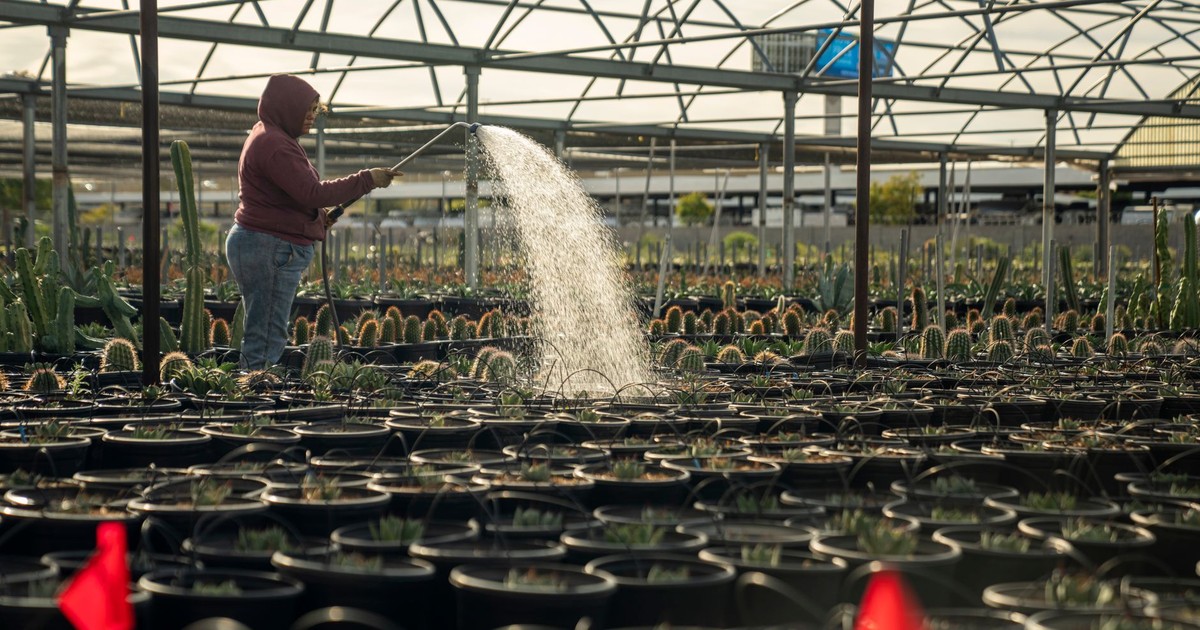
The image of a desert home is often one of low maintenance: gravel instead of grass, a few cacti, nothing to mow. That image is only partially accurate. Desert landscaping still requires active management, and the cost of that management has risen sharply. Due to extreme heat and labor shortages, landscaping companies have aggressively raised prices in 2026. Maintaining a desert landscape, trimming palm trees, removing weeds, and fixing irrigation leaks, is labor-intensive, and service providers are now adding fuel surcharges and heat hazard pay for summer work.
Beyond landscaping, the heat itself drives maintenance costs up across the board. Exterior paint degrades faster. Rubber seals and gaskets fail sooner. Irrigation systems need more frequent inspection. Wood and composite materials crack. The things that need doing in a desert climate are often the same as anywhere else, just on a faster timeline and with additional heat-related complications layered on.
For retirees who are handy and planned to do their own maintenance, the summer heat makes many of those tasks genuinely dangerous for older adults between late May and early October. That means paying someone else to do them, at prices that reflect just how unpleasant the work is.
What’s Worth Weighing Before You Sign

The tax treatment of Social Security is real. The sunshine is real. The healthcare infrastructure in the major metros is solid, and for retirees whose conditions are well-managed, the outdoor lifestyle between October and May is genuinely excellent. For snowbirds who leave in summer, many of the cost pressures listed here shrink significantly.
Most Arizona retirement myths aren’t outright lies. They’re outdated truths that stopped being accurate sometime around 2021 and haven’t been updated in the popular imagination. The housing that was affordable isn’t anymore. The utilities that were manageable have a new regulatory layer pushing costs up. The water table that seemed like a background worry is now a front-page story. A retirement plan built around a 2015 version of Arizona, being executed in 2026, carries far more risk than most people realize going in.
The state can still work. It just demands sharper numbers than it used to. Before signing anything, price out the actual insurance premium for the specific zip code, get the age and model of the HVAC unit, and look up what water district serves the neighborhood and what tier-3 pricing looks like. Those three details will tell you more about the real cost of that house than the listing price will.
Disclaimer: This information is not intended to be a substitute for professional medical advice, diagnosis, or treatment and is for information only. Always seek the advice of your physician or another qualified health provider with any questions about your medical condition and/or current medication. Do not disregard professional medical advice or delay seeking advice or treatment because of something you have read here.
AI Disclaimer: This article was created with the assistance of AI tools and reviewed by a human editor.