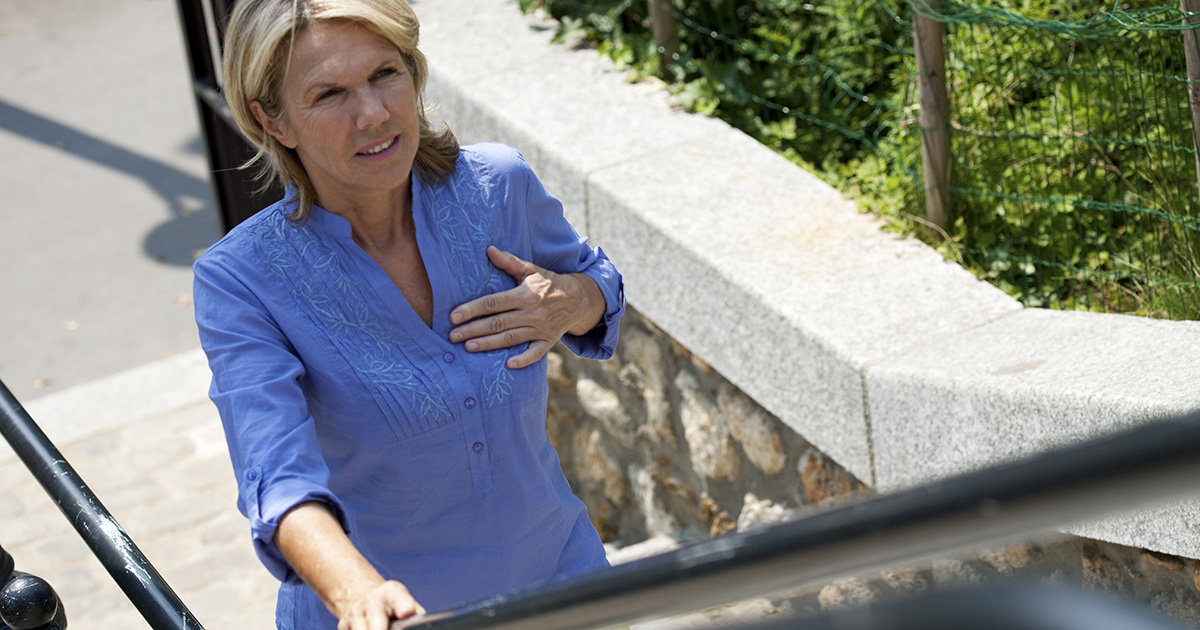

Getting winded on a single flight of stairs, and then watching everyone else sail past you on the landing, is one of those experiences that’s embarrassing in the moment and nagging for days afterward. Most people file it under “out of shape” and move on. Shortness of breath on stairs earns its own medical term: dyspnea. It’s the uncomfortable feeling of not being able to breathe deeply enough, of being “air hungry.” It can occur when climbing stairs, during daily activities like cooking or cleaning, or even when sitting still.
Shortness of breath can come on gradually over weeks or months, or it can happen suddenly. In either case it should be treated cautiously, because it may be the sign of a medical problem. That’s a fair-sized spectrum of possibilities, ranging from “you’ve been sitting at a desk for six months and your cardiovascular fitness has dropped off a cliff” to something that needs a doctor’s attention sooner rather than later. The tricky part is knowing which one you’re dealing with.
Most people assume it’s the former, wait a while, and only act when the breathlessness starts happening on flat ground too. The staircase is often the first place the symptom becomes impossible to ignore, which is exactly why it’s worth understanding what it might mean.
Why Stairs Are a Uniquely Honest Test

Stairs are physiologically unforgiving in a way that flat walking isn’t. Motion-analysis studies show that stair ascent burns more than nine times the metabolic energy of sitting still, so oxygen demand and breathing rate climb almost instantly. Your heart, lungs, and muscles are all suddenly asked to do a lot more work with very little warm-up time. The first burst up a flight relies on the short-lived phosphocreatine system, the body’s fastest energy source. Its fuel runs out in roughly ten seconds, forcing muscles to switch to oxygen-dependent pathways. That’s what triggers the breathless feeling.
Someone who walks comfortably for 20 minutes on flat ground can still find a single flight of stairs surprisingly hard. Flat walking lets the body settle into a rhythm. Stairs demand a sudden spike in output, and anything that limits oxygen delivery (a weak heart, narrowed airways, low red blood cell counts, or simply poor conditioning) shows up fast.
Normal stair climbing should allow you to hold a conversation without gasping. If breathlessness arrives after one or two flights, or comes with chest tightness, that points to either poor cardiovascular fitness or an underlying condition worth investigating. If you can still hold a sentence together at the top of the stairs, your body is probably coping. If you need to stop talking and focus on breathing, pay attention to that.
When It’s Fitness, and When It Isn’t

The most common reason people get winded on stairs is also the least alarming: deconditioning. If you’ve been less active, your heart, lungs, and muscles become less efficient. Your muscles demand more oxygen to do the same work, and you clear carbon dioxide less efficiently. That gap shows up fast on stairs and hills.
Recovery after illness sits in the same category. A recent cold, influenza, or COVID-19 infection can leave airways irritated and stamina lower for weeks. Bed rest, surgery, or extended travel can lower conditioning quickly too, but as you rebuild your routine, stairs tend to feel better.
The signs that distinguish fitness-related breathlessness from something more medically serious are worth knowing clearly. If it eases within a minute or two of resting, stays roughly stable from week to week, only happens with obvious exertion like carrying heavy bags or rushing up multiple flights, and comes with no chest pain, dizziness, or leg swelling, that describes a body that’s simply out of practice. The answer there is structured, gradual exercise: starting with flat walking and building consistently over weeks rather than months.
The red flags look different. Breathlessness that is new, getting worse, or arrives after just one flight of stairs (particularly when you now need to stop during simple tasks that used to be easy) warrants attention. So does becoming short of breath with mild activity, while talking, or even at rest. If recovery takes longer than it used to, or if breathlessness comes with chest pressure, dizziness, palpitations, wheezing, leg swelling, fever, or cough, something beyond fitness is likely involved.
The Lung Conditions Most Often Behind It
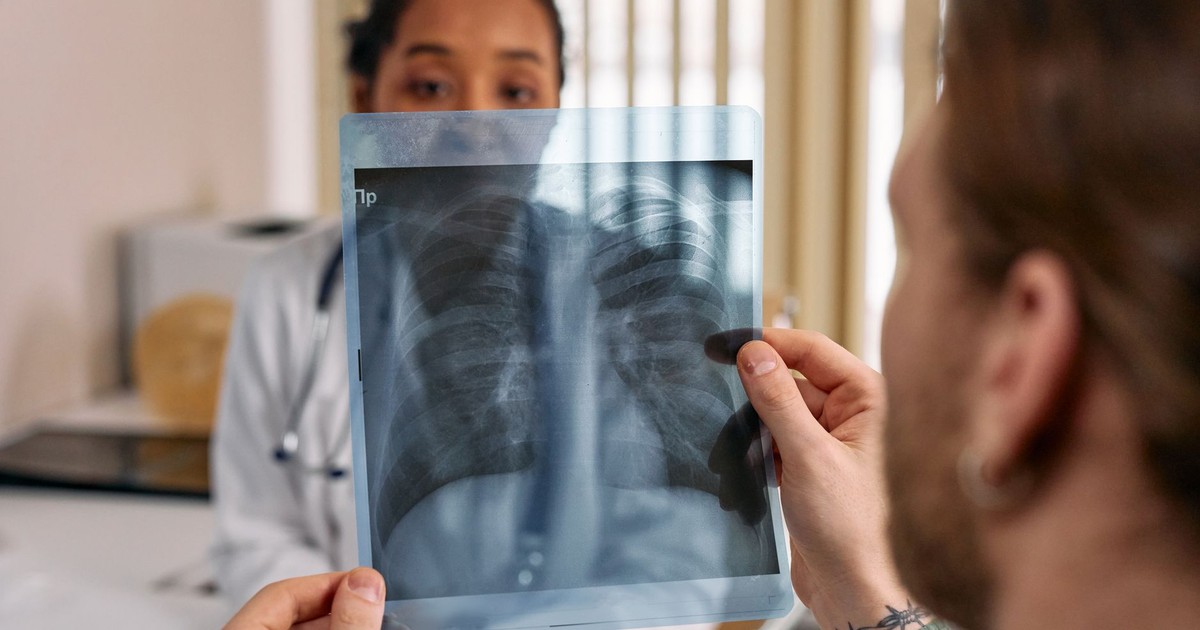
COPD (chronic obstructive pulmonary disease) often first shows up as unexplained shortness of breath during routine activities like stair climbing, sometimes years before a formal diagnosis. It develops gradually, and its early symptoms are easy to wave off as being a bit out of shape. The gap between the first symptom and the actual diagnosis is often years, which is part of why the condition is so frequently underestimated.
A May 2025 CDC data brief found that the age-adjusted prevalence of diagnosed COPD in U.S. adults was 3.8%. Women had a higher rate of diagnosed COPD (4.1%) than men (3.4%), a pattern that reflects diagnosis rates rather than confirmed biological prevalence, since research suggests women with COPD have historically been underdiagnosed. Prevalence rises sharply with age, from 0.4% in adults aged 18 to 24, to 10.5% in those aged 75 and older. Those diagnosed numbers only reflect people who already know they have it; a substantial number are living with the condition unaware.
Mild asthma or early-stage COPD can drop peak expiratory flow (the maximum speed at which you can exhale) by 15% during exertion, enough to create tightness that only appears when stair-climbing. In practice, this means a person can function reasonably well during low-demand moments but hit an invisible ceiling the moment oxygen needs spike. Asthma, in particular, can be triggered by cold air, allergens, or exercise itself, which is why some people find stairs harder in winter or after spending time around certain environments.
Anyone noticing persistent wheezing, a cough that hangs around for more than a few weeks, or breathlessness that follows them into rest is worth getting evaluated. Spirometry (the breathing test that measures how much air you can move and how fast) is the standard diagnostic tool, and it’s straightforward.
The Heart Connection

Cardiac causes of shortness of breath on stairs are taken seriously precisely because stairs are one of the first places they show up. When the heart struggles to deliver oxygen-rich blood efficiently to the muscles and organs, breathlessness on exertion follows. According to Manipal Hospitals, heart failure (a condition where the heart muscle becomes too weak or stiff to pump blood adequately) is one of the key causes. Its impaired pumping often leads to fluid buildup in the lungs (pulmonary congestion), which creates significant breathlessness during activity.
Coronary artery disease, where blocked or narrowed arteries reduce blood flow to the heart muscle, forces the heart to work harder, producing symptoms like shortness of breath and chest pain during physical effort. Valvular heart disease (problems with the heart’s valves that disrupt blood flow within the heart and to the rest of the body) increases the workload on the heart muscle, causing breathlessness during exertion as the body competes for oxygen.
Sudden difficulty with stairs in someone who was previously active often signals cardiovascular issues, with heart disease accounting for around 40% of exercise intolerance cases in adults over 50. The symptom combination that should prompt an urgent conversation with a doctor includes shortness of breath accompanied by chest pressure or heaviness, pain that radiates to the arm or jaw, heart palpitations that feel like fluttering or pounding, or feeling dizzy or faint during or after exertion.
Heart-related breathlessness doesn’t always come with chest pain. In women especially, the presentation can be subtler: unusual fatigue, breathlessness, and a vague sense that something is “off” are sometimes the only early signs.
The Less Obvious Culprits

Not every cause of shortness of breath on stairs fits neatly into “lungs” or “heart.” Anemia and thyroid problems can both produce these symptoms. Anemia (a shortage of red blood cells, or red blood cells that can’t carry enough oxygen) means the body runs on a reduced oxygen delivery system all the time. Stairs expose that deficit immediately. The thyroid is the body’s metabolic regulator; an underactive thyroid slows everything down, including the cardiovascular response to exercise.
Anxiety is another underappreciated driver. The breathlessness it produces is real and physical, not imagined, but it doesn’t originate in the heart or lungs. If stair-climbing triggers anxiety, the resulting hyperventilation can feel almost identical to exercise-induced breathlessness, which makes it hard to distinguish without looking at the full pattern of when and where symptoms appear.
Body weight is also a direct factor. Extra weight means more vertical work per step. Every kilogram carried up a staircase requires the heart and lungs to work proportionally harder. For people who carry significant extra weight, the breathlessness on stairs can be fitness-related, weight-related, or the first sign of a related condition like high blood pressure or sleep apnea, and often all three at once.
About 1 in 4 people who report daily breathlessness have an undiagnosed medical cause. That figure matters because it means the “I’m just out of shape” explanation, while sometimes accurate, is wrong far more often than most people assume. Getting checked is rarely alarmist; it’s how conditions get caught early.
When to Act, and How Urgently

Most episodes of shortness of breath on stairs don’t require an emergency room visit. But some do. Sudden or severe shortness of breath (especially with chest pain, fainting, blue lips, or coughing up blood) is a medical emergency. Don’t wait on those.
For symptoms that are new, gradually worsening, or persistent enough to make you think about them beyond the staircase itself, a primary care appointment is the right first step. A physical exam, blood tests (including a full blood count to check for anemia and thyroid function), an EKG, and potentially a chest X-ray or echocardiogram (an ultrasound of the heart) can together give a clear picture of what’s happening.
Keeping a record of which activities trigger breathlessness, how quickly you recover, whether symptoms are worsening, and any other symptoms that accompany them gives a doctor a useful pattern to work from. The American Lung Association defines dyspnea as the feeling of being unable to breathe deeply enough, separate from simple tiredness. Naming it accurately when you walk into that appointment helps a clinician narrow the diagnosis faster.
What the Staircase Is Actually Telling You

The staircase isn’t the problem. It’s just the messenger. For a large percentage of people, shortness of breath on stairs is the body’s first legible signal that something has shifted (in fitness, in lung function, in cardiovascular capacity) and it’s asking for a response.
The shape of that response depends on what’s behind it. For the deconditioned, it means a genuinely gradual return to regular movement: 10 to 15 minutes of walking most days, building slowly over weeks, not a sprint back to the gym. For those with a lung or heart condition, management through a doctor becomes the foundation everything else sits on. But in both cases, the first and most important thing is not deciding, on your own, that it’s probably nothing.
Breathlessness that’s new and persistent rarely resolves by being ignored. It almost always either stays the same or gets worse, until it starts happening on flat ground too. The staircase just has a way of making the issue impossible to walk past. And sometimes the most useful thing you can do with a symptom you’ve been dismissing is to stop, catch your breath, and actually listen to it.
Disclaimer: This information is not intended to be a substitute for professional medical advice, diagnosis, or treatment and is for information only. Always seek the advice of your physician or another qualified health provider with any questions about your medical condition and/or current medication. Do not disregard professional medical advice or delay seeking advice or treatment because of something you have read here.
AI Disclaimer: This article was created with the assistance of AI tools and reviewed by a human editor.