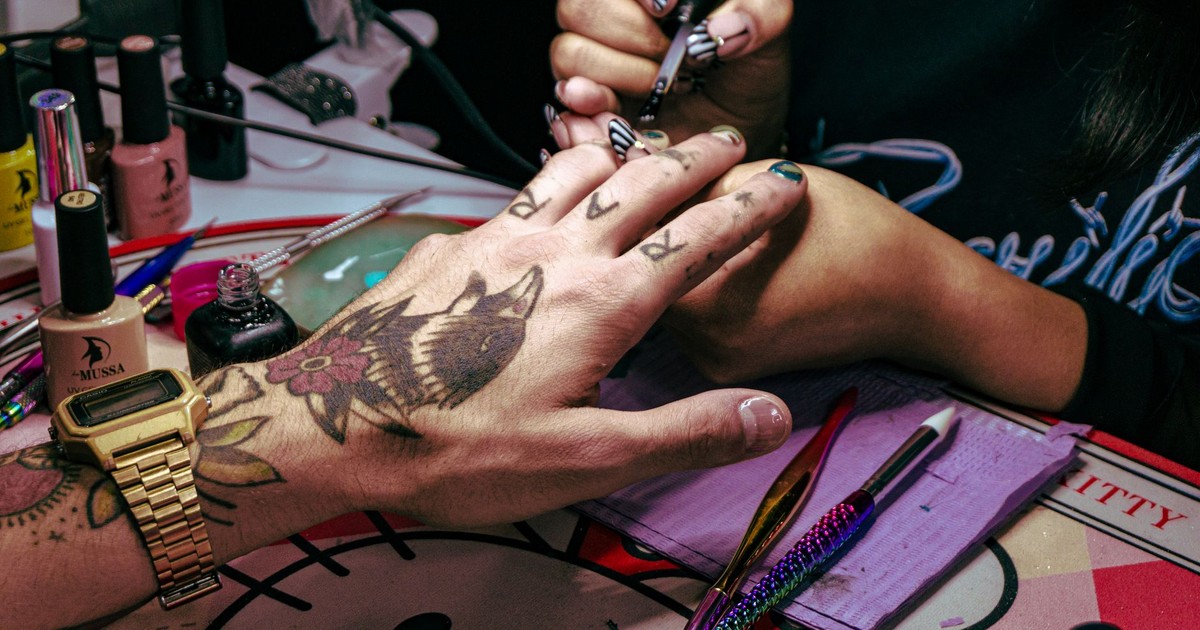

Three small dots in a triangle. Most people who have one on their hand got it at a fine-line studio, picked it because it was small, affordable, and looked clean. Some of them know exactly what it means. Others are only finding out now, in comment sections, that the mark has been doing serious cultural work for over a century.
When the symbol went viral again in July 2026, the reaction ranged from genuinely stunned to darkly funny. One X user, upon reading what the dots can signal in criminal culture, wrote that anyone spotting the tattoo should “run as far as you can.” Another replied: “Imagine explaining this to your grandma.” The grandma might well have one too, and her version of the story would be completely different.
Three dots developed independently across continents, each culture finding its own meaning in the same simple shape, with none of them aware the others existed. That history, across prison yards, French docks, anarchist pamphlets, and church pews, carries weight worth knowing before you either get the tattoo or judge someone who already has it.
What “Mi Vida Loca” Actually Means

The three dots tattoo is a common prison tattoo that represents “mi vida loca,” or “my crazy life,” and is not associated with any particular gang, but with the gang lifestyle itself. Just as with the similarly infamous teardrop tattoo, the three dots are not tied to any specific gang affiliation. You’ll find them on both sides of the bloody rivalry between the Norteños and the Sureños, and on members of the Salvadoran Mara Salvatrucha.
The meaning emerged from Chicano gang culture in Southern California during the mid-20th century. The three dots represented past, present, and future lived outside the law. Each dot held temporal significance: where you’ve been, where you are, and where you’re headed.
The tattoo originated in underground and prison cultures as a symbol of street life, rebellion, and survival. The dots also stand for three aspects of gang culture: the hospital, the prison, and the graveyard. The three words of the phrase each point to one of those three destinations.
Often placed on the hand, between the thumb and forefinger, or on the cheekbone below the eye, the tattoo communicates the wearer’s status as a lifelong gang member, a punctuation mark of acceptance of the violence and erratic elements common in that lifestyle. Placement was never accidental. Under the eye or on the hand: the two locations on the body that face the world most directly.
How It Traveled Across the World
The American story is the loudest, but it’s not the oldest. Cultural anthropologist Margo DeMello, cited in a Mental Floss report, suggests the three dots might come from a French criminal tattoo, in which the trio of spots stood for mort aux vaches, or “death to the cows,” cows meaning the police. In that context the dots weren’t about a lifestyle, they were a declaration of war against law enforcement, coded into three tiny marks that a judge would never notice on a defendant’s hand.
In Russian prison culture, the three dots tattoo is a symbol of criminal status and brotherhood. It represents adherence to the “thieves’ law” (воровской закон) and signals a life of crime. Russia’s criminal tattoo culture is among the most codified in the world.
During the 20th century in the Soviet Union, prison and criminal communities maintained elaborate tattoo systems to indicate members’ ranks and affiliations. Among those imprisoned under the Gulag system, tattoos served to differentiate a criminal leader or thief-in-law from a political prisoner. Wearing an unearned tattoo in that context was not a fashion mistake. Misappropriating the marks of a “legitimate thief” could be punished by death, or the prisoner would be forced to remove them with a knife or a shard of glass.
In Russia today, a three dots tattoo can lead to discrimination, as it implies a criminal past. The social weight behind those three marks in that context hasn’t dissolved just because the Soviet system did.
In Germany, the three dots tattoo has undergone a transformation from a prison symbol to a mainstream minimalist design, having previously been seen among German inmates. Some adopted it during the 1980s as a punk symbol of resistance and rebellion. The punk adoption was almost deliberate in its irony: taking a mark associated with criminal systems and wearing it as a badge of anti-establishment attitude, stripped of its original allegiance. The dots didn’t change. The politics around them did.
The Meanings That Have Nothing to Do With Crime
The three dots symbol has existed for centuries and appears in religion, mysticism, and underground cultures. In ancient history, three dots were used to represent completeness, as in the Holy Trinity (Father, Son, and Holy Spirit) or the cycle of life (birth, life, and death).
The three dots tattoo can also carry religious significance, such as representing Christianity’s Holy Trinity. For Christians who get the tattoo with that intention, the arrangement is usually different: three dots in a vertical line on the wrist or finger rather than a triangle between the thumb and forefinger. Placement carries the meaning. The same three dots in a different formation on a different part of the body tell a completely different story.
Swedish sailors called the three dot tattoo “hobo dots” (luffarprickar) and used it as a protective symbol on long voyages, while European anti-establishment groups adopted it and Filipino fraternities marked members with it. The simple geometric shape developed independently across continents with completely different meanings long before modern gang associations entered the picture.
A mathematics enthusiast might choose three dots arranged vertically to represent the “therefore” symbol used in logical proofs, with zero connection to gang culture. But when placed between the thumb and forefinger, that same placement will likely be read as “mi vida loca” by law enforcement and anyone else familiar with gang tattoos, regardless of the wearer’s actual intent. The meaning is in the eye of the beholder as much as the intention of the wearer. Depending on who’s doing the beholding, the consequences are very different.
The Vietnamese Interpretation

One of the less-reported but most revealing variations of the three dots tattoo meaning comes from Vietnam. Vietnamese teenagers adopted the three dot tattoo with the interpretation toi khong can gi ca, meaning “I care about nothing” or “I don’t care about anything.” That translation shares DNA with the American “mi vida loca” version. Both are expressions of deliberate disconnection from mainstream expectations, but the Vietnamese version carries a particular nihilism that was its own cultural product. Not rebellion against a specific system so much as a complete rejection of social obligation. Three dots as a shrug.
The fact that three unconnected cultures, Chicano California, Soviet prisons, Vietnamese youth, all independently reached for the same three-dot symbol to express some version of “I operate outside your rules” says something interesting. The simplest marks tend to carry the biggest weight. They’re easy to apply in conditions where tattooing equipment isn’t available. They’re easy to hide. And they’re ambiguous enough to pass as nothing to everyone except those who already know.
Who’s Wearing It Now

The three dots tattoo has since been adopted by many in Gen Z who prefer minimalist tattoos, with three dots said to represent “continuity or balance.” The fine-line, micro-design trend that has defined tattooing in the mid-2020s has brought hundreds of old symbols back into mainstream visibility with none of their original context attached.
Three dots fit every criterion. Small, geometric, fast to apply, easy to place on a wrist, a collarbone, a finger. The people getting them today in a fine-line studio in East London or a tattoo parlor in Austin are usually not thinking about Chicano gang culture or Soviet thieves. They’re thinking about continuity, about the ellipsis as a symbol of something unfinished, of life still in progress.
Three dot tattoos traditionally symbolize “Mi Vida Loca” or “my crazy life” and are commonly used to represent struggle and appreciation of life. They can communicate an intention to move forward after unfortunate circumstances. These tattoos are most common in underprivileged or minority communities and speak to an individual’s resilience and perseverance despite a challenging start in life. That original meaning, stripped of its gang-specific context, actually overlaps considerably with how young people today describe why they get them. The language has changed. The emotional territory has not.
The Weight of a Symbol You Don’t Own
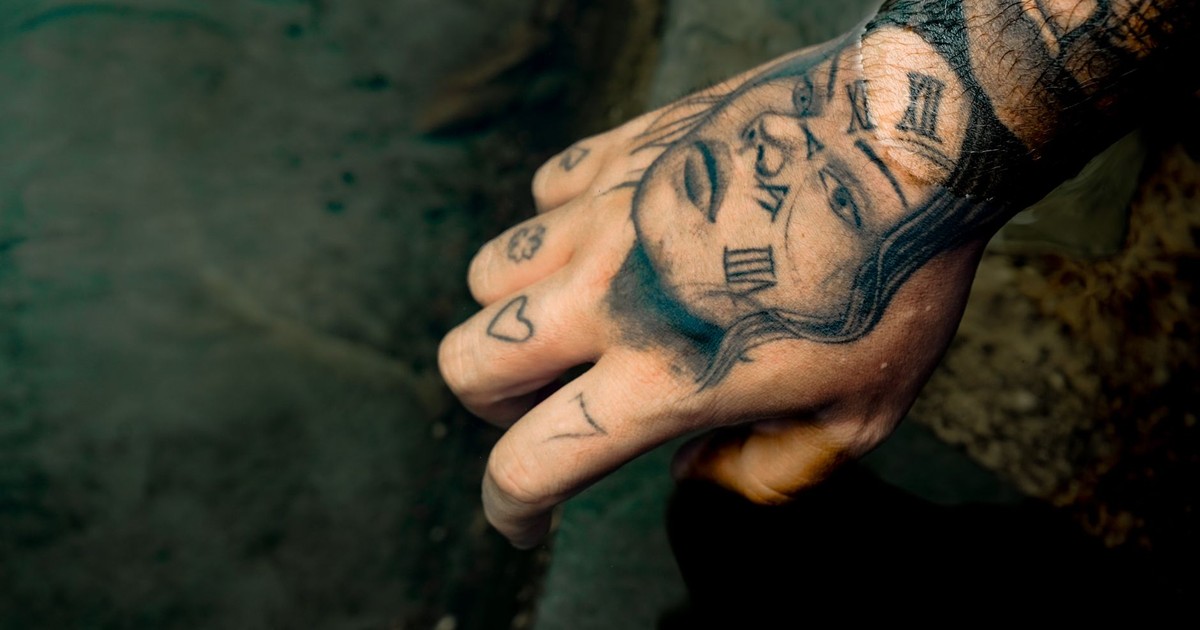
A symbol can be entirely sincere on one person’s wrist and carry completely different associations on the wrist of the stranger next to them, even when the ink looks identical. The dots don’t change. The context around them does all the work.
A number of common tattoo designs carry hidden meanings rooted in prison and gang culture, with three dots in particular prompting people online to warn others to steer well clear. The tattoo is closely associated in the United States with the phrase “Mi Vida Loca,” meaning “my crazy life,” and while it isn’t tied to any single gang, it broadly signifies an affiliation with that lifestyle. Many people got the tattoo based on its aesthetic value alone, without knowing they were picking up a symbol that carries serious weight in at least four separate criminal subcultures across three continents.
Knowing that history doesn’t require you to put the needle down. But it does mean you’re wearing something honestly. Some symbols earn their weight over decades. The three dots have been doing that since long before anyone started calling them minimalist. The people who first marked themselves with this design were not thinking about fine lines and TikTok aesthetics. They were thinking about survival, about loyalty, about a life that didn’t leave many other options. Five minutes with that history changes nothing about how the tattoo looks, but it changes everything about what it means to wear it.
Disclaimer: This information is not intended to be a substitute for professional medical advice, diagnosis, or treatment and is for information only. Always seek the advice of your physician or another qualified health provider with any questions about your medical condition and/or current medication. Do not disregard professional medical advice or delay seeking advice or treatment because of something you have read here.
AI Disclaimer: This article was created with the assistance of AI tools and reviewed by a human editor.