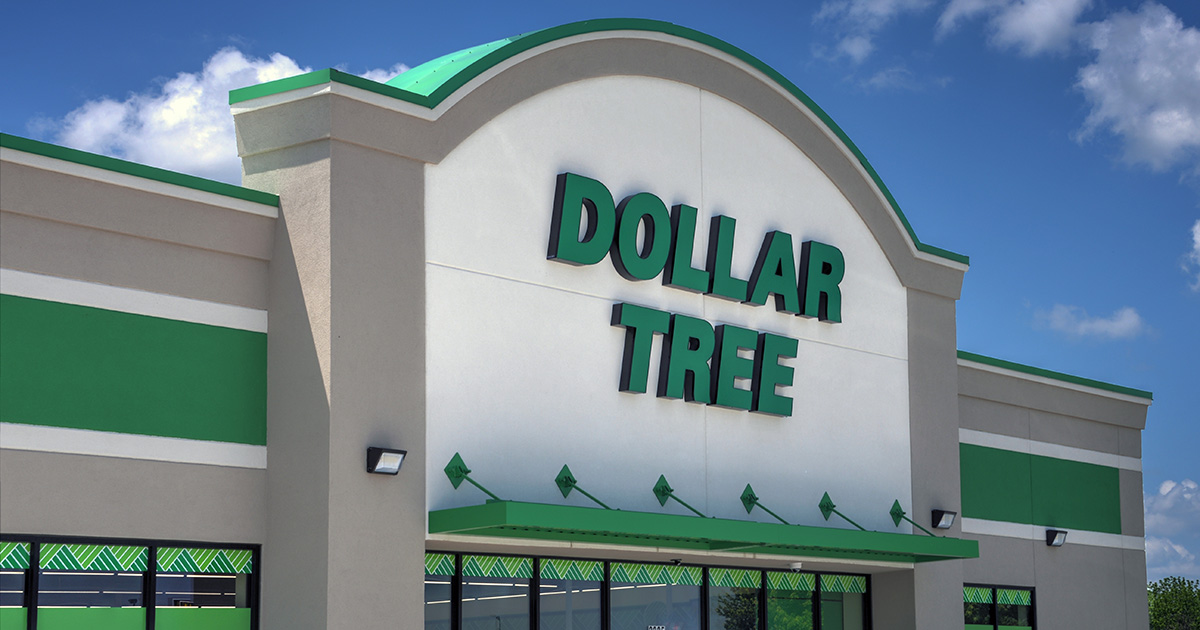

Dollar Tree spent a decade carrying the weight of Family Dollar, a chain it acquired in 2015 for approximately $9 billion and spent nearly ten years trying to make work. The turnaround never quite arrived. When Dollar Tree finally offloaded Family Dollar in the summer of 2025, the company, now running a single banner with more than 9,000 stores, had a very different plan for what comes next.
Dollar Tree released its first-quarter fiscal 2026 results on May 28, 2026. Seventy-five stores would close. Roughly 400 new ones would open. The net effect is a company that is growing, pruning, and repositioning all at once.
How Dollar Tree Got Here

Dollar Tree completed the sale of its Family Dollar business to Brigade Capital Management and Macellum Capital Management for an aggregate base purchase price of $1,007.5 million in cash. The transaction closed on July 7, 2025, a date that now marks a clean dividing line in Dollar Tree’s history. Dollar Tree had paid approximately $9 billion for Family Dollar a decade earlier, meaning the sale crystallized a loss of roughly $8 billion. CEO Mike Creedon called the completion of the transaction “a defining moment for Dollar Tree.”
Whether or not that’s the kind of executive optimism that turns out to be right, it at least made Dollar Tree’s direction obvious: stop managing two different businesses and get very good at one.
The financial results that followed the Family Dollar exit pointed in the right direction. Dollar Tree’s full-year fiscal 2025 results showed net sales from continuing operations rising 10.4% for the year to $19.4 billion, with same-store sales up 5.3%. For a chain that had spent years absorbing losses in a brand that was structurally difficult to fix, those numbers reflected what the core Dollar Tree business looked like without the drag.
What “Closing 75 Stores” Actually Means

The Dollar Tree store closure headline is accurate: Dollar Tree plans to close dozens of stores nationwide this year. The Chesapeake, Virginia-based company said in its first-quarter earnings report, released May 28, that it expects to close about 75 stores during fiscal 2026. But the context changes what that number means. At the same time, Dollar Tree plans to open roughly 400 new stores this year, meaning its total store count is expected to grow.
Dollar Tree did not say which locations will shut their doors. Store-tracking data cited by TheStreet found that Dollar Tree had already closed more than a dozen locations by March, including four in New Jersey and three in New York. Anyone worried about their nearest location will likely find out through local news or a sign on the door, not a corporate announcement.
During the company’s first-quarter earnings call, CEO Michael Creedon acknowledged that a significant number of Dollar Tree stores have not met the retailer’s internal expectations. At an investor presentation earlier this year, the company said about 42% of its stores were below its standards. Creedon said that figure has since fallen to less than one-third as renovations and operational improvements continue. He told investors: “Still not where we want it to be, but significant improvement.”
The 75 Dollar Tree store closures represent the bottom of that distribution: the underperforming locations that renovation and operational fixes can’t save. Dollar Tree plans to open roughly 400 new locations and expand its multi-price format nationwide, which is the other side of that same bet. The retailer isn’t shrinking. It’s editing.
The Multi-Price Shift That Changes Everything

Walk into a Dollar Tree today, and the $1.25 price point that defined the brand for decades is still there. But it no longer tells the full story. Dollar Tree is pressing ahead with a multi-price strategy that now includes more items priced in the $3 to $5 range. Dollar Tree also converted or added roughly 630 locations to its multi-price format during the first quarter of 2026. That brings the total number of locations selling products at various price points to about 5,900.
The strategic logic is straightforward: a single price point limits what you can sell. If everything costs $1.25, you can’t stock full-size cleaning supplies, national-brand personal care items, or larger food packs. The fixed-price model created an artificial ceiling on the merchandise. Multi-price removes it. Dollar Tree has described the strategy as designed to increase basket size and drive margin expansion by introducing new categories, larger pack sizes, and branded items that a single price point couldn’t support.
The Q1 numbers backed that up. Net sales increased 7.2% to $5.0 billion, with comparable store net sales up 3.5%, driven by a 4.5% increase in average ticket. Shoppers were spending more per trip, and the wider price range was part of why. Gross profit margin increased 120 basis points, with the improvement primarily driven by higher mark-on, lower freight costs, and lower shrink, partially offset by higher tariff costs and higher markdowns.
There’s also a digital component to the expansion. In August 2025, Dollar Tree announced a nationwide partnership with Uber Eats, and by January 31, 2026, over 8,800 Dollar Tree stores were serviceable through the platform. For a retailer that built its brand entirely around the in-store treasure-hunt experience, that’s a notable shift in how it thinks about reaching customers.
A New Customer Dollar Tree Is Chasing

One of the more counterintuitive parts of Dollar Tree’s 2026 story is who is suddenly showing up to shop. Dollar Tree CEO Michael Creedon said the chain continues to see a significant boost in traffic, with 3 million more households shopping at its stores during a recent three-month period compared with the same period a year earlier. Approximately 60% of those new customers were higher-income households, those earning over $100,000. About 30% were middle-income households, earning between $60,000 and $100,000.
Some of that is inflation and tariff fatigue: higher earners aren’t immune to grocery bills that have climbed steadily, and Dollar Tree offers a genuine value proposition on household essentials. But Dollar Tree is also actively pursuing these shoppers rather than just accidentally attracting them. The growth comes as the discount retailer increasingly opens stores in more affluent areas in an effort to attract higher-income shoppers who tend to spend more per visit.
Over the last six years, nearly half of Dollar Tree’s new U.S. locations opened in affluent ZIP codes that had median household incomes higher than the regional average, a step up from just over 40% of new stores that the company opened in high-income areas during the preceding six years. Dollar Tree even debuted its 9,000th store in Plano, Texas, an affluent Dallas suburb that has Porsche and Ferrari dealerships within blocks of the discount retailer.
A $100K-household customer who buys a $5 candle, a national-brand snack, and a seasonal item in one trip generates a very different receipt from a customer buying three $1.25 items and leaving. Multi-price isn’t just about product variety. It’s about making the store worth visiting for a broader slice of the population.
Tariffs, Margins, and What Dollar Tree Is Managing Right Now

Not everything in Dollar Tree’s outlook is clean. The company is operating in a tariff environment that creates real cost pressure, since a large portion of its merchandise is sourced from overseas, particularly China. Analyst commentary has suggested Dollar Tree may actually benefit from a broad tariff environment in a way some competitors don’t. When every retailer faces higher import costs, a value retailer has an easier time raising prices without losing shoppers who came specifically to save money.
Dollar Tree raised its full-year guidance after the first quarter. According to the company’s updated fiscal 2026 outlook filed with the SEC, Dollar Tree now expects net sales from continuing operations in the range of $20.5 billion to $20.7 billion, based on comparable store net sales growth in the range of 3% to 4%, approximately 400 new store openings and 75 closings, and adjusted diluted earnings per share in the range of $6.70 to $7.10. That’s the kind of guidance revision that suggests management has more confidence in the second half of the year than the cautious language around tariffs might initially imply.
The Bigger Picture on Dollar Tree Store Closures

Seventy-five Dollar Tree store closures sitting inside a net gain of more than 300 locations is essentially a quality-control program dressed in headline clothing. The stores being shuttered are underperformers: locations where the economics don’t justify continued operation, whether because of lease terms, local market conditions, or the honest acknowledgment that a store in the wrong neighborhood won’t suddenly become viable under a multi-price model. The broader discount retail sector is going through real consolidation right now. Family Dollar has permanently closed hundreds of locations since its sale. Dollar General has faced its own pressures. Value retailers that are surviving are the ones that can give shoppers a reason to return as prices creep upward and inflation-tired consumers get harder to retain.
That context matters for shoppers wondering whether their local store is at risk. Dollar Tree did not say which locations will shut their doors. What is clear is that the closures are concentrated in underperforming locations, not driven by a geographic retreat or a fundamental pullback from discount retail.
What This Actually Means

Dollar Tree is not closing stores because its model is failing. It’s closing them because it now has the clarity and financial discipline to admit which locations were never going to perform and the confidence to replace them with something better. That’s a fundamentally different kind of closure announcement than a retailer in distress shutting locations to stop the bleeding.
The question is whether the multi-price pivot and the pursuit of higher-income shoppers changes what Dollar Tree is at its core. The brand was built on the accessible thrill of finding something useful for almost nothing. Raising price points, targeting suburban shoppers earning six figures, and expanding through delivery services all pull in a particular direction. Whether that direction eventually alienates the customers who need Dollar Tree most, not as a treasure hunt, but as a genuine household budget necessity, is a tension that won’t resolve cleanly in a single quarterly earnings report. What a retailer decides it wants to be, and who it decides to serve, tends to be a longer story than any one fiscal year tells.
Disclaimer: This information is not intended to be a substitute for professional medical advice, diagnosis, or treatment and is for information only. Always seek the advice of your physician or another qualified health provider with any questions about your medical condition and/or current medication. Do not disregard professional medical advice or delay seeking advice or treatment because of something you have read here.
AI Disclaimer: This article was created with the assistance of AI tools and reviewed by a human editor.