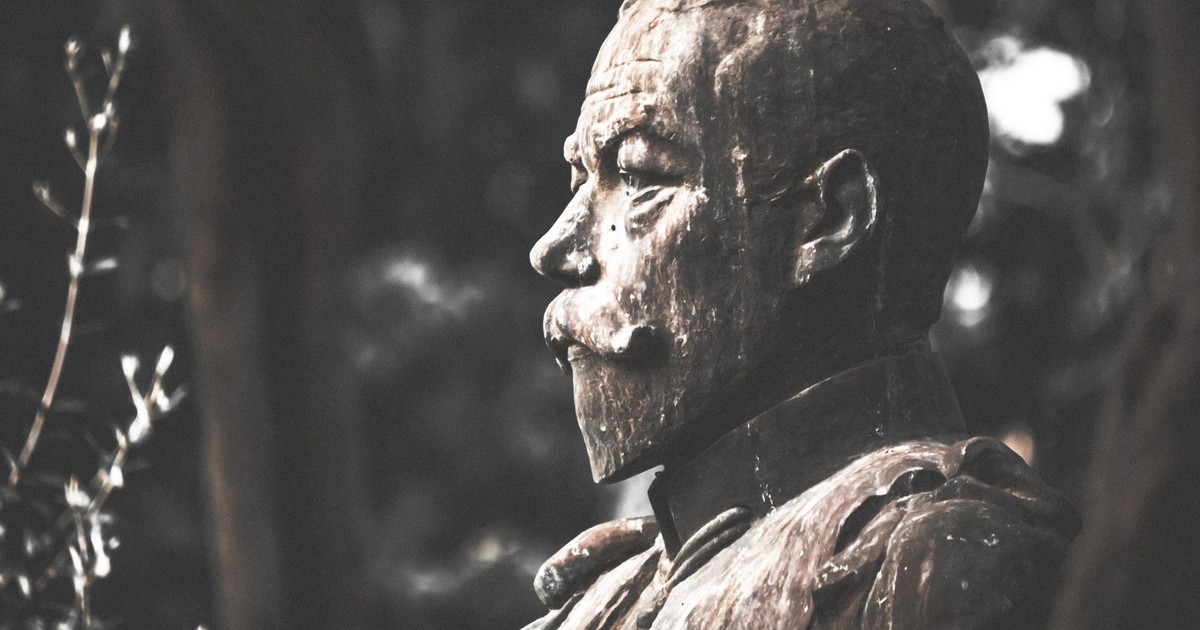

The argument that sparks the biggest fights isn’t always the one with the highest stakes. Sometimes it’s the smallest slight that never gets forgiven. A disapproving glance in a public forum. A rival who keeps winning. A bureaucrat who calls your art obscene.
Emperors, artists, generals, queens: people who commanded armies and reshaped civilizations also spent considerable energy getting back at critics, rivals, and anyone who so much as rolled their eyes at them. The revenge they cooked up was often wildly disproportionate to the original offense.
These 14 petty revenge examples prove that the impulse to get even doesn’t care about your power, your legacy, or your place in the history books. All it needs is a bruised ego and a little creativity.
1. Michelangelo Painted His Critic Into Hell
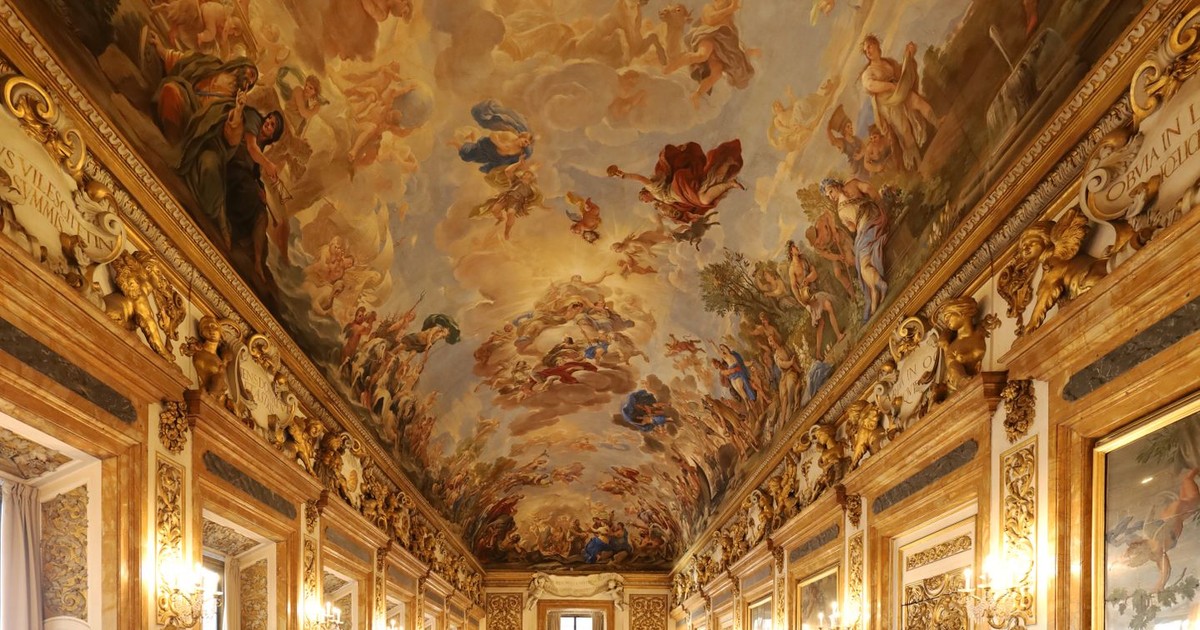
When Biagio da Cesena, the Pope’s master of ceremonies, saw Michelangelo’s unfinished Last Judgment fresco in the Sistine Chapel, he complained loudly that the nudity was shameful and more appropriate for a bathhouse or tavern than a sacred space. He said this to Pope Paul III himself, apparently expecting some sort of intervention.
Michelangelo’s response was to paint da Cesena into the fresco as Minos, judge of the underworld, with a serpent wrapped around his legs and biting his genitals. When da Cesena appealed to the Pope to have it removed, the pontiff reportedly replied that his jurisdiction did not extend to hell.
The portrait remains in the Sistine Chapel to this day. Biagio da Cesena has been in hell for nearly five centuries, and there’s nothing anyone can do about it.
2. Napoleon Exiled a Woman for Making Fun of His Height

Germaine de Staël was one of the sharpest political minds of the Napoleonic era: a novelist, intellectual, and committed critic of Bonaparte’s increasingly authoritarian rule. She ran salons in Paris that attracted liberal thinkers, and she wasn’t shy about her opinions of the Emperor’s ego and his physical stature.
Napoleon’s response was to use the full machinery of the French state against a single woman with a pen. In 1803 he had her banished to a distance of 40 leagues (roughly 120 miles, or about 193 km) from Paris. When she published De l’Allemagne in 1810, Napoleon had the entire French edition seized and destroyed: 10,000 copies turned to pulp.
His censors searched for the smallest insults, and his letters reveal an obsession with how he was seen. Her books were banned across France out of pure spite.
3. Julius Caesar Negotiated His Own Ransom Higher

In 75 BCE, a 25-year-old Julius Caesar was sailing to Rhodes when his ship was seized by Cilician pirates. The pirates demanded a ransom of 20 talents of silver, which was already a substantial sum. Caesar reportedly laughed at them.
He told them they clearly didn’t know who they had captured and suggested that 50 talents would be more appropriate. He then bossed them around for 38 days while his companions gathered the money, and warned them repeatedly, to their faces, that he would crucify them when he was free.
The moment Caesar was released, he raised a fleet, hunted the pirates down, recovered the ransom money, and had them all crucified, exactly as he’d told them he would. The pirates had been warned, repeatedly, to their faces, and simply hadn’t believed him.
4. The 47 Ronin Waited Two Years to Avenge Their Master

In 1701, a Japanese lord named Asano Naganori was tasked with helping organize a formal ceremony at the shogun’s court in Edo. During this event, an official named Kira Yoshinaka treated him poorly, insulting him at every opportunity. Driven to rage, Asano drew his dagger and injured Kira before he was contained by the guards. The shogun sentenced him to commit seppuku, a ceremonial form of suicide, as punishment.
Asano left behind 47 of his samurai, now masterless ronin. The shogun forbade them from exercising their right to revenge as defined by the warrior’s code, and Kira, afraid of retribution, surrounded himself with guards for two years. The ronin lulled Kira into a false sense of security by doing absolutely nothing.
Then, in 1703, they attacked his residence. They located Kira and offered to let him commit seppuku. He couldn’t do it. So their leader, Ōishi Yoshio, did it for him and took Kira’s head to Asano’s grave. Each ronin was sentenced to death for their revenge but was given the choice to commit seppuku, which they all took.
5. Oscar Wilde Anonymously Reviewed His Own Play and Gave It Five Stars

Oscar Wilde was many things, but humble was not among them. After clashing with critics who failed to appreciate his theatrical work with the enthusiasm he felt it deserved, he found a solution: if critics wouldn’t praise him properly, he’d do it himself.
Using a fake name, Wilde reviewed his own work, praising it with extravagant flair. He was so thoroughly convinced of his own genius that when the world failed to confirm it fast enough, he simply borrowed a pen name and confirmed it himself.
Wilde also reportedly attended his own reviews in disguise to observe audience reactions, and wrote letters to editors correcting journalists who he felt had misunderstood his intent. The man had no intention of leaving his legacy to chance.
6. Hemingway Settled Scores in His Posthumous Memoir

Ernest Hemingway’s grudges were legendary even among people who knew him well. He publicly bragged about stealing his rivals’ partners and belittled F. Scott Fitzgerald in his memoirs. On other occasions, he boxed critics mid-interview.
The memoir in question was A Moveable Feast, published posthumously in 1964, in which Hemingway depicted Fitzgerald as weak, insecure, and obsessed with what his wife Zelda thought of his body. Fitzgerald had been dead for 14 years when the book came out.
Hemingway wielded enormous influence, and many of the people he publicly diminished, dead or alive, couldn’t answer back. He was a man who punched down, with prizes.
7. Louis XI of France Wore a Bad Hat to Insult His Nobles

Louis XI, who ruled France from 1461 to 1483 and earned the nickname “the Spider King” for his skill at weaving political traps, had a flair for the passive-aggressive that would be recognizable to anyone who has ever managed a difficult office.
At a court where lavish dress was the primary language of power and status, Louis would arrive deliberately underdressed, wearing the most unremarkable headwear he could find, specifically to make the assembled, peacocked nobility feel watched and judged. He also revoked land titles over perceived slights and sent sarcastic letters to rivals before imprisoning them.
Louis XI didn’t need to shout his displeasure. He just showed up in a bad hat and waited for someone to blink.
8. Andrew Jackson Left a 1,400-Pound Cheese Wheel to Rot Inside the White House

Andrew Jackson received a gift in 1835 that set the stage for what may be the most passive-aggressively petty act of presidential history. A New York dairyman sent him an enormous wheel of cheddar cheese weighing around 1,400 pounds as a gesture of admiration.
Jackson let it sit in the White House entrance hall for two years, slowly aging, until he finally opened the doors to the public and invited anyone who wanted to come and eat it. Thousands reportedly showed up and the cheese was consumed in roughly two hours, leaving the White House carpets and walls smelling of cheddar for weeks afterward.
Jackson had a well-documented contempt for the Washington elite who had mocked his wife Rachel and whom he viewed as insufferably pretentious. Letting a giant cheese wheel ripen in their formal surroundings fits neatly into that resentment.
9. Peter the Great Kept Jars of Shaved Beards as Trophies

Peter the Great was obsessed with dragging Russia into modernity, and the beard, a symbol of traditional Russian Orthodox identity, became his personal cultural battleground. When he decreed in 1698 that Russian men must shave, many of his nobles refused on religious grounds.
Peter personally shaved the reluctant ones, made them parade their bare chins at parties, and kept jars of the shaved beards as proof. Those who paid the beard tax were issued a copper token they had to carry at all times as proof of payment. Being caught bearded without the token meant another shave on the spot.
Peter made the entire exercise as humiliating as possible, apparently because the point was never just hygiene or fashion. It was about who had the power to determine what other people’s faces looked like. The jars were the receipts.
10. Saint Olga of Kyiv Burned an Entire City Down Using Birds

In 945 CE, Prince Igor of Kyiv was killed by a tribe called the Drevlians while attempting to collect tribute. His wife Olga was left to rule in their young son’s name, and the Drevlians saw an opportunity. They sent ambassadors proposing that Olga marry their prince.
Olga had a moat dug, and the ambassadors were buried alive. She sent word back that she required better suitors. The Drevlians sent more men, whom Olga locked in a bathhouse and set fire to.
She wasn’t finished. She invited 5,000 of their leaders to a funeral feast for her husband, got them drunk, and had them killed. She then laid siege to their capital city, Iskorosten. When the city refused to fall, she requested a tribute of three sparrows and three pigeons from every household, claiming she didn’t want to burden them with a heavier demand. The city happily sent the birds. Olga had her soldiers tie burning sulphur to each bird and release them. The birds flew home to their nests, and the city burned to the ground. She was later canonized as a saint by the Russian Orthodox Church.
11. Genghis Khan Destroyed an Entire Empire Over a Shaved Head

In 1218, Genghis Khan sent a trade caravan of several hundred merchants to the neighboring Khwarazmian Empire, seeking a peaceful commercial relationship. The governor of Otrar, Inalchuq, arrested the caravan for treason and executed them.
Genghis tried the diplomatic route first. He sent ambassadors to the Khwarazmian ruler, Muhammad II, seeking justice. One ambassador was executed by the ruler, while the others were shaved and sent back to Genghis. Shaving a man’s beard and sending him home was among the most deliberate insults in the culture of the time.
Genghis took most of his army and decimated the Khwarazmian Empire, assassinating Inalchuq along the way. The Mongols destroyed Khwarazmian cities and the empire ceased to exist, all because someone shaved an ambassador’s beard and sent him home.
12. Maria Oktyabrskaya Bought a Tank With Her Own Money to Avenge Her Husband

When Maria Oktyabrskaya’s husband Ilya was killed fighting the Nazis in 1941, she didn’t grieve and move on. She sold everything she owned and used the money to commission a Soviet T-34 tank, which she named “Fighting Girlfriend.”
She wrote directly to Stalin requesting permission to take her tank into battle. Stalin approved it, and Oktyabrskaya underwent five months of training.
In her first tank battle in October 1943, Fighting Girlfriend was among the first to breach enemy lines and Oktyabrskaya proceeded to cause significant damage against German positions, even leaping out under fire to repair her tank’s tracks when it was hit. She was wounded in January 1944 and died two months later. She became the first female tanker to be named a “Hero of the Soviet Union,” the USSR’s highest military honor for bravery in combat.
13. Pierre Picaud Spent Ten Years Planning His Revenge, Then Executed It Perfectly

The real Count of Monte Cristo was a French shoemaker named Pierre Picaud. In 1807, he became engaged to a wealthy woman, which made three of his friends, Loupian, Chaubart, and Solari, so jealous that they reported him to the authorities as a spy for England.
Picaud was subsequently imprisoned. While in prison, he dug a hole into the next cell and befriended a priest, who told him about treasure hidden in Milan. In 1814, when the Imperial government fell, he was released. He immediately retrieved the treasure, returned to France, and spent ten years plotting how he was going to exact revenge.
He killed Chaubart and Solari quickly, but saved the worst for Loupian, who’d married his previous fiancée. Picaud played a role in his daughter’s death, burned down his restaurant, and framed his son for murder, before finally stabbing Loupian. Picaud died soon after, leaving behind a confession so wild that it’s believed to have inspired The Count of Monte Cristo.
14. Jeanne de Clisson Sold Her Land, Bought Three Warships, and Painted Them Black
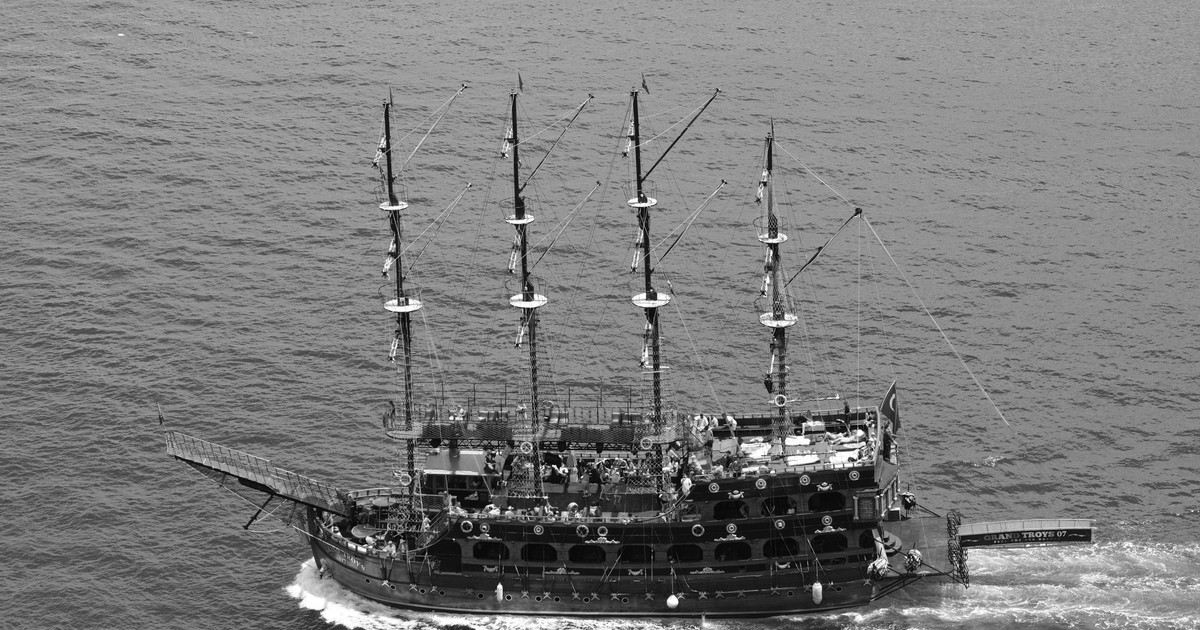
Jeanne de Clisson was a Breton noblewoman whose husband Olivier was convicted of treason by the French crown and beheaded in Paris in 1343. Jeanne was reportedly convinced the charge was fabricated, a political execution dressed up as justice.
She sold her lands, used the money to buy three warships, and had them painted black with red sails. She operated in the English Channel for more than a decade, specifically targeting French vessels and the French crown’s naval interests. She was known to spare a few survivors from each ship specifically so they could go back to the French king and tell him what had happened.
Jeanne de Clisson didn’t just want revenge. She wanted the person responsible for her husband’s death to know, repeatedly, that she was out there, and that she was winning. She carried out her campaign from 1343 until roughly 1356, when she retired to a castle in Brittany with a new husband.
The Pettiness Is the Point
What links all of these petty revenge examples, from Michelangelo’s donkey ears to Jeanne de Clisson’s black-sailed fleet, isn’t the scale. Some of these are enormous acts of destruction. Some are just a bad hat and a sarcastic letter. What they share is the specificity of the target. None of these people were trying to change the world. They were trying to make one particular person feel the sting of what they’d done.
That specificity is what separates petty revenge from something grander, like justice. Justice is abstract and general. Petty revenge is precise and personal. It’s not about correcting a wrong in any systemic sense. It’s about making sure the person who wronged you knows, without question, that you noticed. Biagio da Cesena is in hell. Napoleon’s 10,000 confiscated books are ash. The Khwarazmian Empire is gone. And Kira Yoshinaka’s head is at Asano’s grave.
The grudge, when it’s petty enough and personal enough, turns out to be the part that lasts.
Disclaimer: This information is not intended to be a substitute for professional medical advice, diagnosis, or treatment and is for information only. Always seek the advice of your physician or another qualified health provider with any questions about your medical condition and/or current medication. Do not disregard professional medical advice or delay seeking advice or treatment because of something you have read here.
AI Disclaimer: This article was created with the assistance of AI tools and reviewed by a human editor.