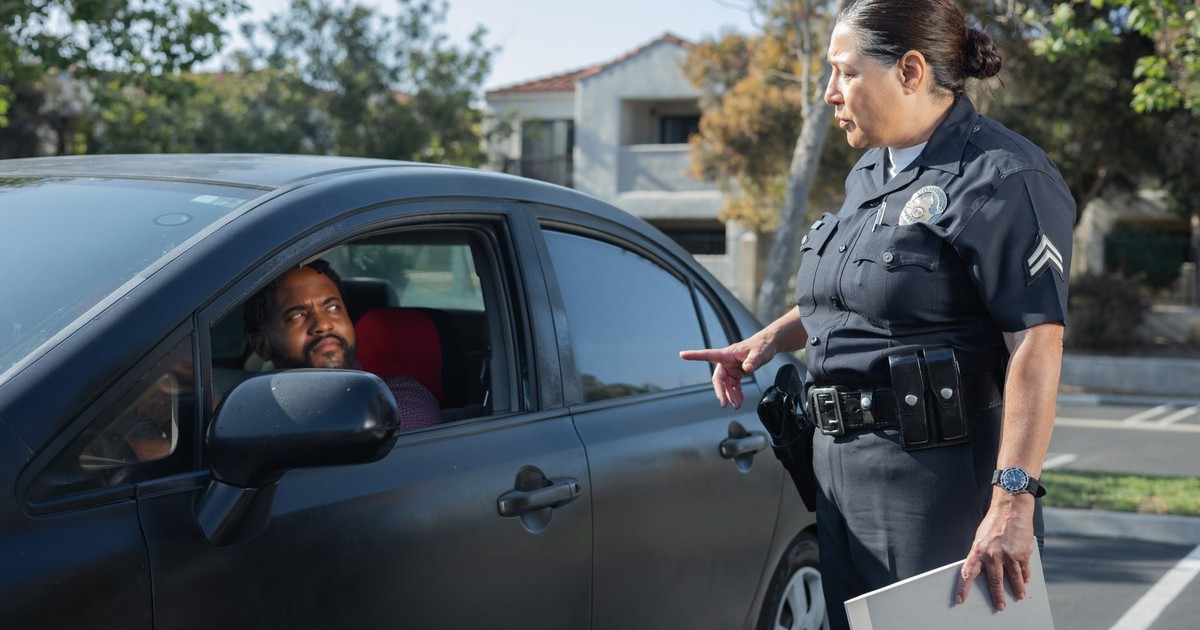

Two men were dead. Both killed in separate ICE vehicle stops, six days apart, in towns they’d lived in for years. The federal agency responsible told its agents, in writing, to stop making those stops. The pause lasted roughly 24 hours.
The reversal, confirmed by a White House official, came a day after ICE agents had been told to stand down from vehicle stops following deadly shootings in Maine and Houston. The speed of the reversal reflected internal White House dynamics as much as any policy question around ICE vehicle stops.
The Two Shootings That Started It
The killings of Lorenzo Salgado Araujo in Houston and Joan Sebastian Durán Guerrero in Biddeford, Maine, both came at the end of traffic stops. ICE agents had been using vehicle stops as a critical tool to meet the Trump administration’s goal of around 2,000 arrests a day.
The Houston shooting happened first. After receiving a tip from law enforcement partners, officers conducted surveillance on a target’s address and noted two white vans at the property. On July 7, officers observed a white van with an individual who resembled the target and initiated a vehicle stop. DHS said ICE officers targeted Salgado Araujo because he was living in the country illegally, and claimed he was shot after he ignored verbal commands and attempted to ram an officer. His family said he had no criminal record and was close to obtaining a work permit, having lived in the U.S. for more than three decades. CNN reported that two men who were with Salgado Araujo disputed the government’s account entirely, saying the agents’ vehicles bumped into them first, and that the agents never identified themselves.
Six days later, in Biddeford, Maine, a coastal city about 15 miles south of Portland, a nearly identical sequence unfolded. ABC News reported that ICE said agents were conducting targeted surveillance on the last known address of a person with a final order of removal when the individual departed the residence in a vehicle, and agents attempted a vehicle stop. The vehicle attempted to flee, and an officer discharged his weapon. The episode resulted in the death of Johan Sebastián Durán Guerrero, a Colombian national who was not the target of a warrant. Witness Daniel Boucher watched it unfold from nearby. He told reporters he heard the young man say “I tried to stop,” and overheard one of the ICE agents allege the driver tried to run him over. No body camera footage exists to resolve the conflicting accounts.
The Pause and Its Limits

Homeland Security Secretary Markwayne Mullin gave the directive to halt the traffic stops. An email sent to ICE deportation officers, reviewed by ABC News, said vehicle stops were paused “immediately.” All personnel were instructed to prioritize other operational methods outside of vehicle stops for immigration enforcement activities.
The directive had real boundaries. The pause applied to ICE ERO, the division responsible for civil immigration arrests and removals. Agents were instructed to end all vehicle stops except for targets with serious or violent criminal histories. The pause would remain in effect until Mullin had approved new vehicle stop training and it had been implemented.
One narrow exception remained. ICE officers could conduct some vehicle stops, but only in the presence of a local law enforcement officer trained to make vehicle stops who partners with ICE under the agency’s 287(g) program. That program delegates specific immigration enforcement authority to participating local and state agencies.
Border czar Tom Homan appeared on Fox News and tried to characterize the move carefully. “It is not a policy change, it is a temporary pause,” Homan said, adding that ICE leadership along with DHS wanted to look at the last couple of incidents and ask whether something could have been done better. He said he was confident ICE was well trained on vehicle stops and expected enforcement to continue moving forward.
Trump Steps In
The pause had made Trump furious, two sources familiar with the matter said, as prominent MAGA voices suggested his administration was weakening immigration enforcement.
TIME reported the decision to reverse came roughly 24 hours after ICE agents had been informed of the pause, and soon after Trump praised vehicle stops as one of ICE agents’ “most important and effective Crime Fighting tools” in a social media post. Addressing federal agents directly, Trump wrote: “ICE, be judicious, fair and smart, and go back and do your very important job.”
Trump’s post came roughly 12 hours after Homan had described the reasoning for the pause, saying Mullin would decide when to lift it. By Wednesday evening, the vehicle stops were back and Mullin and the White House were insisting they were “on the same page.” A secretary can issue a directive, a border czar can explain it on television, and the president can override both with a Truth Social post before lunch.
Shortly afterward, Mullin reposted Trump’s Truth Social message while adding that getting criminals off the street remained ICE’s top priority. Neither Mullin nor Homan had alerted Trump to the pause before imposing it, according to two people familiar with the chain of events.
What Congress Said
Maine’s two senators were among the first to push for the pause publicly. Republican Sen. Susan Collins publicly urged Mullin to pause all “non-violent traffic stops” in the wake of the Biddeford shooting. Collins said the shooting raised “sufficient critical questions” to justify calling DHS to cease all non-urgent vehicle stops while the investigation was ongoing.
The initial pause came soon after Collins’s plea. Both Collins and Sen. Angus King said Mullin had been in frequent contact with them, a contrast to his predecessor, Kristi Noem, who was criticized by officials from both parties for being unresponsive to Congress.
After the reversal, King said Trump’s reversal of the vehicle-stop pause “could well lead to additional deaths,” arguing the pause had made sense as a way to review training and ensure body cameras were fully deployed. He called for a fully independent investigation of the Biddeford shooting. “I want a full, fair, open, transparent investigation of this, not strictly run by the feds,” King said. “Unfortunately, the feds don’t have the credibility today. The people of Maine are not going to accept an investigation run by ICE or the FBI.”
The Body Camera Problem
Both shootings happened without body camera footage, and that absence sits at the center of every dispute about what actually occurred. After the shooting of Renee Good and Alex Pretti in Minneapolis in January, DHS vowed to quickly deploy body cameras to federal immigration agents nationwide. That hadn’t happened.
CNN reported that the fiscal year 2026 funding for DHS allocates $20 million for the procurement, deployment, and operations of body cameras for agents and officers, with DHS planning to purchase more than 5,000 body-worn cameras with that funding. The agency blamed Democrats in Congress and partial government shutdowns for the rollout delay, and was again vowing to deploy cameras for all agents within 60 days. White House Press Secretary Karoline Leavitt acknowledged the slow rollout but said all ICE field agents were expected to have body cameras within 60 days, noting that over half of all ICE field offices now have them.
Holding ICE agents accountable becomes significantly harder when all the public receives from DHS are vague statements about vehicles being used in a threatening way. In both incidents there were independent witnesses who observed events and shared information, but the footage would have been key to determining whether agents followed protocol.
The Legal Ground Beneath It All

ICE vehicle stops don’t operate in the same legal space as a routine traffic stop by a state trooper. Federal agents cannot stop cars for traffic violations, that is reserved for state and local officers. Immigration agents can legally stop a vehicle only for the purposes of enforcing federal law, and the agent must have “reasonable suspicion” that someone in the vehicle is violating the law.
Under Trump’s second term, ICE agents have been involved in a string of shootings, several involving people in vehicles in situations critics say defied their training. A former ICE agent told reporters that agents had limited authorities during traffic stops, and that they were not supposed to give chase to anyone unless there was a fleeing felon known to endanger other lives.
The American Immigration Council’s legal analysis of ICE’s expanded powers notes that the Trump administration has adopted expansive interpretations of ICE’s authority and relies on technical loopholes to avoid legal limits. Vehicle stops have become increasingly common, with authorities often relying on apparent racial profiling, and federal agents’ recklessness in stopping vehicles has led to high-speed chases, crashes, and deaths.
The Broader Enforcement Push
The shootings and the policy reversal unfolded against a backdrop of sharply accelerating enforcement. The Associated Press reported that immigration arrests surged to more than 10,000 people in a five-day span at the end of June, roughly 2,000 arrests per day, a sharp increase over any previous period in the Trump administration. Even during the January surge in Minneapolis, daily arrests averaged only about 1,212 nationwide.
On June 2, ICE extended its training program to 71 days, applying to all new training classes beginning July 1, with previous graduates set to receive follow-on training. The official DHS position is that training never stops at graduation. ICE officers go through on-the-job training and mentorship after the academy.
Deadly incidents earlier this year in Minnesota involving federal agents prompted personnel shifts at DHS, including the departure of Secretary Kristi Noem and the retirement of Greg Bovino, who oversaw deportation operations, and ICE Director Todd Lyons. The fallout from Minnesota also prompted a lengthy standoff in Congress that resulted in the longest partial government shutdown in U.S. history.
However short-lived, ICE’s pause on most vehicle stops showed a federal agency apparently willing to reassess its methods, at least compared to Mullin’s predecessor, Kristi Noem, whose response to the Minnesota deaths was to double down.
What Happens Now
The vehicle stops are back, the legal questions from both shootings remain unresolved, and body cameras are still not in the hands of every agent making enforcement stops. The 24-hour pause made visible something that usually operates out of public sight: the internal tension inside DHS between an enforcement posture that prioritizes volume and speed and the practical reality of what happens when things go wrong in the field.
The debate didn’t get resolved by Trump’s Truth Social post. It got posted over. Two men who were killed were not the intended targets of the operations that ended their lives. Both deaths remain under investigation. The training review that Secretary Mullin said prompted the pause in the first place has not been completed. ICE agents are back to making vehicle stops while the review of the last two fatal ones is still ongoing.
Neither Mullin nor Homan told Trump about the pause before imposing it. The president found out, presumably from cable news or social media, and overruled his own cabinet secretary within hours. The investigations in Maine and Houston will eventually produce findings. Those findings may vindicate the agents involved, or they may not. But the training review that was supposedly the reason for the pause remains unfinished. Agents are back in the field making the same kind of stops that killed two bystanders in two weeks, with the same incomplete camera coverage, under the same pressure to hit 2,000 arrests a day.
Disclaimer: This information is not intended to be a substitute for professional medical advice, diagnosis, or treatment and is for information only. Always seek the advice of your physician or another qualified health provider with any questions about your medical condition and/or current medication. Do not disregard professional medical advice or delay seeking advice or treatment because of something you have read here.
AI Disclaimer: This article was created with the assistance of AI tools and reviewed by a human editor.