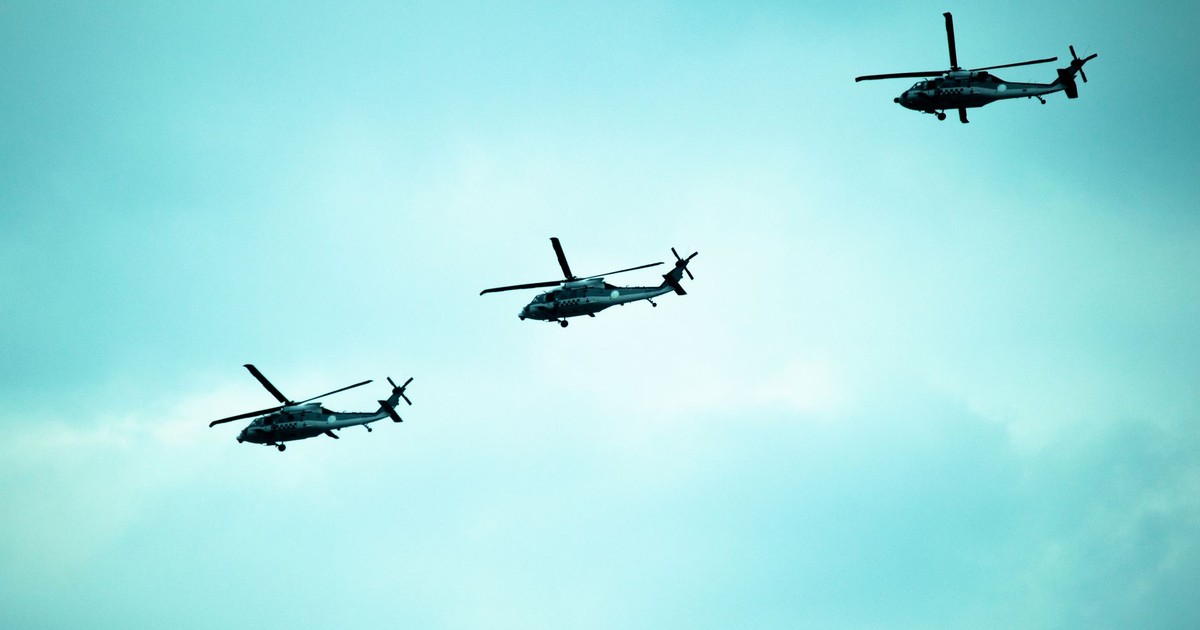

Vice President JD Vance sought to use a military helicopter to ferry himself and his son across Washington for a golf lesson. The Secret Service prepared to join a Marine Corps crew on July 10 to fly Vance’s young son to Joint Base Andrews, home to a secure golf center. Severe thunderstorms and high winds canceled the flight at the last minute. A day after the story reported on complaints from Secret Service staff, Vance’s office quietly switched to a standard SUV convoy.
The reversal sits at the intersection of two overlapping crises: a Secret Service agency stretched well past its institutional limits, and a growing pattern of government resource use by senior administration officials that critics are calling without precedent.
The Flight That Didn’t Happen
Vance planned to travel with his son on Marine Two, the call sign for the helicopter that carries the vice president. The route would have taken them from the Naval Observatory, the vice president’s official residence, across Washington to the base in Prince George’s County, Maryland. The White House Military Office, which reports to the president, would have had to authorize the use of the helicopter for the golf lesson. That authorization had apparently already been set in motion when the storm intervened.
One person familiar with Vance’s travel confirmed that agents would instead drive his son to the lesson at Joint Base Andrews. The vice president’s office did not provide any comment or reason for the change in plans.
The Helicopter’s Price Tag
Operating the helicopter costs taxpayers between $16,000 and $24,600 per hour of use, according to 2022 DoD budget data. That figure covers operations and maintenance for the VH-series helicopters used in executive transport, not fuel alone. A flight from the Naval Observatory to Joint Base Andrews and back would likely represent a fraction of an hour’s flight time, but the total operational cost of mobilizing the crew, conducting preflight checks, standing by, and returning the aircraft to base extends well beyond wheels-up to wheels-down.
There is no formal Secret Service policy prohibiting the use of a government helicopter for transporting a vice president’s child to a local event. Former and current Secret Service supervisors agreed the request for a helicopter for this purpose has no precedent. Prior vice presidents avoided using such expensive government resources for the convenience of their children’s schedules, and agents typically drove children locally in armored SUVs. That practice, never codified but consistently observed across administrations of both parties, is what made the helicopter request so jarring to the agents preparing to carry it out.
“Off the Record” and the Cost of Unpredictability
Secret Service agents assigned to Vance have repeatedly been required to cancel scheduled leave and rapidly adjust security plans because of frequent itinerary changes involving family outings, house-hunting trips, and other personal travel. Within the Secret Service, unannounced or last-minute travel is classified as an “off the record” movement, universally abbreviated as OTR. Hastily arranged trips force agents to cancel their days off, drop other plans, race to the location if needed, and come up with security plans in a hurry, according to numerous current and former Secret Service personnel.
The frustration inside the detail has taken on a life of its own. Agents have reportedly created unofficial memorabilia bearing the phrase “Bobcat OTR Survivors Club” alongside the slogan “Advance. OTR. Repeat.” “Bobcat” is Vance’s Secret Service code name. While such items have long served as internal jokes among federal protective details, they now reflect deeper concerns about staffing shortages
The frustration inside the detail has taken on a life of its own. Agents have reportedly created unofficial memorabilia bearing the phrase “Bobcat OTR Survivors Club” alongside the slogan “Advance. OTR. Repeat.” “Bobcat” is Vance’s Secret Service code name. While such items have long served as internal jokes among federal protective details, they now reflect deeper concerns about staffing shortages and the growing operational burden on agents already stretched by expanded protective responsibilities.
One source described the growing frustration inside the detail, saying “They change everything.” The same individual added, “They don’t stick to their schedules, and that costs shit-tons of taxpayer money.”
A separate source told reporters, “The detail is tired of them not giving notice on things and making everything an OTR.” That source added, “He thinks he can still move around like a U.S. senator.” A senator travels with a small protective detail and relatively minimal coordination requirements. A sitting vice president, especially one with an active international portfolio and a young family, requires a vastly more complex security architecture.
House Hunting by Helicopter
The Vances recently required several last-minute helicopter trips to the region around Middleburg, Virginia, so they could hunt for houses to buy or rent for their expanding family. The couple have three children, ages eight, five, and three, and the second lady is expected to deliver their fourth child late this month.
Flying a military helicopter to look at real estate represents a significant strain on an agency already stretched thin. Previous protected administration officials traditionally warned the Secret Service of their intended travel days in advance, especially when moving their family members.
The house-hunting flights are, in some ways, more revealing than the golf lesson story. A golf lesson is time-limited and easily rescheduled. House hunting in a rural Virginia county is open-ended, dependent on property availability, and difficult to predict. Multiple OTR trips to the same general area, each requiring a fresh security assessment and full mobilization of a helicopter crew, suggest the Vances treated Marine Two as a commuter option rather than formal government transport reserved for official duties or genuine security emergencies.
The agents pulled in to protect Vance and his family have become fed up with the last-minute travel demands that Vance and his wife, Second Lady Usha Vance, frequently place on the security team, according to multiple people with knowledge of their travel who spoke on the condition of anonymity.
The Administration’s Response
The Vance office’s official response, delivered through a spokesperson, did not address the specific allegations. The statement read: “The Vances are grateful to the men and women of the U.S. Secret Service who serve our country with distinction. While protecting a Vice President with a large policy portfolio and a young and growing family presents a unique challenge, agents of the Secret Service do so with excellence every day.”
An administration official offered a more substantive defense. Vance’s plans to travel from his home at the Naval Observatory to the golf course at Andrews Air Force Base would have represented a flight on a familiar route, while avoiding public impacts such as traffic jams and allowing the Vance family to spend time in a secure environment. Vance has not demanded special treatment, but the nature of his time in office has prompted unique security challenges, including the need to protect a young, growing family and for agents to join Vance on regular around-the-world travel.
The Vances are, by a significant margin, the first family to reside at the Naval Observatory with young children since former Vice President Al Gore and his family, more than 25 years ago. That demographic reality does create genuine operational challenges that other recent administrations simply did not face. An administration official said, “The vice president is a father who dedicates as much time as possible to his young and growing family,” adding that “most past presidents and vice presidents have not had young children, and therefore the detail has not been presented with this nature of protective mandate.”
The counterargument from inside the Secret Service is straightforward: other ways exist to get an elementary school student to a golf lesson. An armored SUV motorcade is among them, and it was, ultimately, what happened.
Secret Service Deputy Director Matthew Quinn issued his own statement. “When U.S. Secret Service Special Agents choose to join a protective detail, they understand the commitment required: long hours, frequent travel, and the need for constant flexibility,” Quinn said. “Nights, weekends, and holidays are part of the job.” The statement was careful not to validate or refute the reporting about agent morale.
A Pattern Wider Than One Vice President
The Vance reporting arrived in the same news cycle as a separate but parallel controversy involving FBI Director Kash Patel. Ranking members Raskin and Durbin of the House and Senate Judiciary Committees launched an investigation into Patel’s alleged misuse of taxpayer funds for luxury expenses, including a fleet of BMW vehicles and jet-setting on official business that included jet ski trips and helicopter tours. Their July 8 letter followed an earlier private letter from Republican Senate Judiciary Chairman Chuck Grassley, who had already demanded that Patel answer questions about luxury vehicles, government aircraft, and whether he had reimbursed taxpayers for personal travel.
Patel was allowed by the military to take a VIP snorkeling trip at Pearl Harbor, Hawaii, around the wreckage of the USS Arizona, where 1,177 sailors and Marines died during the Japanese attack in 1941. His spokesman defended it as “a historical tour to honor heroes who died” on the sunken aircraft carrier.
In their formal July 8 letter, Raskin and Durbin wrote that Patel’s “VIP snorkeling experience in Hawaii was not an isolated incident,” alleging that he “frequently demands special perks on ‘official’ trips around the globe, such as a taxpayer-funded helicopter tour during your multi-country jaunt across East Asia and other recreational activities like jet skiing.” The FBI disputed the characterization, with a spokesperson stating the allegations about jet skiing and the helicopter tour “are both false.”
Two senior Trump administration officials, both facing scrutiny over helicopter use on the taxpayer’s dime in the same week, drew immediate comparisons from critics on both sides. Whether the timing was coincidence or something more systemic, the optics proved difficult to separate from the political context of an administration that built its brand on cutting government waste.
The Secret Service’s Structural Problem
A Department of Homeland Security inspector general report found that the Secret Service was understaffed by an average of 21.4 percent across fiscal years 2023 and 2024. The staffing challenges and “inadequate planning” led to agents being assigned to marathon shifts with little time for rest in between, contributing to burnout and exhaustion within the agency’s ranks.
The Secret Service has dealt with a loss of employees and trouble recruiting new ones for a range of reasons, including poor morale, leadership changes, a lack of qualified applicants, and an extensive hiring process. The agency has hired 824 trainees in the first seven months of fiscal year 2026, compared to 786 in all of 2025, and is on track to hire approximately 2,000 law enforcement professionals by the end of 2027.
The understaffing has made the already strenuous demands of the job even more difficult for agents who have to work overtime to make up for the shortage. Secret Service Deputy Director Matthew Quinn acknowledged the pressure, telling reporters, “We can’t create enough incentives to negate the fact that we’re working our people very, very hard.”
In 2024, agents reported nearly 1.2 million overtime hours agency-wide. Agents on the vice president’s detail averaged 336 overtime hours that year, a figure that almost certainly understates the actual total, as many agents do not report all the time they work.
The staffing crisis at the Secret Service is not a new problem. It predates this administration and has been documented across multiple inspector general reports. But that context does not make the Vance requests less operationally significant. It makes them more so. Adding unpredictable, last-minute family transport missions to a detail already working chronic overtime is the equivalent of adding deliveries to a logistics network that has already lost a fifth of its drivers.
The Timing Problem
The timing of the reporting created an additional layer of political difficulty for Vance. On a July 8 episode of Mike Rowe’s podcast “The Way I Heard It,” Vance reflected openly on the surreal nature of his position. Vance said, “I don’t go to the grocery store anymore. People go to the grocery store for me. I like to cook for my kids as a special occasion, but I don’t have to cook anymore. My life is so weird. I fly around on a 757. No more TSA lines for me and the kids.” He then added, “But it can become the sort of thing where if you internalize it, you start to be an entitled a-hole.”
The podcast episode aired days before the helicopter story broke. Critics on both sides of the aisle were quick to note the contrast.
Senator Adam Schiff did not hold back. “Gives ‘helicopter parent’ a whole new meaning,” Schiff posted, adding, “Your kid can’t have a free school lunch because that’s excessive spending but Vance’s kids get flown to golf lessons in military helicopters.”
What the Reversal Actually Confirms
The planned trip on Marine Two was canceled at the last minute due to severe thunderstorms and high winds in the Washington, D.C., area. There is no formal Secret Service policy prohibiting the use of a government helicopter for transporting a vice president’s child to a local event. Operating Marine Two costs taxpayers between $16,000 and $24,600 per hour, per 2022 Defense Department budget estimates. Former and current Secret Service supervisors agreed the request for a helicopter for this purpose has no precedent, noting that prior vice presidents consistently avoided using such expensive government resources for the convenience of their children’s schedules.
The Secret Service itself is caught in a structurally impossible position. Chronic understaffing has long dogged the agency and led agents to work excessive overtime to secure the administration leaders and family members they are legally required to shield. Adding unpredictable, last-minute requests to that environment does not merely erode morale. It degrades the agency’s ability to perform its core mission.
The Vance family’s response, that young children present unique challenges not contemplated by previous protective arrangements, is not without merit. The factual reality of the family’s situation is real. But the administration answered the question of whether those challenges require a Marine Corps helicopter the moment it quietly substituted SUVs for the flight. The switch itself was the concession. A day after MS NOW’s reporting on the complaints from Secret Service staff, Vance’s office canceled the helicopter flight and agents drove his son to the golf lesson at Joint Base Andrews instead.
Norms around government resource use don’t disappear overnight; they get tested, and then tested again, until the testing becomes the new normal. The helicopter reversal was a small correction. Whether it signals a genuine recalibration, or just a tactical retreat until the cameras move on, is a question the agents on that detail will be living with long after the news cycle has ended.