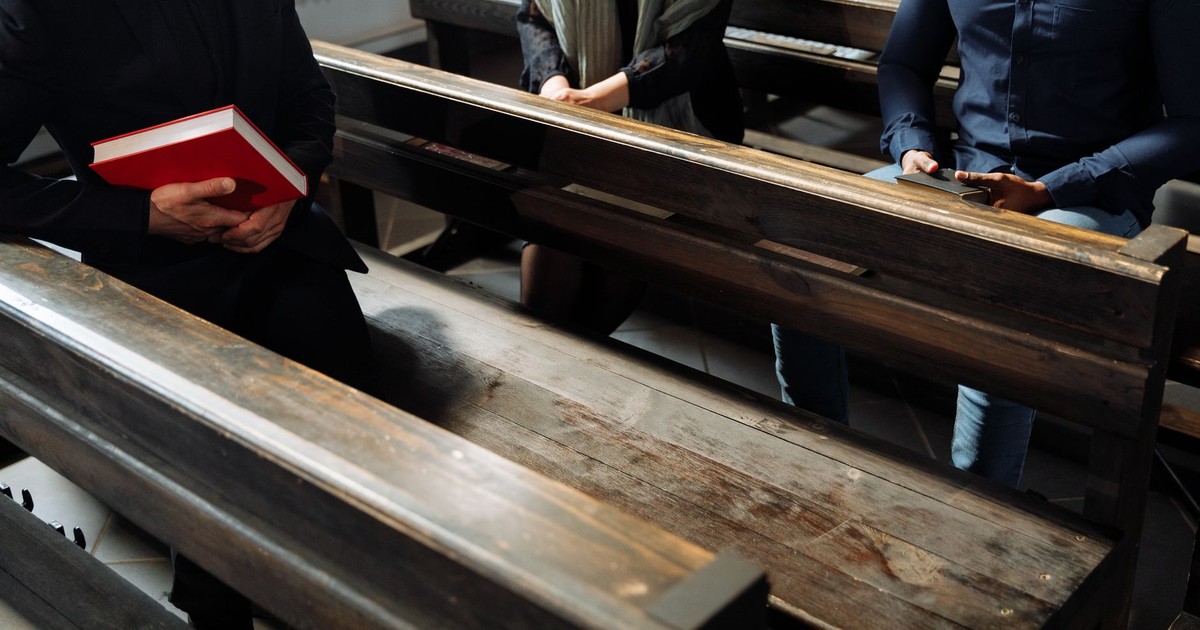

Roughly 40 million Americans have stopped attending worship services in the past 25 years. Most didn’t leave because they stopped believing. They left because the institution stopped working for them. The commute got too long. The Sunday morning slot got too crowded with kids’ soccer and grocery runs. The pastor said something that made them feel unwelcome in a way they couldn’t quite name. Small things, repeated over years, that eventually added up to absence.
For some of the 40 million who left, the decision was rooted in deep pain. For the majority, the reasons were mundane. That matters, because it means the conversation about American Christianity isn’t just a theological one. It’s a practical one. It’s about whether the habits and structures churches built up over decades still serve the people sitting in the pews, or the people who used to.
A broad and ongoing rethinking of church practices is underway, driven not by people who hate religion but by people who care enough about it to ask hard questions. Some of these shifts are generational. Some are technological. Some are the delayed consequences of scandals that went unaddressed for too long. Here are 12 of the practices drawing the most scrutiny right now.
1. Making Sunday Morning the Only Option
For generations, church membership meant one thing: being in a specific building on Sunday morning at a specific hour. Miss it, and you’d missed church. The whole architecture of congregational life was built around that single weekly event.
According to WBUR’s reporting in late 2024, 32% of U.S. adults said they attended in-person in the past month. Pew’s 2023-24 Religious Landscape Study found that roughly one in four U.S. adults watches religious services online at least monthly. When you account for both modes, overall participation has held relatively steady at around 40% monthly. How people participate has fundamentally changed. Churches that treat Sunday morning attendance as the only legitimate form of engagement are now watching people slip away, not because those people lost faith, but because they found other ways to participate and the church wouldn’t count them.
A large and growing share of churches now live-stream services, giving congregations the infrastructure for broader access. What’s slower to change is the unspoken assumption that being in the room is what makes you a real member. Congregations rethinking this are experimenting with midweek gatherings, neighborhood home groups, evening services, and hybrid models where online participation counts as genuine community rather than a consolation prize.
If the goal is discipleship, connection, and service, none of those require a specific zip code on a Sunday at 10am. The building is a tool, not the point.
2. Pastoral Celebrity Culture
The pastor-as-brand model had a good run. Megachurches built around a single charismatic leader filled enormous auditoriums through the 1990s and 2000s, generating podcasts, book deals, and conference circuits that turned local clergy into national figures. The problem with building an institution around one irreplaceable personality is what happens when that personality fails, and in recent years, some very prominent ones have.
Church leaders are asking harder questions about sustainability, reframing discussions about burnout toward flourishing and looking at the conditions that help pastors remain spiritually grounded, emotionally healthy, and vocationally resilient. That shift isn’t just about self-care. It’s about structure. A pastor who holds too much authority, with too little oversight, creates conditions where both the leader and the congregation are at risk.
When a senior pastor controls budgets, personnel decisions, doctrine, and culture all at once, there’s no meaningful check on poor behavior, or worse. Congregations that are rethinking this are moving toward elder boards with real authority, external audits, written behavioral expectations for leadership, and term limits. The goal isn’t to diminish pastoral leadership; it’s to distribute power in ways that make the whole system more durable.
3. Avoiding Transparency About Church Finances
The expectation that a congregation should simply trust church leadership with financial matters, no questions, no audit, no public accounting, has been fraying for years. It frays faster every time a major financial scandal breaks.
Bible sales are up 41.6% since 2022, spiritual app downloads rose 79.5% since 2019, and Christian music streams are up 50% since 2019, so interest in faith is not the problem. People who are spiritually engaged in 2026 are also more financially literate and more accustomed to organizational transparency than previous generations. They give money to nonprofits that publish annual reports. They read GuideStar. They expect to know what a senior pastor earns and how building funds are allocated.
Congregations that are ahead of this curve publish detailed annual financial reports, hold open budget meetings, and separate the pastor’s compensation from the finance committee he chairs. The ones resisting this scrutiny are increasingly finding that younger donors, who now give digitally and can stop a recurring gift with a single tap, are willing to stop giving until they get answers. According to Giving USA 2026, charitable giving in the U.S. reached $617.2 billion in 2025, a record, yet faith-based organizations have seen their share of that total plateau in recent years after decades of leading the pack. Financial opacity is part of that story.
4. Pressure-Based Tithing
The tithe, giving 10% of one’s income to the church, has deep roots in scripture, and many Christians hold it as a genuine conviction. The problem isn’t the practice itself. It’s the way some congregations have weaponized it: guilt from the pulpit, public naming of generous donors, the implication that financial hardship is evidence of insufficient faith, and the use of giving records to measure a member’s spiritual seriousness.
When financial pressure becomes the dominant mode of communication around giving, it drives away exactly the people churches need most: newcomers, younger adults, and those in genuine financial difficulty. People in their thirties and forties who grew up hearing prosperity gospel-adjacent sermons about seed faith and financial blessing have largely stopped believing that God rewards generosity with a bigger paycheck.
The shift is toward teaching generosity as a spiritual formation practice rather than a revenue method. That means explaining how donations are used, connecting giving to specific community outcomes, and treating financial struggle with pastoral care rather than implied judgment. Churches that lead with transparency here tend to generate more genuine giving, not less.
5. Mixing Politics With the Pulpit
The relationship between certain strands of American Christianity and partisan politics has grown so entangled that for many people, walking into a church feels like walking into a campaign event. That perception is doing real damage to religious institutions across the spectrum.
When Pew Research Center last asked about this in September 2022, 77% of U.S. adults said churches and other congregations should not make political endorsements. That figure held across party lines, it wasn’t just Democrats saying it. Political content continues to intensify in many congregations, driven partly by cultural anxiety and partly by pastors who have found that political controversy generates engagement.
Around 20% of religiously unaffiliated Americans say their church became too focused on politics as a reason they left, a figure that has risen since 2016. Unaffiliated Americans are also increasingly likely to cite their mental health as a reason why they left their religion, with 32% naming it. The two things aren’t unrelated. Congregations that function as partisan echo chambers, where questioning the political line feels like questioning one’s faith, create environments that are actively harmful to people who already feel uncertain or fragile. Rethinking church practices around political engagement doesn’t mean churches go silent on public issues. It means treating the difference between prophetic witness and party politics as the meaningful distinction it is.
6. Shame-Driven Purity Culture
The purity movement that swept through evangelical youth culture in the 1990s left a long shadow. The promise rings, the abstinence pledges, the modesty culture, the metaphors that compared sexually active young women to used chewing gum or wilted flowers, all of it was framed as protection. For many of the people who lived through it, it functioned more like damage.
One-third of religiously unaffiliated Americans say they no longer identify with their childhood religion because it was bad for their mental health. Nearly half of LGBTQ unaffiliated Americans cite this reason, compared with 29% of unaffiliated Americans who don’t identify as LGBTQ. The overlap between shame-heavy sexual ethics and mental health harm is not a coincidence. When theology teaches that a person’s worth is tied to sexual history, the effects on self-concept can be lasting and serious.
Churches rethinking this area aren’t necessarily abandoning traditional sexual ethics. Many are holding the same convictions while stripping out the shame architecture that surrounded them. That means talking about sexuality without gendered double standards, without body-policing, and without the implication that a person who has had sex outside marriage is spiritually ruined. It means treating sexual harm, including the harm done by the purity movement itself, as something worth acknowledging honestly rather than defending.
7. Keeping Women Out of Leadership
Notable in recent trends is evidence that women, particularly young evangelical women, are abandoning their faith communities at a rate equal to or higher than that of men. Young women today are, by some measures, less religious than young men, a trend that challenges congregations that have counted on generations of actively engaged women.
The dynamics driving that shift are various, but one of them is leadership. Many denominations still debate women’s ordination, citing doctrinal positions developed centuries ago in cultural contexts very different from today’s. What’s harder to defend is the everyday reality in many congregations: women doing the majority of the volunteer labor, teaching Sunday school, running hospitality, staffing the nursery, organizing fundraisers, while men hold the titles, make the decisions, and control the money.
Younger women in particular are asking whether a community that systematically limits their authority is one they want to build their lives around. Churches that are growing tend to be ones that have found ways to honor both traditional convictions and the genuine gifts and leadership capacity of women in the congregation, without requiring women to check those gifts at the door.
8. Mishandling Abuse and Protecting Institutions
The sexual abuse scandals that have broken across Catholic dioceses, Southern Baptist churches, and independent evangelical congregations over the past two decades have fundamentally changed what congregation members expect from institutional accountability. The pattern has been consistent enough to be a template: abuse occurs, it gets reported internally, leadership prioritizes reputation over safety, the victim is silenced or driven out, and the perpetrator is quietly moved elsewhere.
The number of unaffiliated Americans who cite clergy sexual abuse scandals as a reason for leaving their religion increased by roughly 10 percentage points between 2016 and 2023, from 19% to 31%. That’s a significant jump in a short time. It reflects not just the scandals themselves but the institutional responses, the legal maneuvering, the non-disclosure agreements, the leaders who defended abusers while dismissing victims.
Churches that are rethinking their practices here are implementing mandatory reporting regardless of whether civil law requires it, establishing independent oversight bodies that sit outside the pastoral authority structure, and treating survivor testimony as credible by default rather than as a threat to be managed. These aren’t novel ideas. They’re the baseline standard in virtually every other context where adults are responsible for vulnerable people.
9. Treating Online Worship as Second-Class
The pandemic forced every congregation in America to experiment with digital ministry, often overnight. What many of them discovered was that online participation served people they hadn’t been reaching before: homebound elderly members, people with disabilities, parents of young children who couldn’t physically manage the logistics of Sunday morning, people who lived too far away, people who were exploring faith but weren’t ready to walk through a physical door.
Today, content is plentiful. You can get any sermon anywhere in the world for free, not just sermons but TED talks and YouTubers speaking on virtually any topic. Meanwhile, in an exact reversal of three decades ago, community and connection have become scarce. That observation reframes what churches actually have to offer online participants: not content, which they can get anywhere, but genuine belonging.
The congregations that are ahead on this are treating their online communities as real communities, assigning pastoral care to digital members, creating ways for online participants to serve and give and connect with each other, and resisting the temptation to treat the livestream as simply a broadcast of what’s happening in the room. If the digital congregation is an afterthought, people will eventually figure that out and find somewhere that takes them seriously.
10. Informal or Non-Existent Pastoral Accountability
Beyond the celebrity pastor model is a broader structural problem: in many congregations, especially smaller independent ones, there is simply no meaningful accountability for pastoral behavior at all. The senior pastor reports to an elder board he appointed, whose members serve at his pleasure, in a culture where questioning leadership is treated as spiritual rebellion.
Millennial and Gen Z Christians are attending church more frequently than before. The typical Gen Z churchgoer now attends 1.9 weekends per month, while Millennial churchgoers average 1.8 times, a steady upward shift since the lows seen during the pandemic. Those younger adults bring different expectations about organizational integrity. They grew up watching institutional failures in real time, the Catholic Church, prominent evangelical leaders, youth ministries, Christian colleges, and they have a much lower tolerance for “trust us” as a governance model.
Read More: 20 Forgotten Church Items Most People No Longer Recognize
Churches rethinking accountability practices are separating pastoral review from pastoral authority, instituting 360-degree evaluations, creating confidential reporting methods for congregation members, and normalizing the idea that a pastor being held accountable is not the same thing as a pastor being attacked. That distinction used to need no explanation. It does now.
11. Neglecting Mental Health
For a long time, the standard response to depression, anxiety, trauma, and suicidal ideation within many church communities was prayer, scripture, and the implicit suggestion that stronger faith would fix the problem. Seeking professional mental health support was sometimes actively discouraged as evidence of insufficient trust in God. People in genuine psychiatric crisis were told to repent.
One-third of religiously unaffiliated Americans say they left their religion because it was bad for their mental health, a figure that represents millions of people whose experience of church made their suffering worse rather than better. The consequences of that legacy are now visible in the data on who is leaving and why. Mental health harm has become one of the primary documented reasons for religious disaffiliation, particularly among younger adults.
The shift happening in churches that are rethinking this area involves destigmatizing professional mental health care from the pulpit, building referral relationships with licensed therapists, training pastoral staff to recognize crisis, and being honest about the limits of spiritual care. Prayer and therapy are not competing responses to suffering. Treating them as mutually exclusive has cost many churches the trust of people who needed both.
12. Rigid, Unchanging Worship Formats
The order of service, the style of music, the length of the sermon, the dress code, the physical arrangement of the room, in many congregations these elements have the force of doctrine. Changing any of them produces the kind of resistance that most churches reserve for actual theological disputes. The result is worship experiences optimized for people who were adults in 1987 and increasingly alienating to everyone else.
A surprising shift is challenging long-held assumptions about younger generations and churchgoing. New research from Barna Group suggests the pattern has flipped: Millennials and Generation Z are now attending church more often than their parents and grandparents, with Gen Z churchgoers averaging 1.9 services per month. Rather than signaling a return to business as usual, the findings point to a more specific kind of reengagement, shaped by questions of belonging, meaning, and spiritual exploration.
What that reengagement actually looks like in practice is telling. Younger adults showing up in growing congregations aren’t asking for fog machines and production values. They’re asking for something that feels honest, worship that doesn’t require an aesthetic conversion as a precondition for spiritual belonging, sermons that engage real questions, and communities where they can admit doubt without being treated as a problem to be solved.
The churches rethinking worship formats aren’t abandoning reverence or depth. They’re questioning whether a fixed form, preserved because it’s familiar to existing members, is worth the cost of everyone else walking past the door.
What This Actually Means
None of the practices on this list are being questioned because people have given up on faith. Barna’s research points to rising church engagement among younger adults and continued broad interest in faith among Americans generally. That’s not a population abandoning Christianity. That’s a population asking why their experience of institutional Christianity so often feels like a barrier rather than a door.
The church practices rethinking happening right now is really a question about what a congregation is actually for. If it’s to protect the institution, preserve familiar formats, and maintain the authority of existing leadership, the practices as they stand make a certain kind of sense. If it’s to help people find God, build genuine community, raise kids with moral foundations, and serve the poor, some of those same practices are actively getting in the way.
Most people who’ve stepped back from church haven’t written off faith. They’re waiting to see whether the institution can ask that question honestly.
AI Disclaimer: This article was created with the assistance of AI tools and reviewed by a human editor.